

Edwardian Mahogany Secretary
An edwardian mahogany secretary brings refined writing compartments and glazed bookcase storage into a room, combining fine timber with practical everyday workspaces.
Edwardian Mahogany Secretary
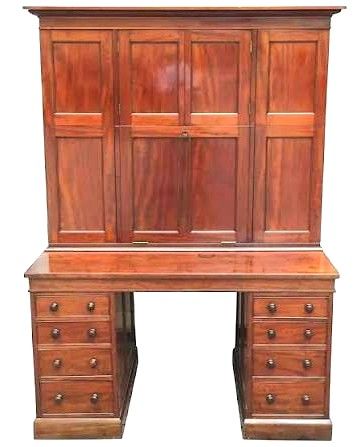
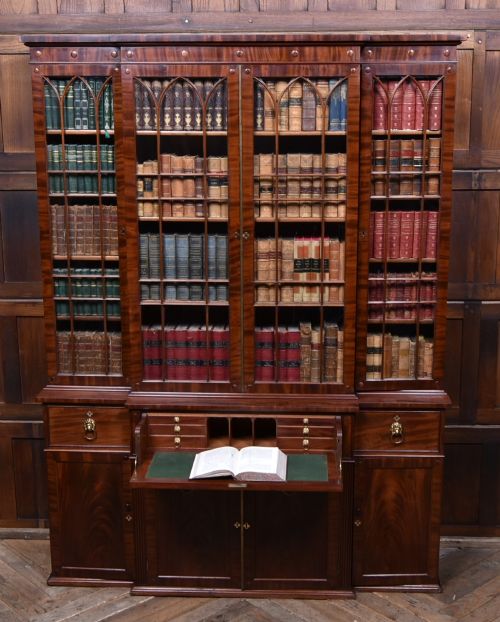
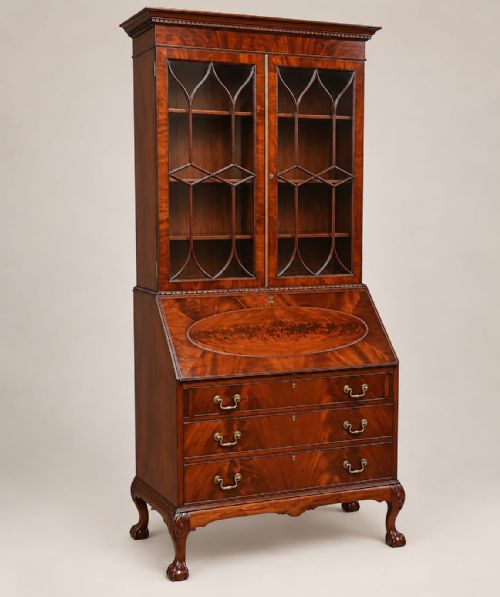
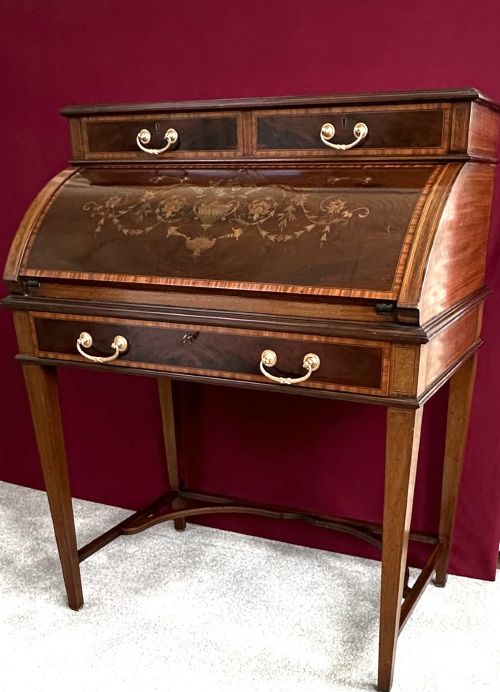
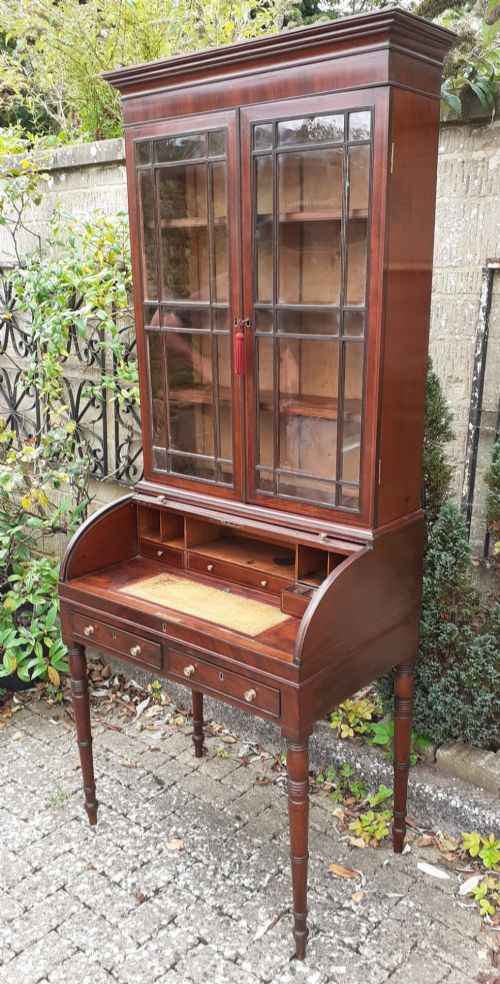
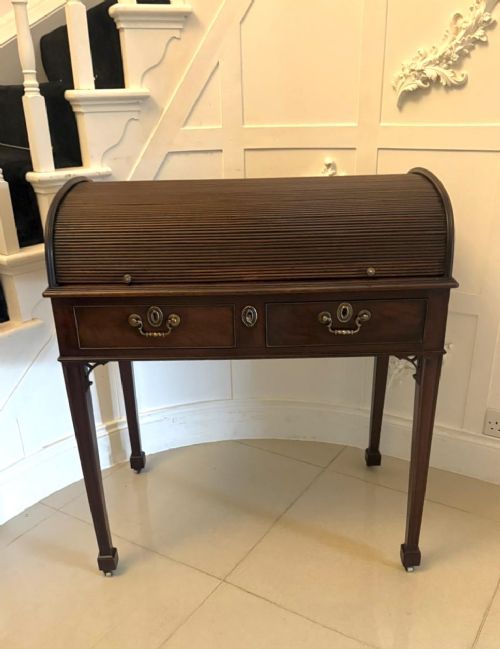
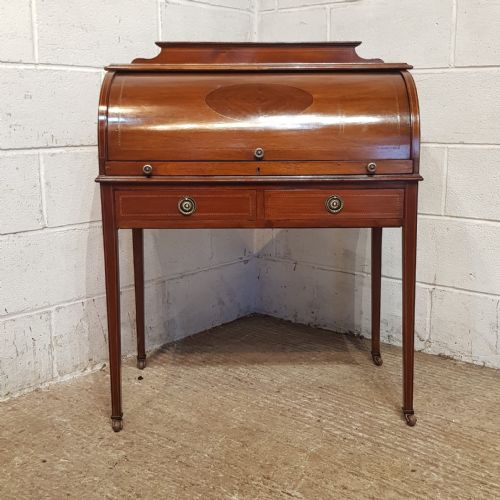
The edwardian mahogany secretary encompasses bureau bookcases, fall-front desks, and cylinder top cabinets produced around the start of the twentieth century. These pieces draw heavily on earlier Georgian and Sheraton Revival vocabulary, translating proportions for smaller Edwardian interiors.
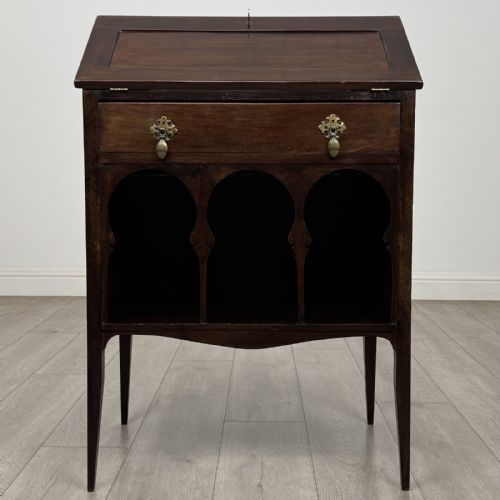
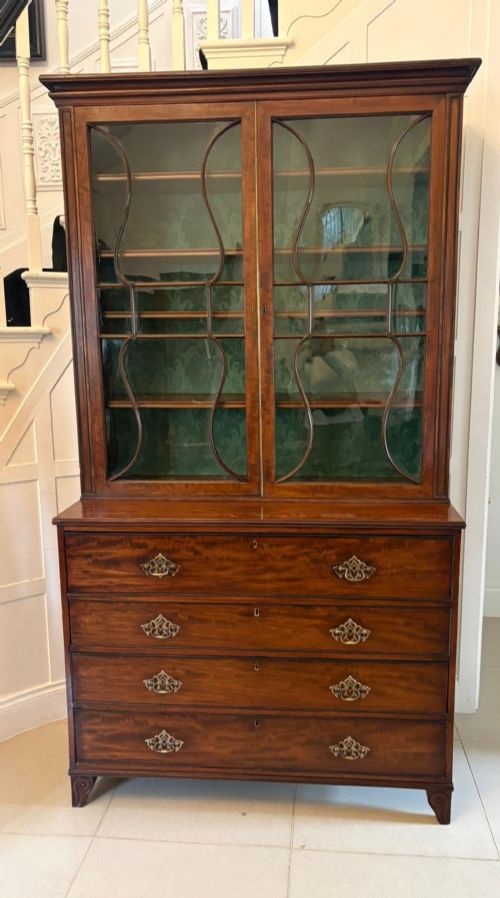
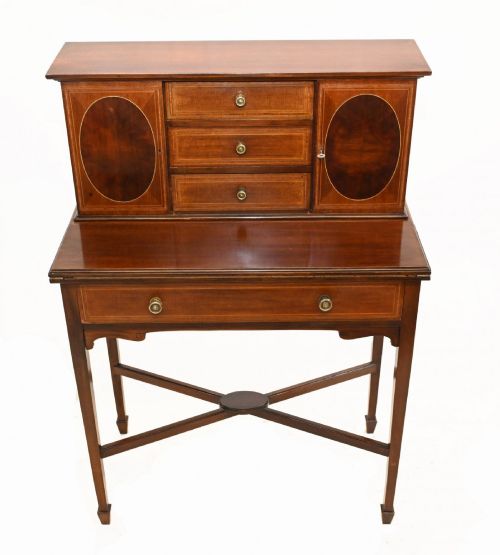
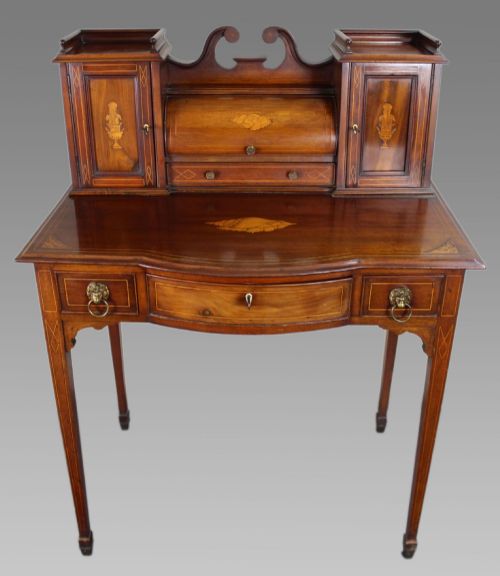
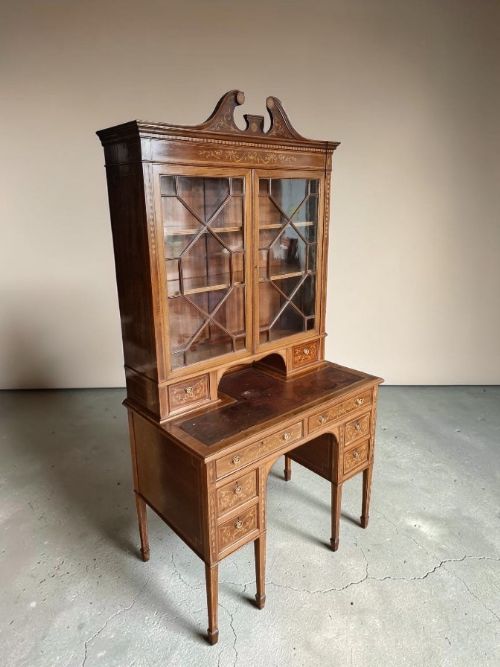
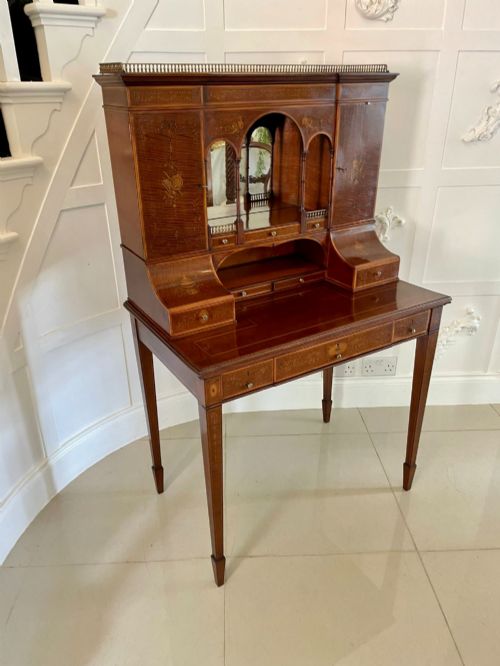
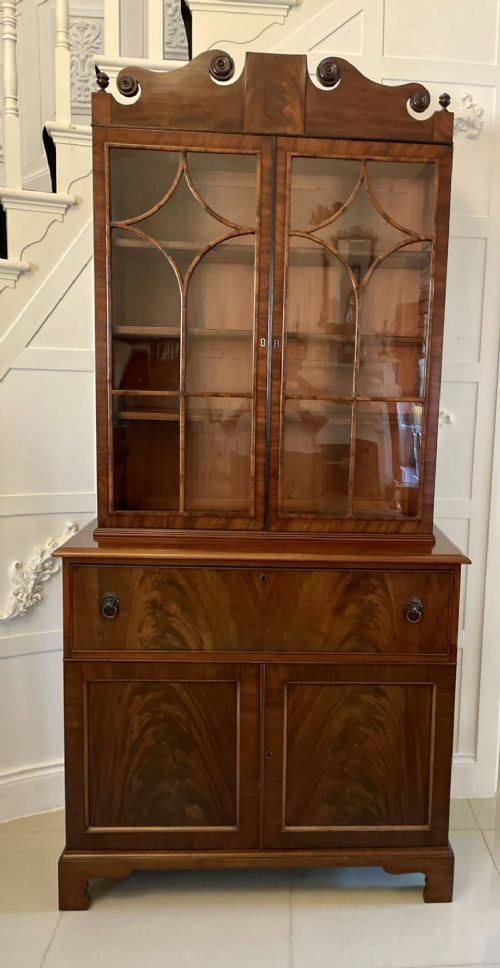
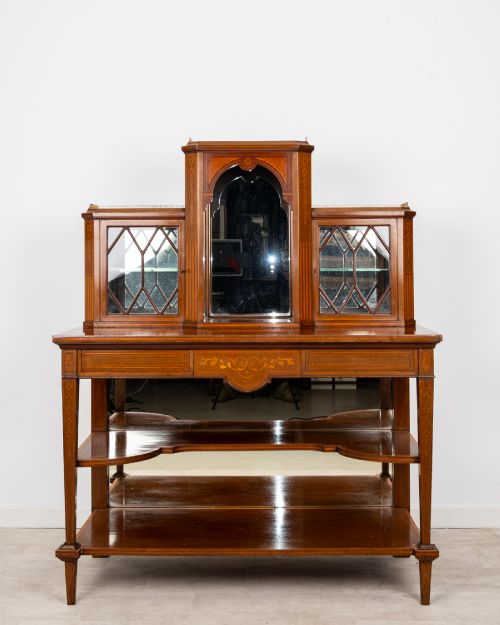
Bureau bookcases dominate the selection, featuring upper shelving enclosed by glass doors above a sloping writing flap and internal pigeonholes. Alongside these stand cylinder desks and compact bonheur du jour writing tables outfitted with small drawers and fitted compartments.
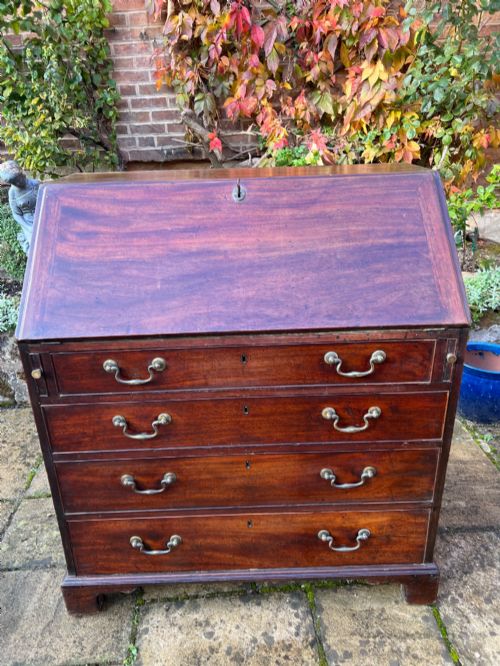
While the majority date from the Edwardian period and the early twentieth century, pieces span from the late eighteenth century through to the Victorian era. This broader spread includes Regency secretaire chests and heavier George III breakfront bookcases in solid mahogany and rich veneers.
Materials and Construction
Cabinet makers relied primarily on mahogany timber, selecting figured grains for exterior panels and secondary woods for internal drawer linings. Satinwood banding, boxwood stringing, and delicate marquetry inlay frequently accentuate the primary surfaces.
Functional hardware utilises cast brass for handles, escutcheons, and hinges, while secondary elements incorporate glass for upper cabinet doors, leather writing inserts, and occasional bone details. Structural joints rely on traditional dovetailing for drawers and mortise and tenon framing for the main carcase.
Edwardian Mahogany Secretary Retail Price Guide 2026
Typical asking prices for edwardian mahogany secretary among the pieces listed under this phrase on Sellingantiques today, from the lower quarter to the upper quarter. They describe what is for sale here now, not the wider market.
Listings feature pieces spanning from the eighteenth century through to the Edwardian era, incorporating mahogany, satinwood, and brass.
Evaluating Craftsmanship
Quality rests upon the selection of timber and the precision of the cabinet work, particularly where secondary woods meet primary veneers. Finer examples display continuous grain matching across drawer fronts and crisp execution of inlaid stringing rather than printed decoration.
Internal engineering distinguishes standard production from superior workshops, visible in the smooth action of tambour shutters, drop-front writing surfaces, and secret compartments. Original brass furniture, unwarped glass panels, and intact leather writing surfaces further separate exceptional items from ordinary utility pieces.
Tudor & Burrey·Gillows·Edwards & Roberts·Lamb & Co
The Edwardian Mahogany Secretary Glossary
- Secretaire
- A desk or cabinet featuring a concealed writing drawer with a drop-down front that reveals pigeonholes and small drawers. This format allows a tall chest or bookcase to function simultaneously as a writing desk.
- Tambour
- A flexible sliding shutter formed from narrow vertical strips of wood glued to a canvas backing. It runs in concealed grooves to cover the cylinder top of a desk.
- Bonheur du jour
- A light lady's writing desk originating in the eighteenth century, typically fitted with a small cabinet or tier of shelves on the writing surface. Edwardian makers revived this graceful form with delicate inlay.
- Marquetry
- Decorative patterns formed by fitting together contrasting veneers of wood, shell, or ivory onto a carcase. It requires immense skill to achieve clean junctions between different materials.
Edwardian Mahogany Secretary: Frequently Asked Questions
What is a secretary desk?
A secretary desk is a piece of furniture that combines a set of drawers or a cabinet base with a concealed writing surface. When opened, the front folds down or pulls out to reveal pigeonholes and small compartments for correspondence.
Many examples also incorporate a bookcase section with glass doors above the desk area. This dual purpose made them essential household items for managing household accounts and storing library collections.
How do I identify an Edwardian piece?
Edwardian furniture typically dates from the reign of King Edward VII between 1901 and 1910, though the style spans the broader turn of the century. These pieces often lighter in proportion than their Victorian predecessors and frequently borrow motifs from the Georgian and Sheraton periods.
Look for delicate satinwood inlay, tapered legs, and bright mahogany finishes. Cabinet interiors often use oak or pine secondary woods alongside machine-cut dovetails on later pieces.
Are cylinder desks practical for daily use?
Cylinder desks offer a secure workspace where writing materials can remain out of sight when not in use. The curved rolling shutter conceals the internal desktop and pigeonholes smoothly.
While the pull-out writing slides provide adequate space for contemporary writing tasks, collectors should handle the mechanical tambour tracks with care to prevent jamming.
How should I care for mahogany furniture?
Mahogany requires stable room humidity and protection from direct sunlight to prevent the timber from fading or drying out. Regular dusting with a soft, dry cloth preserves the polished surface.
Avoid placing these pieces near radiators or heating vents, which can cause wood shrinkage and split delicate veneer panels over time.