


Edwardian Mahogany Pedestal Desk
When you search for an edwardian mahogany pedestal desk, you find sturdy twin-pedestal workstations lined with leather and built to organise a study.
Edwardian Mahogany Pedestal Desk
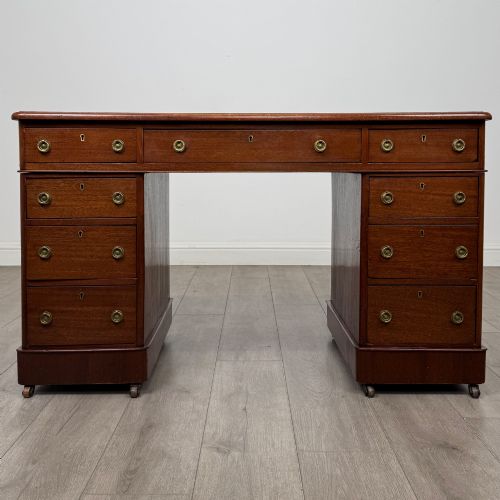
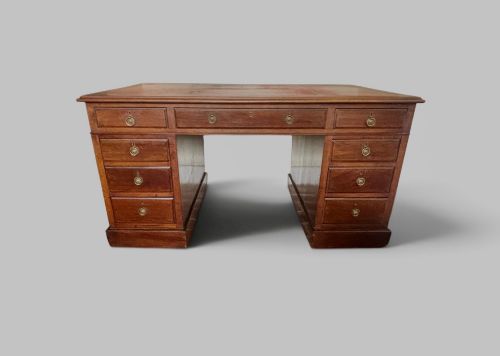
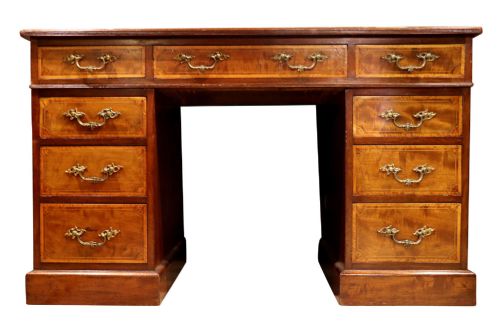
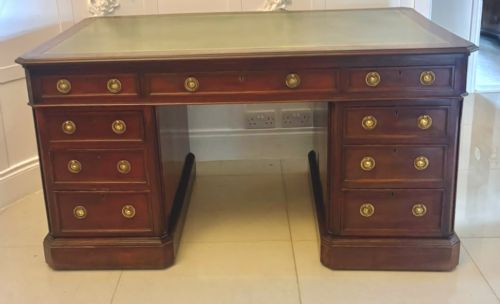
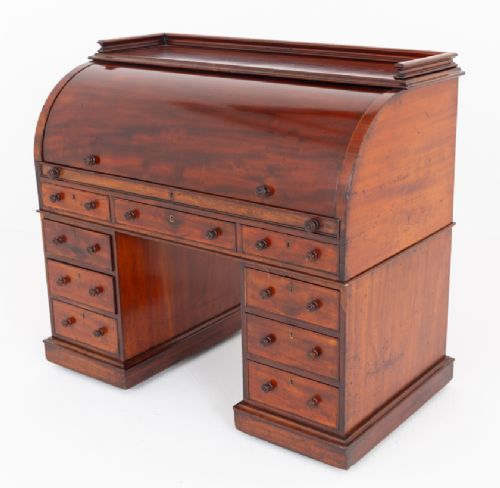
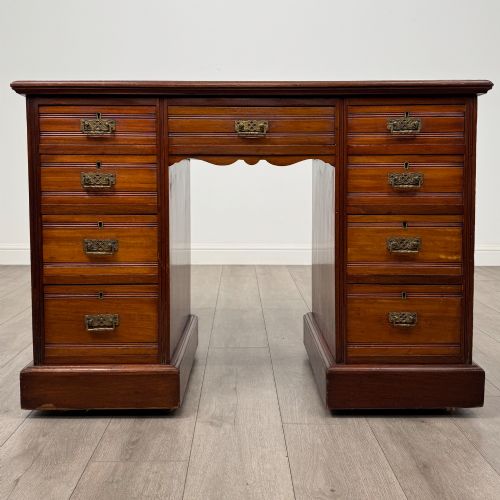
An edwardian mahogany pedestal desk typically consists of a large writing surface resting atop two banks of drawers, often referred to as a twin pedestal arrangement. These pieces frequently feature inset leather writing panels and multiple smaller drawers for stationery.
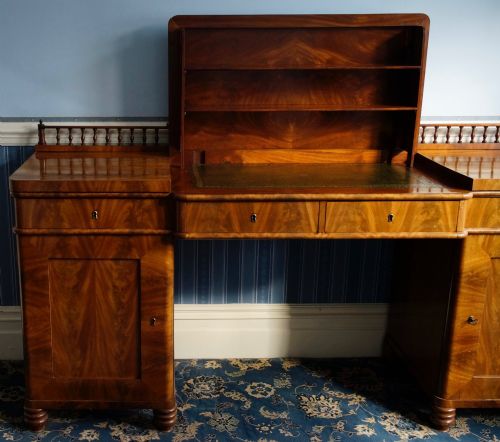
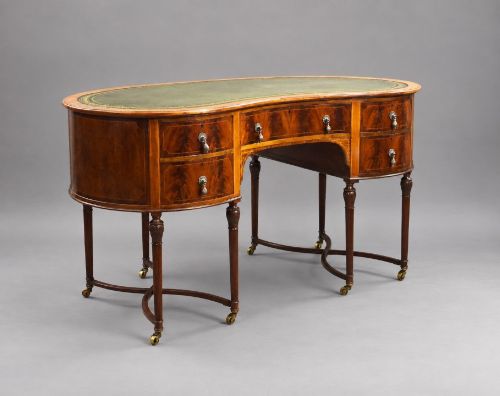
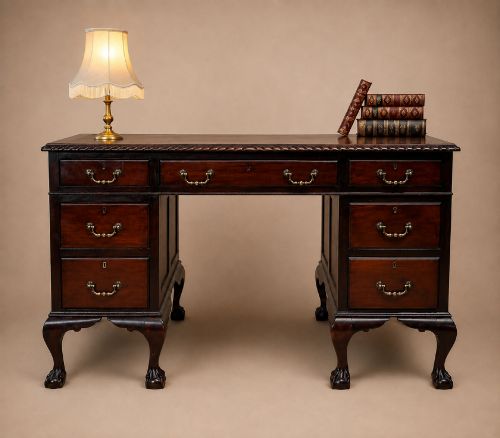
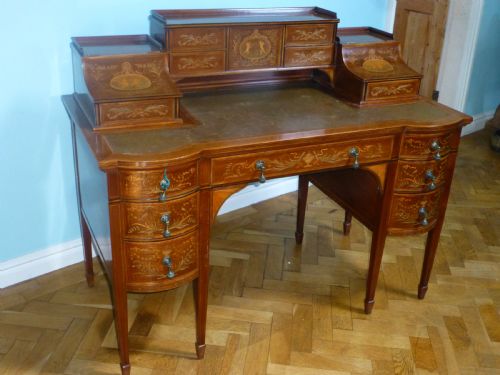
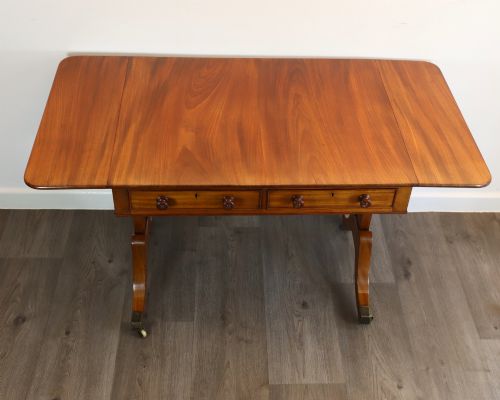
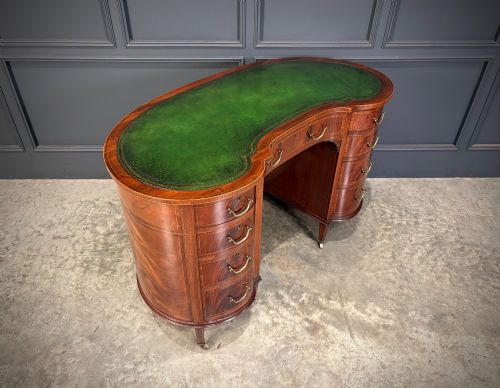
The pieces seen on this page span the Edwardian period alongside related Victorian, 19th-century, and early 20th-century examples. Alongside traditional twin-pedestal formats, you will encounter kidney-shaped desks, Carlton House desks, and kneehole variations.
Originating predominantly from British workshops and cabinet makers, these desks were designed for serious administrative work in home libraries and offices. The primary form combines a central drawer flanked by pedestals containing three or more drawers each.
How They Were Made
Cabinet makers utilised solid mahogany and flame mahogany veneers over secondary timbers, often embellishing surfaces with satinwood, boxwood, and ebony stringing or marquetry inlay. Brass hardware, including original handles and escutcheons, provides functional and decorative accents.
Writing surfaces were traditionally inset with tooled leather, secured around the edges with gilt tooling. The construction relies on sturdy dovetail joints for the drawers and multi-part carcass designs to allow for transportation.
Listings feature mahogany, satinwood, boxwood, and ebony, combined with brass hardware and leather inserts across Edwardian and Victorian periods.
What Varies in Quality
The distinction between standard commercial output and superior craftsmanship rests in the selection of timber, such as highly figured flame mahogany, and the precision of the marquetry and stringing inlay. Finer examples display meticulous hand-cut dovetailing and retained original hardware.
Structural integrity and the survival of original components, particularly the leather writing surface and matching keys, separate workshop-grade pieces from mass-produced alternatives. Maker attribution via stamps or paper labels also elevates the standing of a desk.
Trollope and Sons·Edwards and Roberts·Whytock and Reid of Edinburgh·Cookes of Finsbury London·Wolfe and Hollander·Waring and Gillows
The Edwardian Mahogany Pedestal Desk Glossary
- Pedestal desk
- A freestanding desk comprising a top surface supported by two separate pedestals or cabinets of drawers. These pieces provide substantial storage while allowing room for a chair in the central kneehole.
- Flame mahogany
- A veneer cut from the fork of the mahogany tree where the branch meets the trunk. This timber exhibits a distinctive, fiery flame-like grain pattern prized by cabinet makers.
- Carlton House desk
- A form of writing desk featuring a curved superstructure of small drawers and compartments built around the back and sides of the writing surface. This layout provides extensive pigeonholes for correspondence.
- Kneehole desk
- A desk featuring a recessed central space for the user's legs, flanked by pedestals of drawers on both sides. This format ensures a compact footprint while maintaining adequate storage.
- Stringing
- Thin inlay lines of contrasting timber, such as boxwood or ebony, embedded into the mahogany surface. This technique defines the edges and geometric panels of drawers and tops.
Edwardian Mahogany Pedestal Desk: Frequently Asked Questions
What is an edwardian mahogany pedestal desk?
It is a large freestanding writing table featuring a central top and two columns of drawers beneath. These desks served as substantial work spaces in Edwardian studies and offices.
They combine practical drawer storage with a dedicated writing surface, often lined in leather for comfort during daily correspondence.
How do I care for the leather top?
Keep the leather surface away from direct sunlight and excessive moisture to prevent drying and cracking. Occasional application of specialist leather balm maintains suppleness.
Avoid using harsh chemical cleaners on the gilt tooling around the perimeter of the leather insert.
Are these desks easy to move?
Many larger examples are built in three separate sections, comprising the top and the two drawer pedestals, to facilitate transport. Lifting the components individually makes repositioning much simpler.
Freestanding models are finished on all sides, meaning they do not need to be placed against a wall.
How can I identify the period?
Examine the timber selection, hardware style, and internal drawer construction for clues to the date of manufacture. Edwardian pieces often incorporate Sheraton Revival inlay motifs and lighter mahogany tones.
Maker stamps inside drawer boxes or paper labels on the carcass frequently confirm the workshop origin.