
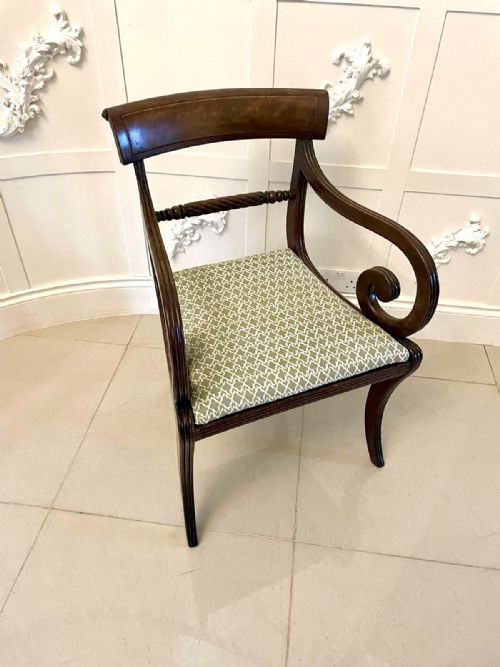
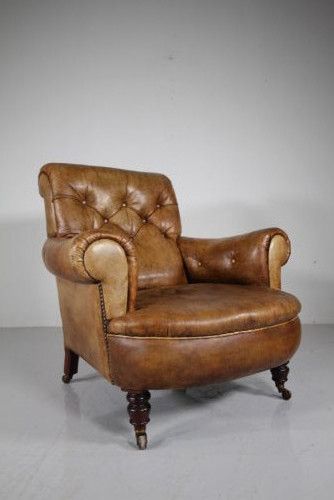
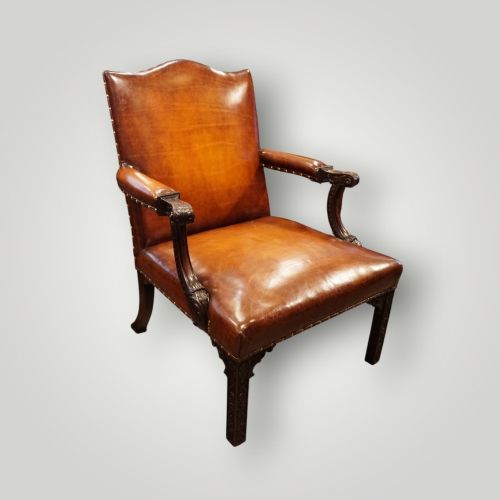
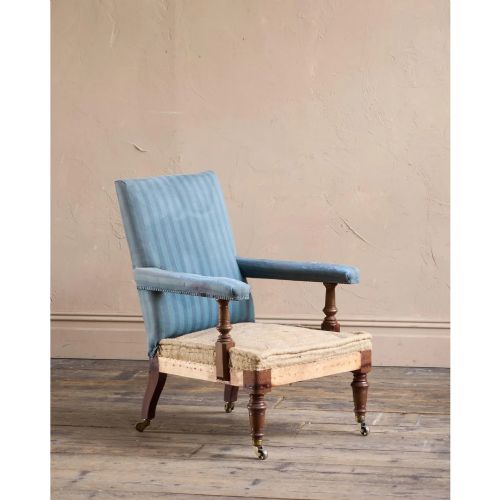


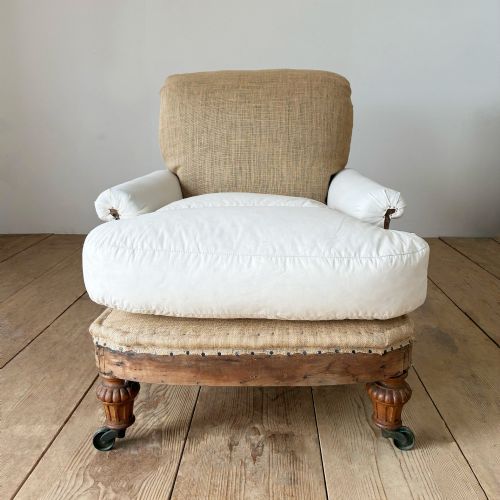
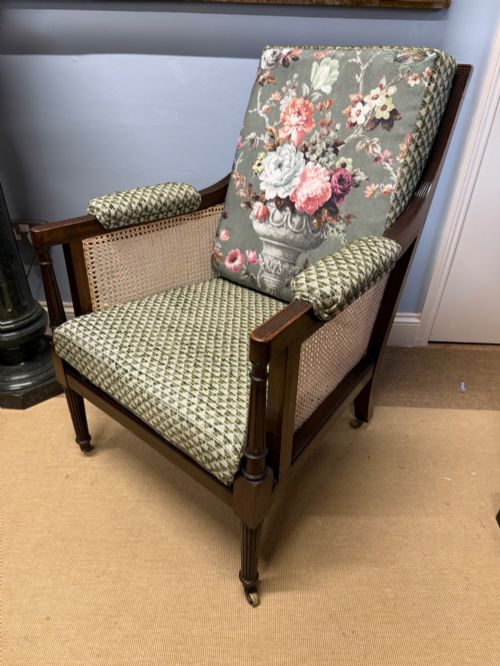
Edwardian Mahogany Library Chair
An edwardian mahogany library chair combines solid timber frames with leather or cane panels, offering sturdy yet comfortable seating for study spaces.
Edwardian Mahogany Library Chair
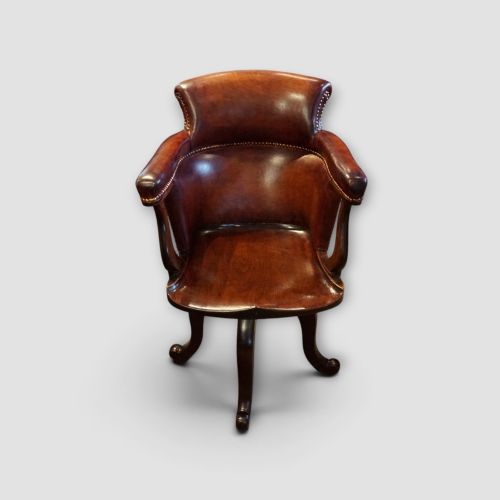
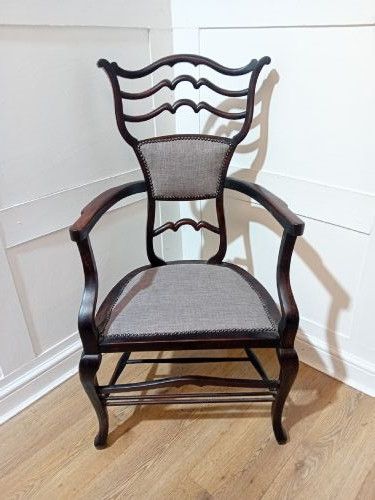
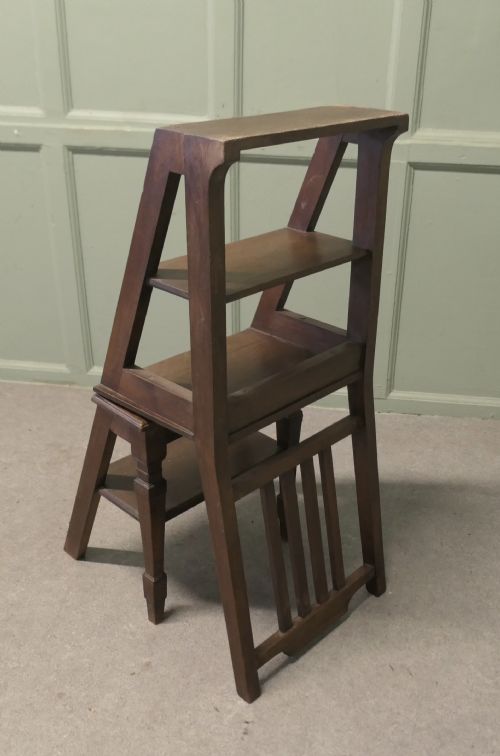
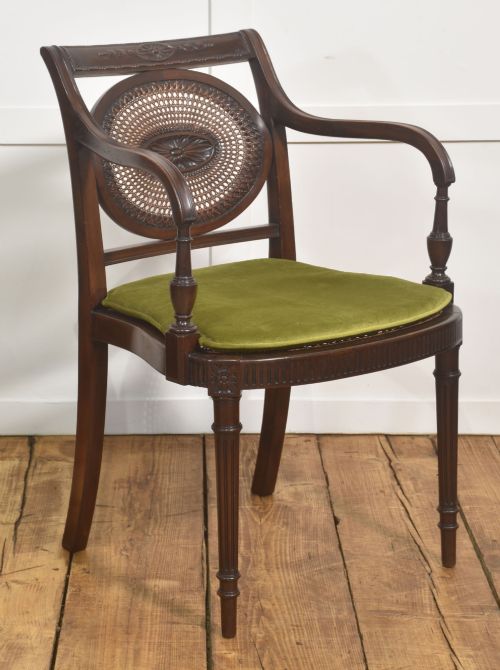
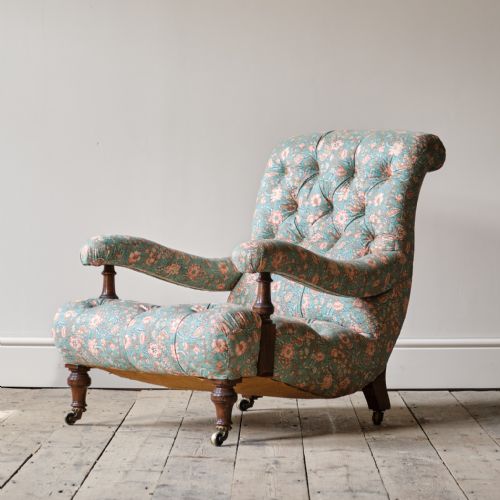
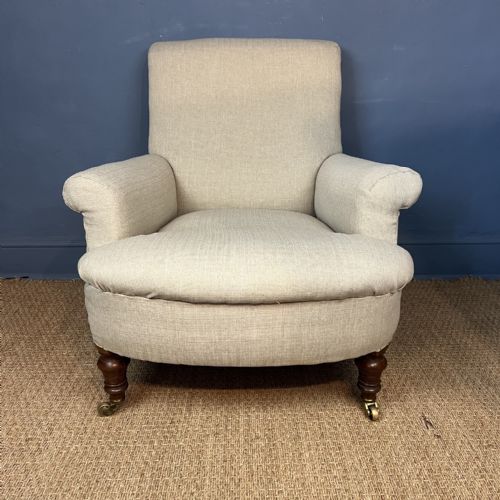
The search phrase edwardian mahogany library chair brings together seating designed for reading rooms, studies, and offices from the early twentieth century and surrounding periods. These chairs appear in forms ranging from tub shapes and desk chairs to open armchairs and metamorphic library steps.
Most examples found in these listings date from the Edwardian period, often displaying Sheraton Revival or Chippendale influences through inlaid woodwork and carved details. Pieces also emerge from the nineteenth century, including Victorian, Regency, and William IV iterations alongside later twentieth-century interpretations.
Makers and workshops constructed these seats to function practically while anchoring a room's interior design, utilising dense tropical timber combined with supple hides or woven panels. Buyers encounter variations including large scale club armchairs, compact desk chairs, and pairs intended for twin seating arrangements.
How They Were Made
Cabinetmakers built the structural frames using solid mahogany, frequently selecting Cuban varieties for their rich grain and heavy weight. Workshops integrated decorative techniques such as marquetry inlay, blind carving, and Sheraton Revival motifs directly into the timber framework.
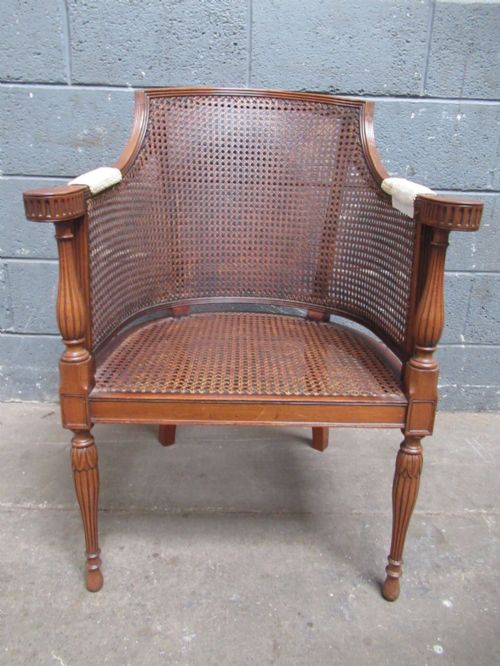
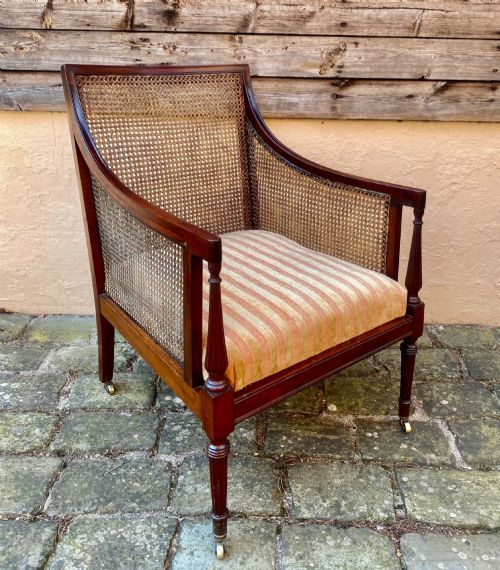
Seating surfaces relied on contrasting textures, combining hand-dyed English hide leather, velvet, and fabric upholstery with woven rattan cane and split cane panels. Brass hardware and castors occasionally completed the assembly on mobile desk and library models.
Listings feature mahogany, cane, leather, and brass across Edwardian, Victorian, and Regency periods.
What Varies in Quality
The integrity of the timber frame and the precision of the joinery distinguish standard utilitarian seating from finer salon and library chairs. Carved elements, such as blind fretwork or delicate inlay, display the hand of skilled artisans rather than mass production methods.
Upholstery materials and secondary woods also establish the grade of a piece, with high-end examples featuring hand-dyed full-grain hides, tightly woven split cane, and secondary framing in robust hardwoods.
Morison and Co·Holland and Sons·Gillows·Robert Strahan·Howard and Sons
The Edwardian Mahogany Library Chair Glossary
- Bergere
- An enclosed upholstered armchair with wooden framing and cane sides or back panels. This French-derived style became popular in British libraries during the eighteenth and nineteenth centuries.
- Library Steps
- A set of staircase steps designed to reach high bookshelves, occasionally manufactured to fold down into a chair. These metamorphic pieces served dual functions in grand domestic libraries.
- Marquetry
- Decorative veneer work arranged in intricate patterns on wooden surfaces. Craftsmen used contrasting timber veneers to create floral or geometric designs across chair rails and backsplashes.
- Sheraton Revival
- A late nineteenth and early twentieth century design movement inspired by the neoclassical furniture of Thomas Sheraton. Pieces feature slender proportions, satinwood inlay, and classical symmetry.
- Blind Carving
- Low-relief carving applied to a flat surface without piercing the wood through. This technique often adorned the legs and arm supports of Georgian and revival library chairs.
Edwardian Mahogany Library Chair: Frequently Asked Questions
How do I identify Edwardian furniture?
Edwardian furniture dates from the reign of King Edward VII between 1901 and 1910, though the style extends slightly either side of those dates. Pieces frequently borrow inspiration from earlier Georgian and Sheraton designs.
Makers working in this era utilised mahogany timbers, often enhanced with subtle marquetry inlay or satinwood banding. The overall aesthetic prioritises lighter proportions compared to heavy Victorian furnishings.
Were these chairs used at desks?
Library chairs frequently doubled as desk seating in studies, home offices, and libraries. Designs often incorporated swivel mechanisms, castors, or elbow rests tailored for writing.
Smaller desk chairs offered mobility and lower profiles to fit neatly beneath writing tables. Larger armchairs remained stationary by firesides or reading stands.
What makes a chair Sheraton Revival?
Sheraton Revival pieces replicate the neoclassical lines established by eighteenth-century designer Thomas Sheraton. Workshops produced these revival items during the late Victorian and Edwardian eras.
Characteristics include tapered legs, delicate inlaid stringing, and balanced geometric proportions. Mahogany frames served as the primary canvas for these refined decorative details.