
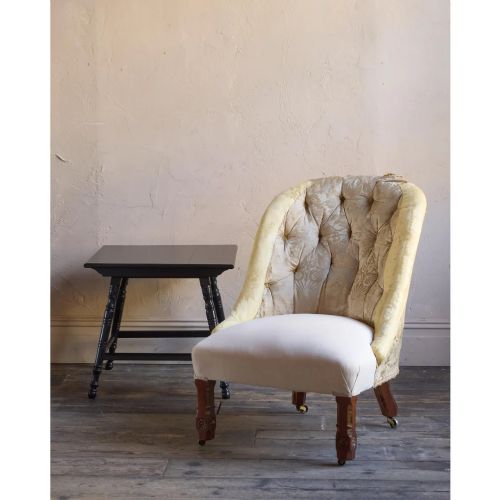


Carved Mahogany Nursing Chair
A carved mahogany nursing chair offers low-slung seating crafted during the Victorian and Edwardian eras, prized for comfortable fireside repose.
Carved Mahogany Nursing Chair
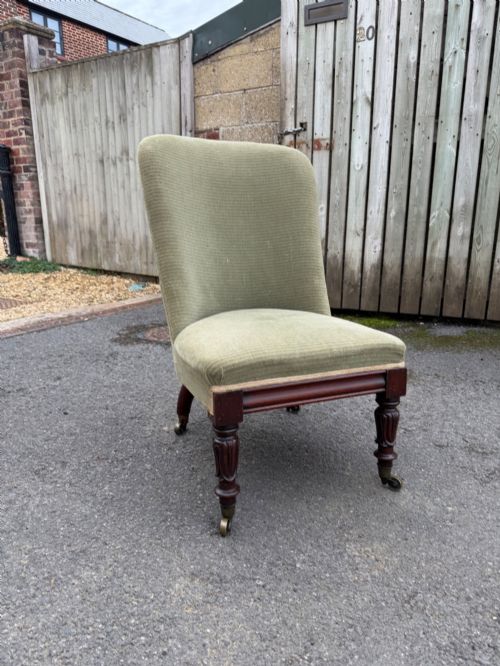
A carved mahogany nursing chair is primarily a low seat designed for the bedroom or parlour during the nineteenth and early twentieth centuries. These pieces appear frequently in Victorian and Edwardian iterations, encompassing styles from plain frames to elaborate Gothic Revival and Chippendale Revival forms.
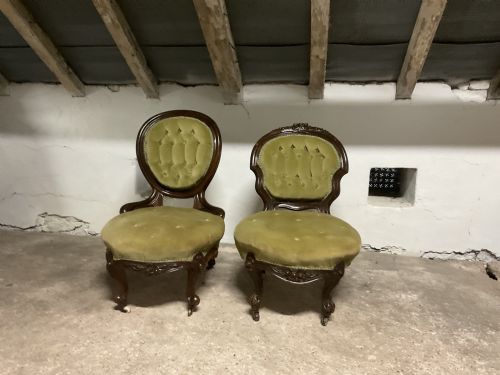
The category spans a variety of related bedroom and low-backed seating, including slipper chairs, gossip chairs, and prayer chairs. Buyers encounter show-wood frames carved from rich timber, often accompanied by original or renewed upholstery.
Origins stretch across British workshops of the Victorian and Edwardian periods, featuring robust mahogany frames supported on cabriole legs, castors, or simple turned supports. The low stature defines the group, distinguishing these seats from standard dining or parlour chairs.
How they were made
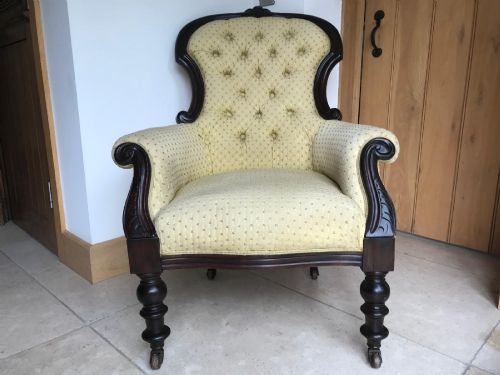
Makers utilised solid mahogany for the structural frames, carving scrolls, foliage, and gadrooning directly into the show-wood timber. Joinery relied on traditional mortise and tenon construction to ensure stability across low-slung seats.
Upholstery formed an essential part of the construction, layering fabric, tapestry, velvet, or silk over internal stuffing supported by webbing and springs. Brass castors frequently fitted the foot of the front legs to ease movement across carpets.
Listings feature mahogany frames paired with materials such as brass, velvet, tapestry, ceramic, and silk across the Victorian and Edwardian periods.
What varies in quality
The depth and crispness of the timber carving dictate the visual distinction of the frame, with hand-tooled execution separating standard production from finer work. Superior examples demonstrate harmonious proportions where the curved show-wood complements the textile covering.
The integrity of the original mahogany frame and the quality of the textile finish determine the enduring appeal of each seat. Pieces retaining subtle inlay, sophisticated scrollwork, or specialised upholstery styles stand apart in craftsmanship.
Wheeler Of Arncroach·Gillows
The Carved Mahogany Nursing Chair Glossary
- Mahogany
- A dense, reddish-brown tropical hardwood favoured by cabinet makers for its strength and fine carving properties. It forms the primary structural material for these Victorian and Edwardian frames.
- Show-wood
- Exposed wooden framing around an upholstered seat or back that displays the carved detail and grain of the timber. This polished woodwork defines the aesthetic of salon and nursing chairs.
- Castor
- A small wheel fitted to the base of furniture legs to facilitate movement across floor coverings. Brass versions frequently appear on the feet of nineteenth-century chairs.
- Prie Dieu
- A devotional prayer chair featuring a low seat and an upper rest designed for kneeling or leaning. These pieces share the compact proportions common to nursing seating.
- Bergere
- An enclosed armchair featuring woven cane panels on the back and sides within a wooden frame. This French-influenced style occasionally appears among bedroom seating.
Carved Mahogany Nursing Chair: Frequently Asked Questions
What is a nursing chair?
A nursing chair is a low-seated Victorian or Edwardian armchair designed originally for feeding infants or personal grooming in the bedroom. The reduced height allowed women to sit comfortably close to the floor or hearth.
These pieces transitioned easily into general parlour and fireside use over time, valued for their compact footprint and decorative show-wood carving.
How do I date a chair?
Dating relies on examining the prevailing style, timber treatment, and structural hardware visible on the frame. Victorian examples often display heavy scrolling and button-backed upholstery, while Edwardian pieces introduce inlaid details and lighter proportions.
Secondary indicators include the presence of brass castors, hand-carved motifs, and specific regional construction methods recorded across the nineteenth and early twentieth centuries.
Were these chairs used only in bedrooms?
While initially designed for private chambers and nurseries, these low seats frequently served in parlours, salons, and drawing rooms. Their modest scale made them versatile additions to various domestic spaces.
Victorian interior arrangements often placed such seating near fireplaces or dressing tables where relaxed postures were preferred.
What upholstery fabrics were used?
Original seating utilised textiles such as silk, velvet, tapestry, damask, and woven fabrics suited to domestic parlours. Many pieces also feature button-backed detailing that secures the internal stuffing.
Contemporary examples often retain these traditional materials or present modern reupholstery that respects the historic character of the mahogany frame.