
Edwardian Mahogany Folding Table
An edwardian mahogany folding table brings practical versatility and warm timber tones to a room, offering clever mechanisms for modern living.
Edwardian Mahogany Folding Table
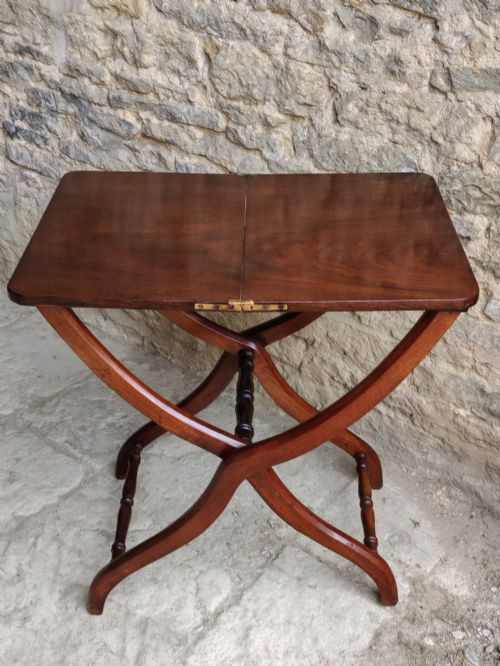
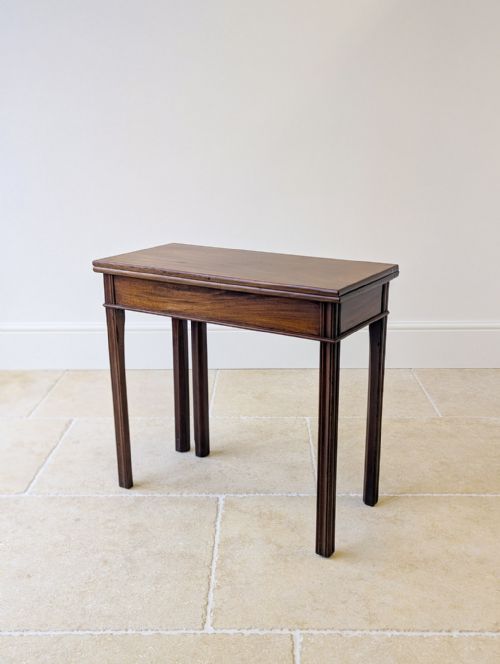
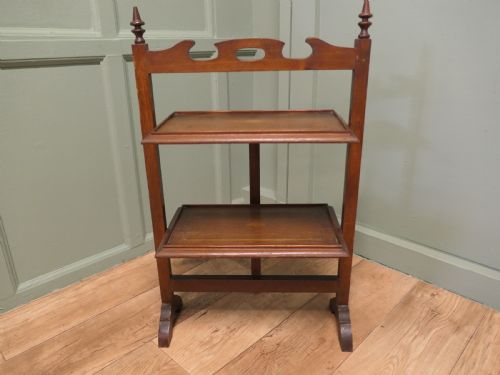
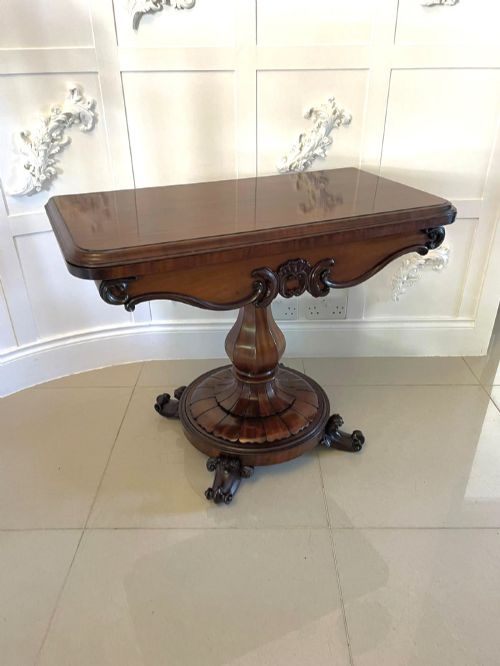
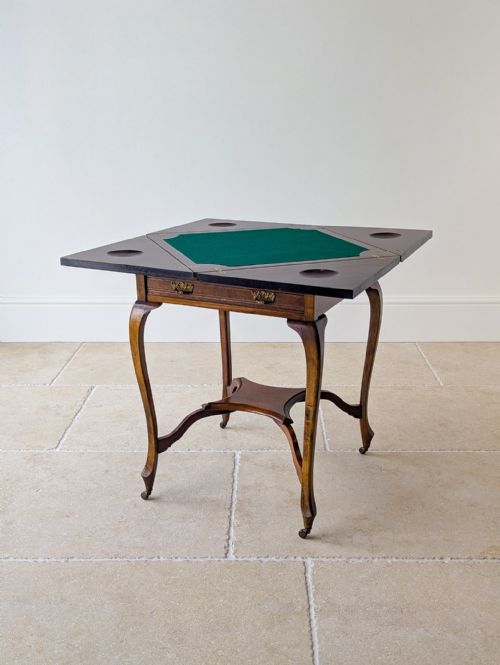
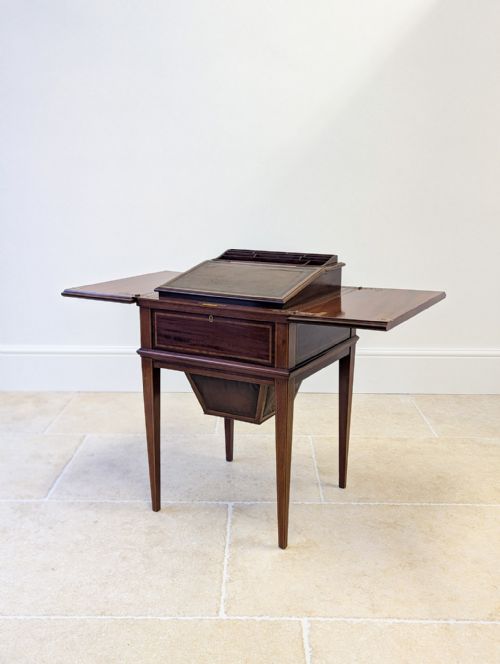
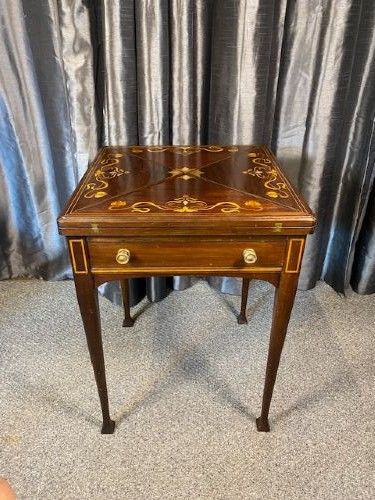
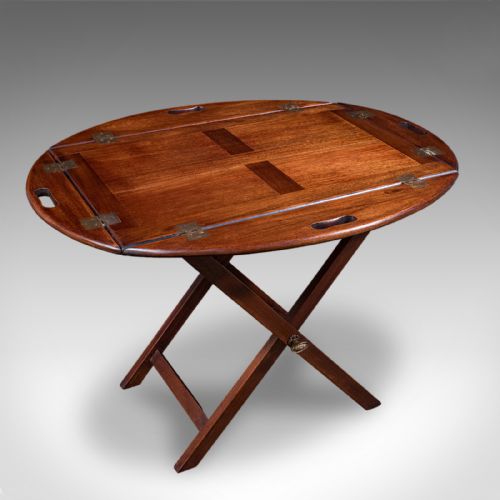
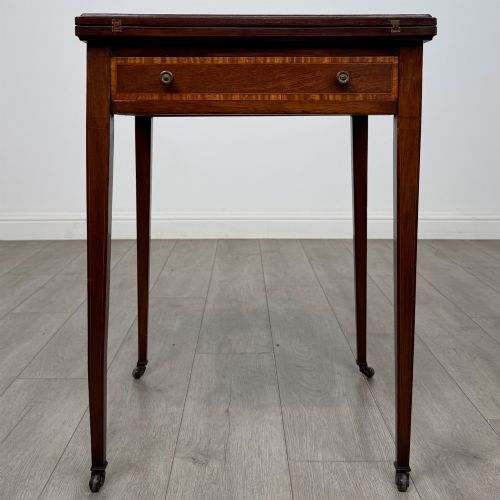
An edwardian mahogany folding table encompasses forms designed to save space, including envelope card tables, games tables, tea tables, and occasional butler trays. These pieces reflect the refined tastes of the early twentieth century, combining utility with compact engineering.
The Edwardian examples dominate the selection, often accompanied by pieces referencing Georgian, Victorian, and Regency styles through revival designs. Makers of the period utilised rich timber grains to create items suited for both formal drawing rooms and informal sitting spaces.
How They Were Made
Makers constructed these tables primarily using solid mahogany and mahogany veneers, frequently enhanced with contrasting boxwood and satinwood inlay. The woodwork relies on traditional joinery to ensure stability when the leaves, flaps, or folding mechanisms are engaged.
Functional elements incorporate brass hinges, leather or baize playing surfaces, and glass inserts, depending on the specific table type. Metamorphic and envelope actions depend on precise internal pivot systems that allow the top to rotate and unfold smoothly.
Listings feature mahogany, satinwood, and boxwood combined with baize and leather inserts across Edwardian, Victorian, and Georgian periods.
What Varies in Quality
The standard of timber selection and inlay precision marks the division between everyday utility items and superior pieces. Finer examples display carefully matched flame mahogany veneers and crisp stringing without disruption.
The smoothness of the folding or rotating mechanism indicates the original workshop skill. Tables with rigid hinges or loose pivoting joints lack the refined calibration found in better-executed furniture.
The Edwardian Mahogany Folding Table Glossary
- Envelope card table
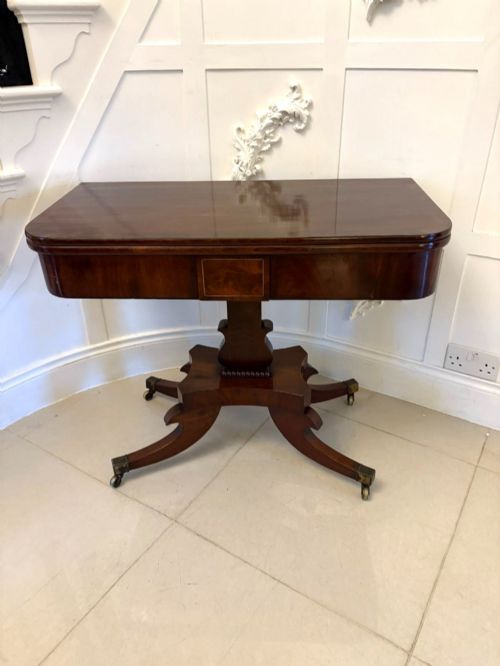
- A folding table with four triangular flaps that rotate and fold open to reveal a baize-lined playing surface. This clever mechanism opens in a single fluid motion.
- Sutherland table
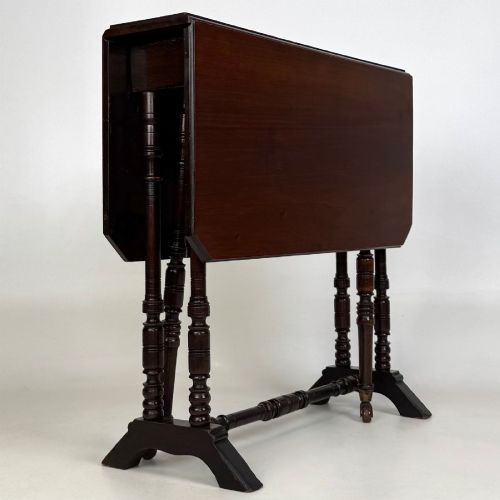
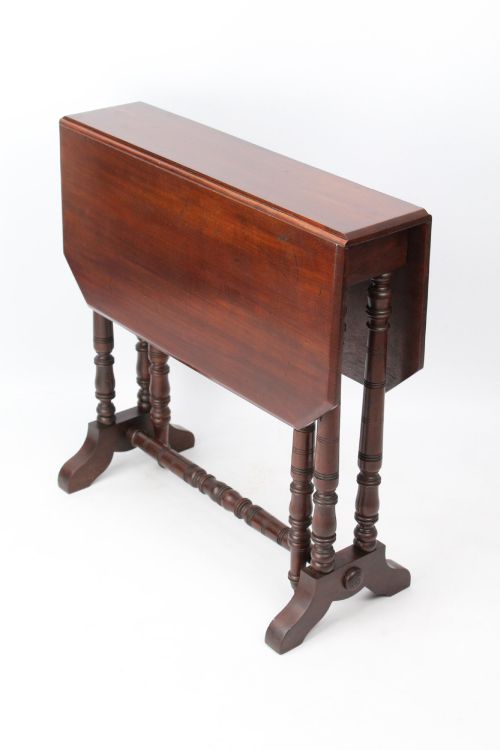
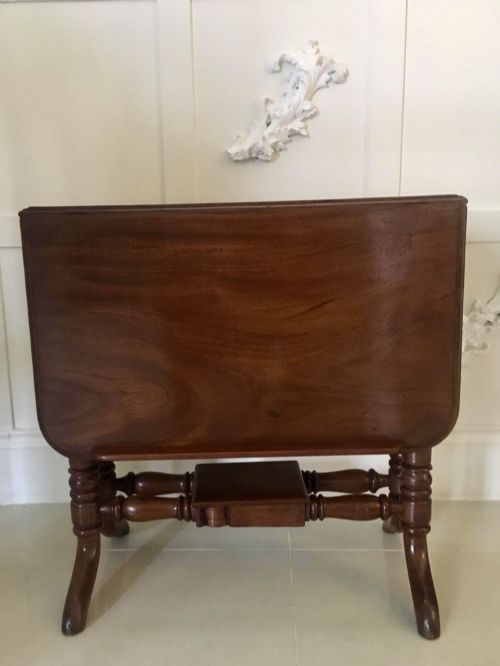
- A narrow drop-leaf table with exceptionally small flaps supported by swinging gate legs. It folds down to a minimal footprint for easy storage against a wall.
- Butlers tray
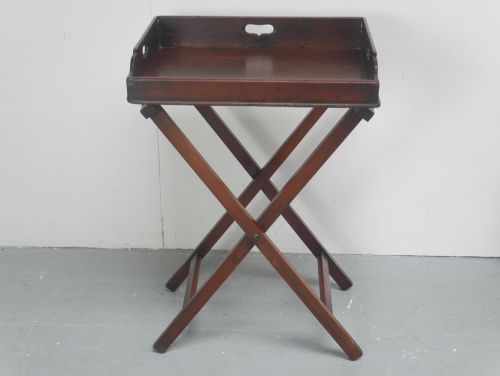
- A rectangular wooden tray with hinged or shaped sides, usually set upon a separate folding X-frame stand. It was originally designed for portable serving.
- Inlay
- A decorative technique where contrasting woods such as satinwood or boxwood are fitted into recesses flush with the mahogany surface. This adds geometric or floral borders to the timber.
- Metamorphic furniture
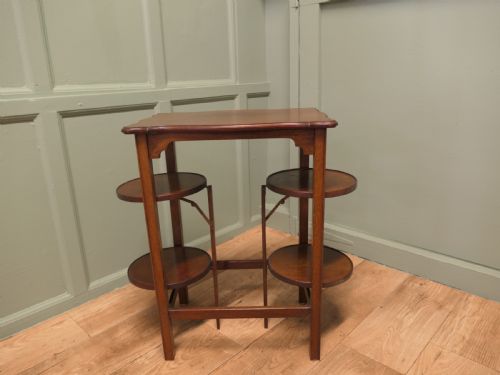
- Pieces designed to transform into alternative forms, such as combining a fire screen with a table. These inventive designs served multiple domestic purposes in compact spaces.
Edwardian Mahogany Folding Table: Frequently Asked Questions
How do envelope tables work?
An envelope table operates through a pivoting top where four triangular leaves fold inward over one another. Rotating the top by forty-five degrees allows each flap to unfold sequentially into a square playing surface.
Underneath, internal wooden arms support the opened leaves automatically. This mechanism provides a stable surface for cards or writing without requiring manual leaf supports.
Were these tables used for dining?
Most folding tables from this era served auxiliary functions such as tea service, games, or occasional writing rather than heavy family dining. Tea tables and butler trays catered to light refreshments and social entertaining.
Smaller drop-leaf and Sutherland variants suited compact sitting rooms where permanent large furniture restricted movement. They provided temporary surface space that vanished when folded down.
How do I care for the timber?
Mahogany requires minimal maintenance, benefiting from occasional dusting with a dry, soft cloth to protect the polished finish. Avoid placing timber surfaces near direct heat sources or strong sunlight to prevent warping and fading.
Applying a traditional beeswax polish helps preserve the moisture and grain depth of the wood. Leather or baize inserts on card tables need careful protection from moisture and sharp objects.
How do I distinguish Edwardian from Georgian styles?
Edwardian pieces often revive Georgian and Sheraton forms through lighter construction, simpler satinwood inlay, and machine-assisted production techniques. Genuine eighteenth-century pieces display hand-cut joinery, deeper patina, and solid timber framing without modern veneers.
Revival furniture from the early 1900s mimics earlier proportions but frequently incorporates modern hardware and internal metal pivots. Examining the construction underneath usually reveals the true period of manufacture.