



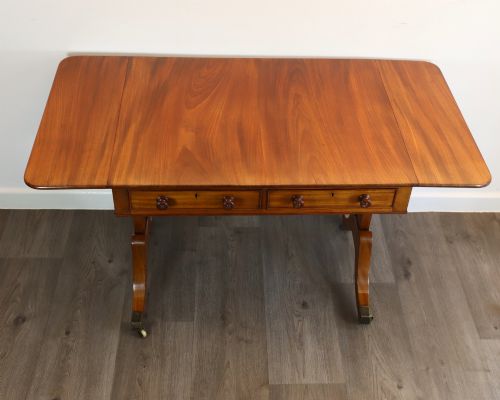
Edwardian Mahogany Drop Leaf Table
An edwardian mahogany drop leaf table brings compact versatility and rich timber grain to a room.
Edwardian Mahogany Drop Leaf Table
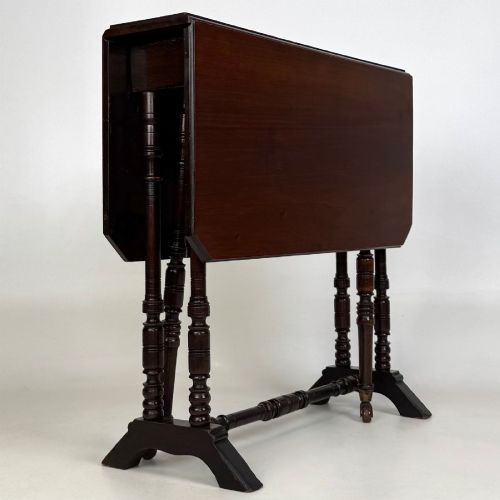
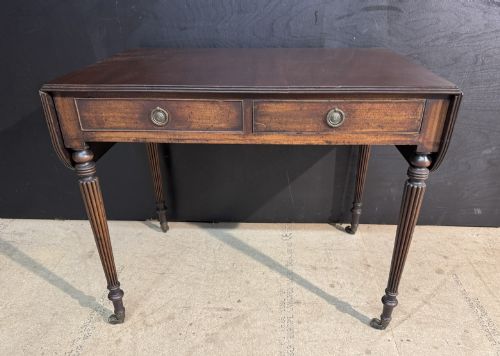
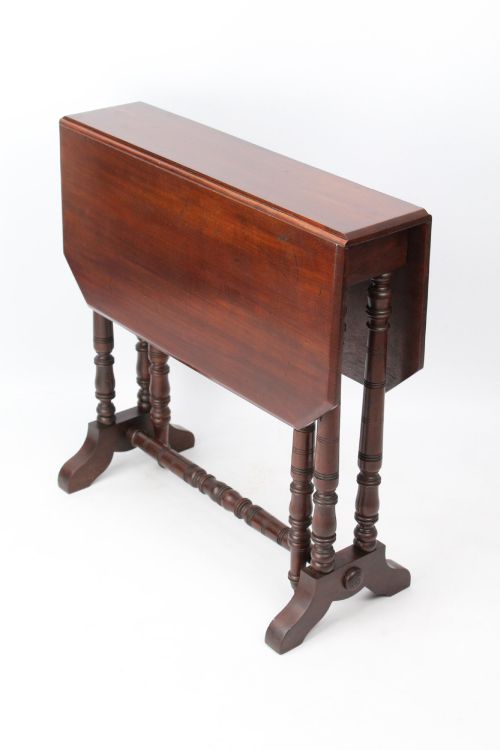
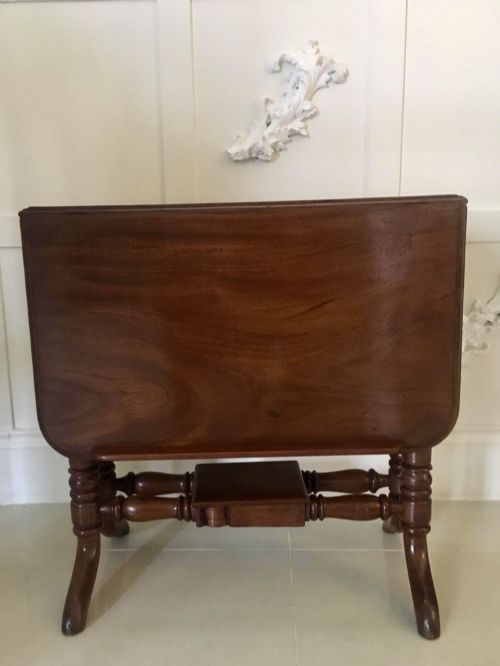
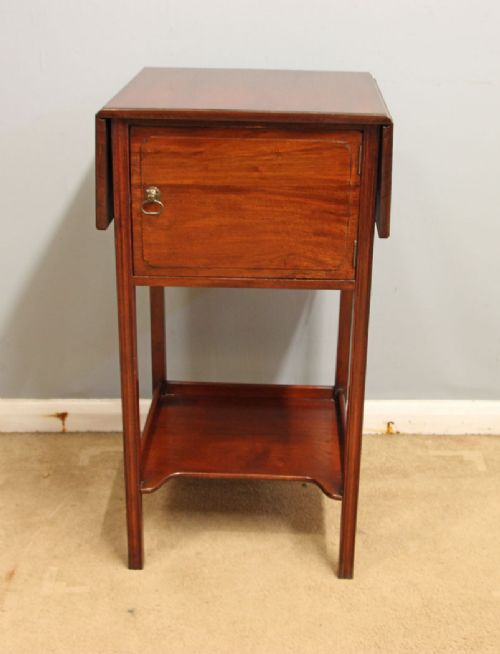
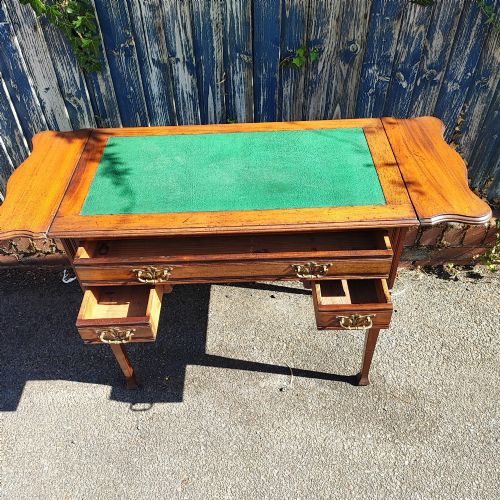
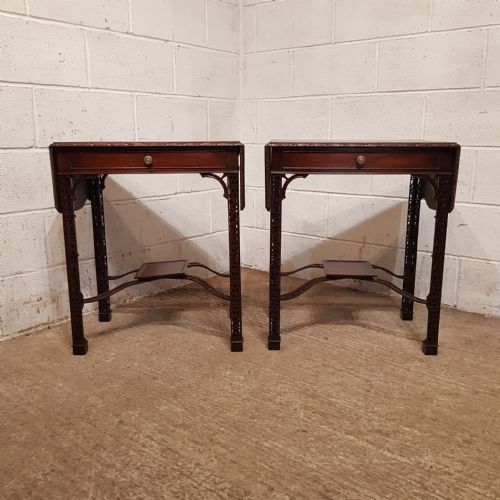
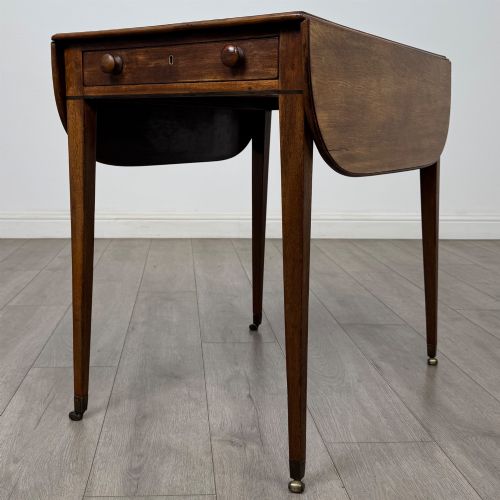
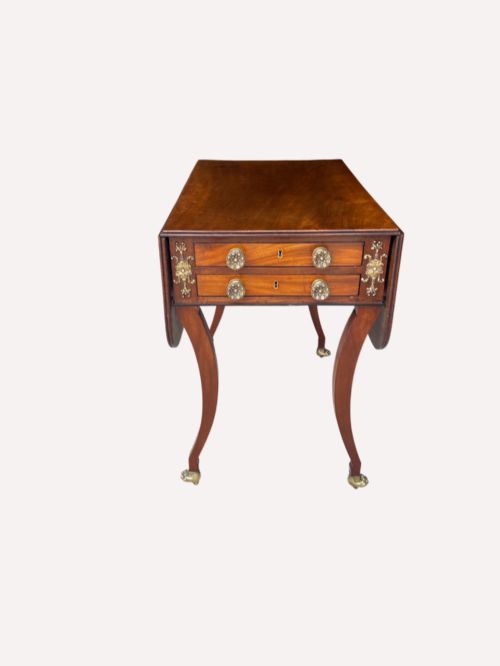
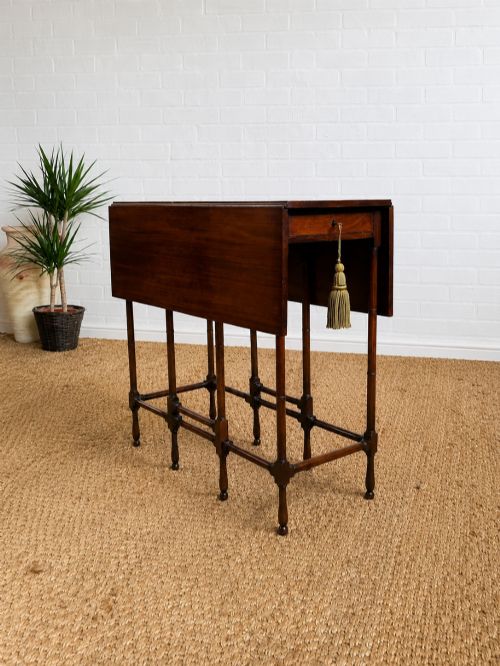
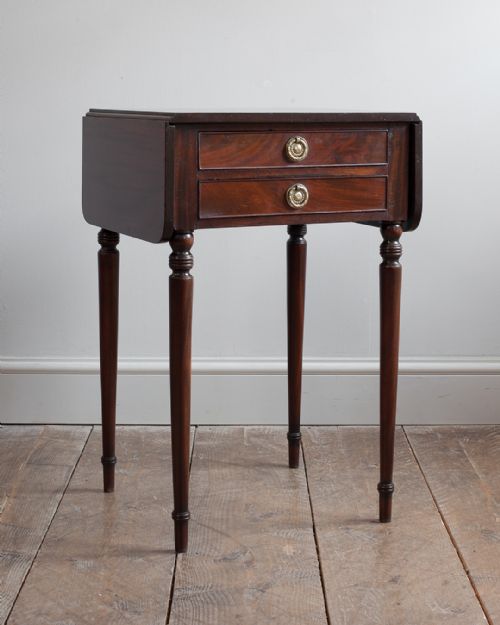
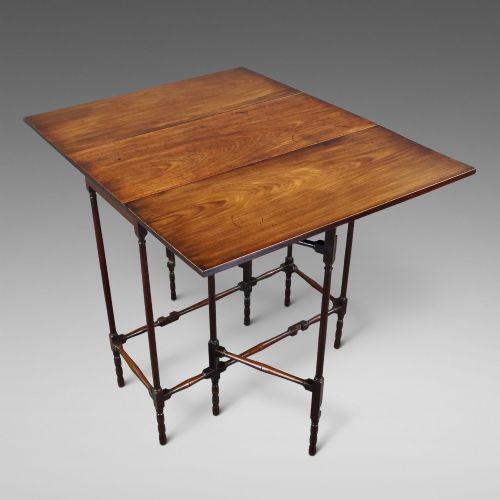
An edwardian mahogany drop leaf table is a functional domestic surface designed to save space when its hinged flaps are lowered. You encounter various forms here, from slender Sutherland tables and Pembroke tables to gateleg and occasional tables produced around the turn of the twentieth century.
Makers of the Edwardian period frequently drew inspiration from earlier Georgian and Regency designs while adapting proportions for smaller domestic spaces. These tables served multiple purposes in period homes, functioning as tea tables, work tables, and occasional surfaces.
What varies in quality
The refinement of the timber selection dictates the visual appeal, moving from standard mahogany boards to highly figured grains and precise satinwood stringing. Superior examples display crisp inlay work and carefully fitted joints that keep the drop leaves level when extended.
The complexity of the base construction also separates standard utility tables from finer parlor pieces. Smooth articulation in the folding mechanisms and well-turned legs indicate greater care by the cabinet-maker.
Several tables include bamboo-turned legs, proving that even formal Edwardian tea time occasionally welcomed a touch of botanical whimsy.
Andrew Thomson And Sons
The Edwardian Mahogany Drop Leaf Table Glossary
- Sutherland table
- A narrow table featuring exceptionally wide drop leaves that fold almost vertically down to the floor. These slender pieces were designed to occupy minimal floor space when closed.
- Pembroke table
- A small occasional table equipped with two hinged flaps on opposite sides and usually featuring a single drawer. They originated in the eighteenth century and remained popular through the Edwardian era.
- Gateleg table
- A table with hinged legs that swing outward from the centre frame to support the drop leaves. This construction provides robust support for larger folding surfaces.
- Satinwood inlay
- A decorative technique where lighter contrasting wood is inserted into recesses within the darker mahogany surface. It creates geometric or floral borders characteristic of Edwardian revival styles.
Edwardian Mahogany Drop Leaf Table: Frequently Asked Questions
Where should I place an edwardian mahogany drop leaf table?
These tables fit well behind sofas, in entryways, or against walls where floor space is limited. Raising the leaves transforms the surface for serving tea or accommodating guests.
Their compact footprint makes them practical for smaller rooms while retaining traditional period character.
How do I identify an edwardian piece from a georgian original?
Edwardian tables often feature machine-sawn timber uniformity, lighter satinwood inlay patterns, and specific turnery styles typical of the early twentieth century. Georgian precursors tend to display heavier proportions and hand-cut joinery marks.
Examining the underside and drawer construction helps reveal the manufacturing period.
Can these tables be used for everyday dining?
Larger gateleg and Sutherland variants provide sufficient surface area and leg clearance for seating multiple people. They function effectively as occasional dining or tea tables.
Care should be taken to protect the polished mahogany surface from moisture and heat during daily use.
What maintenance does polished mahogany require?
Regular dusting with a soft, dry cloth preserves the finish without building up excess residue. Natural wax can be applied occasionally to nourish the timber grain.
Keeping the table away from direct sunlight and heat sources prevents the wood from drying out or warping.