


Mahogany Square Top Side Table
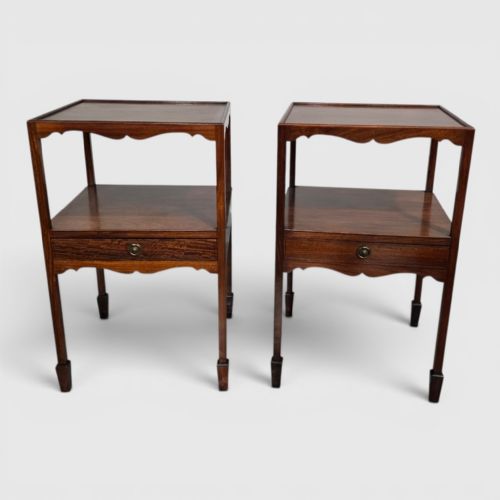
These mahogany square top side table pieces bring honest utility and rich timber warmth to any room.
Mahogany Square Top Side Table
A mahogany square top side table serves as a versatile piece of furniture found across Georgian, Victorian, and Edwardian periods. Buyers search for these items to add surface space and period character to sitting rooms and bedrooms alike.
The selection here encompasses various forms including simple lamp tables, kettle stands, bedside tables, and occasional tables with square tops. Examples range from fixed top drawer tables to tilt-top and snap-top designs originating in the eighteenth and nineteenth centuries.
How they were made
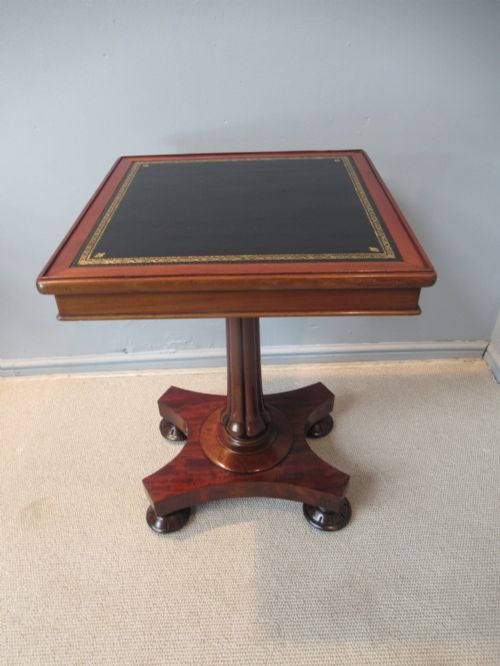
Cabinet makers utilised solid mahogany and timber veneers, often incorporating secondary woods for internal drawer construction. Finer pieces display delicate inlay work using boxwood, satinwood, and gold leaf detailing along borders and edges.
Structural joints typically rely on traditional techniques such as mortise and tenon, while movable surfaces utilise tilt mechanisms, concertina actions, or brass hardware. Tripod bases feature carved pillar supports radiating into three distinct legs.
Table forms span functional bedside lamp stands, kettle supports, tea tables, and clever envelope card tables.
What varies in quality
The distinction between ordinary and superior examples lies in the selection of the mahogany timber and the crispness of any carved or inlaid decoration. Rich grain figures and thoughtful proportions elevate a simple utility table into a notable decorative object.
Engineering integrity within moving parts, such as tilt mechanisms, drawer runs, and folding table tops, dictates longevity and daily usability. Original brass fixtures and intact secondary timbers further distinguish the better workshops.
The Mahogany Square Top Side Table Glossary
- Tilt-top
- A tabletop mounted on a catch and pivot mechanism allowing the surface to fold vertical when not in use. This clever space-saving design is frequently seen on tripod occasional tables.
- Tripod table
- A small freestanding table supported by a central pillar above three spreading feet. These nimble forms became popular during the eighteenth century for tea and lamp placement.
- Kettle stand
- A miniature table designed specifically to hold a heavy water vessel near the hearth. Their compact square tops often feature raised mouldings or galleried edges.
- Concertina action
- An expanding frame mechanism that supports a fold-over tabletop when opened out. It creates a stable dining or gaming surface without requiring a central swing leg.
- Padouk
- An exotic hardwood related to mahogany, prized for its dense grain and deep reddish-brown tone. It appears in select nineteenth-century pieces.
Mahogany Square Top Side Table: Frequently Asked Questions
How do I date a mahogany side table?
Dating relies on examining the construction methods, timber choice, and stylistic details present in the piece. Eighteenth-century examples often feature hand-cut dovetails and subtle patination, whereas later Victorian and Edwardian items incorporate machine-sawn elements and distinct revival ornamentation.
Hardware and secondary woods also offer vital clues. Oak or pine linings usually point to earlier eras, while brass mechanisms evolve noticeably from Georgian hand-cast components to nineteenth-century industrial production.
What were tilt-top tables used for?
Tilt-top tables served as flexible furnishings that could be tucked away against a wall when not in service. In smaller rooms, owners flipped the surface vertical to clear floor space during daytime hours.
When lowered, the square top accommodated tea services, books, or lamps. This dual function made them essential items in Georgian and Regency interiors.
Can I use an antique table daily?
Most antique side tables function very well for everyday domestic use, provided they receive sensible care. Solid mahogany is a robust hardwood that withstands regular placement of lamps, books, and cups.
Care should be taken to protect polished surfaces from moisture and direct heat. Maintaining stable room humidity prevents timber shrinkage and keeps joints secure over years of service.