
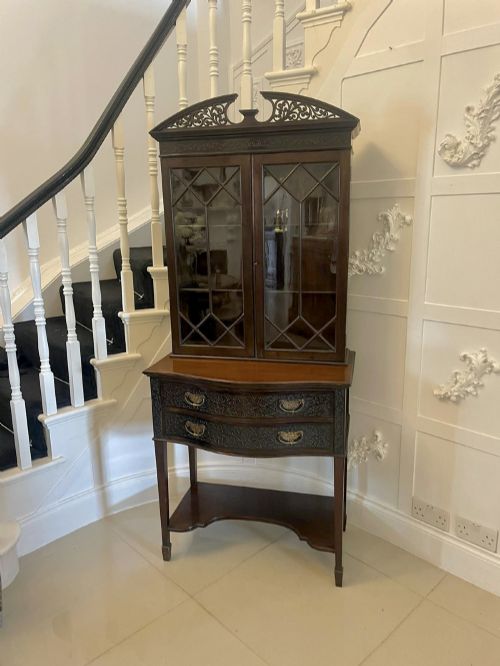
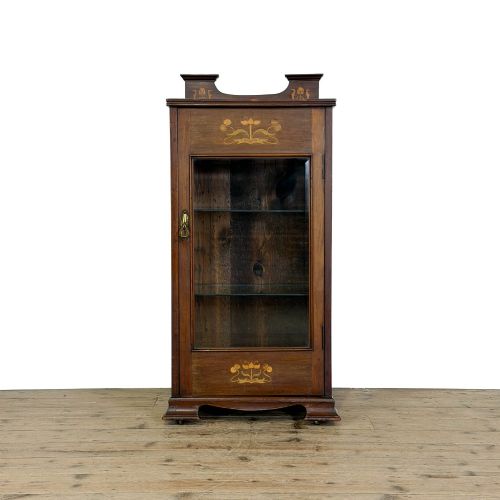
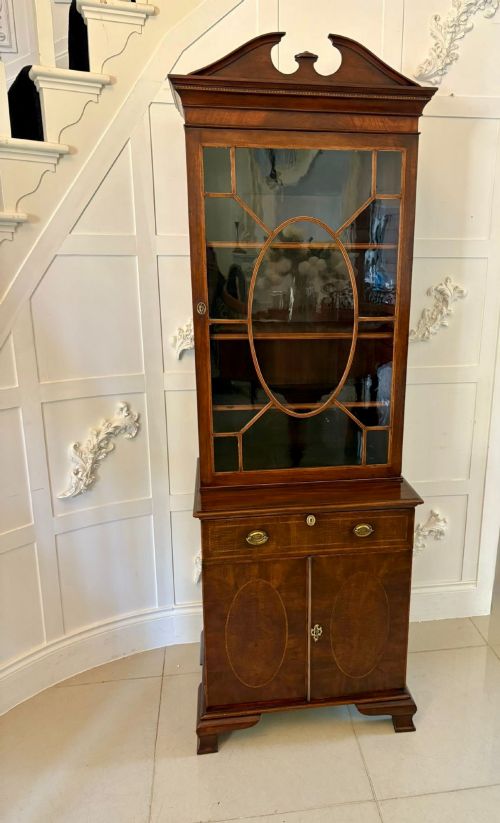
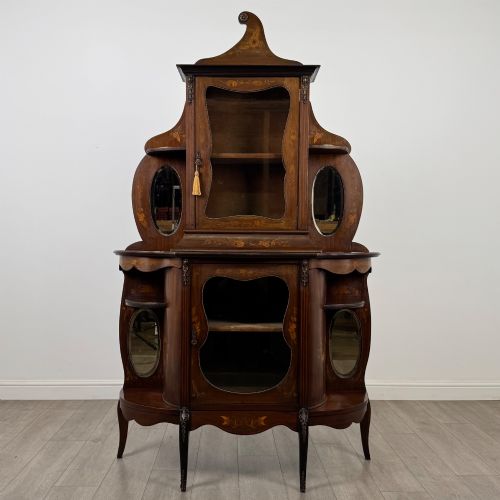
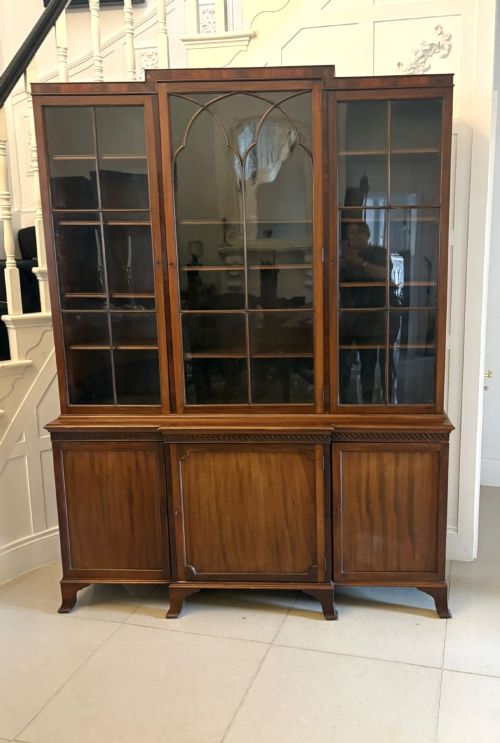
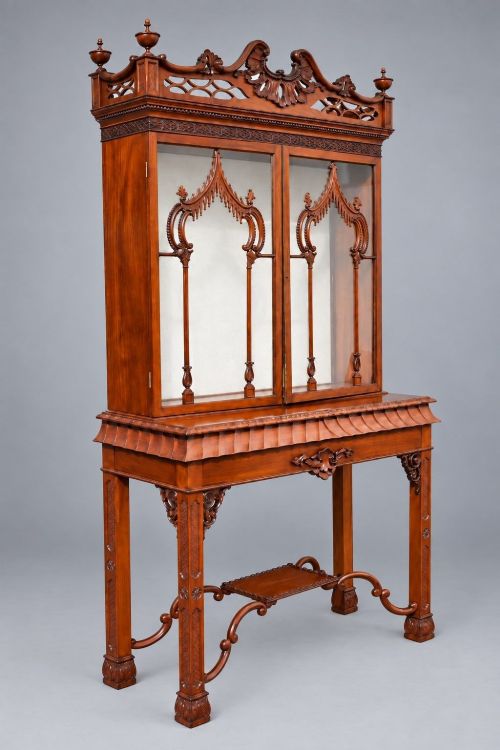

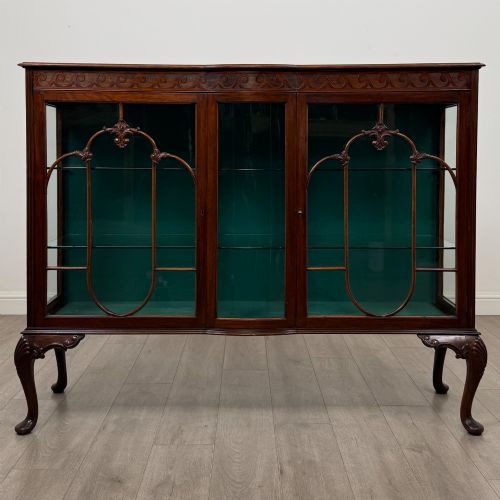
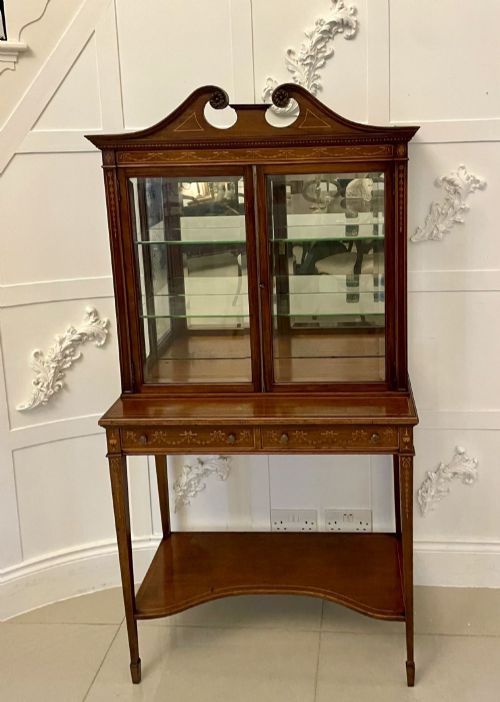
Edwardian Mahogany China Cabinet
An Edwardian mahogany china cabinet brings refined display space to a room, combining rich timber with delicate glazed framing designed to showcase treasured porcelain.
Edwardian Mahogany China Cabinet
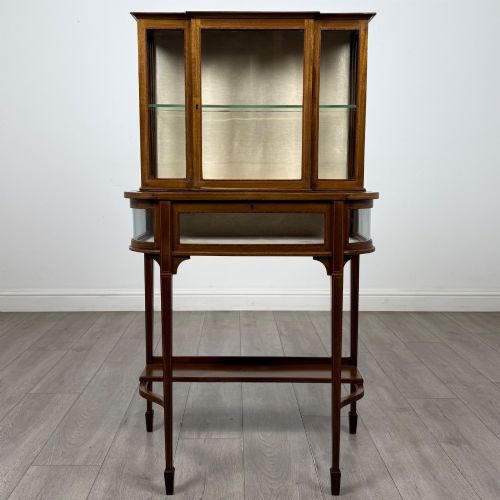
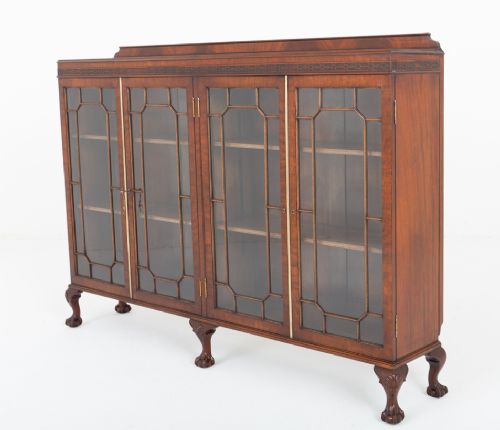
An Edwardian mahogany china cabinet is a purposeful glazed display piece intended to protect and exhibit ceramic collections within the home. These items typically emerge from the Edwardian period or the late nineteenth century, reflecting the tastes of households wanting structured visibility for fine china.
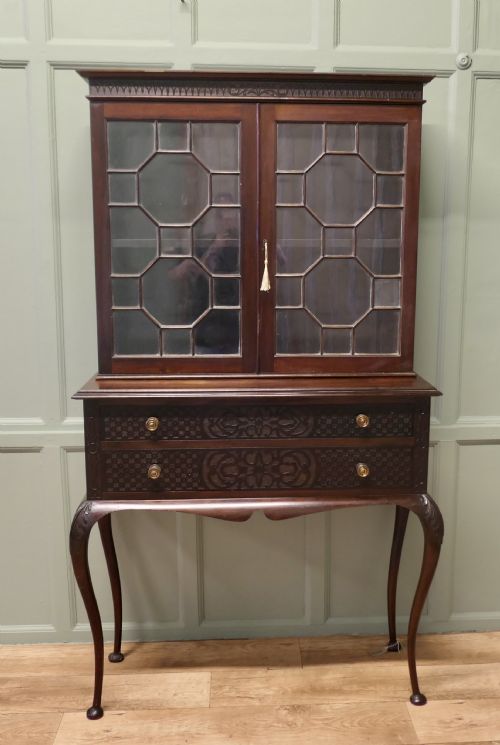
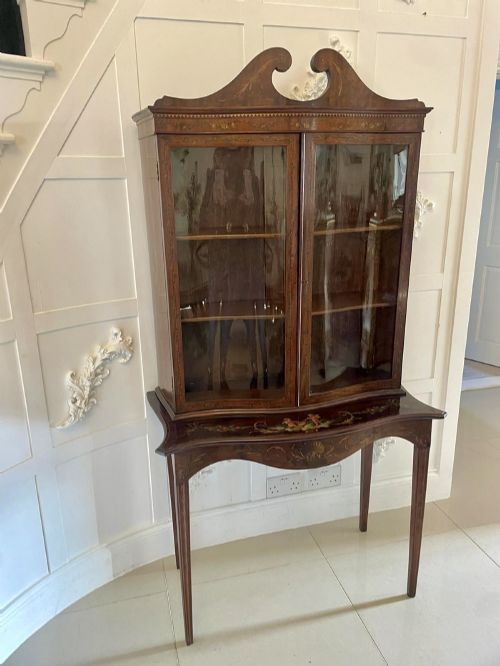
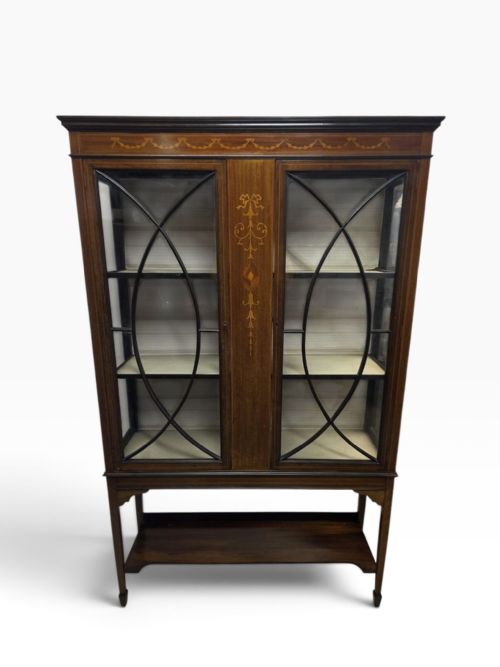
Most examples found here take the form of freestanding glazed cabinets, two-part combinations, or bow-ended variants that soften the corners of a room. Makers often drew upon Sheraton Revival or Chippendale Revival vocabulary, integrating glass panels with wooden astragals to frame the contents clearly.
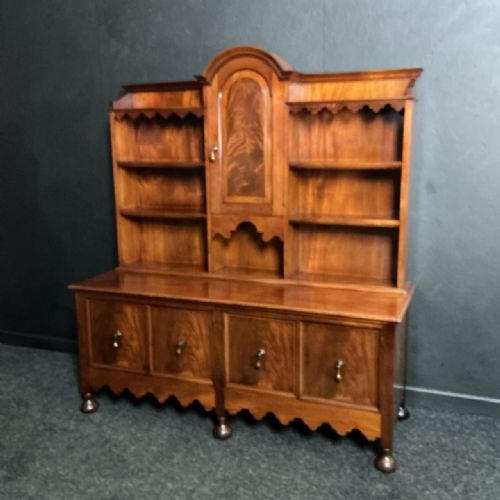
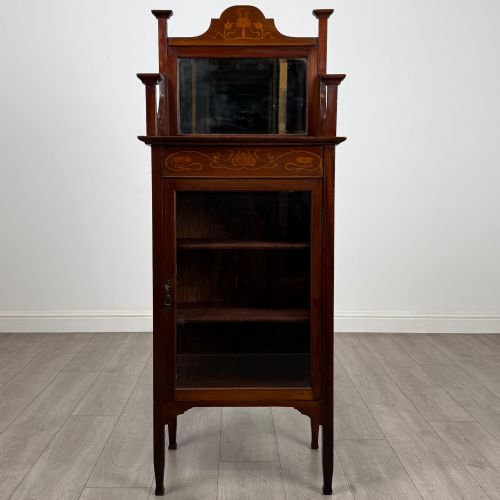
Beyond standard upright display cases, buyers frequently encounter pieces featuring mirrored backs, painted decorations, or lower cupboards that add enclosed storage beneath the main display tier. These variations accommodate diverse interior requirements while maintaining the core mahogany framework.
How they were made
Cabinet makers constructed these pieces using solid mahogany and supportive secondary timbers, frequently applying fine satinwood inlay, marquetry, and wood banding to enrich the flat surfaces. Glass panes were secured within timber doors using wooden glazing bars, whilst internal shelves rested on adjustable supports.
Surface ornamentation often included delicate hand-painted floral motifs, brass hardware, and occasional mirror plates fitted to the interior back panels to amplify light through the displayed porcelain.
Many Edwardian display cabinets secretly preserve the faint scent of polished beeswax from homes where tea sets were proudly curated a century ago.
What varies in quality
Quality in an Edwardian mahogany china cabinet rests upon the crispness of the inlay work, the thickness and selection of the mahogany veneer, and the structural integrity of the glazed doors. Superior pieces display precise botanical marquetry, balanced proportions, and robust joinery that keeps heavy glass doors aligned over decades of use.
Finer workshops invested greater attention into secondary details such as original painted decoration, high-grade brass fittings, and mirror backs that remain free from heavy foxing. Lesser examples rely on simpler stamped mouldings and minimal banding, showing a purely functional approach rather than decorative ambition.
Edwards and Roberts·Maple and Co·Shapland and Petter
The Edwardian Mahogany China Cabinet Glossary
- Astragal
- A small moulding used to divide panes of glass within a cabinet door. These narrow strips form geometric patterns across the glazed front.
- Marquetry
- Decorative veneer work formed by fitting together pieces of different coloured wood to create pictorial or floral designs. This technique ornaments the exterior doors and friezes.
- Bow front
- A convex, curved cabinet front that projects outward from the main body. This shape softens the room's angles and expands the internal display depth.
- Sheraton Revival
- A late nineteenth and early twentieth century design style that reinterprets the lighter neoclassical furniture of Thomas Sheraton. It relies on satinwood inlay, tapered legs, and refined proportions.
- Serpentine front
- A furniture front characterised by a wavy contour, curving outward in the centre and inward at the sides. This fluid shape demands advanced cabinet-making skill.
- Satinwood inlay
- Contrasting yellowish timber set flush into mahogany surfaces to create linear borders or decorative motifs. It provides a bright visual accent against dark wood.
Edwardian Mahogany China Cabinet: Frequently Asked Questions
Where should I place a china cabinet?
These cabinets suit dining rooms, drawing rooms, or hallways where natural light can strike the glass and illuminate the interior shelves. Positioning them away from direct sunlight protects the timber and any painted decoration from fading.
Ensure the floor is level so the glazed doors hang true and open without binding against the mahogany frame.
How do I clean the glass safely?
Use a soft cloth and a mild glass cleaner applied to the cloth rather than sprayed directly onto the glass. This prevents excess liquid from seeping into the wooden astragals or damaging the surrounding mahogany.
Take care around hand-painted surfaces and delicate inlay work near the edges of the door frames.
Can these cabinets hold heavy items?
While built to support collections of ceramic plates, cups, and porcelain figures, internal wooden shelves have load limits determined by their thickness and span. Lighter decorative objects display best and prevent long-term sagging of the shelving.
Distribute weight evenly across the shelves to maintain structural balance within the display area.
How do I distinguish Edwardian from Victorian cabinets?
Edwardian cabinets generally exhibit lighter proportions, brighter satinwood inlay, and influences from the Sheraton Revival style. Victorian predecessors tend to be heavier in build, utilising darker mahogany and more robust carved detailing.
Reviewing the construction methods and secondary woods often clarifies the transition between late nineteenth-century Victorian work and early twentieth-century Edwardian production.