


Edwardian Magazine Rack
When you handle an edwardian magazine rack, you hold the domestic sorting of a quieter century.
Edwardian Magazine Rack
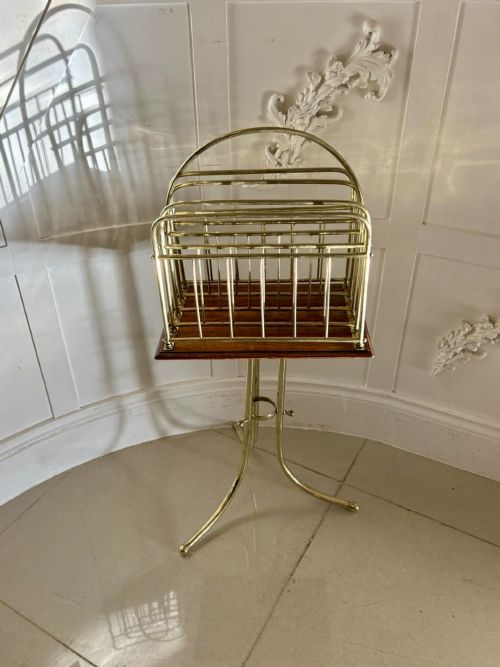
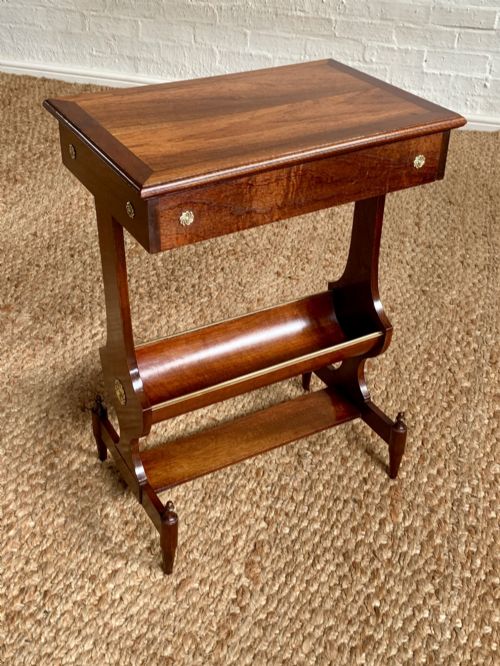
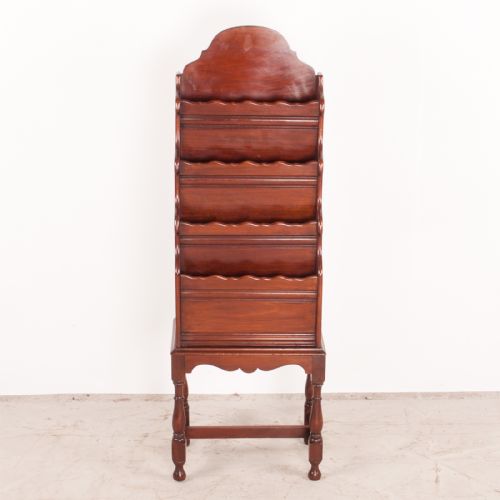
An edwardian magazine rack serves to tidy periodicals, newspapers, and sheet music in a domestic interior. You will find these items taking the form of upright stands, book troughs, and revolving holders.
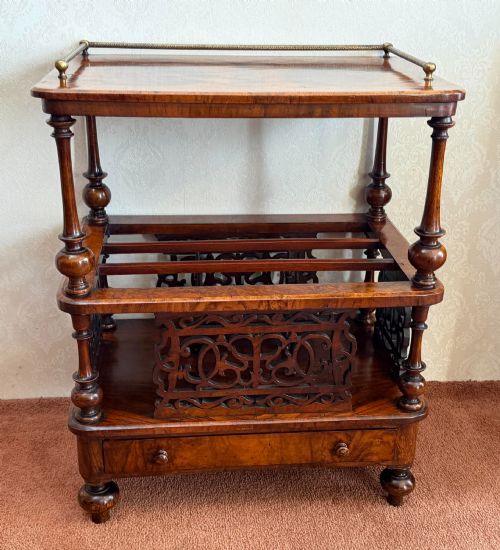
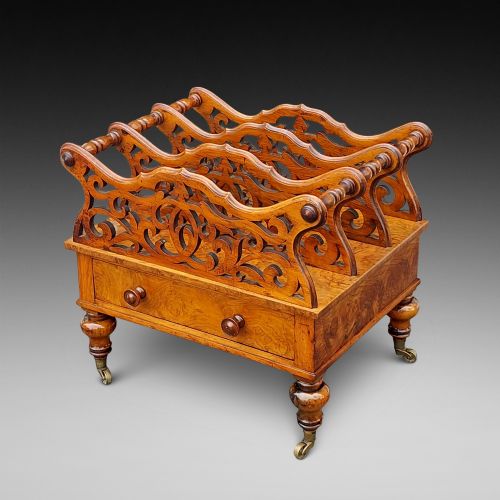
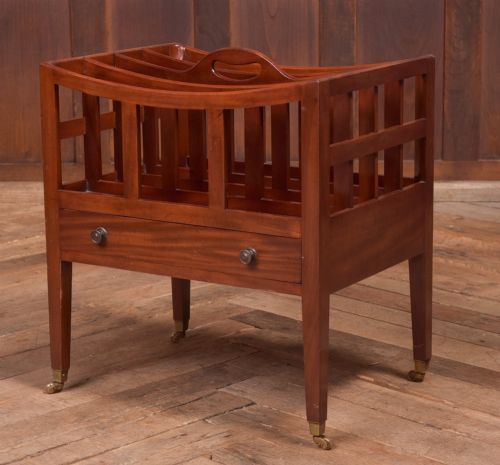
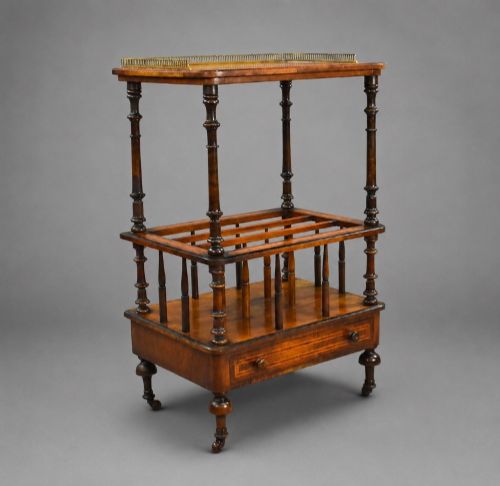
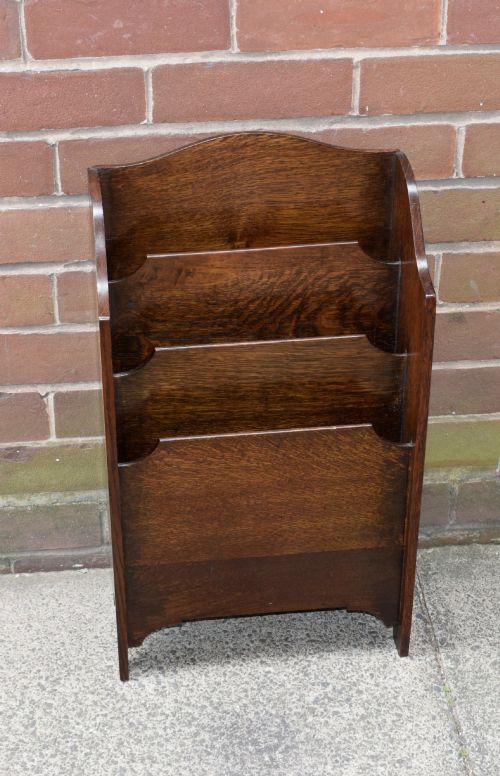
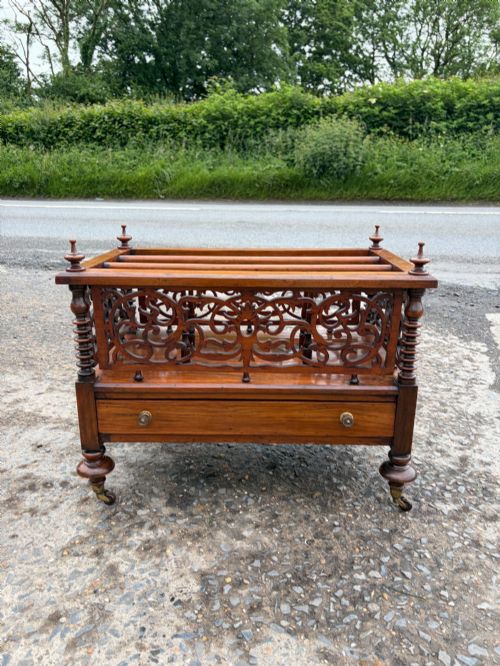
The pieces on this page span the Edwardian period alongside earlier Victorian and Regency examples, as well as later 1920 pieces. Traditional canterburys with sectioned compartments and drawers often double as occasional tables.
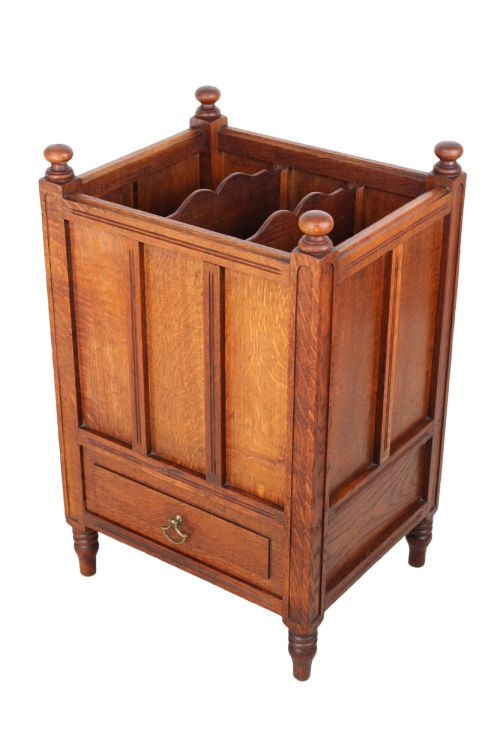
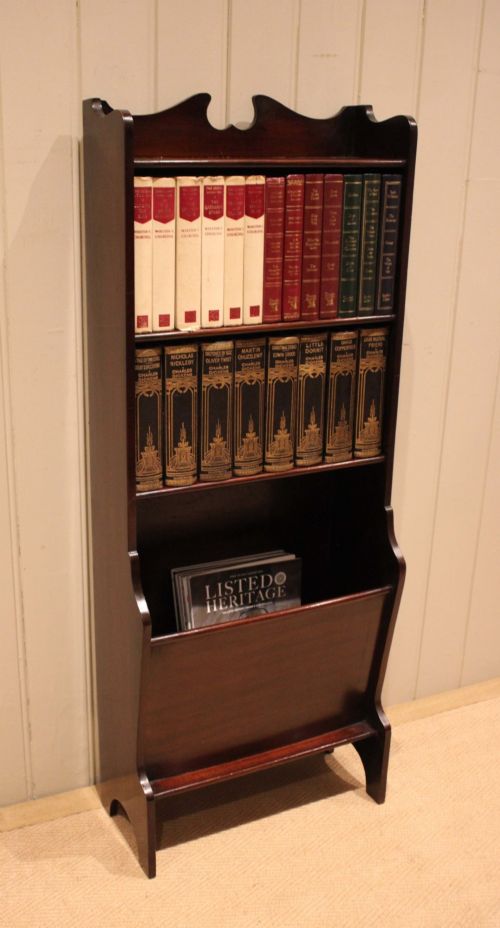
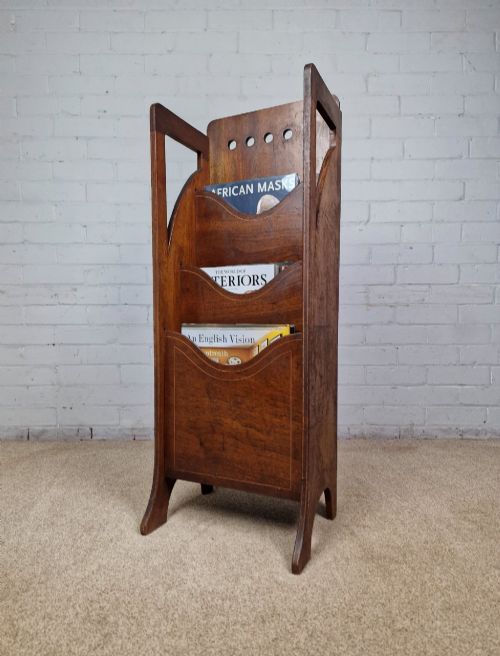
Makers utilised various formats, including wall shelves, floor-standing units, and metamorphic designs. Mahogany, oak, and burr walnut dominate the structural framework, frequently paired with brass hardware.

How They Were Made
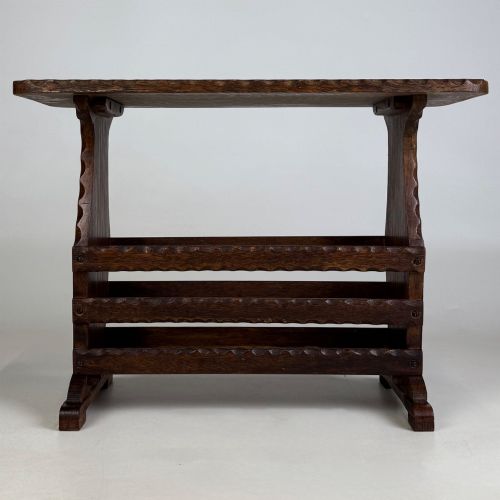
Joinery methods range from pegged joints in Arts and Crafts oak pieces to turned legs and castors on mahogany and rosewood canterburys. Bamboo and ceramic details also appear within specific Victorian and Edwardian iterations.
Edwardian Magazine Rack Retail Price Guide 2026
Typical asking prices for edwardian magazine rack among the pieces listed under this phrase on Sellingantiques today, from the lower quarter to the upper quarter. They describe what is for sale here now, not the wider market.
Object forms span traditional canterburys, book troughs, revolving stands, and wall shelves.
What Varies in Quality
The distinction between standard production and finer examples rests on timber selection and timber preparation, such as figured flame mahogany or rich burr walnut. Finer items exhibit crisp marquetry inlay, substantial brass fittings, and integrated drawers rather than purely utilitarian assembly.
Structural integrity and proportion differentiate the workshops. Pieces retaining original castors, sound joints, and well-balanced tiered partitions demonstrate superior execution.
Wolf's of Birkenhead·Hall Birmingham
The Edwardian Magazine Rack Glossary
- Canterbury
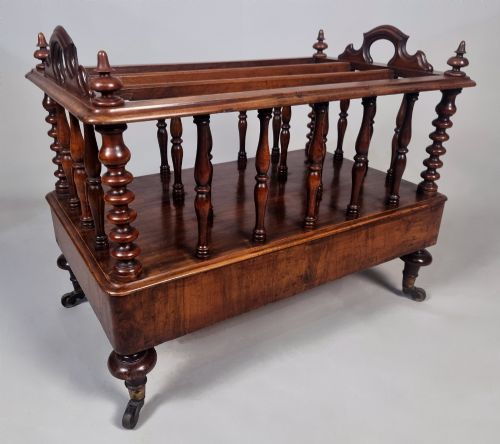
- A low stand with partitioned sections for holding sheet music, books, or magazines, often featuring a small drawer underneath. They date from the late eighteenth century onward.
- Book Trough
- An open-topped wooden trough designed to hold books or periodicals upright on a desk, table, or floor. They frequently feature carrying handles or shaped ends.
- Marquetry
- Decorative veneer work arranged in patterns or pictures using various woods, shells, or other materials. This technique adorned many Edwardian and Victorian tabletops.
- Revolving Rack
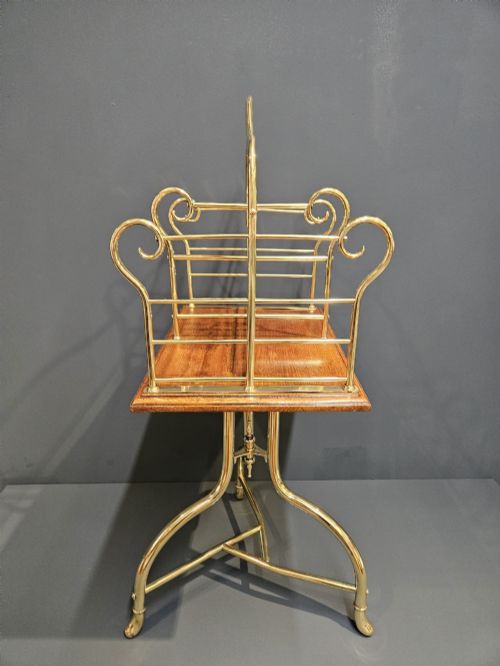
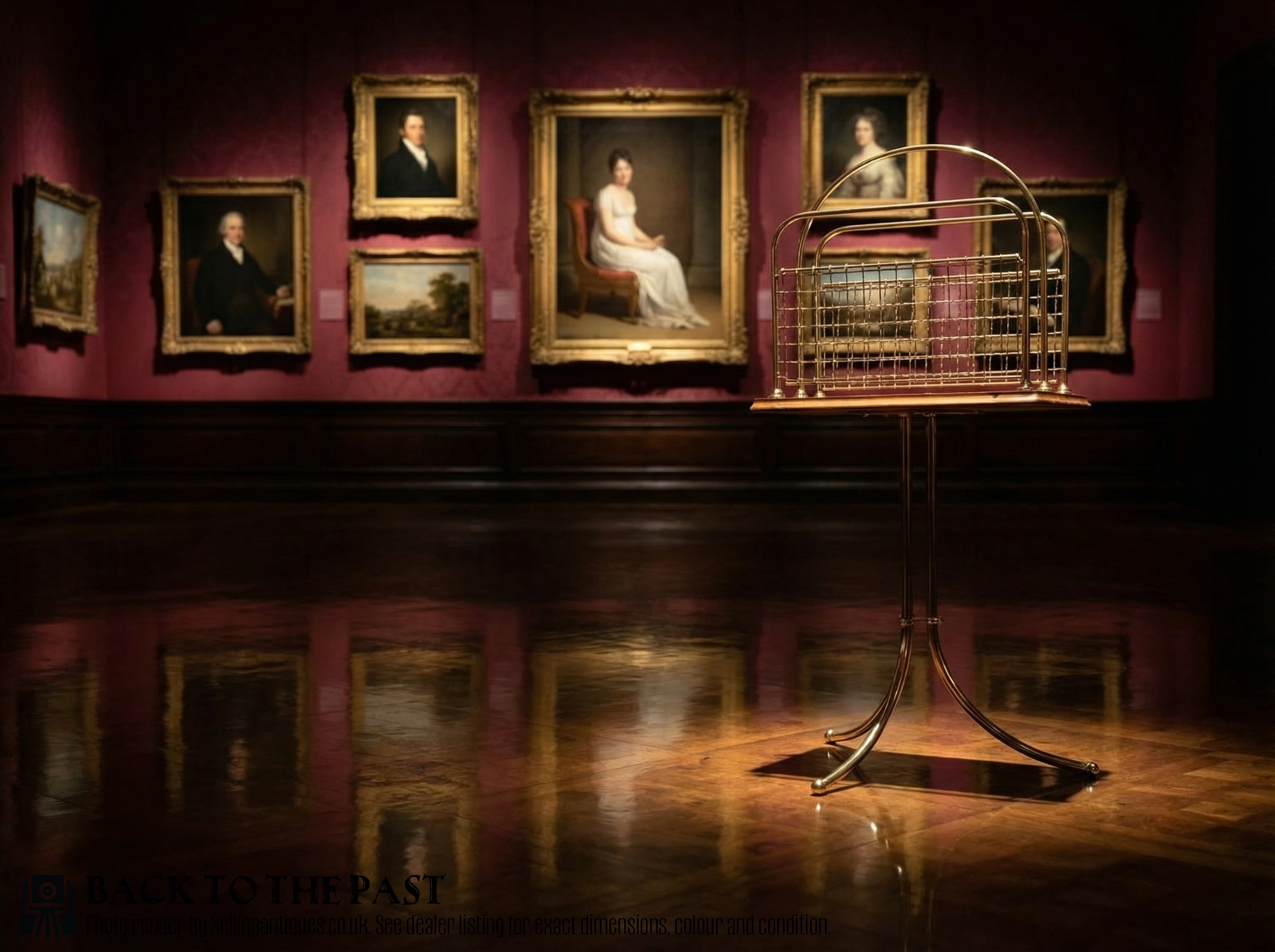
- A book or magazine stand mounted on a rotating base, allowing users to access multiple compartments from a single seating position. They combined oak frames with brass spindles.
- Metamorphic Stand
- Furniture designed to transform or fold for different uses. These versatile items adapted to changing domestic requirements in the early twentieth century.
Edwardian Magazine Rack: Frequently Asked Questions
What is an edwardian magazine rack?
An edwardian magazine rack is a domestic furnishing designed to hold periodicals, newspapers, and books in sitting rooms or libraries. These pieces ranged from stationary wooden troughs to revolving brass and oak stands.
They reflect the domestic reading habits of the early twentieth century, keeping daily papers and monthly journals orderly and accessible.
How do you use a canterbury?
A canterbury functions as a low storage stand, originally intended for sheet music and now commonly utilised for magazines and folios. The partitioned upper section keeps items upright and separated.
Many examples include a small drawer below the rack for smaller accessories, while others incorporate flat tops to serve as occasional tables.
Are these racks sturdy enough for heavy books?
Most pieces are built from solid hardwoods like mahogany, oak, or walnut, designed to support standard periodicals and bound volumes. Troughs and stationary racks handle weight securely.
Revolving stands and folding brass frames suit lighter newspapers and magazines rather than heavy ledgers or large reference volumes.
How do I distinguish Edwardian from Victorian pieces?
Victorian pieces often display heavier proportions, rich burr walnut veneers, dark rosewood, and elaborate inlaid marquetry. They frequently take the traditional canterbury form with turned legs.
Edwardian examples tend towards lighter mahogany frames, Arts and Crafts oak construction, or polished brass and bamboo combinations reflecting a simpler aesthetic.