
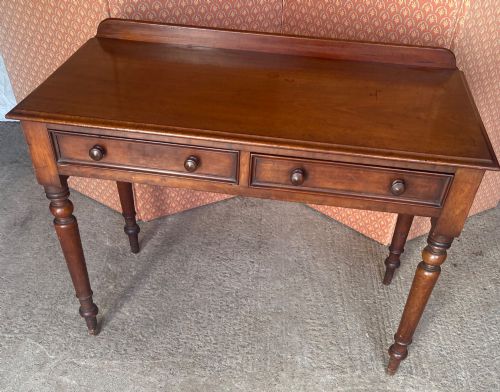
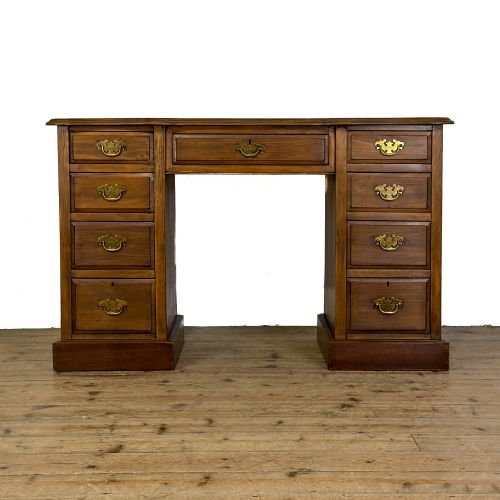
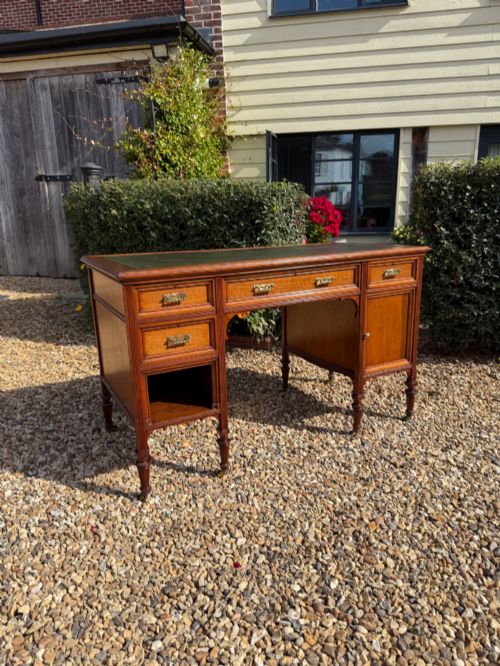
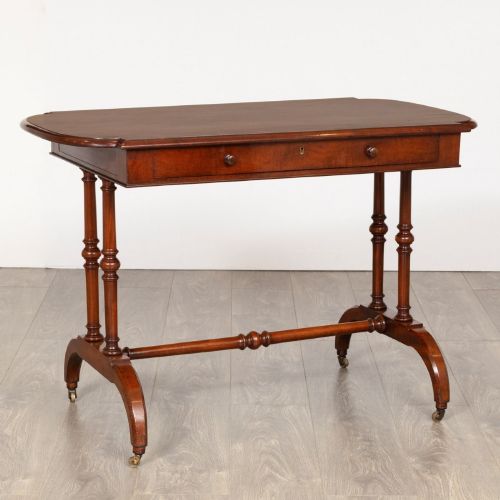

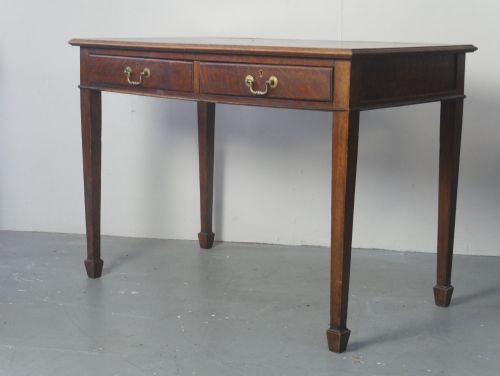
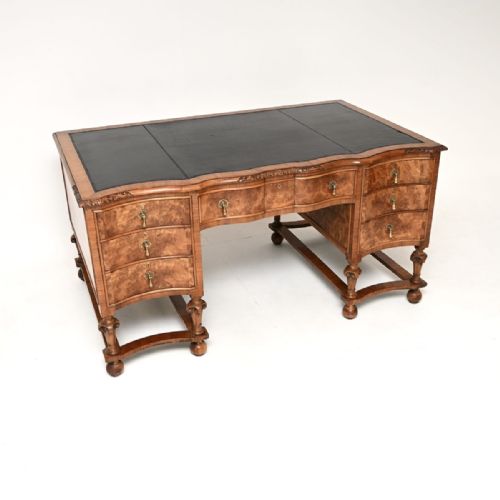
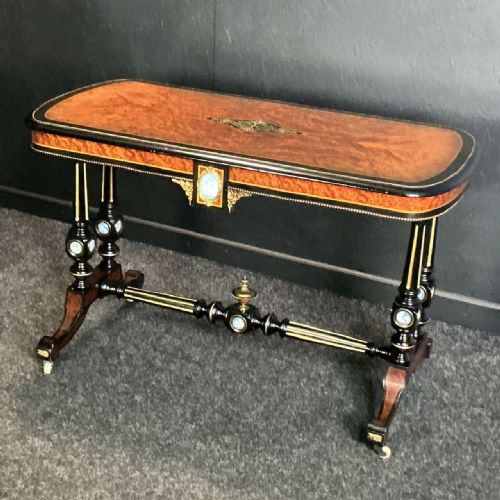
Edwardian Library Desk
An edwardian library desk brings sturdy writing surfaces and handsome timber into a room, designed for serious study.
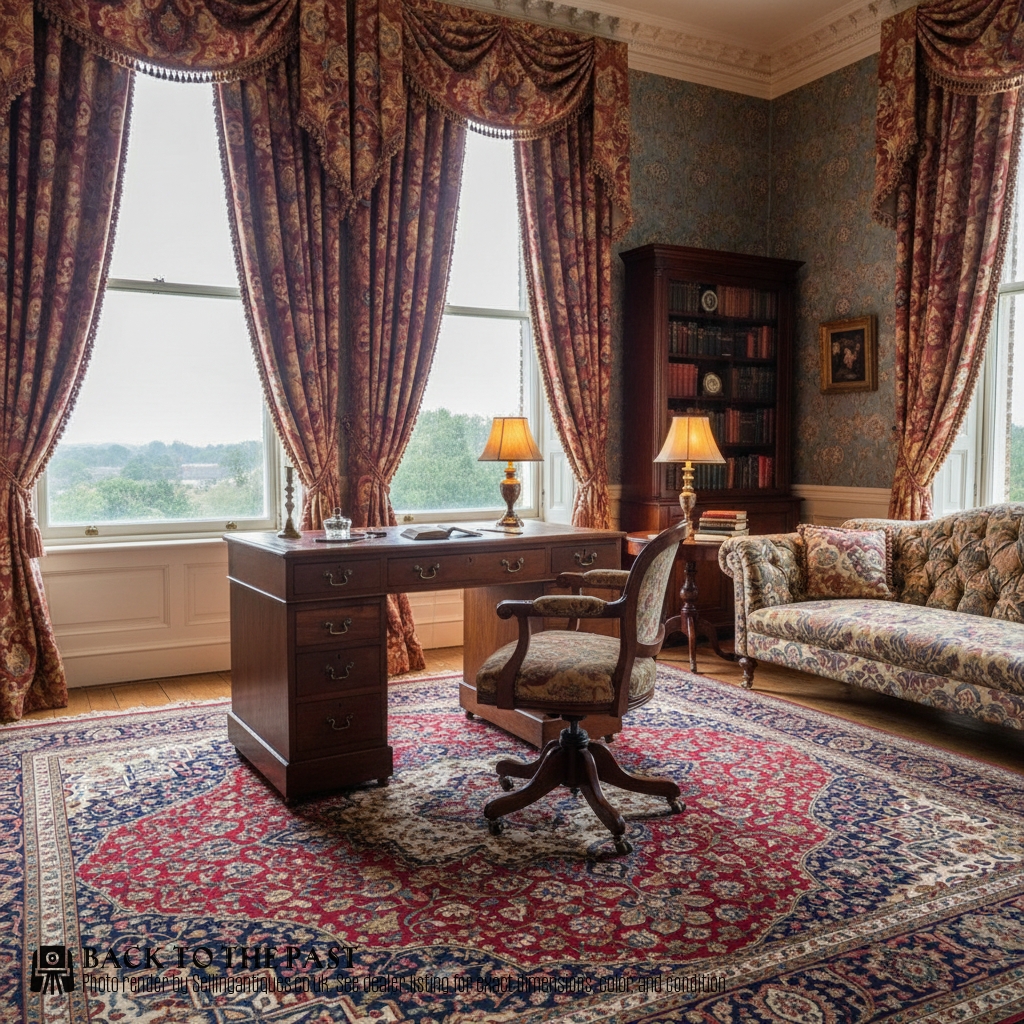
Edwardian Library Desk
An edwardian library desk represents a sturdy writing surface built for study and administration, often appearing in freestanding formats that allow access from multiple sides. These pieces bridge the heavier Victorian aesthetic and lighter twentieth-century forms, appearing frequently in mahogany, oak, and walnut.
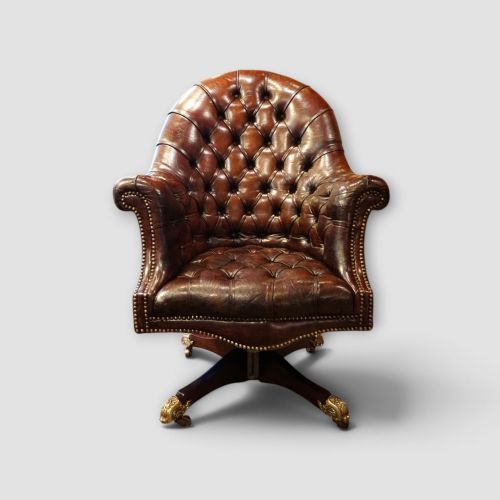
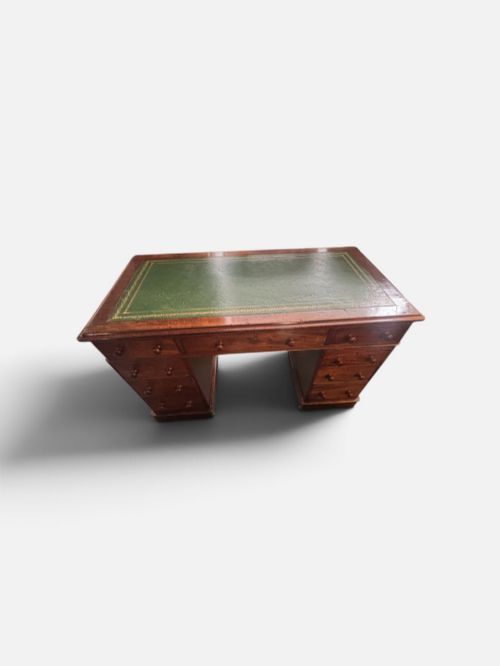
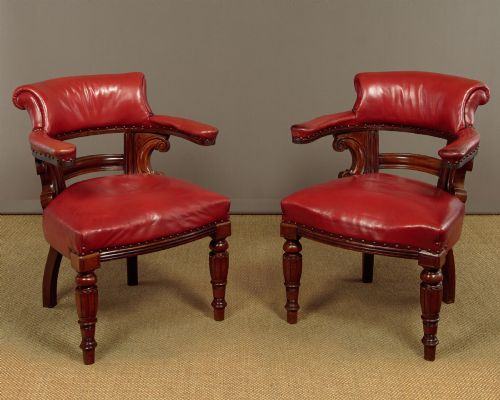
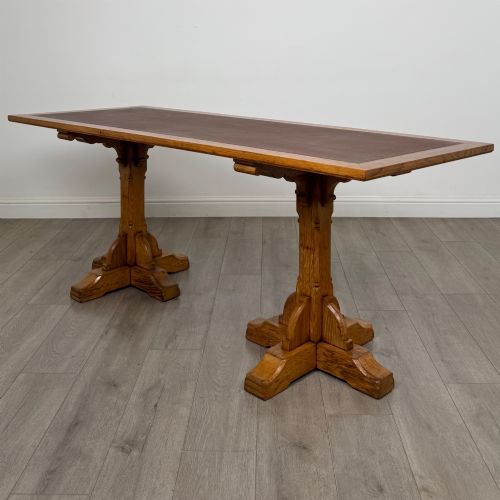
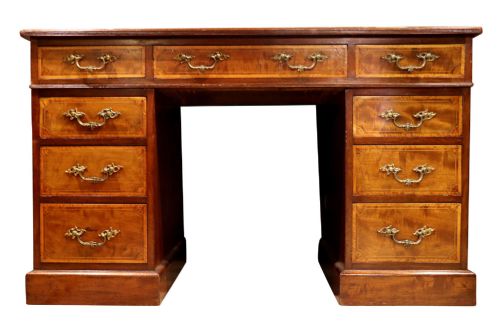
The version most commonly encountered on this page combines a leather inset top with pedestal drawers or turned legs, reflecting the practical needs of writing and organisation. Alongside standard writing tables, the selection includes partners desks designed for dual use and revolving chairs suited to study environments.
Makers of the period drew upon earlier Georgian and Sheraton revivals, incorporating inlay, satinwood banding, and brass hardware into everyday office furniture. This grounding in traditional cabinet-making ensures that utility remains matched with considered proportion.
Materials and construction
Cabinet-makers relied heavily on solid mahogany and oak for structural integrity, frequently pairing these timbers with burr walnut or satinwood veneers for decorative impact. Surfaces destined for regular writing were routinely inset with tooled leather, secured with brass tacks or blind tooling.
Joinery methods of the period prioritised durability, utilising dovetailed drawer construction and robust internal framing to support heavy ledgers and books. Hardware such as original brass drop handles and castors completed the build, ensuring smooth daily operation.
Period styles span Victorian, Edwardian, Arts and Crafts, and Sheraton Revival forms.
Judging standard and execution
The distinction between standard commercial pieces and finer workshops lies in the selection of timber veneers and the crispness of hand-carved details or marquetry inlay. Superior examples display careful grain matching across large surfaces and retain original brass hardware rather than later replacements.
Internal construction also separates grades, with secondary timbers such as oak used consistently in drawers rather than cheaper softwoods. The integration of finished panelling on all four sides indicates a piece intended to stand centrally in a room rather than against a wall.
Trollope And Sons·Edwards And Roberts·Maple And Co·James Shoolbred And Co·Whytock And Reid·Hindley And Sons
The Edwardian Library Desk Glossary
- Partners desk
- A large double-sided desk featuring drawers and cupboards on both faces, allowing two people to work opposite one another.
- Pedestal desk
- A form comprising two freestanding drawer modules or pedestals that support a wide writing slab above.
- Inlay
- A decorative technique where contrasting timbers or materials are set flush into the primary wood surface to create geometric or floral patterns.
- Marquetry
- Elaborate veneer work arranged to form pictorial designs, frequently utilised on cabinet fronts and table tops during the period.
- Leather top
- A writing surface inset with coloured hide, commonly edged with gold-tooled decoration.
Edwardian Library Desk: Frequently Asked Questions
What is a partners desk?
A partners desk provides workspace on both sides, featuring banks of drawers facing opposite directions so two people can sit face to face.
These large formats were standard in institutional offices and large country house libraries where multiple clerks or scholars needed simultaneous access.
How do I care for leather top desks?
Leather surfaces require occasional treatment with specialist neutral wax or leather balm to prevent the hide from drying and cracking over time.
Avoiding direct sunlight and excessive heat will preserve both the supple texture of the leather and the gilt tooling along the edges.
Are these desks suitable for daily computer use?
Many library tables and pedestals offer generous surface areas and sturdy construction capable of supporting modern desktop equipment and laptops.
Careful measurement of kneehole clearance is recommended to ensure comfortable seating arrangements for daily office work.
How do I distinguish Edwardian from Victorian furniture?
Edwardian pieces generally exhibit lighter proportions, brighter mahogany tones, and a revival of Sheraton or neoclassical inlay styles compared to heavier Victorian forms.
The transition around 1900 brought simpler lines and a preference for inlaid satinwood banding over dense, dark carvings.