


Medium Oak Writing Desk
A medium oak writing desk is a sturdy timber workspace designed for daily correspondence, bringing warmth and functional compartmentalisation to a study.
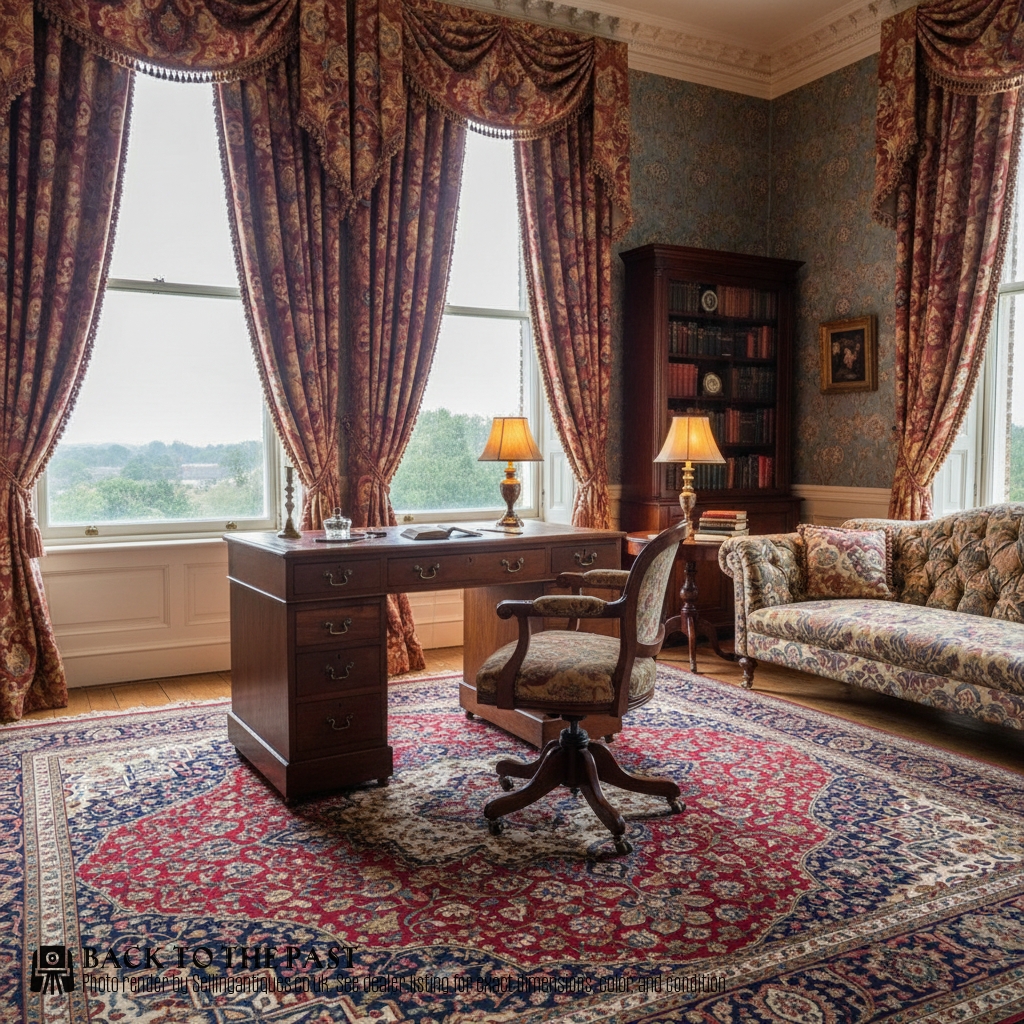
Medium Oak Writing Desk
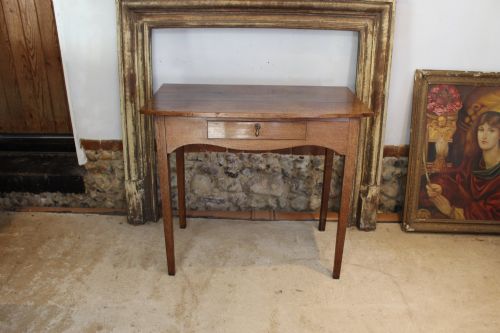
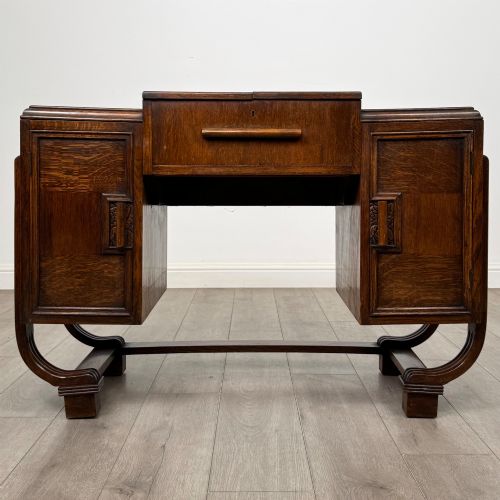
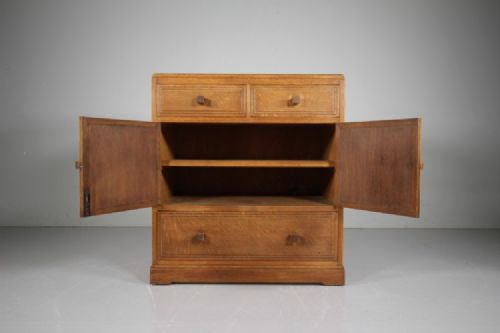
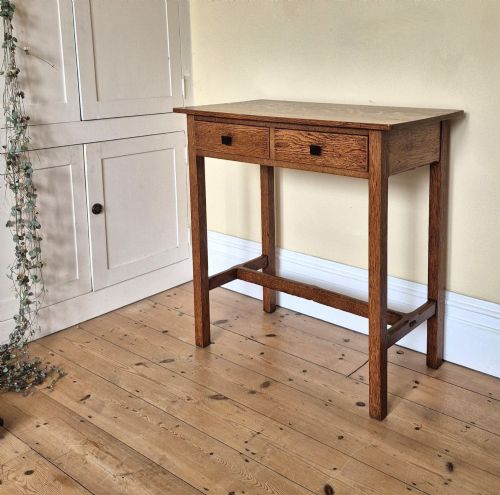
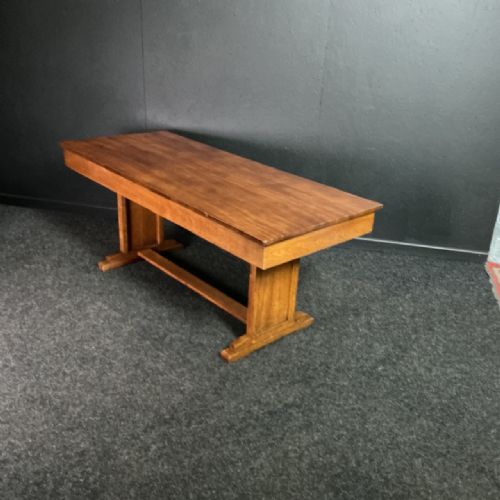
The most frequent examples on this page are Edwardian and 1930s pieces, ranging from simple side tables and library tables to complex bureau cabinets with internal stationery compartments. Makers and workshops from this era utilised the natural grain of oak to create both domestic and institutional furniture.
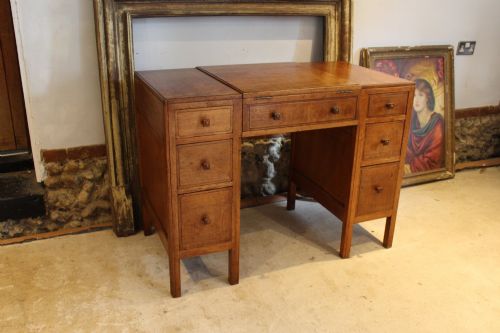
Forms vary from utilitarian school library tables to substantial kneehole desks fitted with leather writing surfaces and multiple drawers. Each variation reflects the specific clerical or domestic writing needs of the late nineteenth and early twentieth centuries.
What varies in quality
Quality in a medium oak writing desk is determined by the integrity of the timber selection and the precision of the joinery within drawers, roll-top mechanisms, and fall-front writing flaps. Superior examples exhibit balanced grain alignment and robust internal framing that withstands regular use.
The presence of original hardware, such as brass pulls, working keys, and functional locks, distinguishes finer workshop productions from standard commercial pieces. Additionally, documented attribution or maker labels elevate the historical interest of a desk.
Materials recorded across current and past pieces include oak, brass, glass, copper, leather, wood inlay, and lead.
Stanley Webb Davies·Bryn Mawr Welsh·Hubert Simpson of Kendal·Heal & Sons
The Medium Oak Writing Desk Glossary
- Bureau
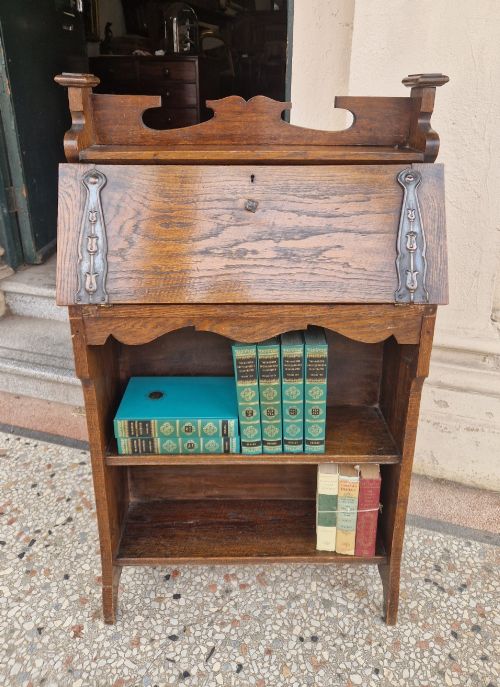
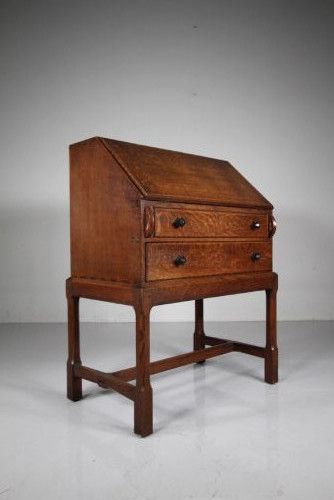
- A desk featuring a hinged sloping flap that covers a compartment of pigeonholes and small drawers. This form allows the writing surface to be concealed when not in use.
- Roll top
- A desk fitted with a flexible tambour shutter made of narrow slats of wood that slides in curved grooves to cover the work surface. It secures the desk interior without a traditional fall-front lid.
- Twin pedestal
- A desk configuration consisting of two separate stacks of drawers supporting a single wide desktop above. The user sits in the kneehole space positioned centrally between the pedestals.
- Bureau bookcase
- A two-part piece of furniture combining a lower writing bureau with an upper glazed or panelled bookcase cabinet. These tall units maximise storage for both books and writing materials.
- Kneehole desk
- A compact desk design featuring a central recess for the legs flanked by banks of drawers on both sides. This symmetrical arrangement became standard for domestic studies in the Victorian period.
Medium Oak Writing Desk: Frequently Asked Questions
What is a medium oak writing desk?
A medium oak writing desk is a functional piece of wooden furniture designed for reading and writing, utilising oak timber with a medium tone.
These pieces typically date from the late Victorian period through the 1930s, encompassing various formats such as kneehole desks, roll tops, and drop-front bureaux.
How do I identify an Edwardian desk?
Edwardian desks often display lighter oak tones and simpler linear details compared to heavily carved Victorian predecessors. They frequently incorporate brass hardware and fitted stationery interiors.
Many examples from this era also include roll-top mechanisms or two-part bureau bookcase structures designed for domestic studies.
Where were these desks used originally?
These pieces served as functional workspaces in domestic studies, home offices, and public institutions such as school libraries. They were built to handle daily administrative tasks, letter writing, and record keeping.
Today, they function similarly in modern homes while providing period character to a room.