
Edwardian Kitchen Chairs
Edwardian kitchen chairs encompass durable country designs in elm, ash, and oak, offering practical utility and timeless character for everyday dining spaces.
Edwardian Kitchen Chairs
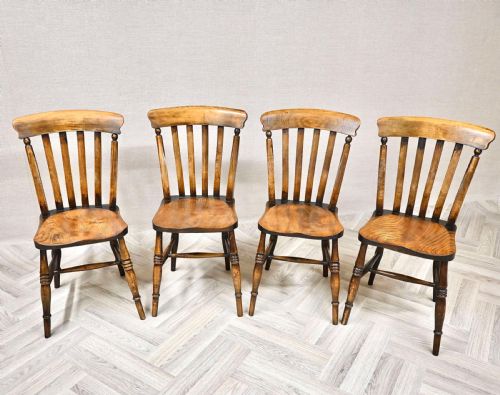
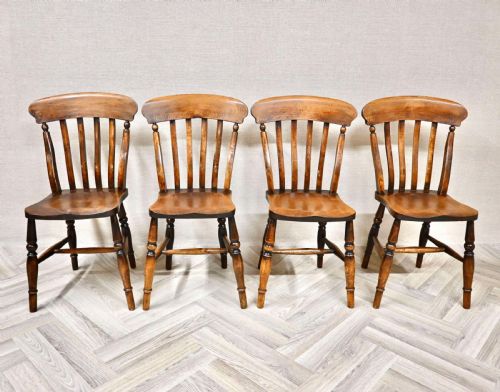
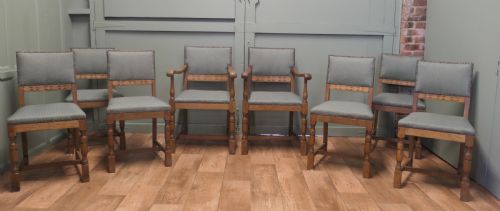
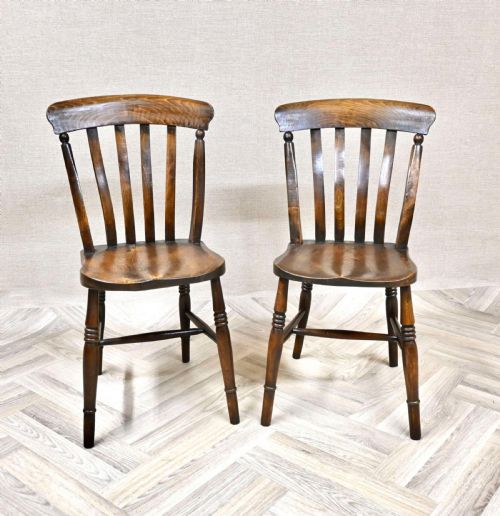
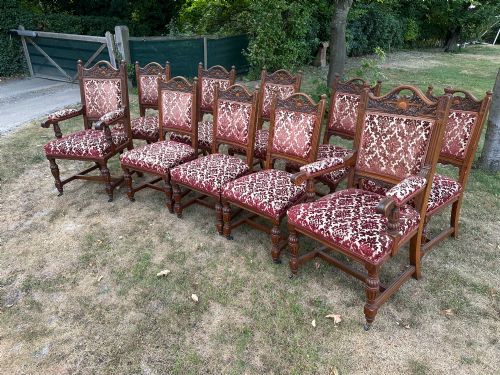
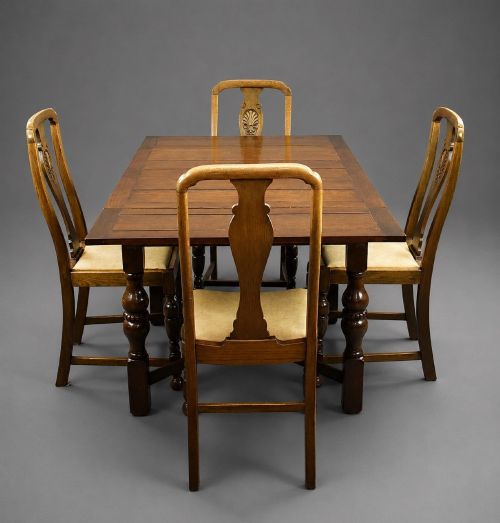
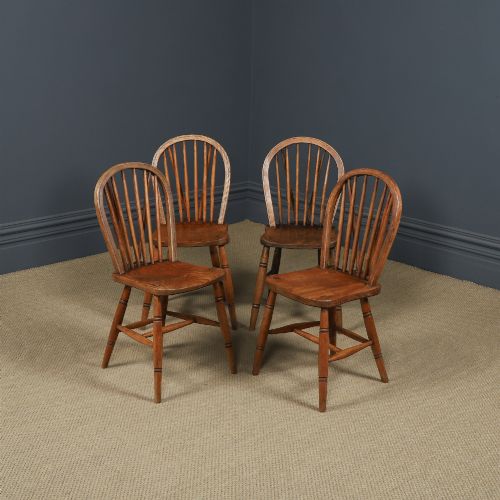
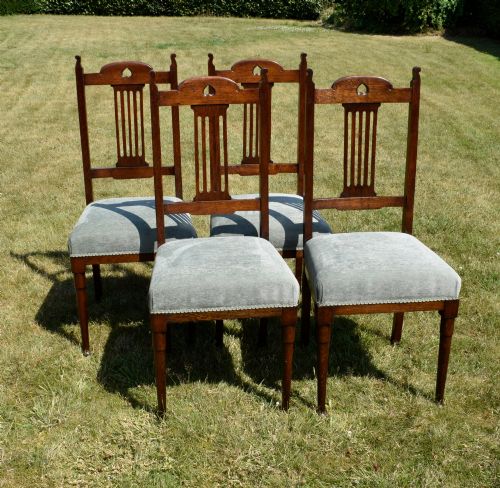
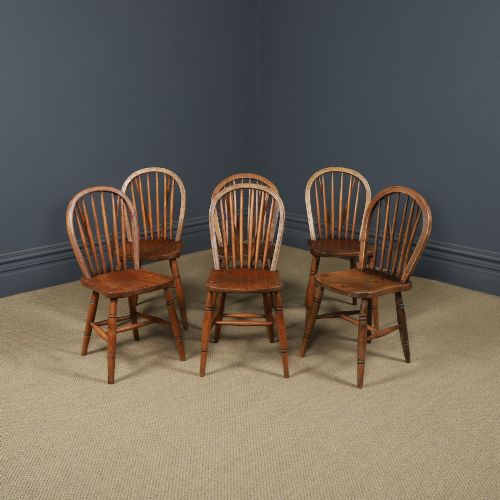
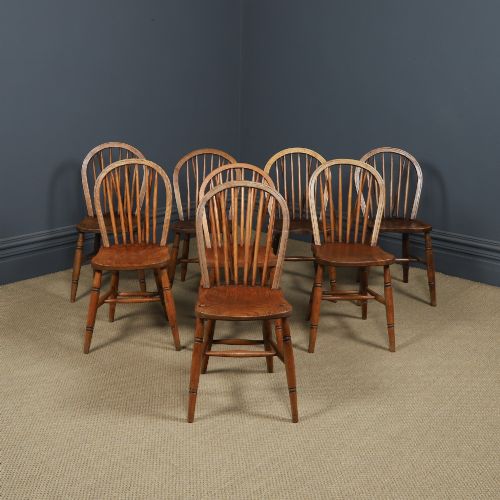
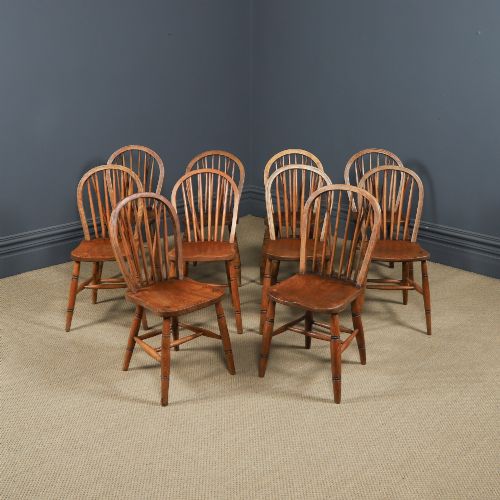
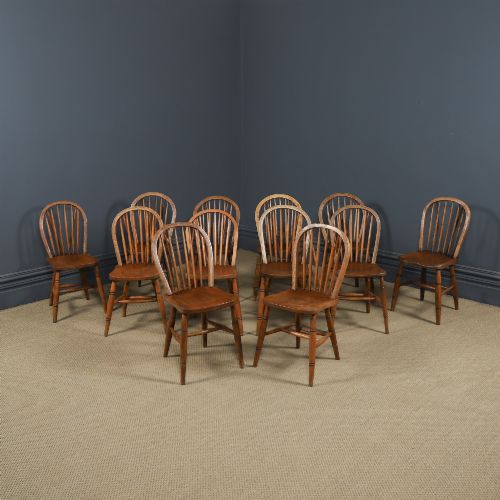
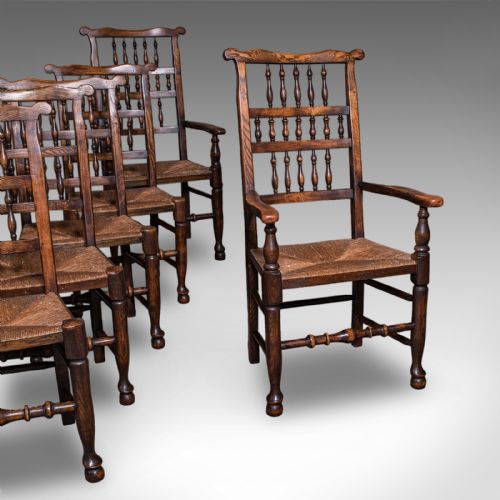
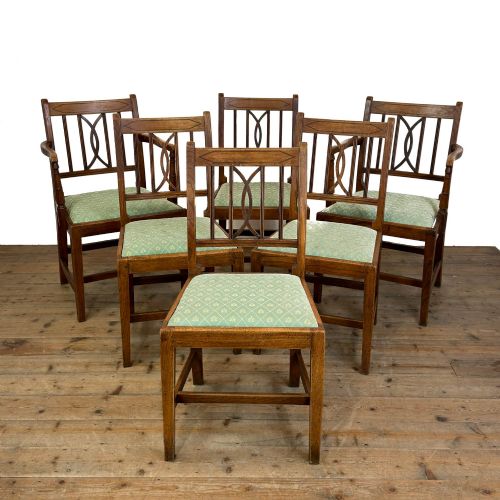
When you search for edwardian kitchen chairs, you encounter a robust selection of domestic seating originating primarily from the early twentieth century and the broader Edwardian period. The inventory ranges from single armchairs and children's chairs to large dining sets numbering up to twelve pieces.
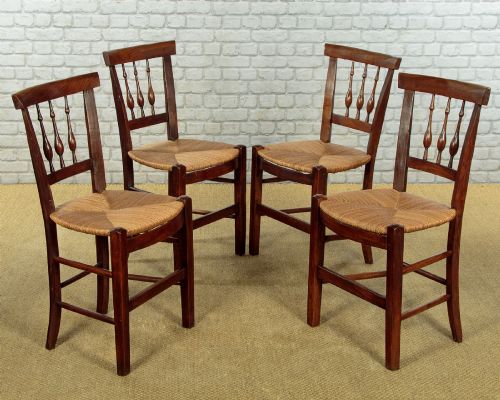
Beyond standard dining chairs, the category includes ladder backs, rush seat chairs, and occasional rocking chairs. Many pieces reflect Arts and Crafts sensibilities or English country house aesthetics.
Materials and Construction
Makers utilised a combination of hardwoods and softwoods suited to daily domestic wear, most frequently pairing elm seats with ash, beech, or oak spindles and frames. Elm provided a tough, non-splitting surface for the seat while ash and beech offered flexible strength for steam-bent hoops and backs.
Traditional joinery techniques governed the construction, relying heavily on pegged mortise and tenon joints and turned components. Windsor chairs employed socketed legs and spindles wedged directly into solid plank seats.
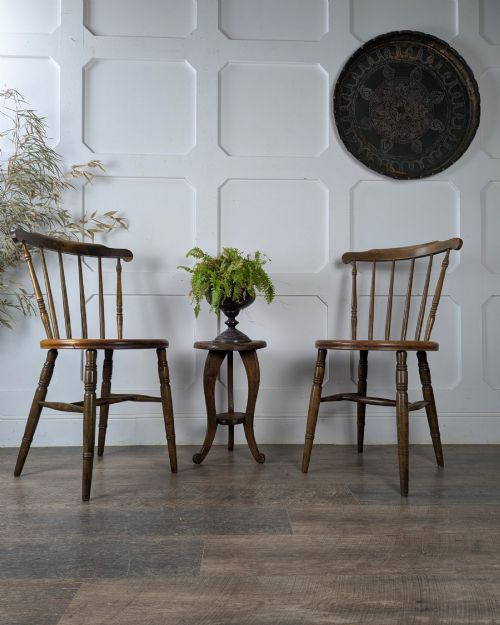
The inventory records numerous variations of stick back and wheelback forms spanning the nineteenth and early twentieth centuries.
Evaluating Quality
Quality in these chairs rests on the integrity of the timber selection and the retention of original structural components. Chairs featuring deeply saddled solid elm seats and well-balanced turned underframes command greater attention.
Uniformity across larger dining sets and matching sets of carvers indicates superior original workshop production. The preservation of surface patination and minimal replacement of spindles or legs distinguish finer examples.
Liberty·Bateman·High Wycombe
The Edwardian Kitchen Chairs Glossary
- Windsor
- A chair built with a solid wooden seat into which the legs and back spindles are separately bored and wedged. This form relies on a central bow or hoop for structural support.
- Wheelback
- A Windsor variation featuring a pierced wooden splat in the shape of a carriage wheel set into the centre of the backrest. It appears frequently in domestic country seating.
- Lath back
- A chair style characterised by flat wooden slats or laths running vertically across the backrest rather than turned spindles. These slats are typically tenoned into top and bottom rails.
- Rush seat
- A seating surface woven from dried marsh rushes twisted into cords and patterned across the frame. This technique provides a resilient and traditional alternative to solid wood.
- Penny seat
- A specific type of saddled wooden seat featuring a circular depression carved near the rear, named for its superficial resemblance to a large coin.
Edwardian Kitchen Chairs: Frequently Asked Questions
What defines an Edwardian kitchen chair?
These chairs are defined by their utilitarian construction, typically combining native timbers like ash, elm, and beech into robust forms. They reflect the transition from Victorian heavy proportions to lighter early twentieth-century country styles.
Most examples rely on traditional stick back, Windsor, or ladder back designs intended for heavy domestic use in farmhouses and town houses alike.
How do I spot a Windsor chair?
A Windsor chair is readily identified by its solid plank seat that serves as the central anchor for all other components. The legs and back spindles are tenoned directly into bored holes within the seat.
This method of construction creates a strong, unified frame without requiring a traditional box-framed base under the seat.
Are these chairs suitable for daily dining?
These pieces were originally built for rigorous daily use in kitchens and dining rooms, making them inherently durable for modern dining. Solid wood construction and sturdy underframes ensure they withstand regular seating.
Many sets also feature upholstered or rush seats designed to offer additional comfort during extended meals.
How do I mix mismatched chairs?
Mixing different chairs relies on finding common threads in material, such as pairing various elm and ash Windsor styles around a central oak table. Shared design traits like hoop backs or spindle counts help create a cohesive aesthetic.
Carver armchairs placed at the heads of a table can anchor a diverse collection of side chairs successfully.