

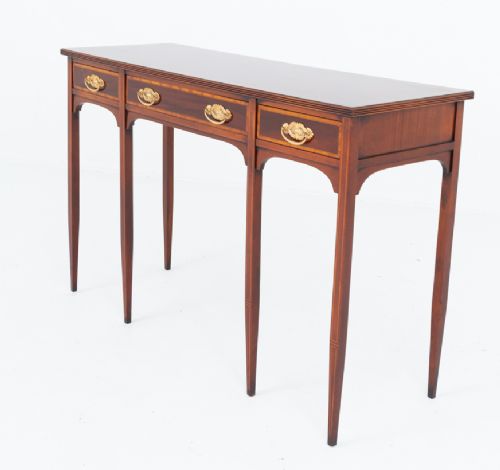
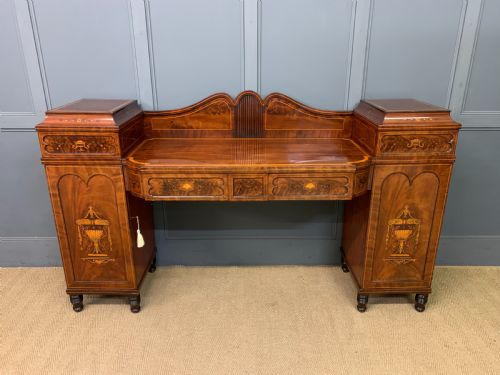


Edwardian Inlaid Server Table
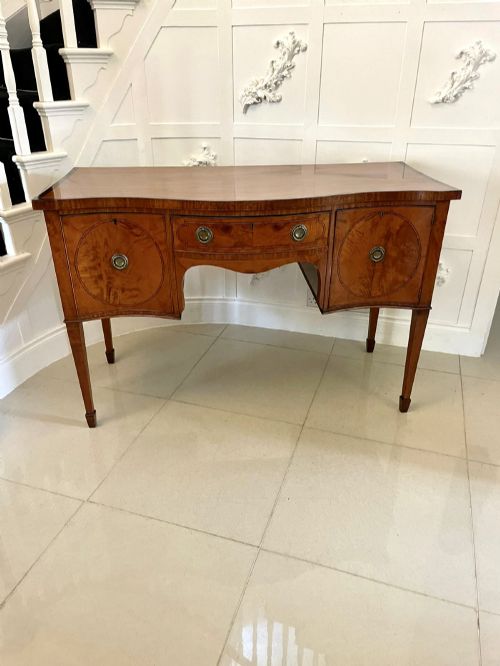
An edwardian inlaid server table brings refined mahogany and delicate boxwood and satinwood detailing into a dining room or hall.
Edwardian Inlaid Server Table
When searching for an edwardian inlaid server table, collectors encounter a variety of sophisticated serving pieces, sideboards, and side tables spanning the Edwardian period, Victorian era, and earlier Georgian influences. These furnishings serve practical functions in dining and reception rooms while showcasing polished timber surfaces and decorative detailing.
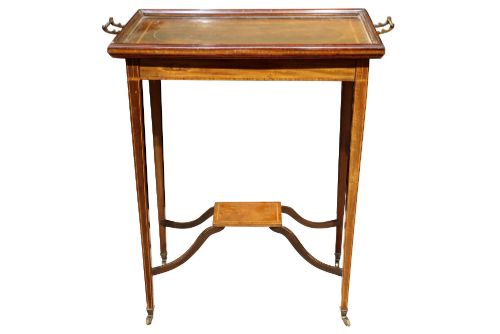
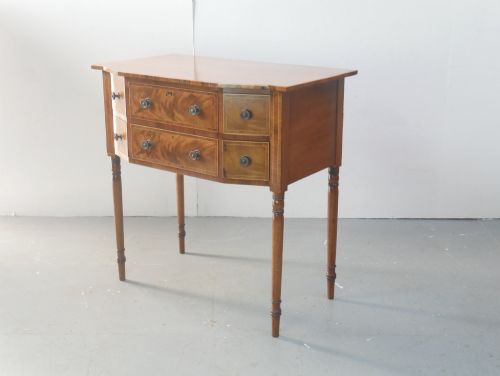
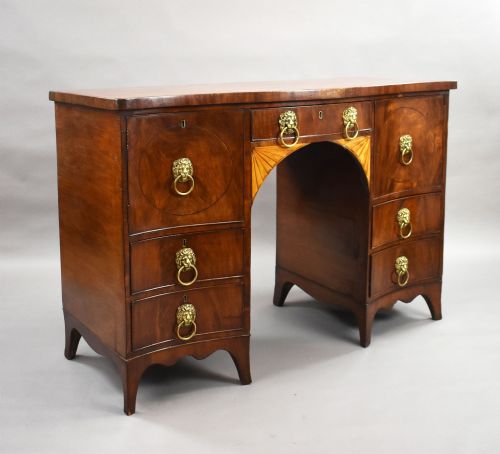
The pieces most frequently met on this page include Edwardian mahogany servers, sideboards, and side tables featuring contrasting wood inlays. Examples range from serpentine and bowfront shapes to tray top occasional tables and lowboys, reflecting diverse stylistic revivals such as Sheraton Revival and Regency.
Makers and makers' marks occasionally appear, linking specific pieces to established cabinet-making firms like Robson & Sons or Howard And Sons. These variations provide context for the construction methods and aesthetic choices favoured by late nineteenth and early twentieth century workshops.
How they were made
Cabinet-makers relied primarily on solid mahogany and carefully selected veneers, applying satinwood and boxwood for contrasting stringing and decorative motifs. These timbers were selected for their grain pattern and stability.
Inlay techniques involved cutting precise recesses into the primary wood to receive lighter contrasting strips or complex marquetry panels. Brass hardware, including handles and gallery rails, was often incorporated to complement the dark wood tones and inlaid borders.
Listings feature pieces from the Edwardian period, Victorian era, and Georgian times, constructed from mahogany, satinwood, boxwood, and marble.
What varies in quality
Structural sophistication distinguishes finer specimens, particularly in serpentine or bowfront shapes that demand advanced carpentry. The choice of hardware and the presence of documented makers add further distinction to individual pieces.
Robson And Sons·Howard And Sons
The Edwardian Inlaid Server Table Glossary
- Crossbanding
- A strip of veneer applied to the border of a furniture surface with the grain running perpendicular to the centre.
- Serpentine
- A curved shape featuring a convex centre flanked by concave sides, frequently seen on formal sideboards.
- Bowfront
- A convex, outward-curving front profile popular in late Georgian and Edwardian cabinet-making.
- Marquetry
- Decorative patterns formed by fitting together contrasting pieces of veneer into a wooden background.
- Lowboy
- A small table with drawers, typically standing on four tall legs, used for serving or storage.
Edwardian Inlaid Server Table: Frequently Asked Questions
How do you style an edwardian inlaid server table?
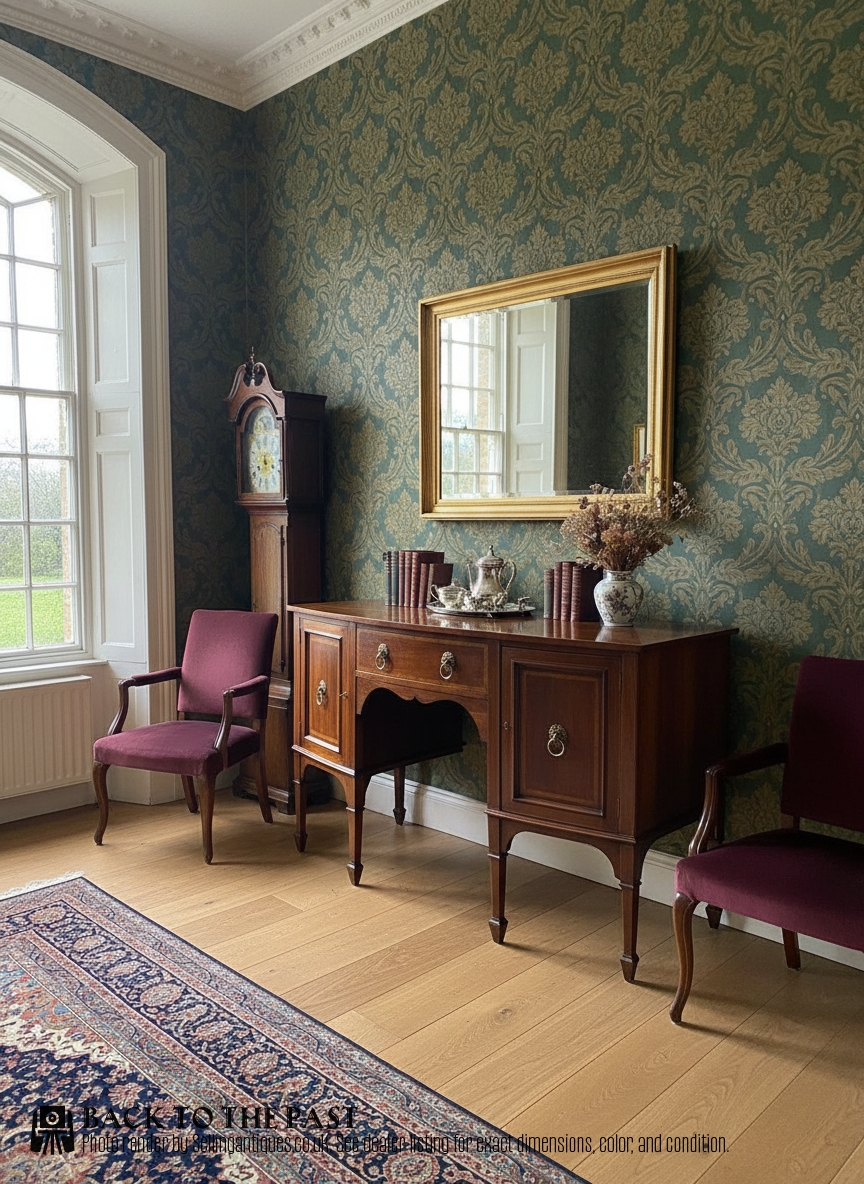
Living with an edwardian inlaid server table involves placing it against a dining room or hallway wall where its wood grain and decorative banding remain visible. It functions effectively as a serving surface during meals or as a display space for silver and ceramics.
Keep surrounding decor complementary to the rich tones of mahogany and satinwood without overwhelming the delicate inlaid details of the piece.
How do you tell Edwardian pieces from Georgian ones?
Distinguishing Edwardian furniture from original Georgian pieces requires examining the construction techniques, timber characteristics, and style markers. Edwardian items often reflect a revival of Georgian or Sheraton designs but were produced around 1900 with machinery-assisted precision.
Original Georgian pieces from the eighteenth century exhibit hand-tool marks and timber ageing consistent with the earlier period, whereas Edwardian reproductions or revivals display the brighter finish and specific hardware of the 1900s.
What materials were used in these tables?
These serving tables and sideboards were constructed primarily using mahogany as the main structural and surface timber. Cabinet-makers incorporated lighter woods such as satinwood and boxwood for decorative inlays, stringing, and crossbanding.
Additional materials frequently included brass for handles, drawer pulls, and occasional gallery rails, contributing to the overall decorative scheme of the furniture.