

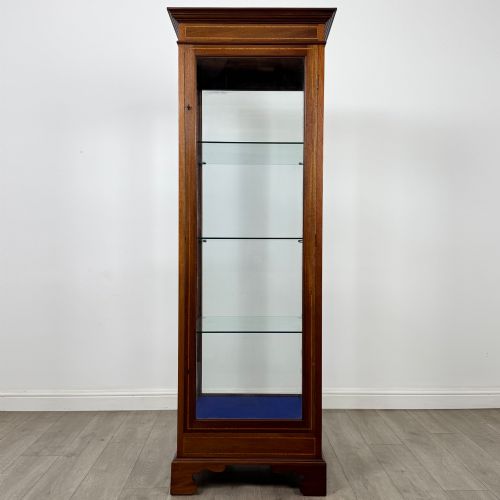
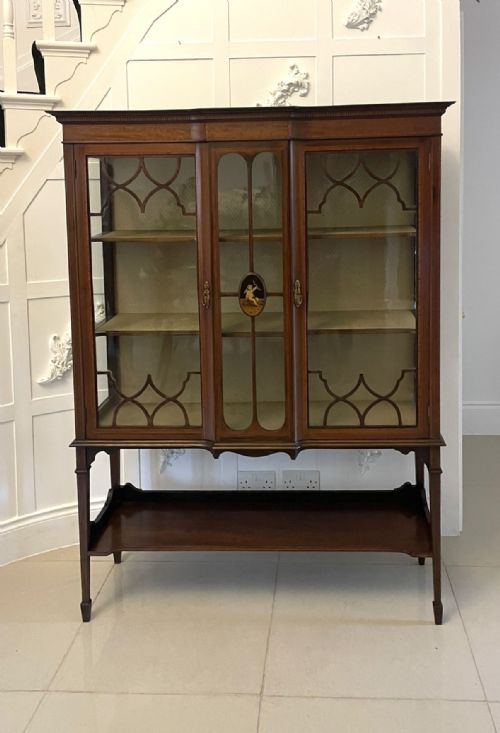
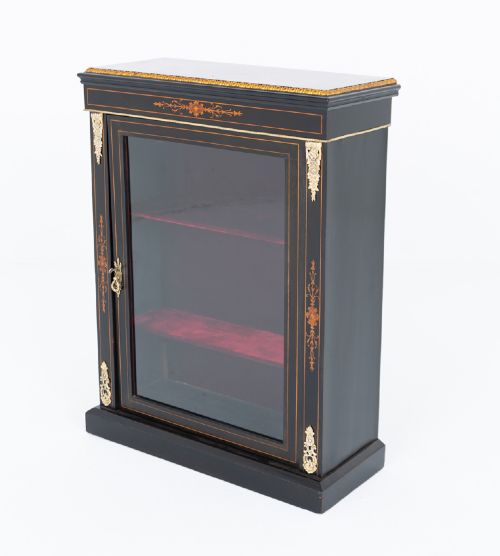
Edwardian Inlaid Display Case
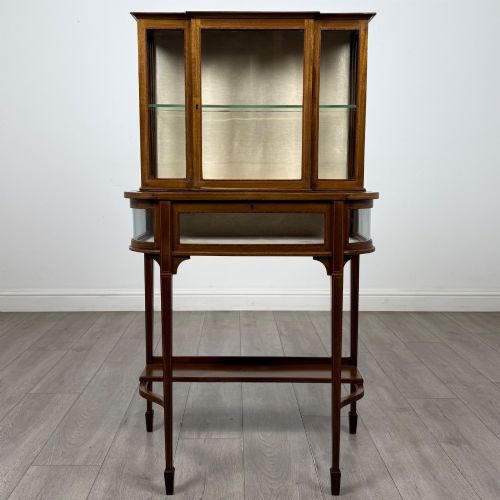
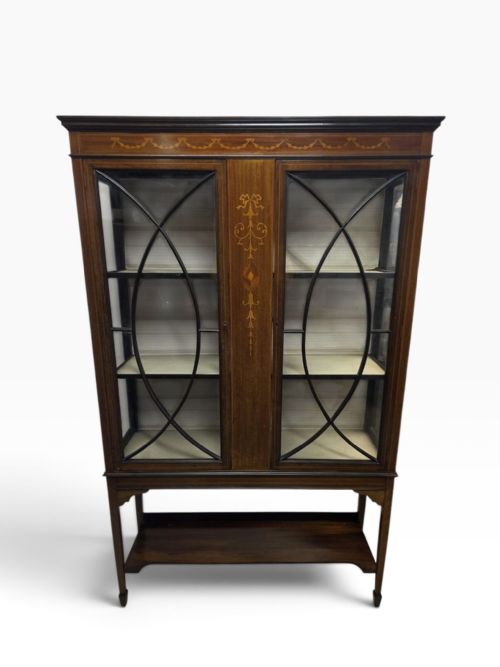
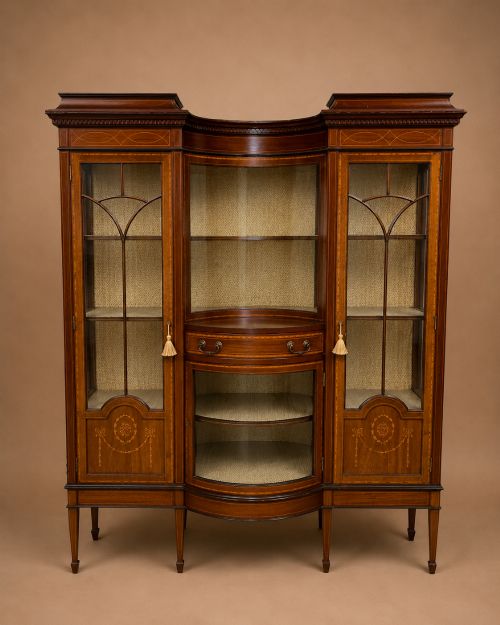
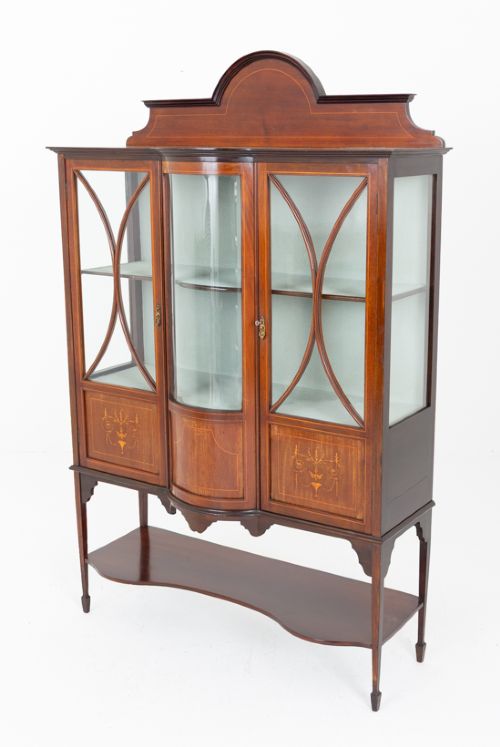
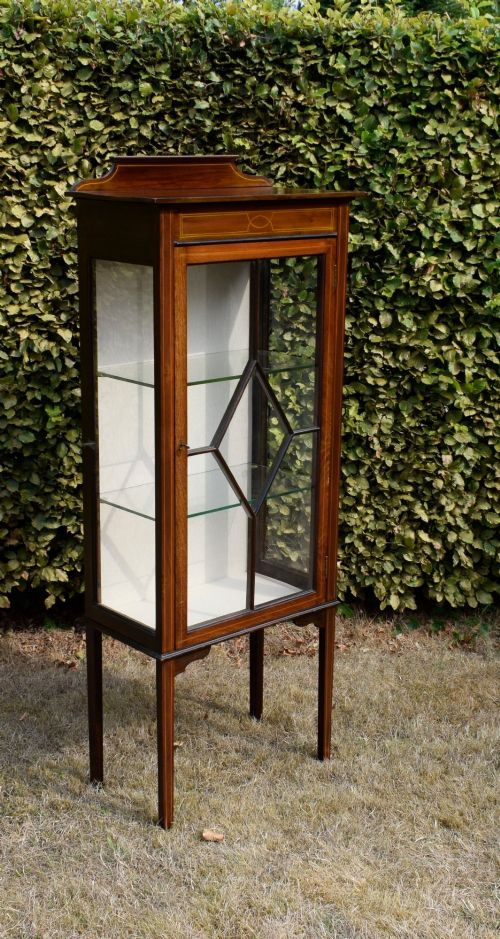
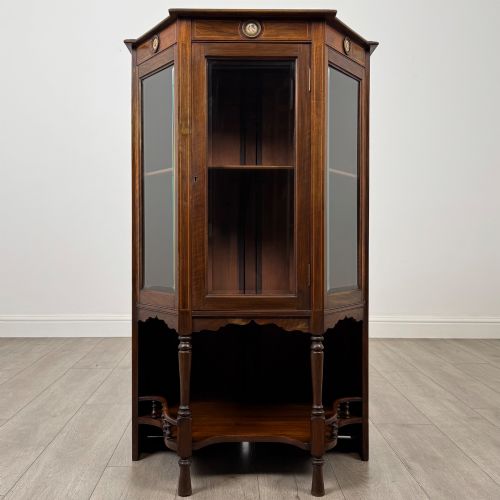
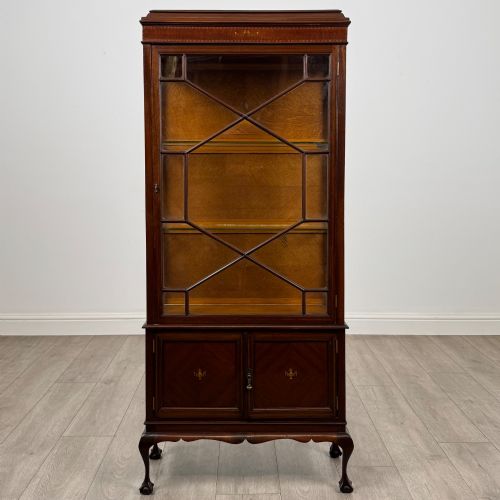
An Edwardian inlaid display case is a glazed cabinet designed to showcase porcelain and small treasures, combining light timbers with delicate banding.
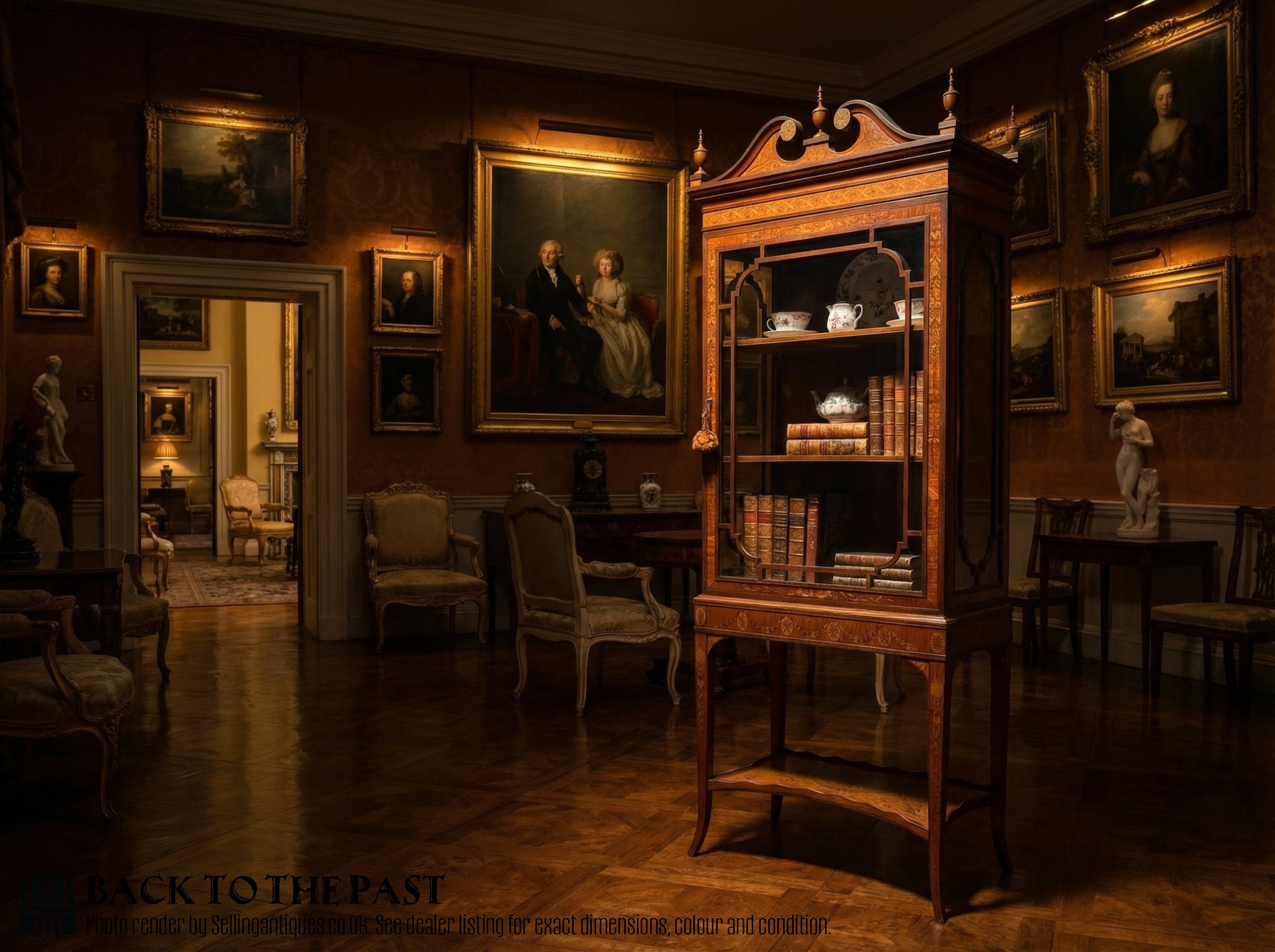
Edwardian Inlaid Display Case
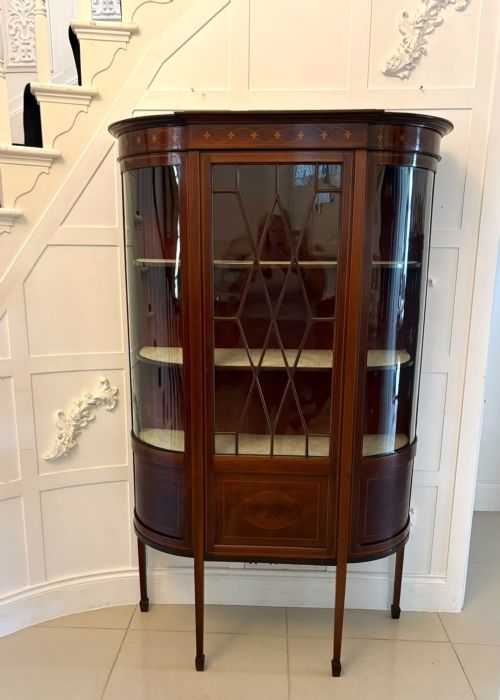
An edwardian inlaid display case gathers together glazed cabinets, corner cupboards, and bijouterie tables made primarily around the turn of the twentieth century. The version met most frequently on this page is the freestanding mahogany cabinet, often finished with satinwood inlay and standing on slender tapered legs.
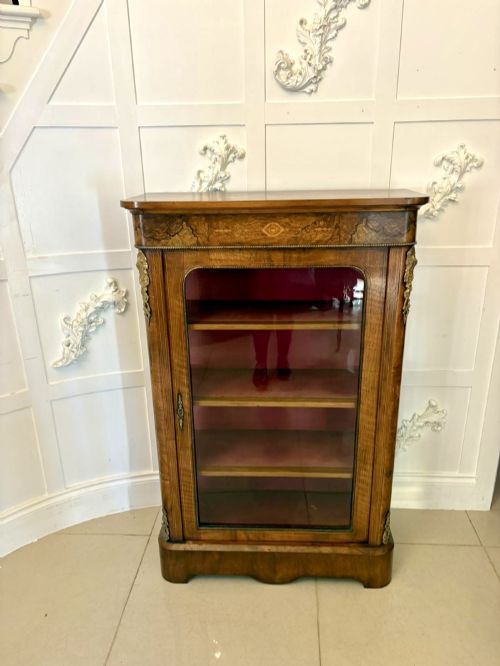
The selection extends across related forms from the nineteenth century, taking in Victorian pier cabinets and late nineteenth-century mahogany bookcases fitted with glass doors. Pieces range from small tabletop collectors' cabinets to tall corner cupboards designed to utilise domestic space efficiently.
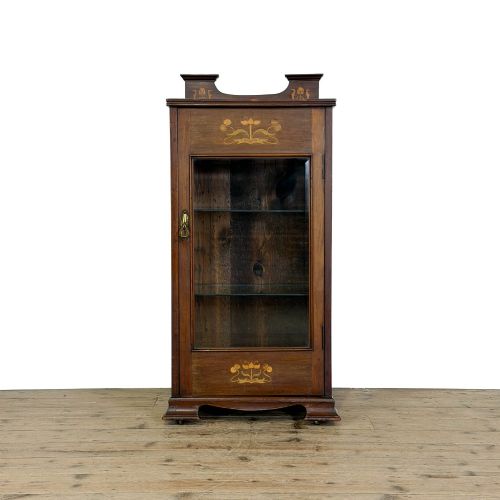
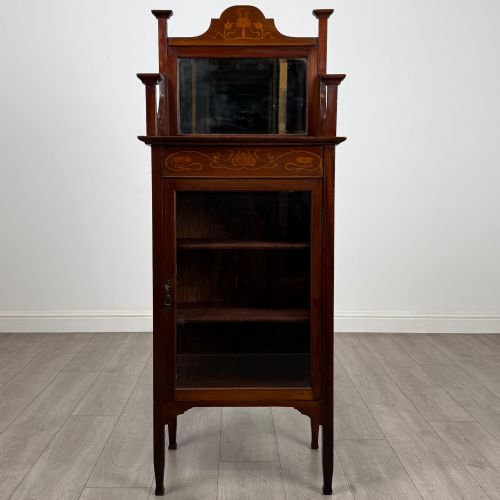
Stylistic revivals dominate the records, with Sheraton Revival and Georgian Revival designs appearing alongside occasional Arts and Crafts and Art Nouveau examples. Makers and workshops drew heavily on eighteenth-century precedents while adapting proportions for Edwardian drawing rooms.
Materials and Techniques
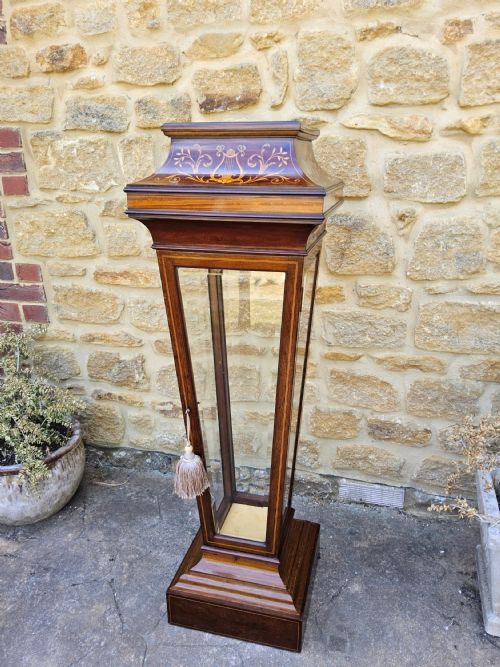
Cabinet makers relied heavily on mahogany as a stable ground timber, frequently pairing it with walnut, burr walnut, rosewood, and satinwood. These woods provided contrasting tones necessary for the geometric banding and decorative panels characteristic of the period.
Inlay and marquetry form the primary decorative vocabulary, executed using contrasting veneers set flush into the primary timber. Glass panels are held within glazing bars in doors and sides, while brass hardware secures doors and internal shelving.
The selection includes corner cabinets, bijouterie tables, and full-height bookcase combinations.
Distinctions in Quality
The refinement of the timber selection and the precision of the inlay separate standard production from finer work. Superior examples exhibit tightly figured mahogany and carefully contrasted satinwood banding that follows structural lines without gaps or crude filler.
Proportion and glazing detail also determine grade, where slender glazing bars and balanced cornices reflect greater labour than heavy frames. The integration of curved bowed glass doors and fitted lined interiors further marks out pieces produced by leading workshops.
James Hicks·Maple And Co
The Edwardian Inlaid Display Case Glossary
- Pier cabinet
- A low cabinet designed to stand against the wall space between windows. These pieces often feature glazed doors and decorative wood inlay.
- Bijouterie table
- A glass-topped table constructed specifically for displaying small ornaments, medals, or jewellery. They frequently stand on slender legs with hinged glazed lids.
- Sheraton Revival
- A late nineteenth and early twentieth-century design movement imitating the neoclassical style of Thomas Sheraton. It relies on satinwood inlay, tapered legs, and balanced geometric forms.
- Marquetry
- The art of applying pieces of veneer to a structure to form decorative patterns. Craftsmen use various tinted woods to build up floral or classical motifs.
- Vitrine
- A glass display cabinet used for holding porcelain and curiosities. The term often describes tall freestanding pedestal cabinets with glass on multiple sides.
Edwardian Inlaid Display Case: Frequently Asked Questions
What is an Edwardian inlaid display case used for?
These cabinets were originally designed to protect and exhibit delicate porcelain, silverware, and collected curiosities in the formal rooms of Edwardian homes. The glass panels allowed owners to display their prized possessions while keeping dust away.
Today, they serve much the same purpose in modern interiors. Collectors use them to organise and highlight small objects, ceramics, and books while adding a period focal point to a room.
How do I distinguish Edwardian from Victorian cabinets?
Edwardian cabinets generally appear lighter in build and colour, frequently employing satinwood inlay on mahogany grounds with slender, tapered legs. Victorian equivalents from earlier decades tend to use heavier timbers like burr walnut, feature darker finishes, and often incorporate substantial plinths.
Revival styles bridge the gap, but the overall shift towards airier proportions defines the turn-of-the-century aesthetic. Examining the internal construction and secondary woods often confirms the period of manufacture.
Where should I place a corner display cabinet?
Corner display cabinets suit awkward angles and empty room junctions where standard rectangular furniture would block circulation. They draw the eye into unused space while providing ample vertical display area.
Positioning them away from direct sunlight protects both the timber finishes and the displayed items from fading. Placing them near light sources helps illuminate the interior through the glazed sides.
What is a bijouterie table?
A bijouterie table is a specialised display piece featuring a glazed top and often glazed sides, standing on high legs. It allows items like medals, small silver pieces, and miniatures to be viewed from above.
These tables were popular in drawing rooms for interactive display. The interior is typically lined with fabric to cushion delicate objects resting inside.