

Edwardian Inlaid China Cabinet
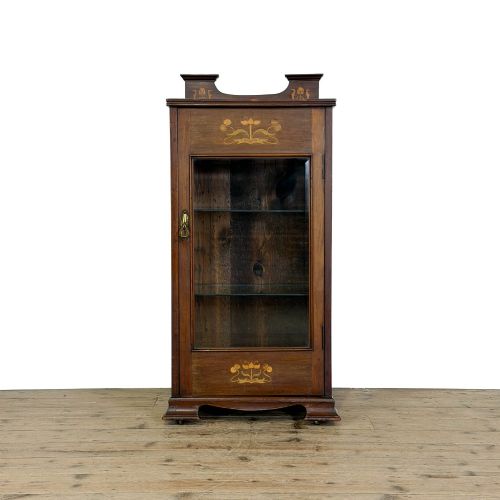
An edwardian inlaid china cabinet brings delicate woodcraft and glazed display space together to showcase porcelain in any reception room.

Edwardian Inlaid China Cabinet
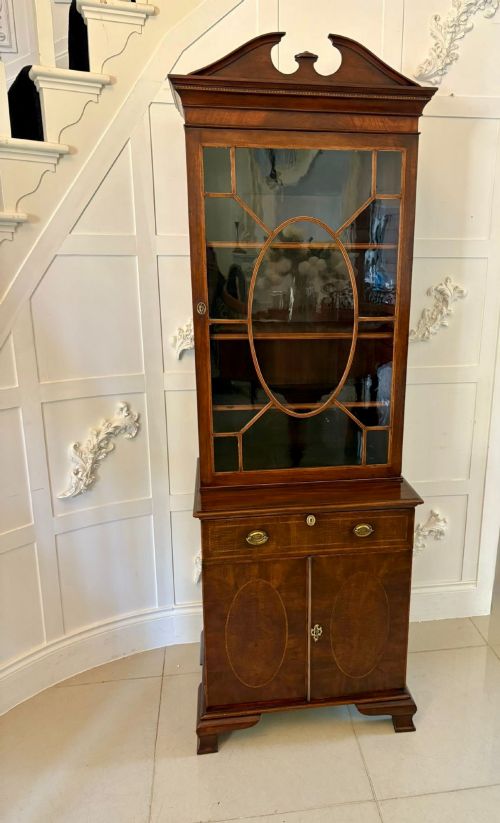
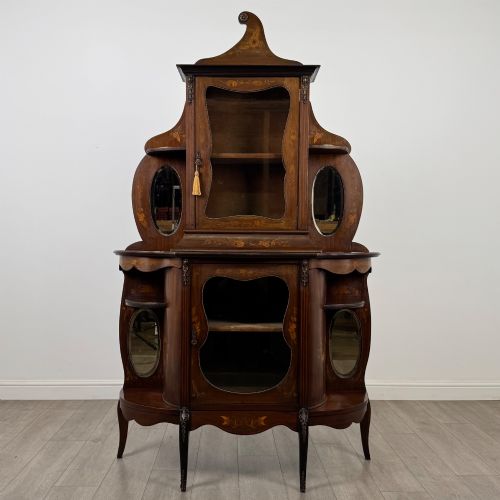
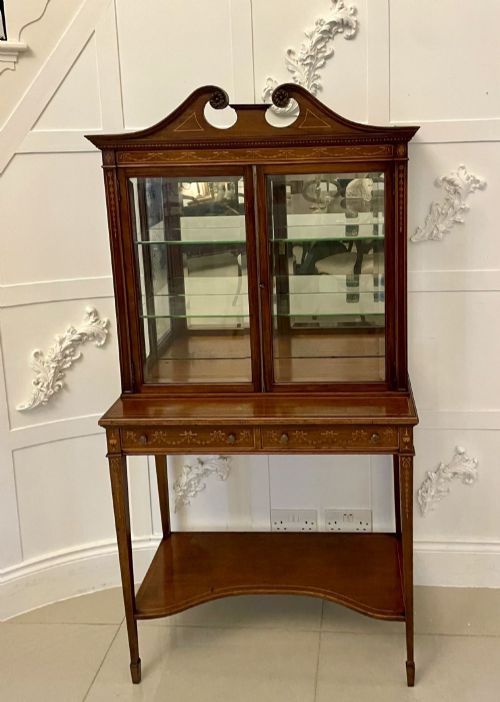
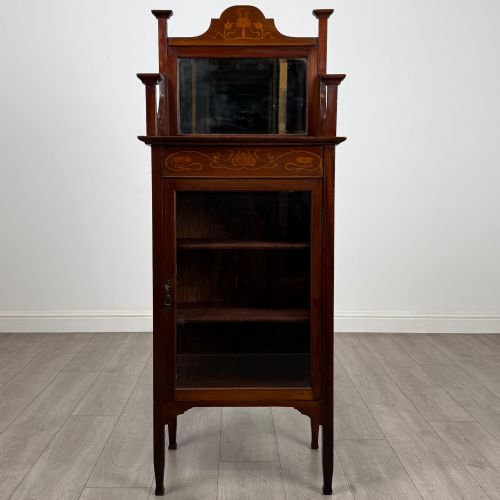
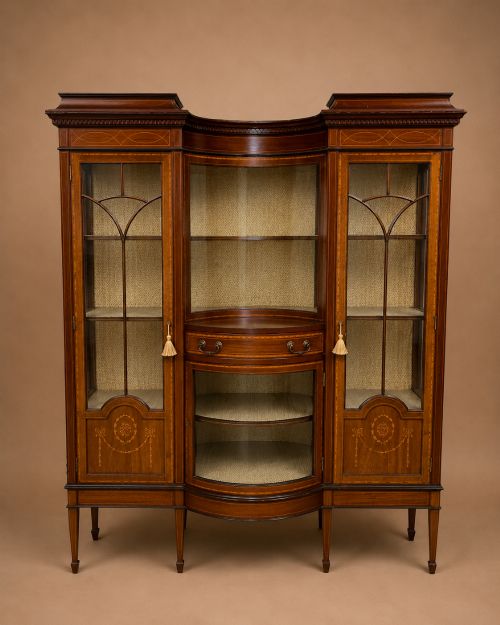
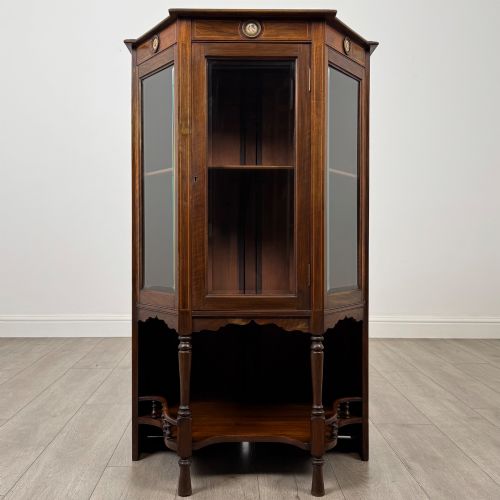
An edwardian inlaid china cabinet is primarily a glazed piece of furniture designed to protect and display porcelain or glassware. The form spans the Edwardian period and the late nineteenth century, drawing heavily on Sheraton Revival aesthetics alongside occasional Art Nouveau influences.
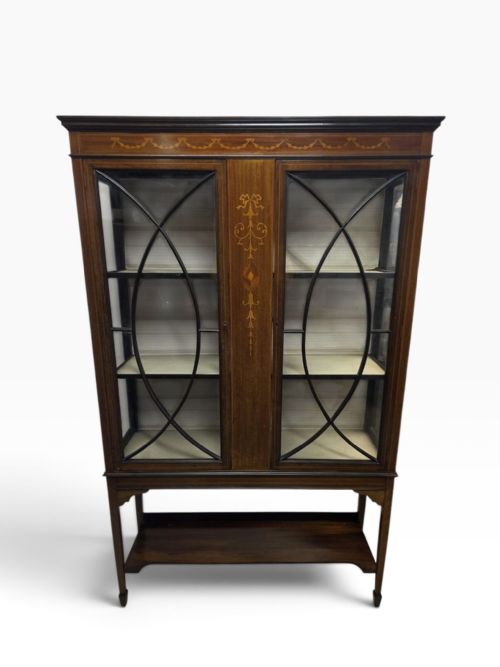
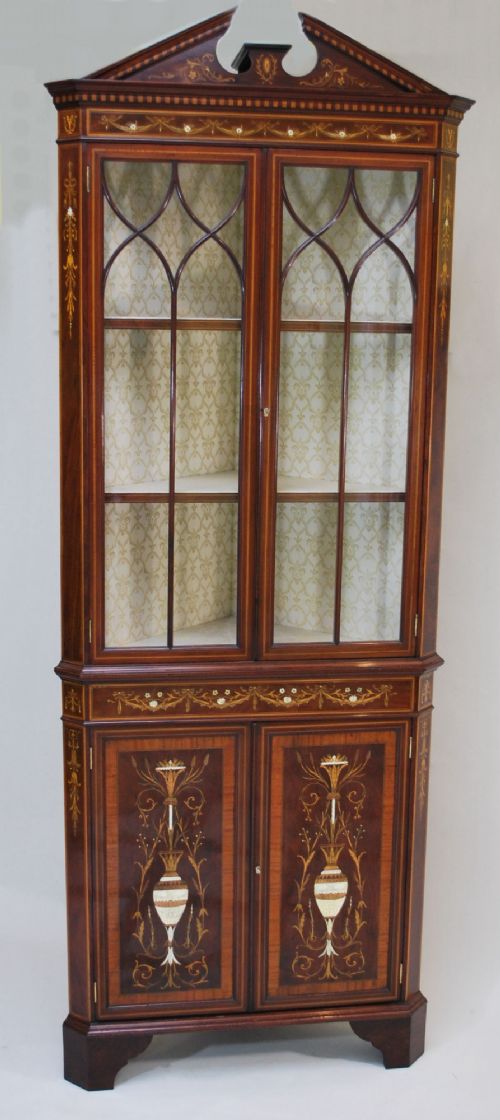
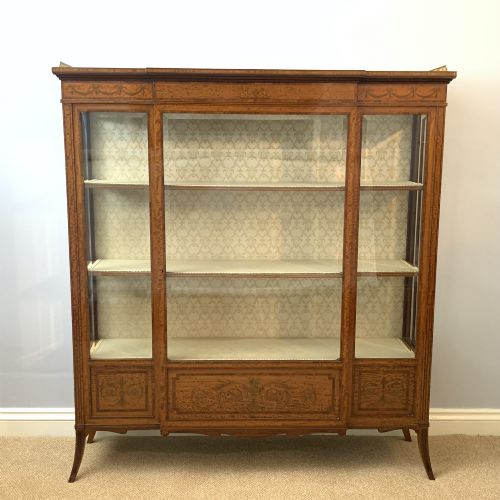
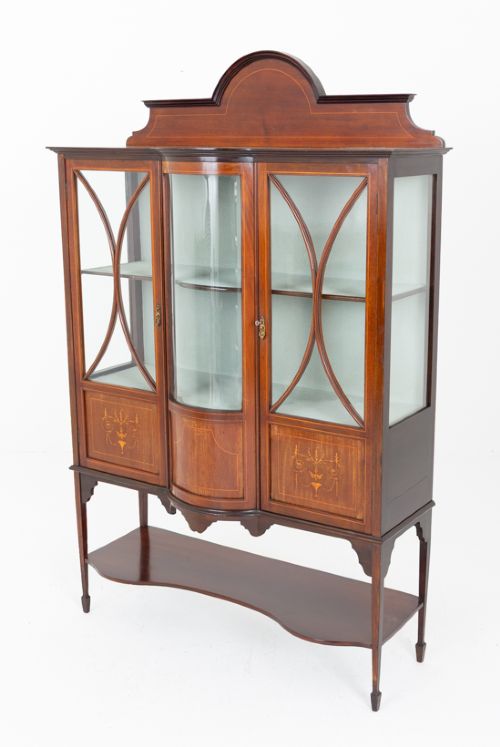
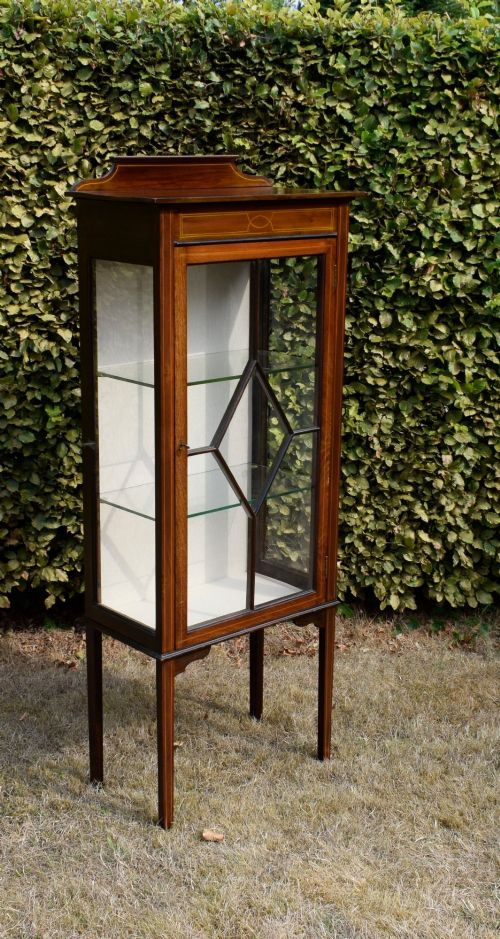
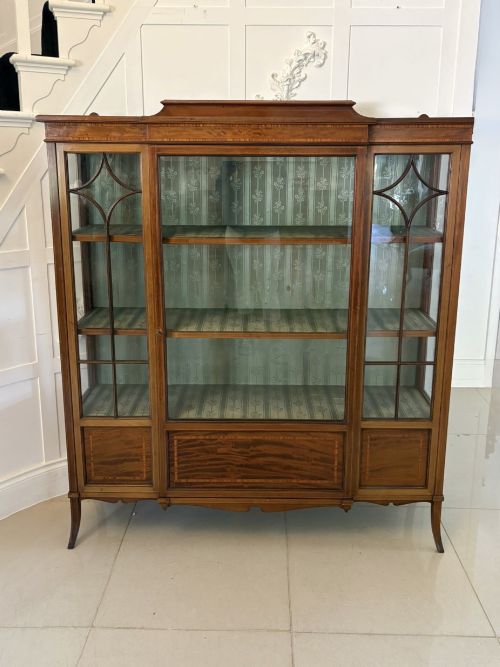
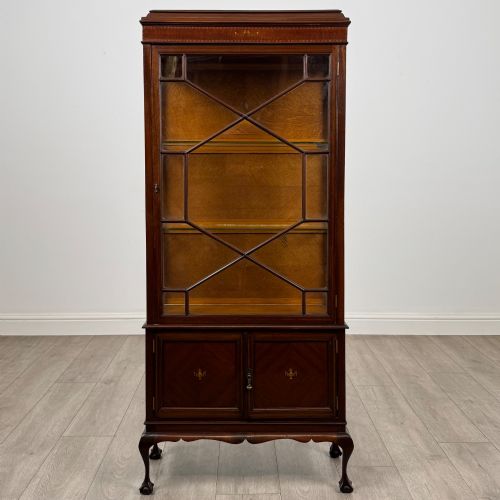
Most examples found here are constructed from mahogany, often enriched with satinwood or general wood inlay. Cabinets appear in various formats including straight-fronted two-door versions, corner units, bow-fronts, and serpentine shapes.
Makers and retailers such as Edwards & Roberts, Maple & Co., and Shapland and Petter contributed significantly to the output recorded in the archive and current listings. These pieces range from compact single-door cabinets to substantial two-part breakfront designs.
How they were made
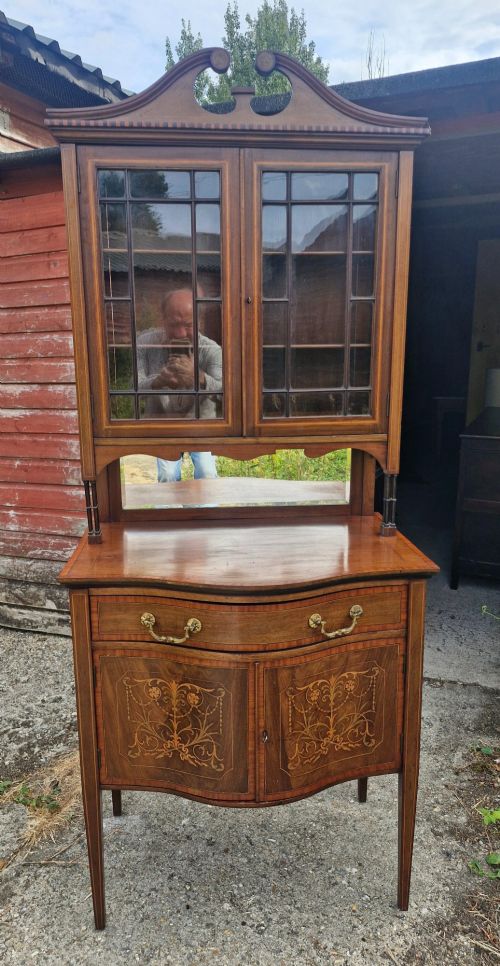
Cabinet makers utilised solid timber frames combined with stable veneers, selecting mahogany as the primary structural wood. Satinwood and contrasting dark timbers were cut finely to create intricate floral marquetry and linear stringing across the doors and cornices.
Glazing techniques involved individual glass panes held in place by wooden astragal bars, sometimes arranged in geometric or curving patterns. Brass hardware and mirrored interior backs were frequently integrated to enhance light reflection within the display compartments.
Several compact examples include mirrored backs originally intended to multiply the visual impact of small ceramic teacups.
What varies in quality
The sophistication of the marquetry and the precision of the inlay work separate standard workshop output from exceptional cabinet-making. Dense, sharply cut floral designs and well-balanced satinwood banding indicate higher workshop standards.
Construction details such as curved bow-front or serpentine doors, substantial mahogany framing, and maker signatures from firms like Edwards & Roberts elevate the standing of a piece. The integration of original glass, functional brass locks, and mirrored backs further distinguishes finer examples.
Edwards & Roberts·Maple & Co·Shapland and Petter
The Edwardian Inlaid China Cabinet Glossary
- Marquetry
- Decorative veneer work formed by fitting together small pieces of various woods to create pictorial or floral patterns. This technique defines the surface ornamentation on many cabinet doors.
- Astragal
- A small wooden moulding used to hold glass panes within a frame. These bars create the glazed lattice work characteristic of display cabinet doors.
- Satinwood
- A pale, lustrous timber native to India and Ceylon, utilised extensively for contrasting stringing and decorative panels. It provides a bright visual counterpoint to darker mahogany carcases.
- Breakfront
- A piece of furniture where the central section projects forward from the flanking sides. This architectural layout adds depth and visual weight to larger display cabinets.
- Bow-front
- A convex curved cabinet front that softens the linear geometry of the room. This shape requires skilled carpentry to form the curved glass and matching doors.
Edwardian Inlaid China Cabinet: Frequently Asked Questions
How do I clean the interior?
Use a soft, dry cloth to dust the glass shelves and wooden surfaces without applying modern chemical sprays. Care must be taken around delicate inlaid banding and original mirror plates.
Opening the doors periodically allows the interior to air out safely. Avoid placing damp or unsealed objects directly onto the wood.
Can these hold heavy china?
Most cabinets are built to support standard porcelain collections on their original wooden or glass shelves. Overloading individual tiers should be avoided to protect the internal supports.
Heavier service sets are better distributed across the lower wooden base sections. Checking the shelf supports ensures stability for heavier ceramic pieces.
Are the keys usually original?
Many surviving cabinets retain their working brass locks and matching keys, though replacements are common in antique furniture. Original keys often feature simple barrel designs specific to the maker.
Locks should be turned gently without applying excessive force to the mechanism. A professional locksmith can supply appropriate period-style replacements if required.