




Edwardian Inlaid Card Table
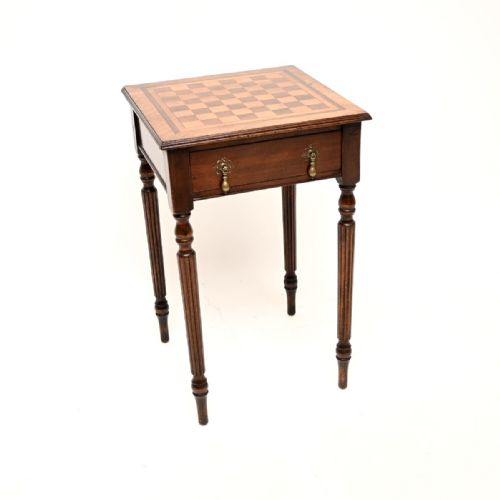
An edwardian inlaid card table combines clever folding mechanics with delicate satinwood or boxwood enrichment, offering a versatile surface that transforms from a compact side table into a full gaming board.
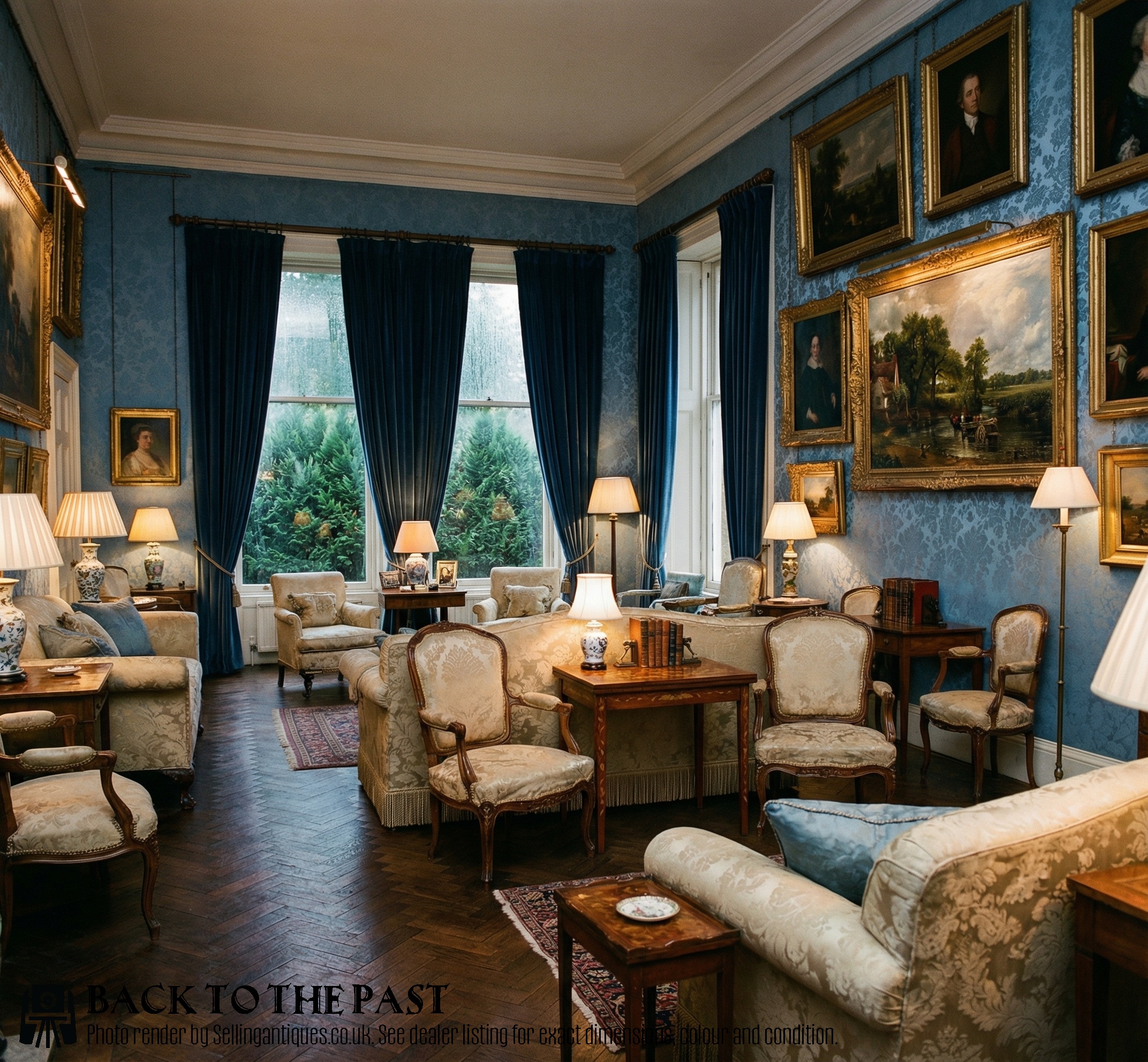
Edwardian Inlaid Card Table
An edwardian inlaid card table is a piece of furniture designed specifically for parlour entertainment, emerging strongly during the Edwardian period alongside earlier Georgian, Regency and Victorian precedents.
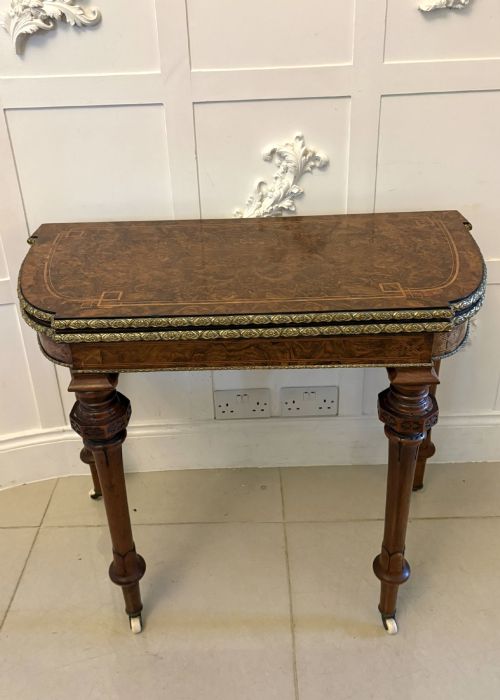
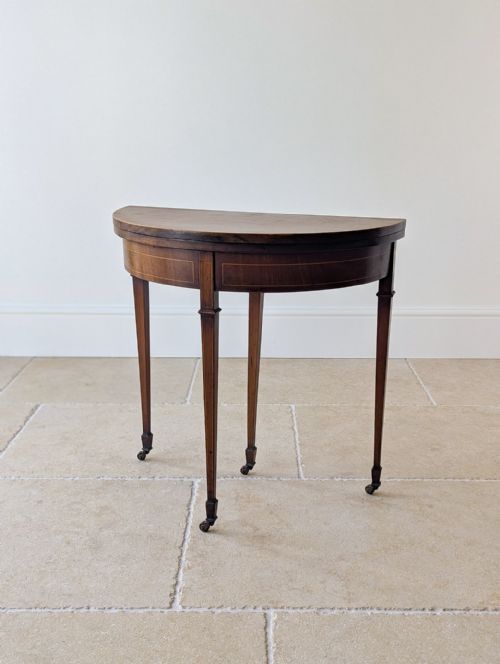
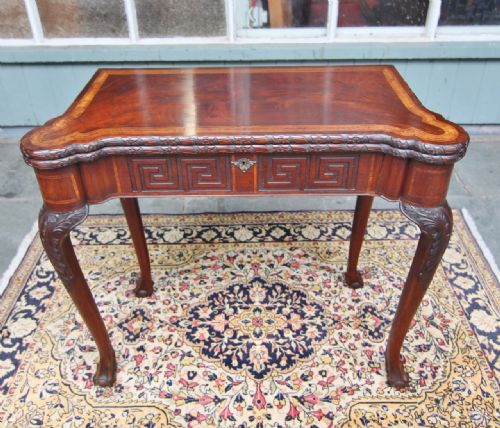
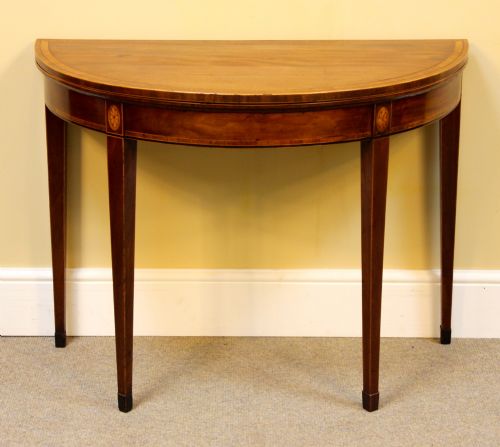
Buyers also encounter demilune or half-round folding tops and fold-over card tables in mahogany, rosewood and satinwood, reflecting popular Sheraton Revival and classical design influences.
Materials and Construction
Timbers such as mahogany, rosewood and burr walnut provide the solid structural carcass and richly figured veneers for these tables, complemented by contrasting secondary woods like boxwood.
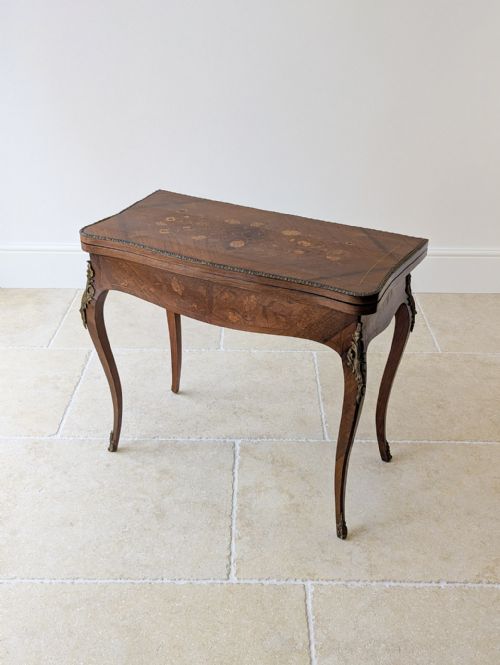
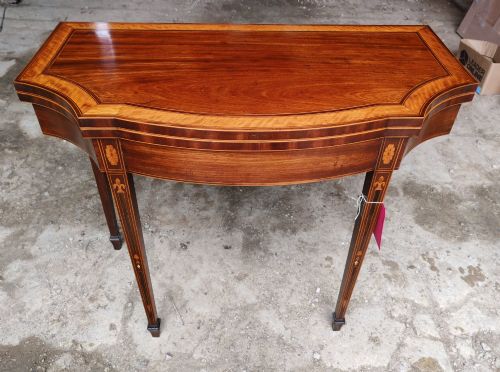
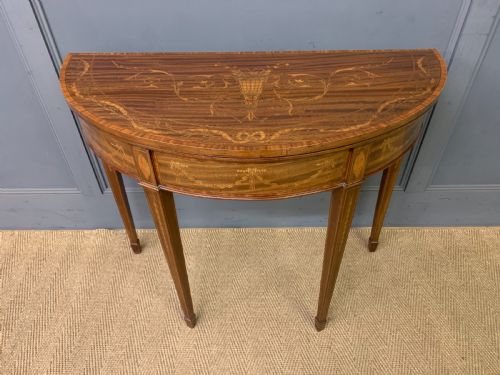
Inlay and marquetry techniques utilise satinwood, ebony and various dyed woods to create delicate floral swags, classical urns, and geometric banding across the tops and friezes.
Edwardian Inlaid Card Table Retail Price Guide 2026
Typical asking prices for edwardian inlaid card table among the pieces listed under this phrase on Sellingantiques today, from the lower quarter to the upper quarter. They describe what is for sale here now, not the wider market.
Materials recur across multiple eras, pairing foundational mahogany and rosewood with decorative satinwood, boxwood, brass and ormolu mounts.
Craftsmanship and Proportion
Quality rests in the precision of the folding mechanisms and the tightness of the joinery, ensuring the leaves align perfectly when closed and remain stable when opened for play.
Finer examples display crisp, hand-cut marquetry and dense, highly figured timber veneers rather than printed motifs or plain secondary woods, maintaining balanced proportions throughout the legs and frame.
Maple & Co·Howard & Son's
The Edwardian Inlaid Card Table Glossary
- Envelope table
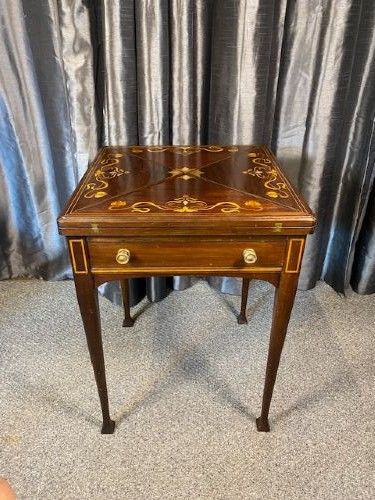
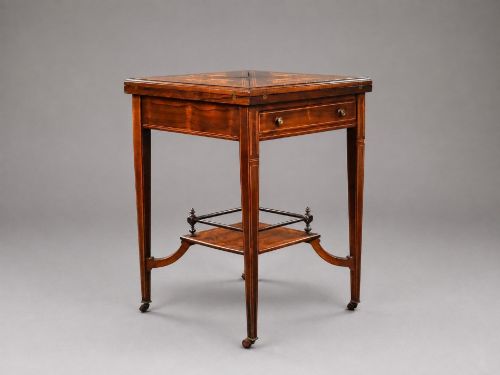
- A square card table with four triangular flaps that rotate and fold open diagonally to reveal the playing surface. This ingenious design was immensely popular during the Edwardian period.
- Demilune
- Half-moon shaped furniture designed to stand flush against a wall when folded. These tables often feature fold-over tops supported on swinging rear legs.
- Marquetry
- Decorative patterns formed by fitting together thin veneers of various woods, ivory or shell onto a structural carcass. It differs from inlay by covering the entire surface in a picture or pattern.
- Baize
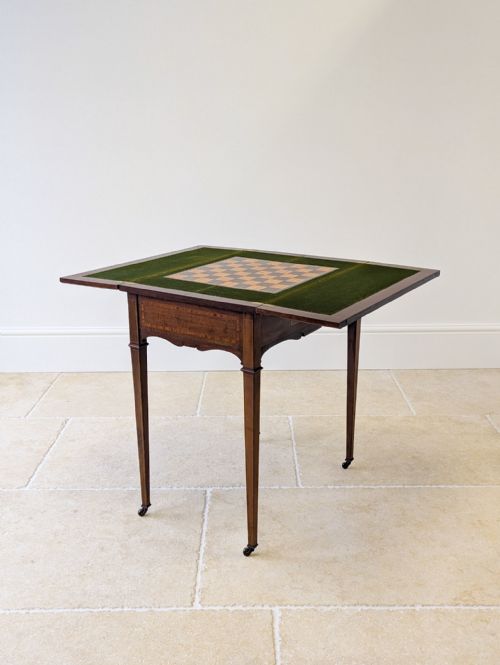
- A coarse woolen fabric, typically green or red, used to line the playing surface of card and games tables. It provides a soft, non-slip texture for handling playing cards.
- Sheraton Revival
- A late nineteenth and early twentieth-century style inspired by the furniture designs of Thomas Sheraton. It favours light mahogany and satinwood construction with delicate floral inlay.
Edwardian Inlaid Card Table: Frequently Asked Questions
How do envelope card tables work?
An envelope table operates through a pivoting top where the four triangular leaves are hinged independently. As you rotate the top forty-five degrees, the triangular flaps unfold outward to create a square table.
Underneath this action, some models feature an interconnected mechanism that raises an internal compartment or simply uncovers the baize-lined interior ready for play.
What were these tables used for?
These tables served primarily for evening parlour games, whist, bridge and chess in domestic homes. When not in use for gaming, the folded top allowed the piece to function as a decorative side or lamp table against a drawing room wall.
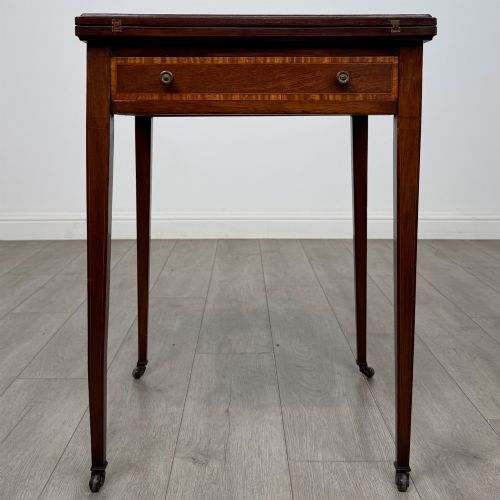
The inclusion of small drawers often provided storage for card decks, counters and score pads.
How do I care for the wood and inlay?
Keep these tables away from direct sunlight and radiators to prevent the delicate satinwood and boxwood veneers from drying out or lifting. Regular dusting with a dry, soft cloth is sufficient for maintenance.
Avoid placing damp glasses or hot items directly on the polish, and use coasters or protective pads if the table is utilised daily.
How can I tell an Edwardian piece from a Georgian one?
Edwardian tables, particularly those made around nineteen hundred, often utilise lighter construction methods and machine-assisted veneers alongside hand-cut satinwood inlay. They frequently appear as envelope forms with tapered spade feet.
Georgian tables from the eighteenth century typically rely on heavier solid timbers, simpler fold-over demi-lune designs, and carved mahogany details rather than extensive marquetry panels.