

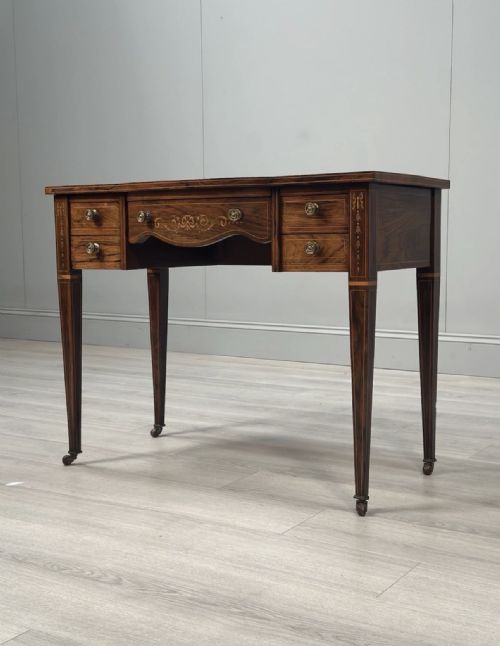
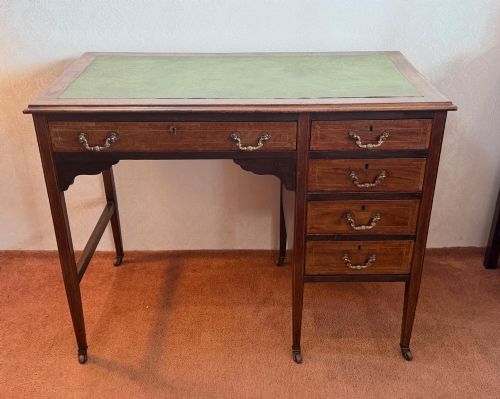
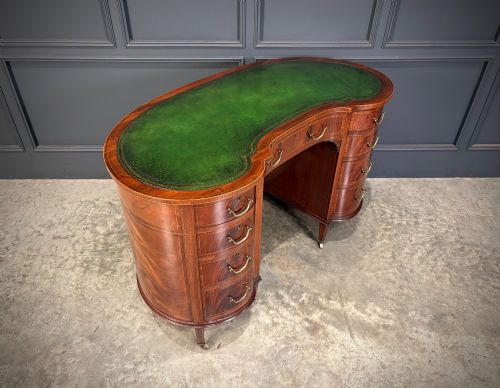
Edwardian Inlaid Bureau Desk
An edwardian inlaid bureau desk brings refined marquetry and structured writing space into a room, combining practical storage with elegant proportions.
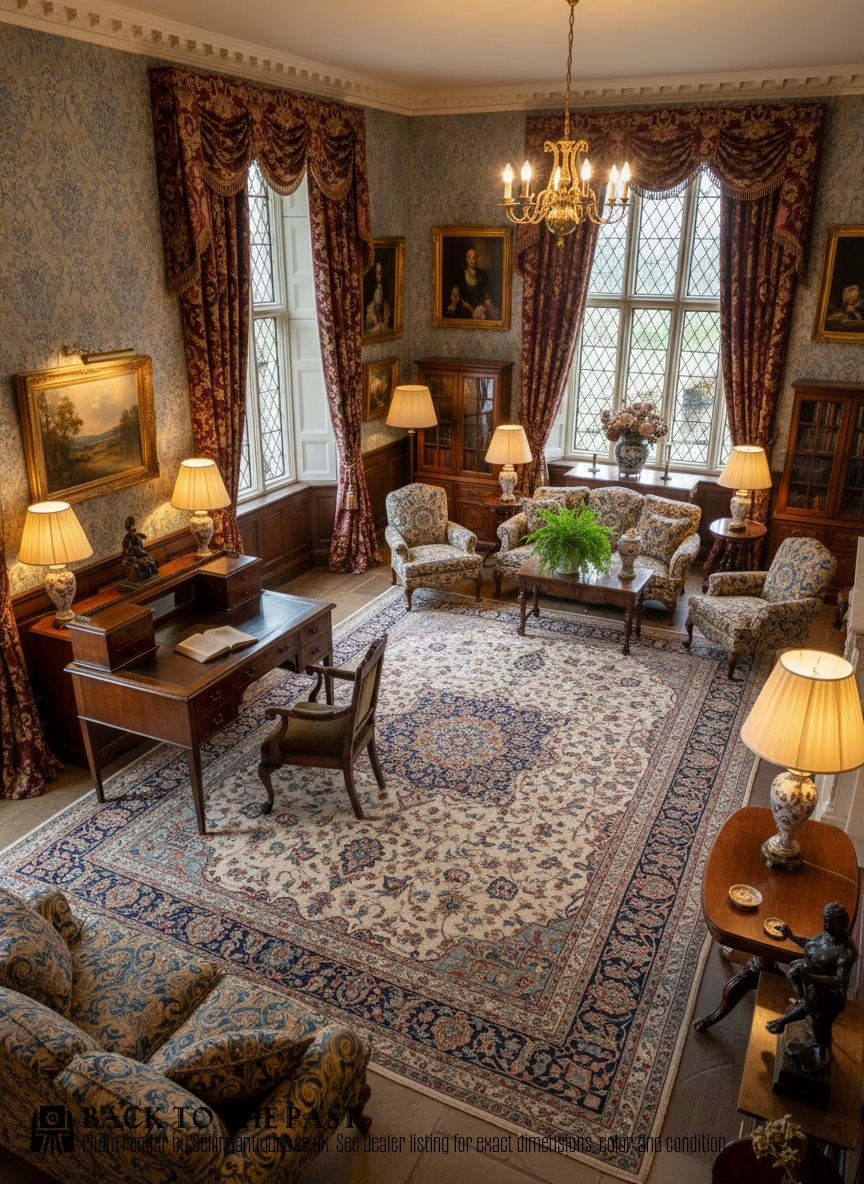
Edwardian Inlaid Bureau Desk
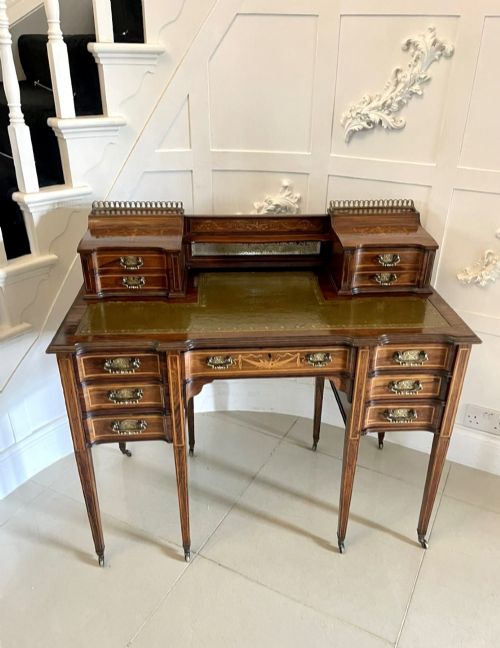
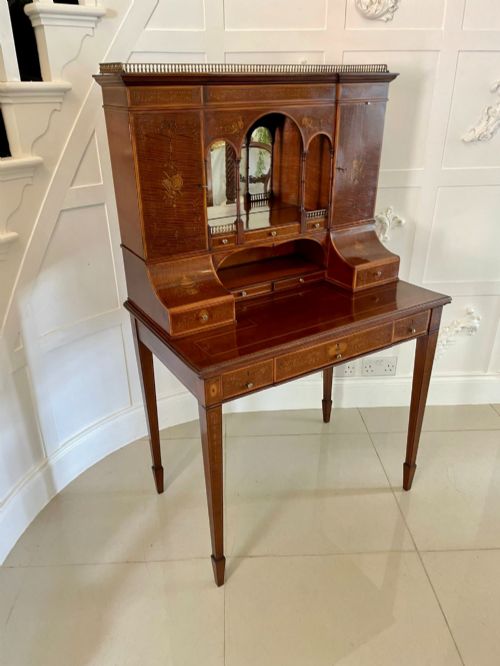
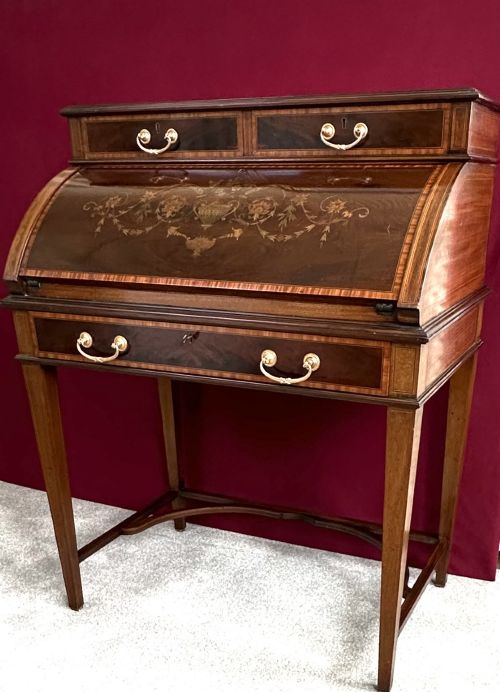
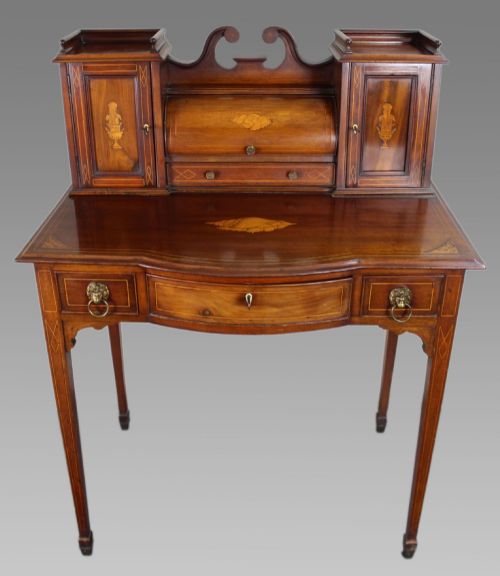
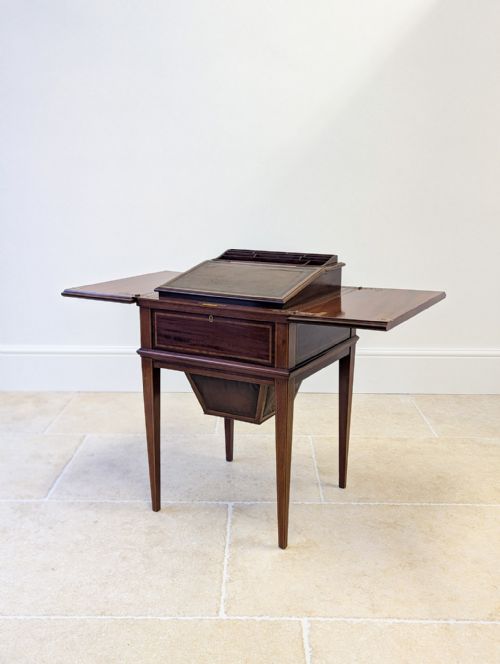
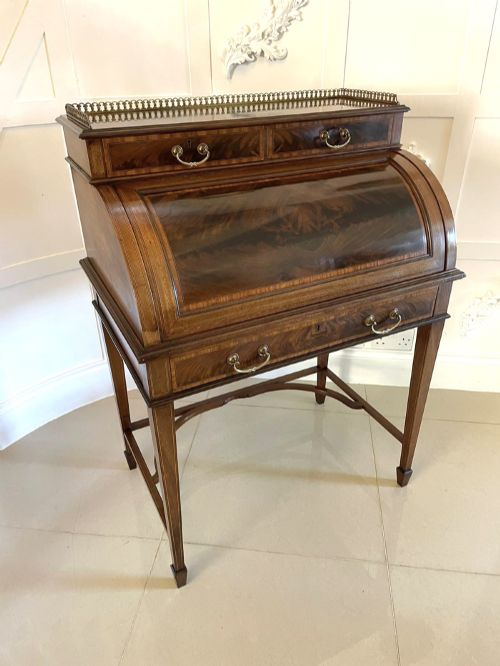
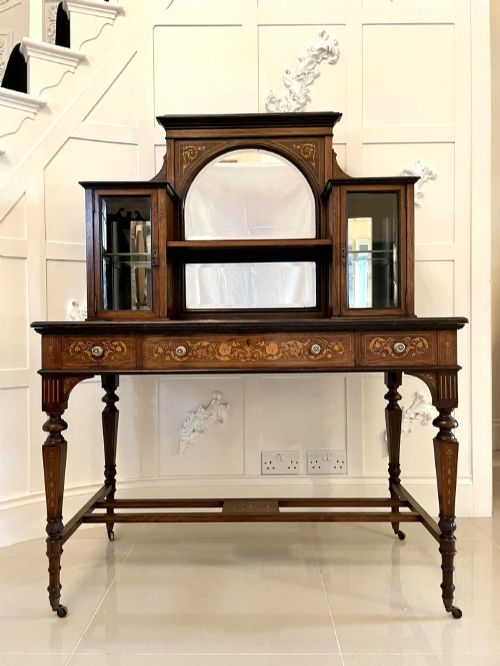
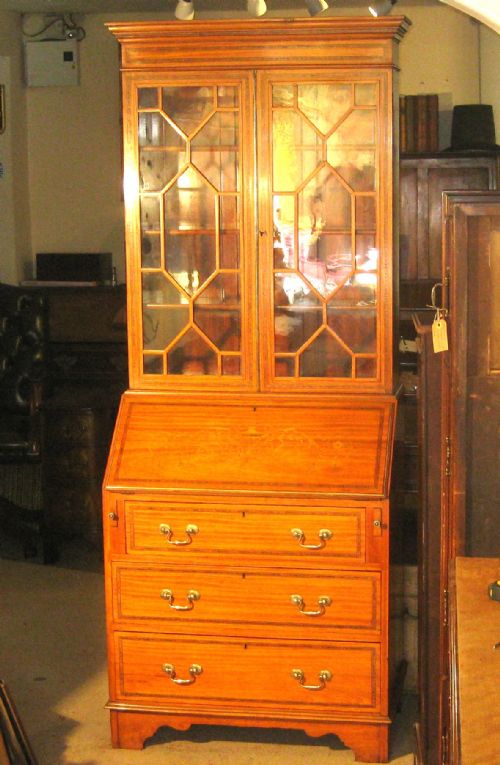
When searching for an edwardian inlaid bureau desk, buyers encounter forms spanning fall-front writing desks, cylinder desks, and comprehensive bureau bookcases dating from the Edwardian era and the late Victorian period. These pieces originate primarily from the turn of the twentieth century, aligning with Edwardian and Sheraton Revival aesthetics that prioritize lighter woods and delicate decorative motifs.
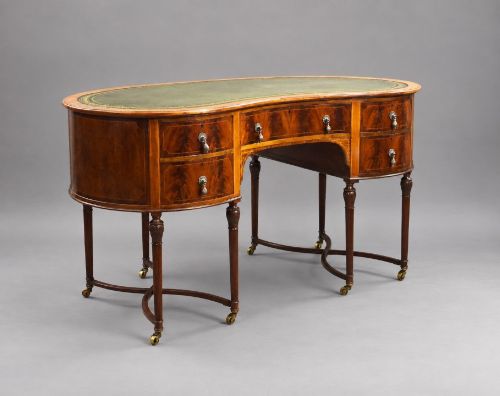
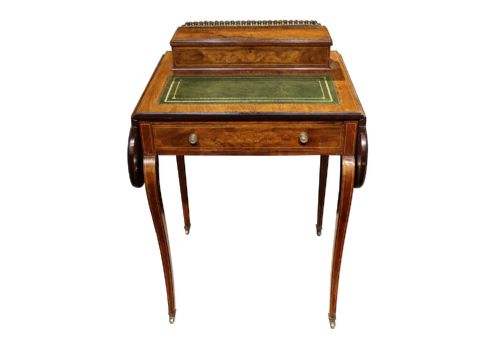
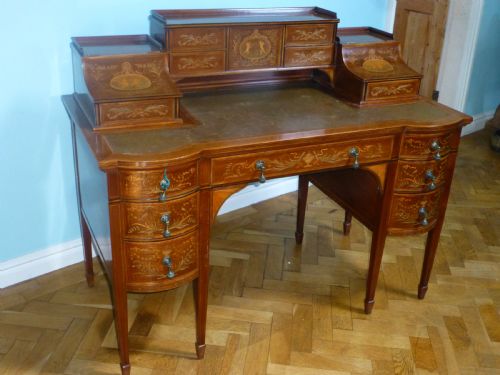
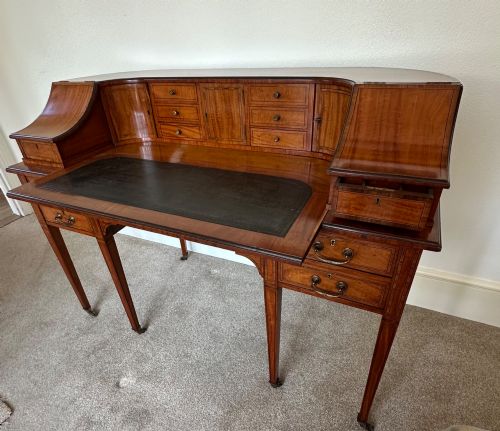
The selection ranges from compact lady's writing tables and kneehole desks to elaborate Carlton House desks and bureau bookcases fitted with internal compartments. Mahogany and satinwood serve as the main timbers, frequently embellished with contrasting boxwood and satinwood inlay to create geometric and floral patterns.
Materials and Construction
Cabinet makers utilised solid timbers and selected veneers of mahogany, satinwood, and rosewood, applying contrasting boxwood and satinwood inlay to accentuate borders and panel centres. Marquetry panels incorporate various tinted woods to form intricate decorative motifs, while internal drawers and stationery compartments reveal secondary timbers such as oak and pine.
Hardware typically comprises cast brass handles and hinges, complementing the polished timber surfaces. Leather insert panels, often tooled with gold leaf, provide a durable writing surface on fall-front desks and writing tables.
Listings feature Edwardian and Victorian periods, incorporating mahogany, satinwood, rosewood, and brass materials across multiple desk forms.
Assessing Quality and Craftsmanship
Quality rests upon the precision of the timber selection and the execution of the inlay work. Finer examples display tightly figured flame mahogany or carefully matched satinwood veneers, alongside crisp, flush marquetry without gaps or lifting edges.
Structural integrity appears in the smooth operation of fall-fronts, cylinder tops, and internal drawers. Pieces bearing maker stamps or plaques indicate workshop attribution and higher standards of period cabinet making.
Maple and Co·Edwards and Roberts
The Edwardian Inlaid Bureau Desk Glossary
- Bureau
- A writing desk featuring a sloping fall-front that opens to reveal a fitted interior of small drawers and pigeonholes.
- Carlton House desk
- A horseshoe-shaped writing desk with a raised superstructure of small drawers and compartments curving around the back of the writing surface.
- Marquetry
- Decorative veneer work forming pictures or patterns using various coloured woods, shells, or ivory set into a background veneer.
- Satinwood
- A durable tropical timber with a lustrous yellowish sheen, utilised extensively for cabinet making and fine stringing inlay.
- Sheraton Revival
- A late nineteenth and early twentieth century design movement drawing inspiration from the lighter neoclassical furniture of Thomas Sheraton.
Edwardian Inlaid Bureau Desk: Frequently Asked Questions
How do I use a bureau desk?
The sloping fall-front lowers to create a flat writing surface supported by internal pigeon arms. This reveals small drawers and compartments designed for correspondence and stationery storage.
When writing concludes, the fall-front lifts and secures shut, concealing the contents and presenting a tidy panelled cabinet to the room.
How do I distinguish Edwardian from Victorian desks?
Edwardian desks tend to employ lighter timbers like satinwood and feature restrained Sheraton Revival inlay patterns. They reflect the brighter aesthetic preferences following the turn of the twentieth century.
Victorian pieces often utilise heavier mahogany or rosewood with denser marquetry and darker finishes, pointing to mid to late nineteenth century manufacturing traditions.
Are these desks suitable for daily writing use?
Most models provide adequate writing space, particularly variants featuring inset leather panels and pull-out surfaces. Internal compartments accommodate modern stationery needs while preserving period character.
Care should be taken to protect antique polish and veneered surfaces from moisture and direct heat sources during everyday use.