
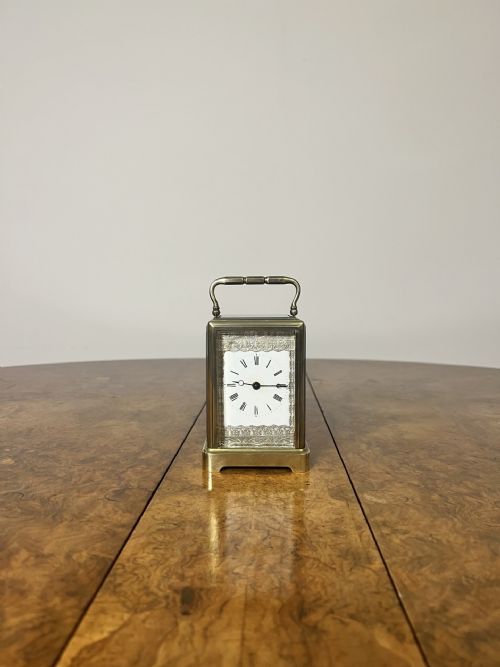


Edwardian Horology Clock
These pieces of edwardian horology clock encompass carriage clocks, wall clocks and mantel pieces that bring mechanical precision and period elegance into a room.
Edwardian Horology Clock
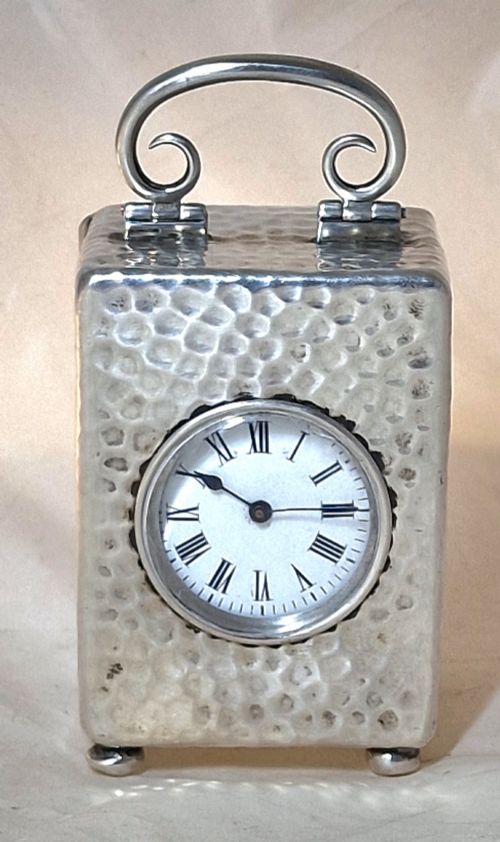
An edwardian horology clock comprises timepieces ranging from portable carriage clocks in brass and silver cases to substantial oak and mahogany wall clocks, mantel clocks and bracket clocks. The selection spans the Edwardian period alongside late Victorian and early twentieth century examples, reflecting diverse domestic and institutional uses from railway stations to drawing rooms.
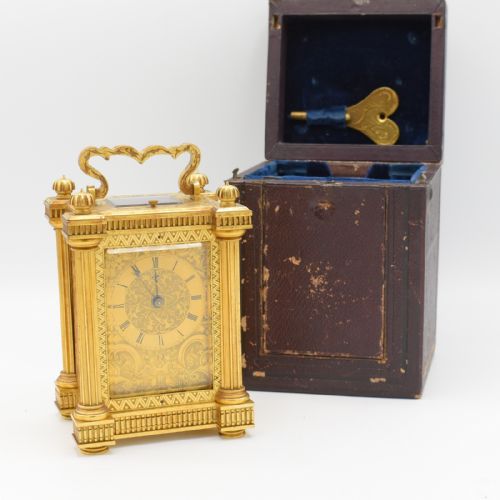
Carriage clocks dominate the portable forms, frequently housed in brass, gilt brass or silver cases with white enamel dials. Wall clocks appear in fusee and drop-dial formats using mahogany or oak, while larger formats include crystal regulators, torsion anniversary clocks and longcase or granddaughter clocks.
Origins stretch across English, French and German makers, bringing together movements such as fusee mechanisms alongside decorative styles like Arts and Crafts pewter, French Belle Epoque and Classical Revival.
Materials and construction
Movements utilise mechanical ingenuity, from standard gear trains to fusee movements designed to maintain even tension as the mainspring winds down. Cases combine cabinet-making skills in carved wood with precision metal casting and glass bevelling.
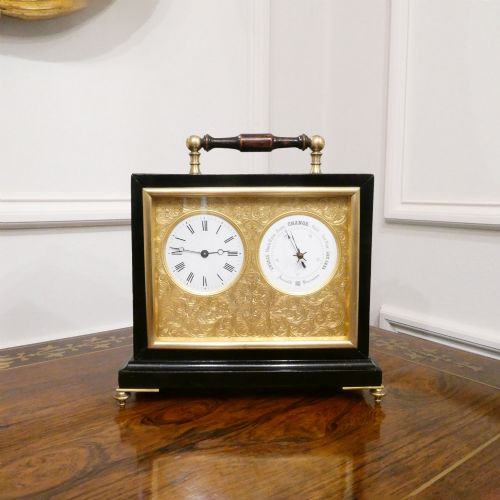
Some clocks came with built-in barometers, ensuring owners could check the weather and the hour in one tidy wooden sweep.
Judging quality
Quality rests upon the refinement of the movement and the integrity of the housing, where heavier brass platforms, signed dial plates and complex complications such as grande sonnerie or alarm functions distinguish superior examples from standard production pieces. Engraved casework and original matching components elevate a piece substantially.
The choice of materials also dictates standing, with solid hardwoods and precious metals outperforming simpler plated or mixed-metal assemblies. Crispness in the casting of brass handles and bezels marks the distinction between workshop output.
Howell & James London·David Veasey for Liberty & Co·Latshea & Sons Edinburgh·Mappin and Webb·Balbiani BROOKLEY·Winterhalder & Hofmeier·Dent of London
The Edwardian Horology Clock Glossary
- Fusee
- A conical pulley used in clock movements to equalise the torque of the mainspring as it unwinds. This mechanism ensures consistent force is applied to the gear train for accurate timekeeping.
- Carriage clock
- A small, portable spring-driven clock designed for travelling during the nineteenth and twentieth centuries. They usually feature a carrying handle and a glass-panelled brass case.
- Torsion clock
- A timepiece regulated by a suspended pendulum that rotates back and forth rather than swinging. Often called an anniversary clock, it requires less frequent winding.
- Crystal regulator
- A mantel clock featuring glass panels on all sides held in a brass or gilt frame. This design allows the pendulum and movement to be viewed from multiple angles.
- Grandre sonnerie
- A striking mechanism that sounds both the hours and the quarters automatically on every quarter hour. It represents a high level of horological complexity.
Edwardian Horology Clock: Frequently Asked Questions
How do I wind a carriage clock?
Most carriage clocks use a key inserted into a square arbour on the back plate to wind the mainspring. Care must be taken not to overwind the spring.
Moving the hands should be done gently, following the manufacturer instructions typical of the specific movement type.
What is a fusee wall clock?
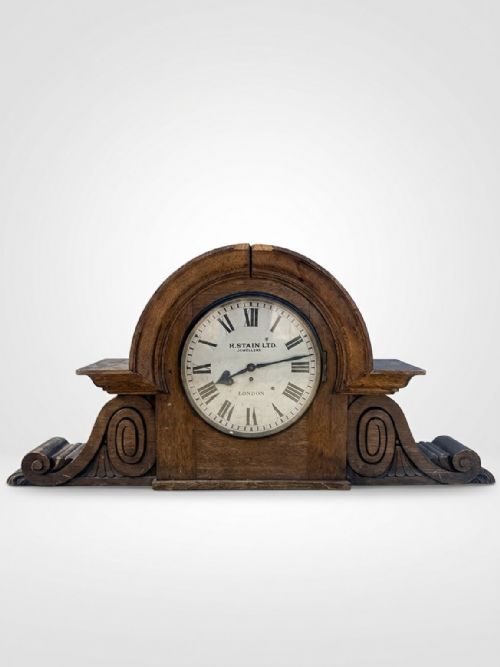
A fusee wall clock relies on a fusee chain or cord connected to a conical drum to drive the mechanism. These were standard for reliable timekeeping in offices, railways and grand halls.
Their simple dials and robust mahogany or oak frames made them ideal for public spaces.
How do I date an antique clock?
Dating relies on maker signatures, hallmarks on silver or metal cases, and stylistic cues such as Edwardian inlay or Victorian revival motifs. Movement stamps and patent numbers also offer clues.
Comparing construction methods against known regional workshop timelines helps narrow the decade of manufacture.
Where should I place a heavy bracket clock?
Bracket clocks and wooden mantel clocks require a stable, level surface away from direct heat sources and damp environments. Wall clocks need secure mounting to masonry or strong studwork to bear the weight.
Keeping the clock level ensures the pendulum beats evenly and the escapement functions correctly.