
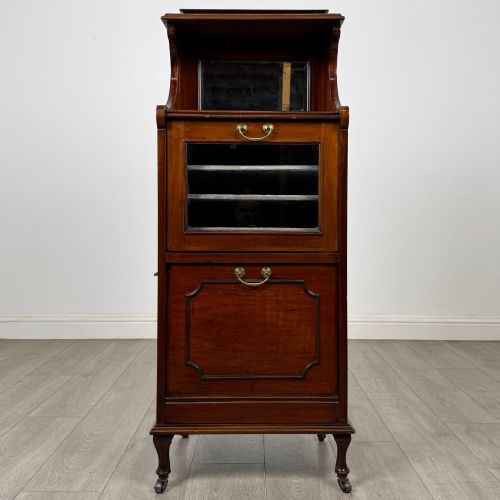
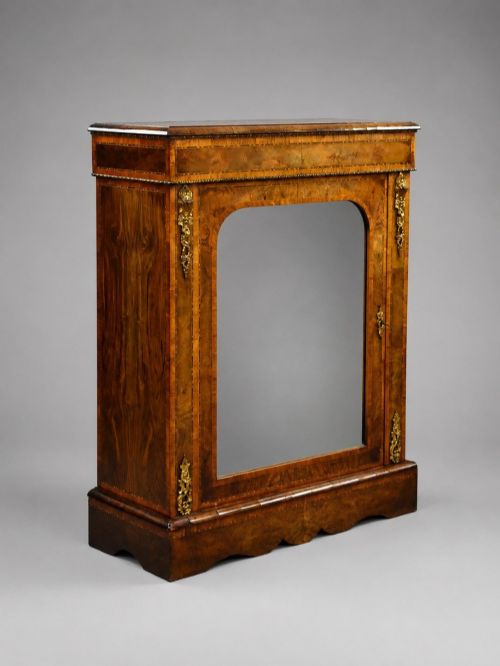
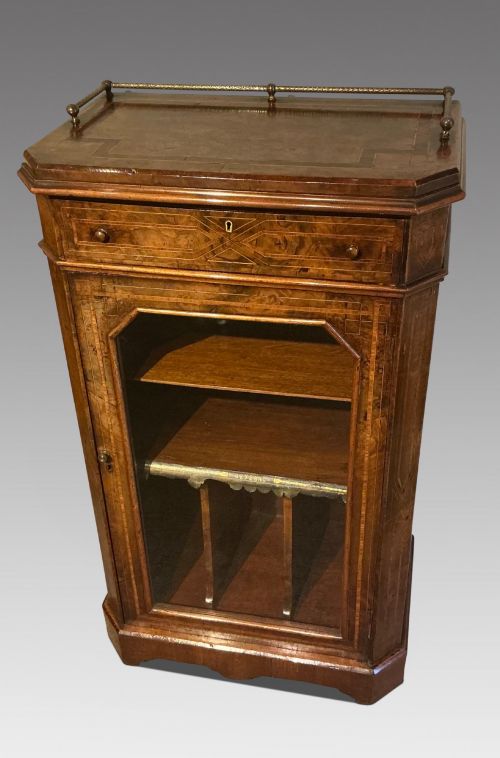
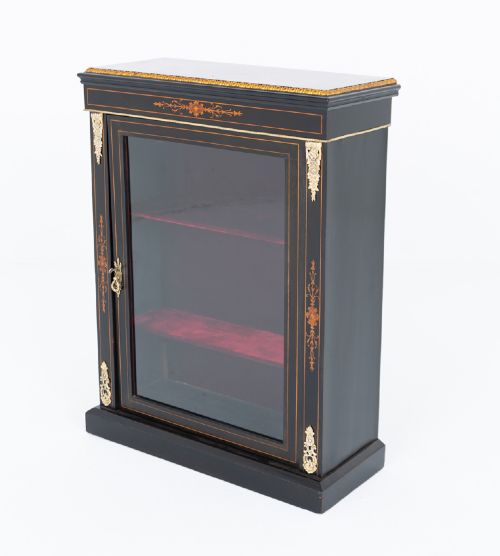


Edwardian Glazed Music Cabinet
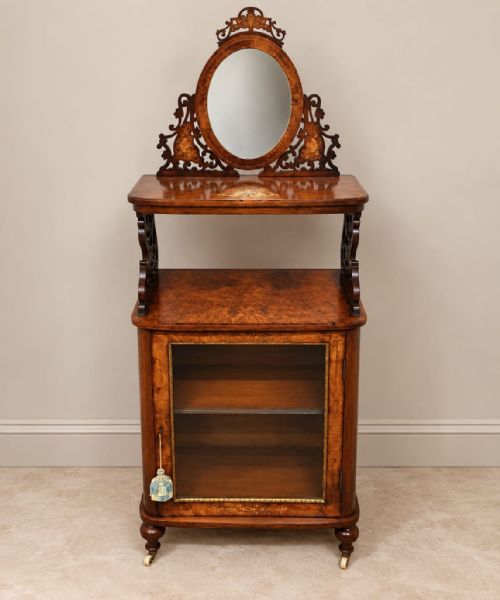
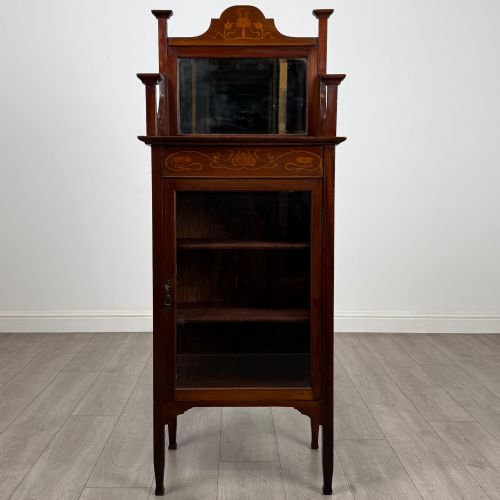
These edwardian glazed music cabinets keep scores organised behind glass, combining neat proportions with fine marquetry.
Edwardian Glazed Music Cabinet
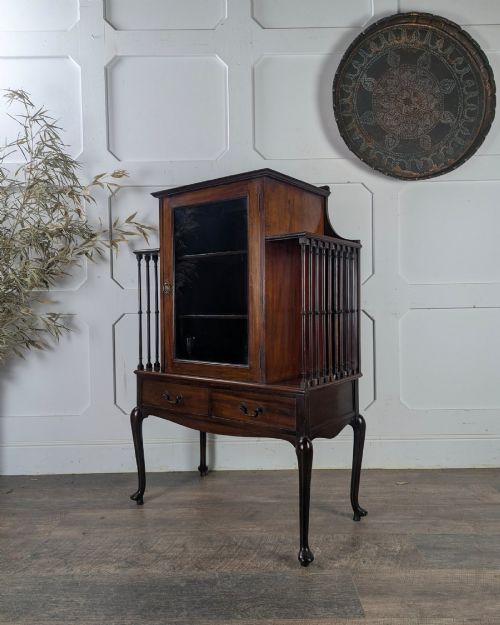
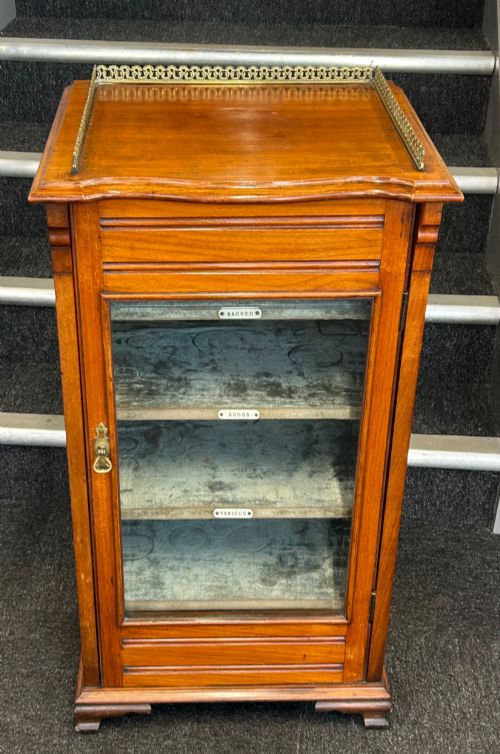
An edwardian glazed music cabinet brings upright storage to domestic interiors, designed specifically to house sheet music and scores. The most frequent versions on this page date from the Edwardian period and late Victorian eras, taking the form of upright cabinets with glazed upper doors.
Makers shaped these pieces from mahogany, walnut, and rosewood, often incorporating satinwood inlay and brass handles. Alongside dedicated music cabinets, the selection includes related pier cabinets and display cabinets that share the same compact footprint and glazed presentation.
Materials and construction methods
Joiners built these cabinets using solid timber carcases faced with mahogany, walnut, and rosewood veneers. Burr walnut and yew wood appear frequently to add decorative grain pattern across the principal surfaces.
Inlaid decoration in satinwood and other contrasting timbers provides linear detail and classical motifs. Glazed doors utilise clear glass set into timber frames, complemented by brass handles and hinges.
Many of these cabinets spent a century holding parlour piano scores before finding new life displaying modern collections.
Distinguishing quality across the range
The standard of timber selection and intricacy of the inlay set the finer examples apart from simpler workshop output. Finely figured burr walnut and delicate contrasting stringing indicate careful attention by the cabinet maker.
Hardware quality also marks the tier of a piece, with cast brass fittings and clean glazing bars showing superior craftsmanship. Original internal divisions for sheet storage preserved intact add further merit.
The Edwardian Glazed Music Cabinet Glossary
- Glazed door
- A timber frame enclosing glass panes to protect contents while allowing visibility. This feature distinguishes display and music cabinets from purely enclosed storage.
- Inlay
- Pieces of contrasting timber fitted flush into a surface to form decorative patterns. Satinwood is frequently used for this purpose on mahogany and rosewood grounds.
- Pier cabinet
- A slender upright cabinet designed to stand against a narrow wall space or between windows. These share proportions and glass doors with many music cabinets.
- Burr walnut
- Timber taken from a tree growth showing swirling, highly decorative grain patterns. It provides a rich visual texture on Victorian and Edwardian cabinet doors.
Edwardian Glazed Music Cabinet: Frequently Asked Questions
What fits inside an edwardian glazed music cabinet?
These cabinets were originally designed to hold sheet music, folios, and scores within their upright shelving or specialised drawers. The internal depth and adjustable shelves also accommodate books, small display items, and household collections.
Today, owners utilise the glass-fronted compartments to store and exhibit porcelain, glassware, or media collections while keeping dust away from delicate items.
How do I date an edwardian glazed music cabinet?
Dating relies on examining the timber species, secondary woods inside drawers, and the style of inlay decoration. Edwardian examples often feature lighter mahogany or rosewood with delicate satinwood banding, whereas Victorian pieces tend to use heavier walnut and bolder brass hardware.
Construction methods such as dovetailing on internal drawers and the type of glass used in the doors also provide clues to the decade of manufacture.
Where should I place a music cabinet at home?
Because of their compact upright footprints and narrow widths, these cabinets fit comfortably in hallways, living rooms, and studies. They make efficient use of vertical wall space without dominating a room.
Keep them away from direct sunlight and strong heat sources to protect vulnerable wood veneers and antique glass from fading or cracking.
How do I care for the wood and glass?
Regular dusting with a soft, dry cloth keeps the polished timber surfaces free from grit. Apply a quality beeswax periodically to nourish the wood grain and maintain the satin finish without building up heavy residue.
Clean the glass panes with a mild glass cleaner applied to the cloth rather than sprayed directly onto the surface, avoiding contact with the surrounding timber frame.