
Edwardian Glazed Library Bookcase
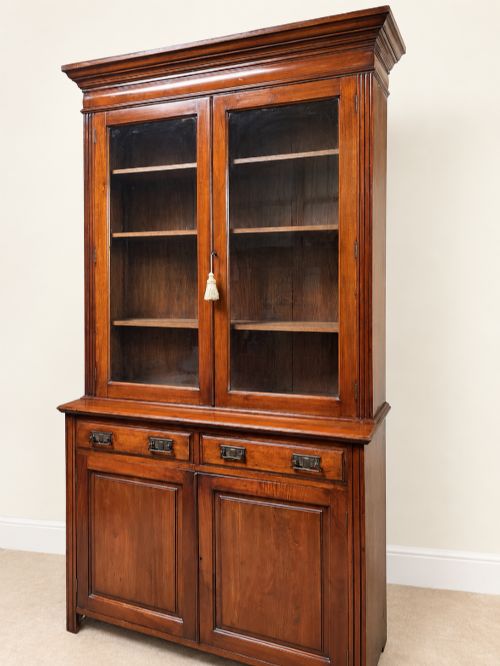
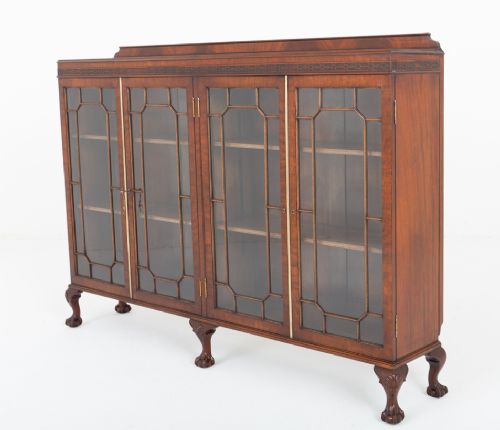
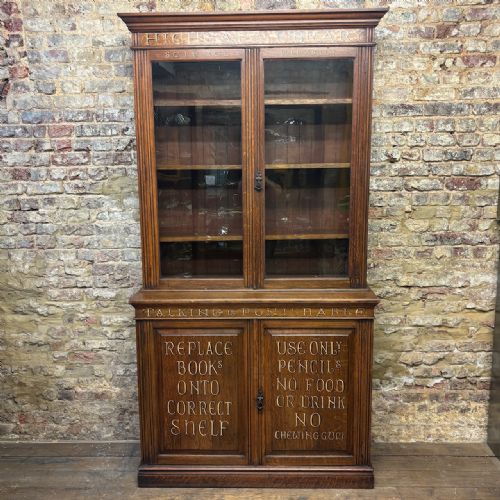
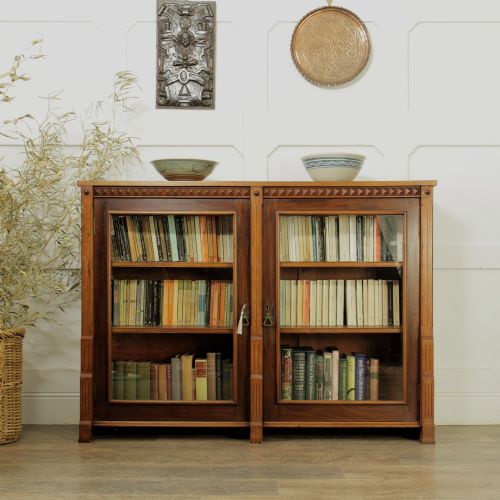
An edwardian glazed library bookcase brings architectural presence and visible utility into a room, designed to protect volumes behind clear glass panels.
Edwardian Glazed Library Bookcase
An edwardian glazed library bookcase is a substantial timber cabinet built to house books while shielding them from dust and damp air. These pieces combine upper display sections with lower cupboards or drawers, anchoring the walls of domestic studies and large reception rooms.
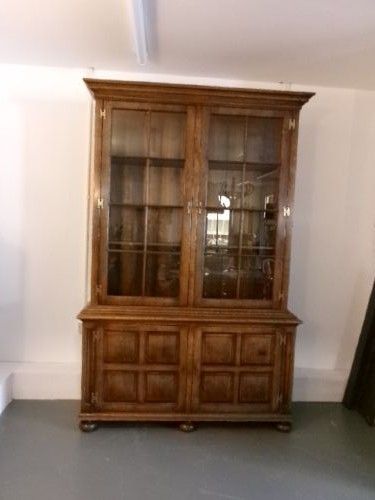
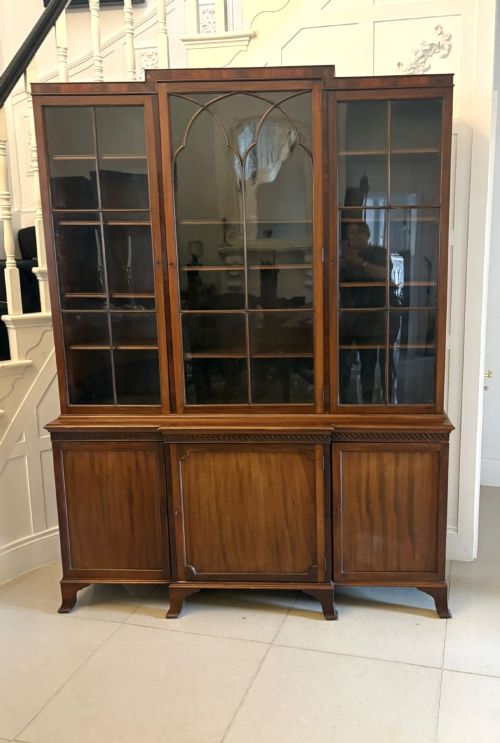
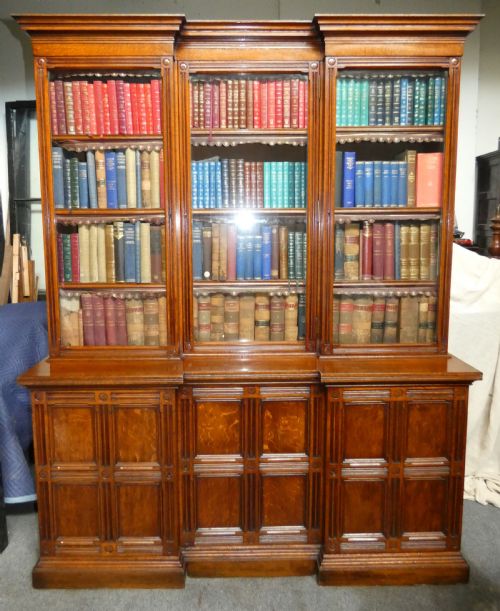
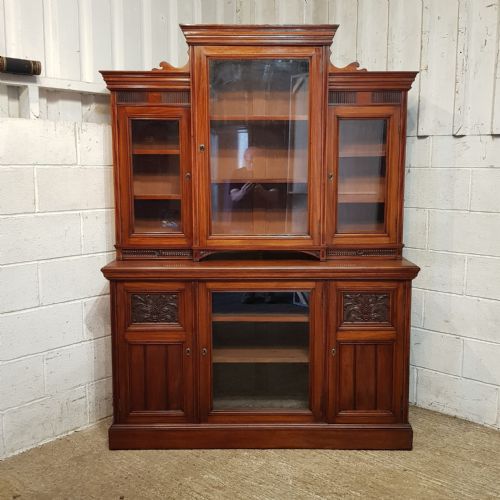
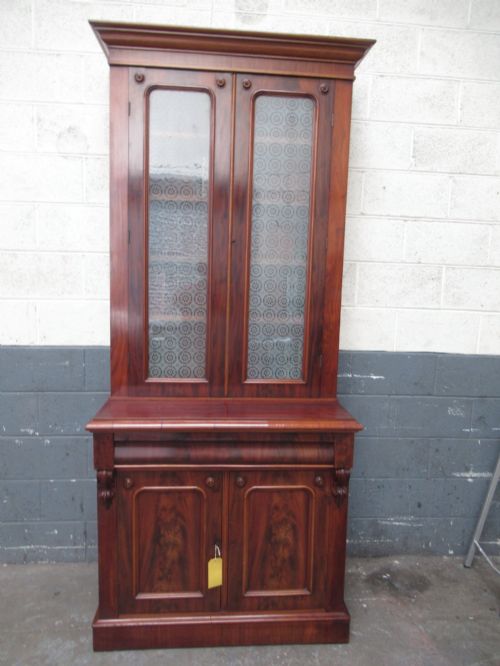
The versions most commonly found here date from the Edwardian era through to the early twentieth century, though nineteenth-century and Victorian examples also appear. Formats range from large breakfront display cabinets to modular stacking units and smaller two-part cupboard combinations.
Makers often drew upon revival styles, utilising Sheraton, Chippendale, and Queen Anne motifs alongside simpler Edwardian Arts and Crafts designs. Oak and mahogany dominate the selection, frequently enhanced by walnut, satinwood, or inlaid details.
How they were made
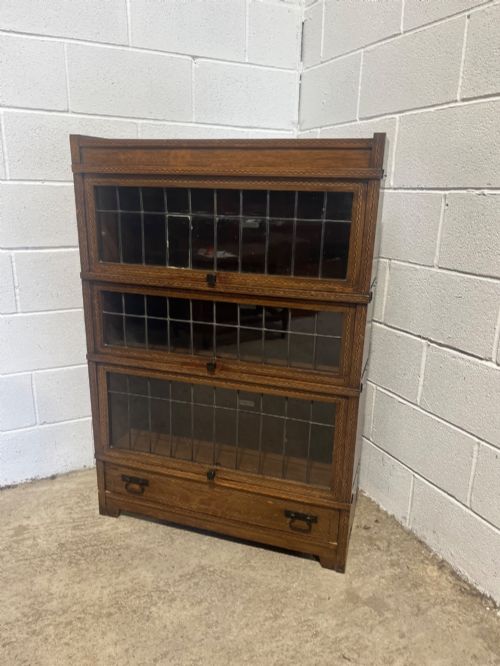
Cabinet makers constructed these pieces primarily in solid mahogany, oak, and walnut, frequently applying figured veneers to breakfront doors and cornices. Brass hardware secures the doors and supports adjustable shelving, while lead came occasionally frames individual glass panes in stacking office formats.
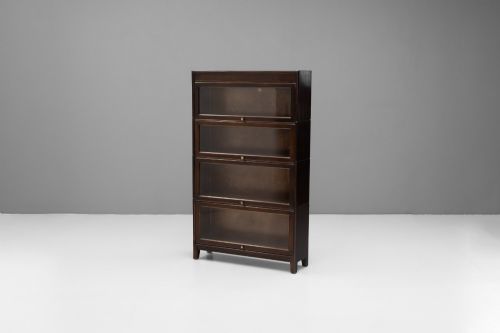
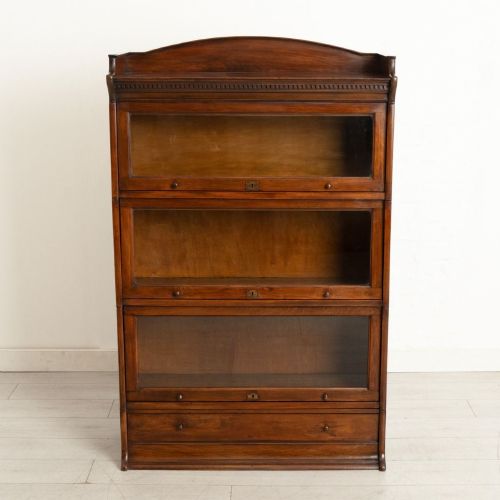
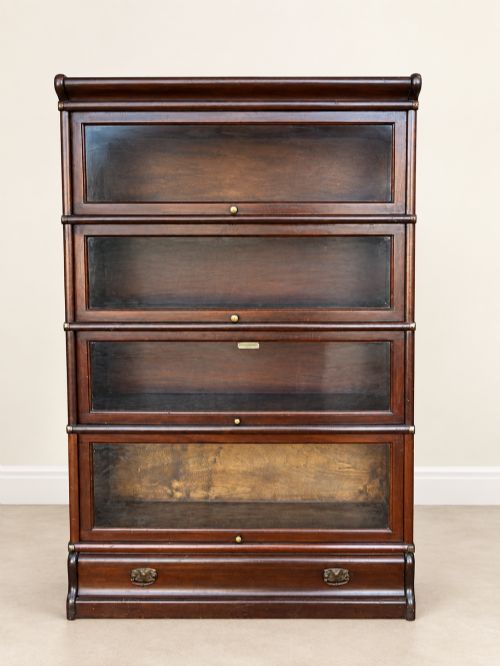
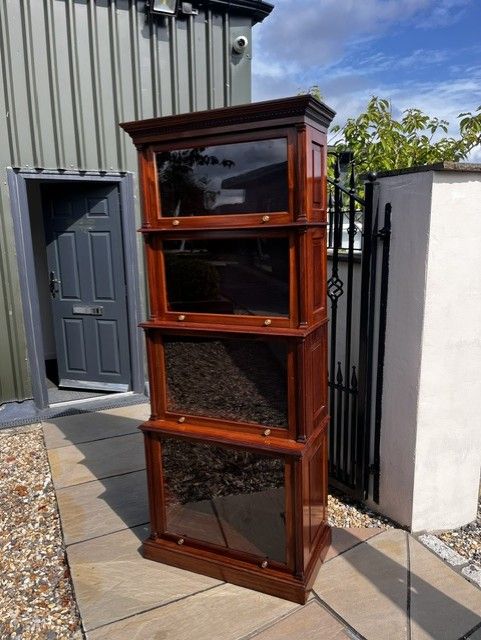
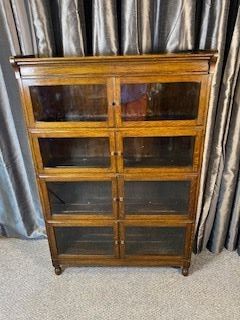
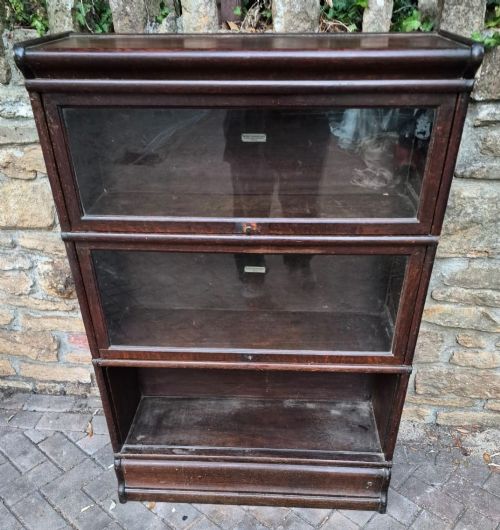
Sectional barrister designs utilise specialised stacking mechanisms that allow individual glass doors to lift and slide inward above each tier of books. Larger breakfront and two-part library cabinets rely on traditional mortise and tenon joinery to support heavy timber carcases and glazed frames.
Some stacking bookcases feature patent mechanisms designed so busy professionals could read verdicts without unstacking their legal digests.
What varies in quality
The distinction between standard utility furniture and superior craftsmanship lies in the selection of timber veneers and the precision of the joinery. Finer pieces display carefully matched grain patterns across large surfaces, crisp inlay work, and robust internal framing that prevents door warping.
Hardware weight and glass clarity also separate tiers of production, with heavier brass fittings and clear, distortion-free window panes indicating higher workshop standards. Maker attribution, through stamped signatures or paper labels, often reflects the tier of original manufacture.
Globe Wernicke·Wylie and Lochhead·Lebus·Minty·Maple and Co·Waring and Gillow
The Edwardian Glazed Library Bookcase Glossary
- Breakfront
- A cabinet design where the central section projects forward from the flanking wings. This configuration creates visual depth and typically provides deeper storage in the central lower cupboards.
- Barrister bookcase
- A modular sectional piece featuring multiple stacking tiers with glass doors that lift and slide into the cabinet. It was designed for easy transport and to keep professional libraries dust-free.
- Glazed door
- A timber frame fitted with transparent glass panes to display book bindings while protecting volumes from environmental damage. Lead came is sometimes used to divide the glass into smaller segments.
- Inlay
- The technique of embedding contrasting strips of wood or shell into the primary timber surface to create decorative patterns. Sheraton and Chippendale revival pieces frequently feature this detail.
- Cornice
- The ornamental moulding that crowns the upper edge of a bookcase. It visually caps the architectural structure of tall library cabinets.
Edwardian Glazed Library Bookcase: Frequently Asked Questions
How do I date an edwardian glazed library bookcase?
Examine the timber, construction methods, and revival style indicators present in the piece. Edwardian examples often feature lighter oak or mahogany with subtle inlay, whereas Victorian predecessors tend to be heavier and darker.
Hardware styles and maker labels provide further chronological clues. Modular stacking variants generally point towards the early twentieth century.
Are the shelves adjustable?
Most library bookcases of this period feature movable shelves supported by wooden ratchets, metal clips, or brass studs. This flexibility allows the interior height to accommodate varying sizes of volumes.
Some earlier or simpler variants may have fixed shelving integrated directly into the carcase frame.
How should I care for the wood and glass?
Maintain the timber by applying traditional beeswax periodically to nourish the grain and prevent the surface from drying out. Avoid placing the cabinet in direct sunlight or near heat sources to protect the polished finish.
Clean the glass panels gently with a cloth and standard solution, taking care not to let moisture seep into the wooden frames or lead came.