

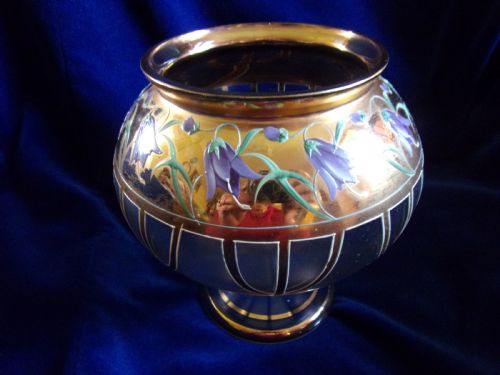


Edwardian Glass Urn
These pieces called edwardian glass urn combine decorative utility with period proportion, bringing tactile glass forms into domestic spaces.
Edwardian Glass Urn
An edwardian glass urn takes the classical vessel shape into the domestic sphere, serving as a decorative centrepiece, lidded jar, or table ornament. Buyers search for this phrase to find translucent and coloured vessels that carry the formal weight of earlier centuries within early twentieth-century interiors.
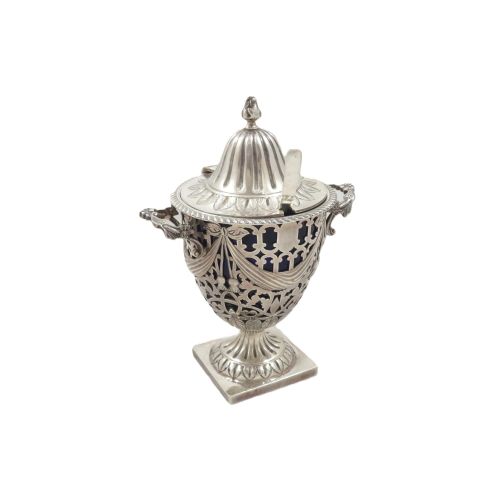
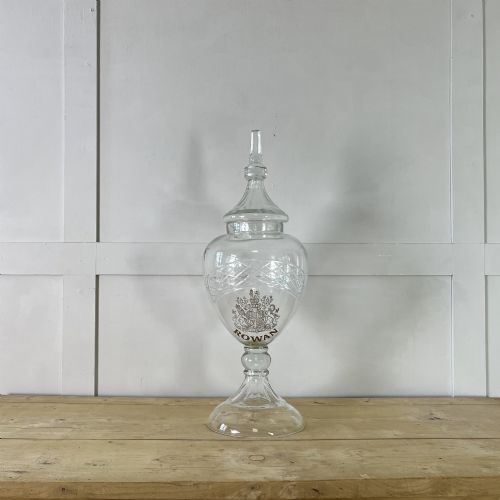
While the title names the Edwardian period, the objects meeting this description span the late Victorian decades through to the 1930s, including pieces with associated metal mounts in brass or sterling silver. They appear as cut glass apothecary jars, lidded vases, and pedestal bowls.
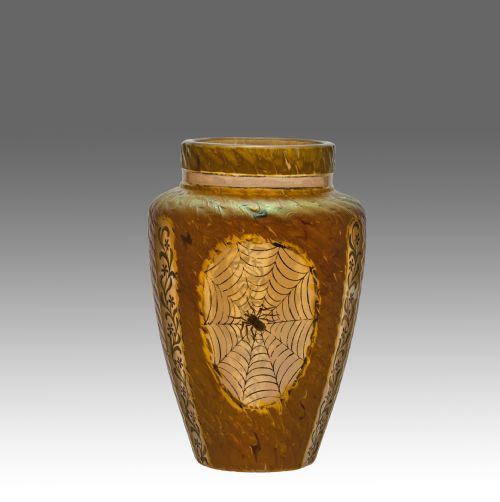
Makers and designers working in these forms utilised diverse artistic movements, incorporating Art Nouveau fluidity, Adam Revival symmetry, and Secessionist lines into the moulded or blown body of the vessel. The resulting pieces range from clear cut glass to opaque painted finishes and iridescent surfaces.
How they were made
The primary material is glass, manipulated through blowing, moulding, or cutting to achieve heavy faceted surfaces, smooth opaque walls, or iridescent sheens. Artisans often combined this with enamelling, gilding, or cameo carving to build up surface detail.
Metal components such as brass, sterling silver mounts, and pewter overlays provide structural framing and decorative contrast for the glass bodies. Gesso and gold leaf appear on associated frames and mirrors, while fruitwood inlay decorates related cabinetry.
A sturdy brandy dispenser once served refreshments for Benskins Brewery in Watford.
What varies in quality
Quality in these vessels rests upon the crispness of the glass cutting, the depth and control of cameo carving, or the precision of enamel and gilt application. Superior examples demonstrate a careful balance between the weight of the glass body and the refinement of any metal mounts or lids.
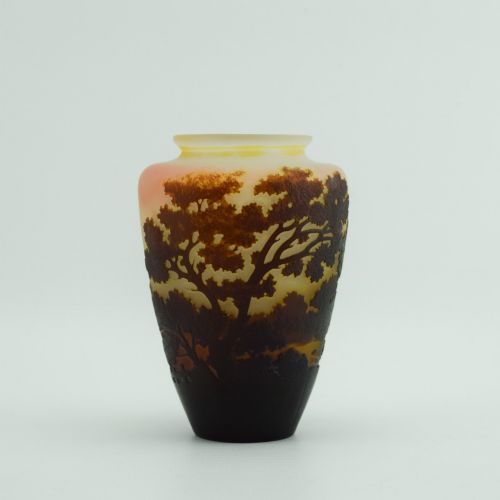
The distinction between standard production pieces and exceptional works often lies in the artistic signature or attribution, such as cameo glass by Galle or iridescent forms by Kralik and Loetz. The execution of secondary details, from hand-painted motifs to silver basket work, separates the finest workshop output from simpler domestic wares.
Kralik Glass·Loetz Witwe·Galle·Graystan·Edwards and Roberts
The Edwardian Glass Urn Glossary
- Cameo glass
- A vessel formed of two or more layers of different coloured glass fused together, where the outer layer is carved away to leave a raised design. This technique requires considerable skill to achieve depth and tonal contrast.
- Iridescent glass
- Glass treated with metallic salts while hot to create a shimmering, rainbow-like surface effect. Makers such as Loetz and Kralik utilised this finish extensively during the early twentieth century.
- Cut glass
- Glass decorated by grinding and polishing facets, flutes, or geometric patterns into the surface using a rotating wheel. Deep cutting creates sharp edges and heavy refraction.
- Sterling silver mount
- A collar, rim, or handle fashioned from British sterling silver and fitted to the glass body. These additions provide structural reinforcement and decorative elegance.
- Art Nouveau
- A design style characterised by flowing, organic lines inspired by natural forms. It appears frequently in the fluid shapes and plant motifs of early twentieth-century glass.
Edwardian Glass Urn: Frequently Asked Questions
How were glass urns used originally?
These lidded vessels and jars served primarily as decorative ornaments on mantelpieces, sideboards, and pedestals, or functioned as apothecary containers and sugar baskets.
Their substantial presence allowed them to anchor tabletop arrangements or hold dry goods and potpourri within formal Edwardian rooms.
Are these pieces signed by makers?
Certain examples feature etched signatures, acid-stamped marks, or engraved lettering identifying specific glassworks, design studios, or retail furnishers.
Unsigned pieces remain common and are attributed through distinctive manufacturing techniques, colour palettes, and decorative motifs characteristic of particular periods.
What styles influence these designs?
The aesthetic draws heavily upon late nineteenth-century historicism and early twentieth-century avant-garde movements, balancing classical revivalism against organic modernism.
Adam Revival and Sheraton Revival forms sit alongside Art Nouveau asymmetry and Vienna Secessionist geometry within the same decorative vocabulary.