


Edwardian Framed Picture Pair
These edwardian framed picture pair selections bring together matched twin wall art and photograph enclosures spanning the late nineteenth and early twentieth centuries.
Edwardian Framed Picture Pair
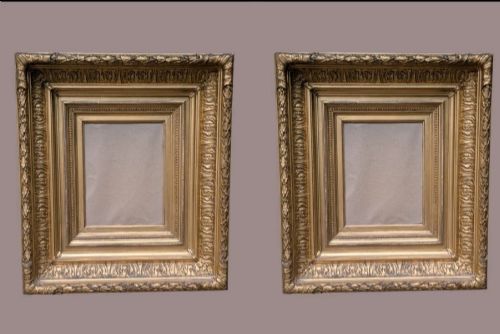
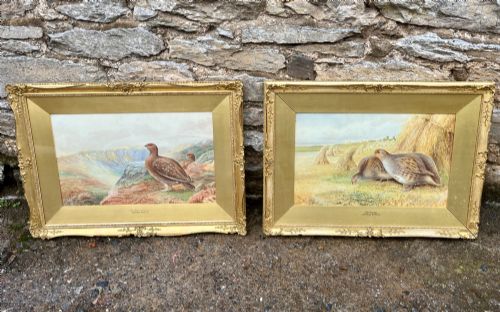
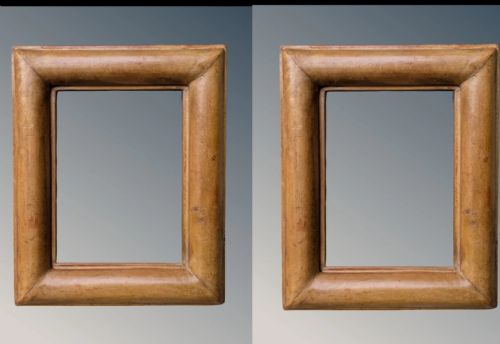
When you search for an edwardian framed picture pair, you encounter matched sets of twin artworks, photographs or decorative enclosures designed to hang together. The pieces on this page encompass framed watercolours, oil paintings, gouache, prints, and portrait or landscape photographs housed in paired surrounds.
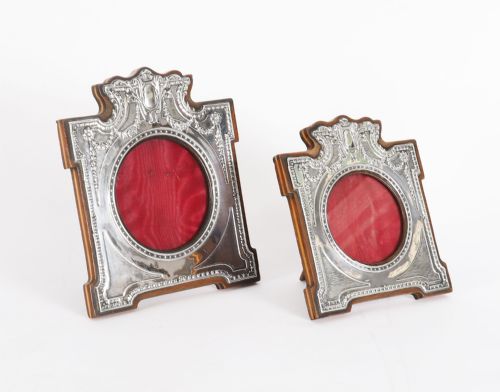
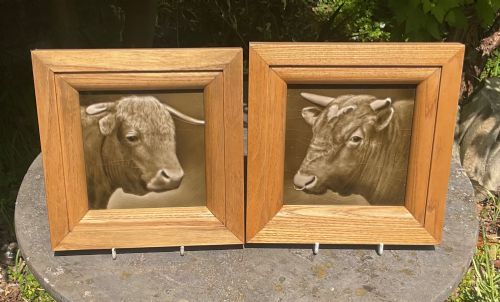
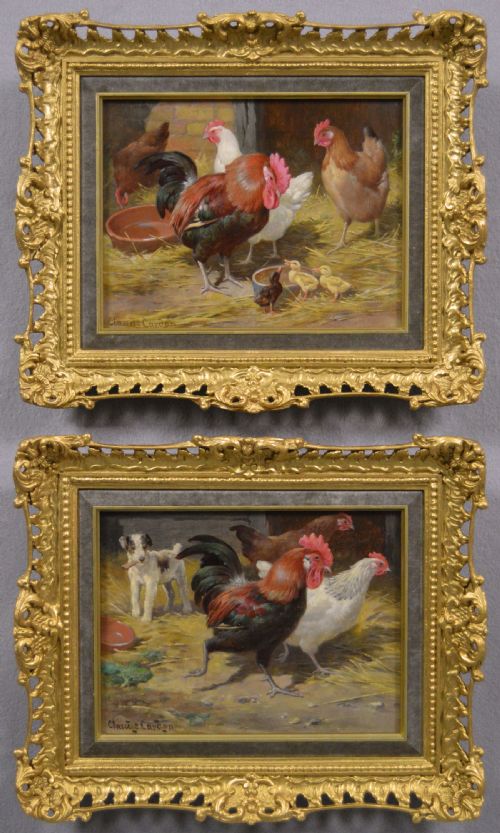
The selection ranges from traditional Victorian gilt frames and ornate Edwardian silver photograph enclosures to leather surrounds, brass Art Nouveau holders, and ceramic tile pairings. Many pairs showcase landscape watercolours, sporting art, marine scenes, and farm animals by named artists.
While bearing the Edwardian stylistic label, the actual groupings draw from periods spanning the late nineteenth century through to the interwar decades. Buyers find everything from delicate botanical needlework pictures to robust maritime paintings and ceramic plaques.
Materials and construction methods
The construction of these pieces relies heavily on traditional woodworking, metal casting, and paper-based mediums set behind protective glass. Wood and giltwood form the core structural supports for many canvas paintings and watercolours, often augmented by gold leaf details.
Metalwork pairs utilise sterling silver, brass, and plated alloys shaped into intricate photograph surrounds with easel backs or hanging loops. Paper supports hold watercolours, gouache, and prints, whilst specialised ceramic tiles and porcelain plaques introduce fired pigments.
Surrounding elements incorporate leather framing and moulded composite materials shaped into ornate oval profiles with dome-fronted glass. Each medium demands specific handling to preserve the integrity of the paper, canvas, or metallic sheen.
Object forms on this page include framed photographs, oil paintings, ceramic tiles, and landscape watercolours.
Gradations in craftsmanship
Quality in these paired sets rests upon the crispness of the original artistic hand, the depth of the frame moulding, and the integrity of the materials. Fine watercolour and oil painting pairs demonstrate accomplished brushwork and balanced composition, distinguishing them from basic decorative prints.
Metal and wood enclosures show variation through the weight of the silver or brass, the precision of the cast ornamentation, and the preservation of original gilding. Matched sets that retain their original companion piece intact without later alterations command stronger visual harmony.
The relationship between the art and its housing dictates overall desirability, as genuine period framing complements the interior work rather than overpowering it. Superior examples exhibit harmonious proportions across both companion pieces.
Mappin Bros·Royal Worcester·Sherwin & Cotton
The Edwardian Framed Picture Pair Glossary
- Giltwood
- Wood that has been coated with gold leaf or gilt composition to create a reflective, golden surface. This finish appears frequently on ornate Victorian and Edwardian picture frames.
- Watercolour
- A painting method in which the paints are made of pigments suspended in a water-based solution. These delicate works require protective glass covering.
- Diptych
- Two painted or carved panels that form a single artistic unit, often hinged or displayed side by side. This format appears in original watercolour pairs.
- Gouache
- A water-based paint method using opaque pigments mixed with a binding agent. It provides dense colour saturation on paper supports.
- Sterling silver
- A silver alloy containing ninety-two point five percent silver by mass and seven point five percent other metals. It forms the structure of luxury Edwardian photograph frames.
Edwardian Framed Picture Pair: Frequently Asked Questions
How do I hang a picture pair?
Hanging a matched pair requires careful measurement to ensure both pieces sit at identical eye levels with even spacing between them. Balance the weight evenly across two separate wall fixings rather than a single cord to keep the frames straight.
Maintain consistent vertical alignment so the visual dialogue between the two companion artworks remains undisturbed. Consider natural room lighting to prevent glare on the protective glass surfaces.
Are these frames original to the art?
Many pairs retain their original Victorian or Edwardian surrounds, whilst others have undergone re-framing during subsequent decades. Examine the fit at the back of the rebate to see if the artwork has inhabited the housing for a prolonged period.
Slight matching variations in wear between the frame and the internal picture often indicate a long association. Professional framers during the early twentieth century frequently paired loose works with contemporary mouldings.
How should I clean silver photo frames?
Silver photograph surrounds require gentle dusting with a soft, dry microfibre cloth to remove surface particles. Avoid harsh chemical polishes that can strip delicate hallmarks or decorative chasing work.
Keep moisture away from the interior backing board and the photographic aperture to prevent water damage. Professional silver conservation cloths help maintain the soft lustre without abrasive wear.
What distinguishes Edwardian from Victorian frames?
Victorian frames tend to feature heavier, deeply carved ornamentation with robust giltwood and darker, more imposing profiles. Edwardian examples often display lighter proportions, incorporating Art Nouveau influences or sleeker silver and brass structures.
Late nineteenth-century styles lean towards theatrical opulence, whereas the Edwardian era introduced cleaner lines and softer decorative motifs. Both styles value hand-finished craftsmanship over mass-produced uniformity.