

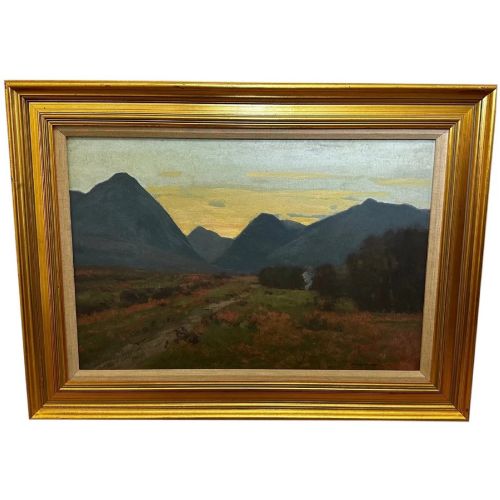
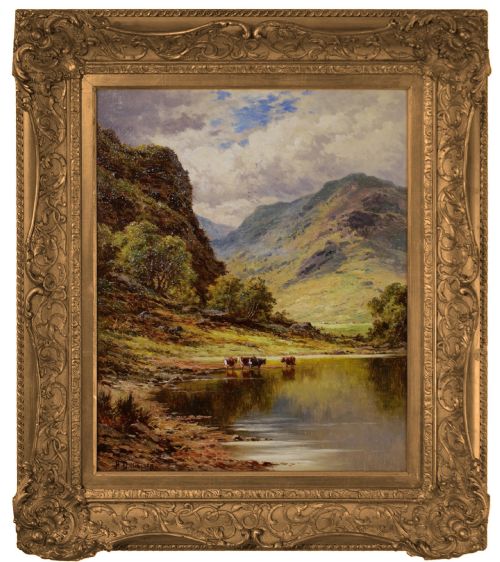
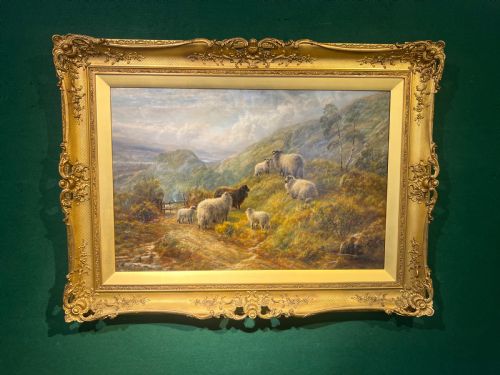
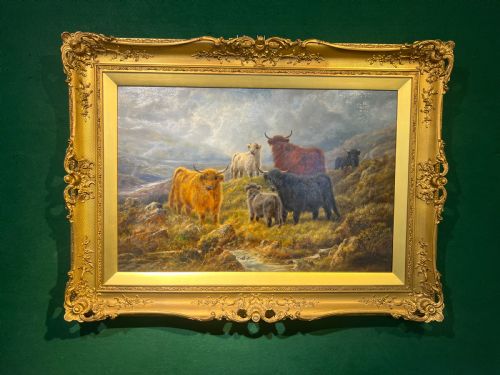
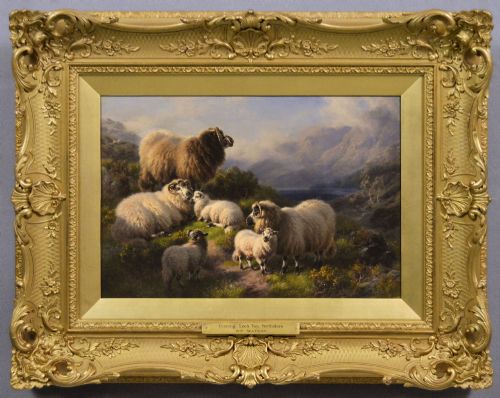
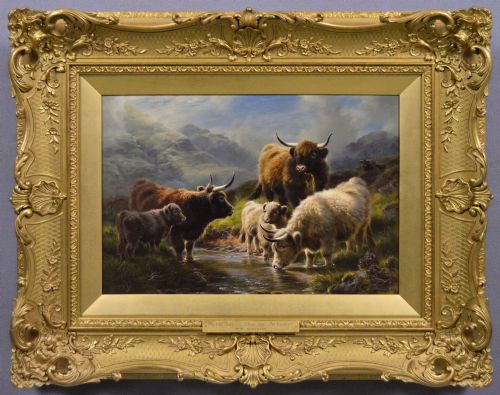
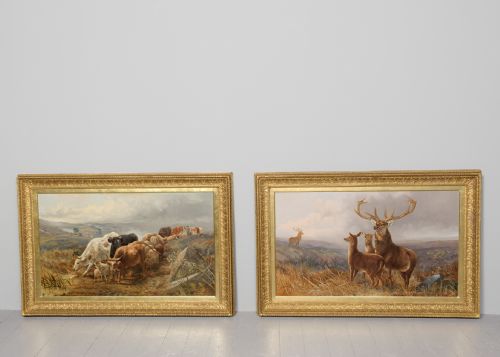
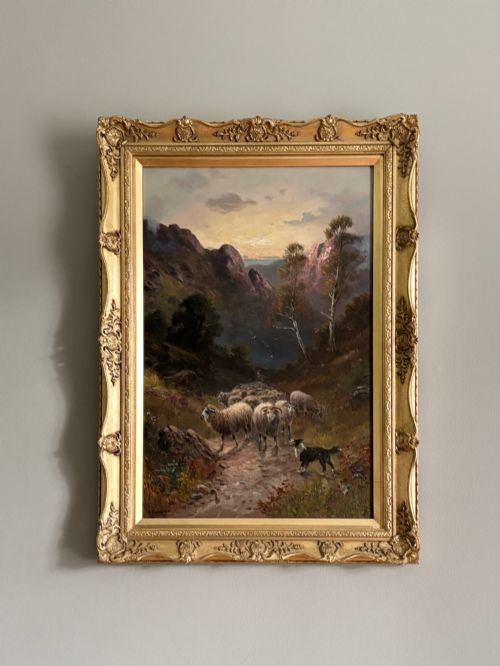
Framed Highland Landscape
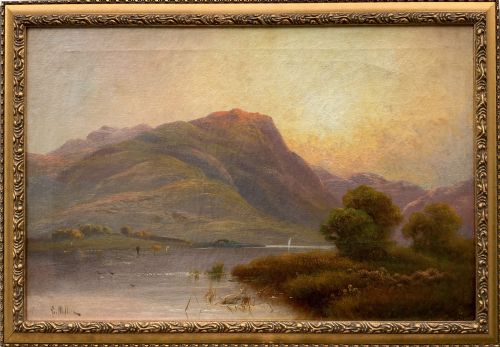
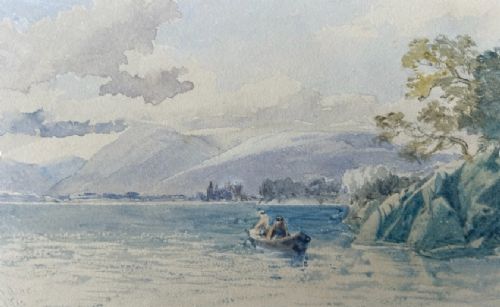
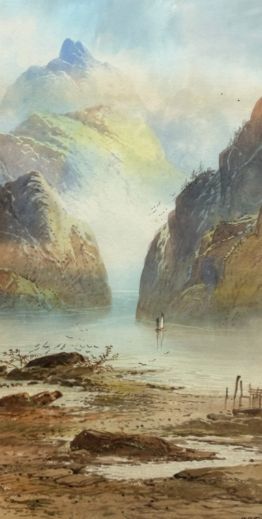
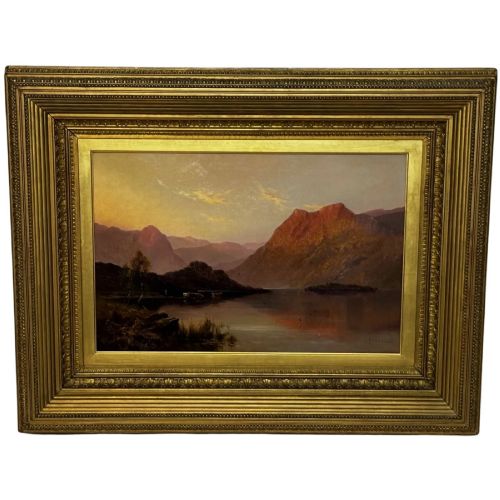
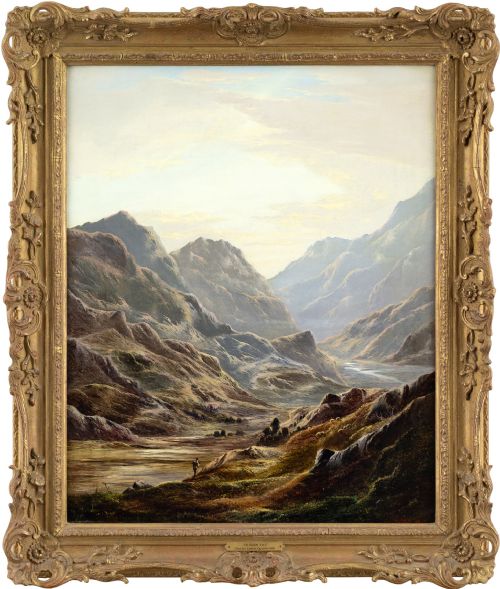
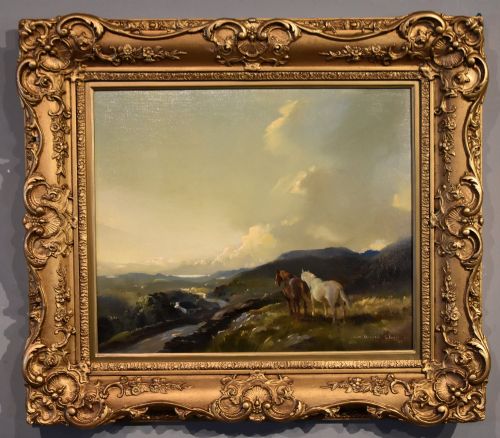
When you search for a framed highland landscape, you are looking at evocative depictions of misty Scottish mountains, lochs, and cattle created during the Victorian and Edwardian eras.
Framed Highland Landscape
A framed highland landscape captures the rugged topography of Scotland, featuring familiar locations such as Loch Tay, Arran, and Glen Tilt across the nineteenth and early twentieth centuries.
The works on this page appear primarily as oil paintings on canvas or wood panel, alongside watercolours and gouache, reflecting the artistic output of Victorian and Edwardian painters.
Compositions frequently incorporate domestic animals like highland cattle and sheep within expansive mountain vistas, aligning with British realism and Scottish impressionism.
Materials and Technique
Artists utilised oil paint on stretched canvas or wooden panels, applying pigment to build the atmospheric depth characteristic of nineteenth-century landscape painting.
Watercolour and gouache on paper were equally common for detailed topographical scenes, often protected behind glass within period surrounds.
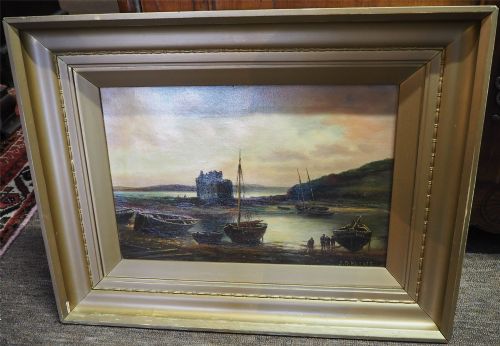
Presentation relied heavily on moulded wood frames finished with gesso and gold leaf or giltwood, completing the visual package of the artwork.
Several canvases squeeze an impressive number of highland cattle and passing rain showers into a single misty glen.
Evaluating the Pieces
The strength of a composition rests on the artist's handling of Scottish light and weather, distinguishing masterly depictions of morning mist from routine studio output.
Brushwork varies from the tight academic precision of the mid-nineteenth century to the looser, more expressive handling seen in later Scottish impressionism.
The integrity of the original giltwood and gesso framing contributes significantly to the overall presence and historical authenticity of the piece.
William Beattie-Brown·George Fotherly Hargitt·Thomas Miles Richardson Jnr·William Henry Earp·Alfred Fontville de Breanski Jr·George Houston·Henry H. Parker·Robert Watson·William Watson Jnr·Robert Cleminson·Douglas Cameron·Charles Leslie·Vernon DeBeauvoir Ward·Everett Watson Mellor·Joseph Knight·William George Tennick·Archibald Kay·Henry Robinson Hall·William Henry Mander·Henry Hillier Parker·W.E. Evans·William Grant Murray·Tom Seymour·James Bell Anderson·Sidney Yates Johnson
The Framed Highland Landscape Glossary
- Gesso
- A plaster-like mixture applied to wooden frames before gilding, providing a smooth base for intricate moulded decoration.
- Giltwood
- Wood that has been coated with gold leaf or gold paint, standard for framing nineteenth-century fine art.
- Watercolour
- A painting method in which the paints are made of pigments suspended in a water-based solution, frequently executed on paper.
- Oil on Canvas
- Pigments bound in a drying oil applied to a woven fabric stretched across a wooden frame, dominant in Victorian landscape production.
- Scottish Impressionism
- A painting style characterised by visible brushstrokes and an emphasis on natural light, emerging in late nineteenth and early twentieth-century Scotland.
Framed Highland Landscape: Frequently Asked Questions
What defines a highland landscape painting?
These works focus on the natural scenery of the Scottish Highlands, frequently incorporating mountains, lochs, and local wildlife such as red deer or highland cattle.
They emerged strongly during the Victorian period as urban collectors sought romanticized visions of rural British topography.
How can I date a framed highland landscape?
Dating relies on stylistic clues within the brushwork, the signatures of documented nineteenth or early twentieth-century artists, and the construction methods of the frame.
Victorian pieces often feature heavy giltwood and gesso surrounds, while later Edwardian examples may show looser impressionistic tendencies.
Were these paintings always framed?
Primary works from the nineteenth century were almost invariably paired with custom wooden frames designed to complement the depth and scale of the oil or watercolour within.
Original frames frequently utilise moulded gesso finished with gold leaf, which remains an integral component of the historical object.
Where were these artists active?
Painters travelled directly to Scottish locations like Glen Tilt, Loch Awe, and the Isle of Arran to sketch en plein air before finishing canvases in their studios.
Their output reflects a broader British artistic movement dedicated to documenting regional topography and rural life.