



Edwardian Floral Porcelain Urns
Edwardian floral porcelain urns bring refined botanical motifs and delicate ceramics into living spaces.
Edwardian Floral Porcelain Urns
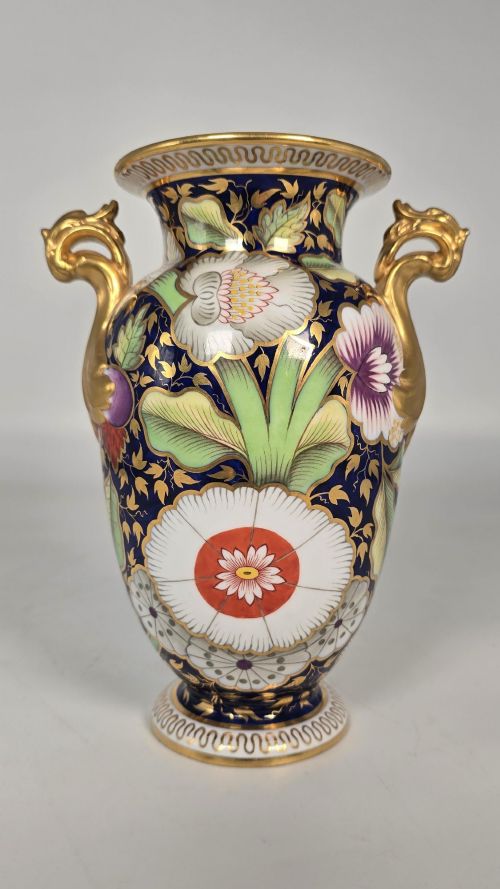
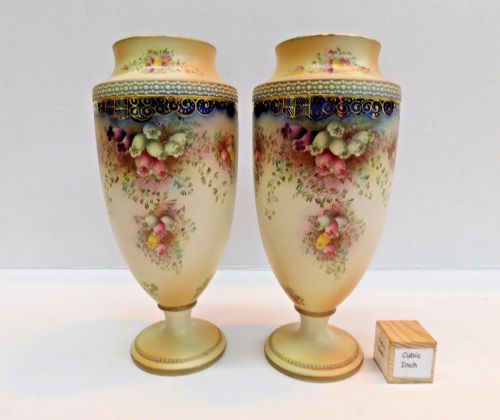
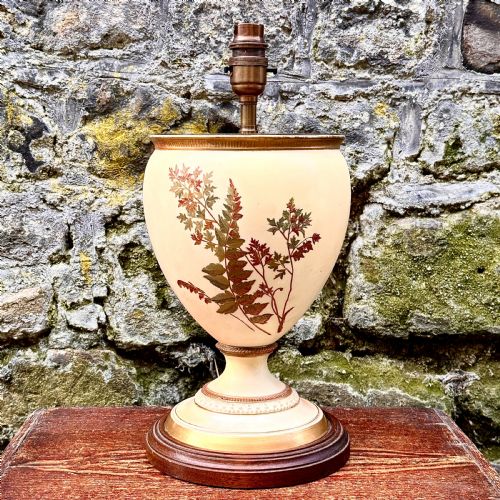
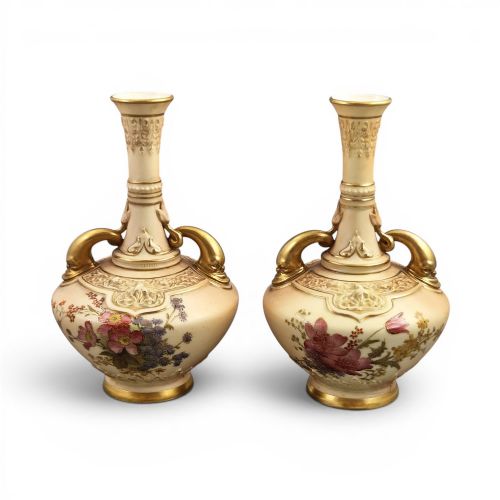
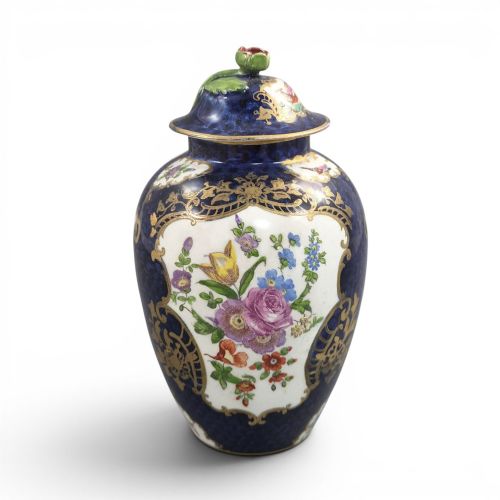
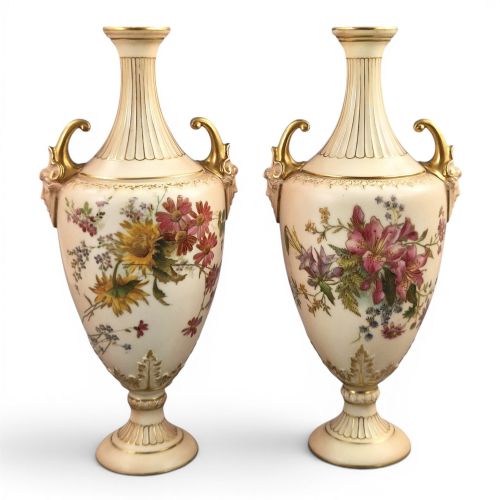
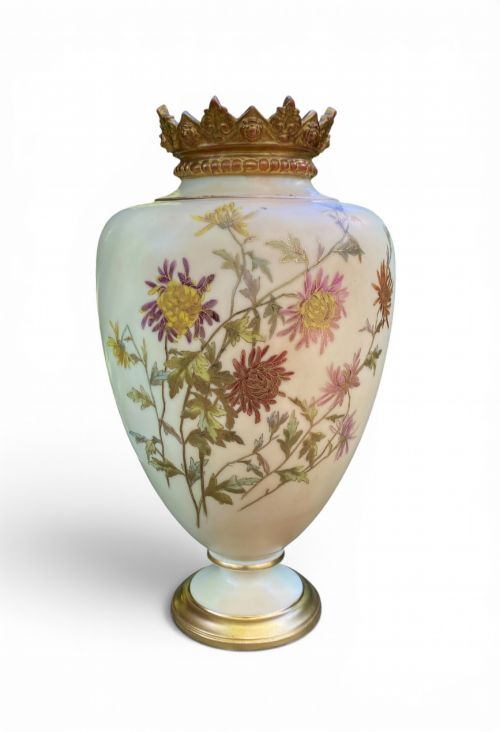
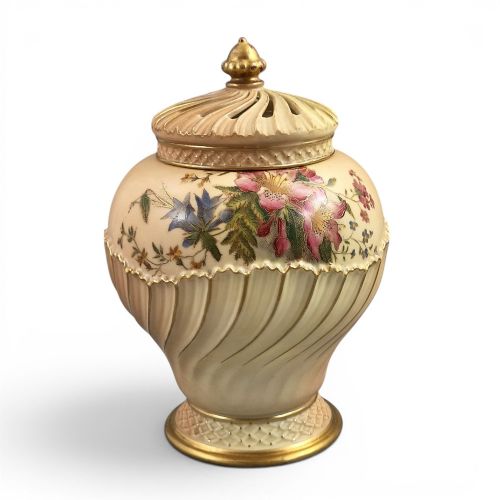
Edwardian floral porcelain urns encompass decorative vessels created during the early twentieth century and the late Victorian era. These pieces frequently feature hand-painted botanical subjects, floral arrangements, and delicate plant motifs across porcelain bodies. The selection spans pedestal vases, covered jars, pot-pourri vessels, and ewers originating from prominent British potteries.
The predominant examples encountered here hail from the Edwardian period and the late nineteenth century. These objects combine classical urn shapes with soft blush ivory grounds, rich gilding, and intricate polychrome enamel painting. Buyers select these decorative items to introduce period elegance and botanical artistry into domestic interiors.
Materials and production techniques
Makers utilised fine porcelain, earthenware, and stoneware bodies shaped into classical urns, ovoid vases, and pedestal forms. Potters applied specialised glazes, including blush ivory finishes and scale blue grounds, to create smooth surfaces for subsequent decoration. Gold leaf and heavy gilding frequently highlight handles, rims, and footed bases.
Artisans decorated these ceramics using hand-painted enamel techniques to render chrysanthemums, roses, and exotic birds. Specialised transfers and slip decoration also appear alongside pierced gilt handles and fitted covers. Kiln firing fixed the polychrome pigments and metallic leaf permanently to the ceramic fabric.
Edwardian Floral Porcelain Urns Retail Price Guide 2026
Typical asking prices for edwardian floral porcelain urns among the pieces listed under this phrase on Sellingantiques today, from the lower quarter to the upper quarter. They describe what is for sale here now, not the wider market.
Periods represented span from the late nineteenth century through the Edwardian era and into the early nineteen-twenties.
Quality variations across the range
Quality separates standard production wares from master-painted exhibition pieces through the skill of the brushwork and the complexity of the design. Hand-painted floral studies executed by named artists command greater attention than simple transfer-printed motifs. The crispness of the porcelain moulding and the delicacy of any pierced or jewelled handles also distinguish finer examples.
The application of gold leaf and the subtlety of the glaze ground dictate the overall refinement of the object. Richly gilt surfaces and nuanced blush ivory tones demonstrate superior factory output compared to plain or heavily worn finishes. Intricate shapes, such as dolphin-handled urns or multi-pieced pot-pourri jars with covers, indicate higher manufacturing ambition.
Royal Worcester·Crown Staffordshire·Royal Crown Derby·Mason’s Ironstone·Royal Doulton·Alexandra Porcelain Works Ernst Wahliss·W&R Carlton Ware·Booths Silicon China
The Edwardian Floral Porcelain Urns Glossary
- Blush ivory
- A soft, matte cream-coloured porcelain ground developed by Victorian and Edwardian potteries to imitate ivory. This finish served as a popular background for hand-painted floral decoration.
- Imari
- A decorative style characterised by rich blue, iron-red, and gilt colour palettes inspired by Japanese porcelain exports. British factories adopted this aesthetic during the late nineteenth and early twentieth centuries.
- Pot-pourri
- A covered vessel pierced with holes designed to diffuse scent from dried flower petals placed inside. These containers often feature elaborate pedestal forms and removable lids.
- Ewer
- A large jug with a wide spout and an ornate handle, styled on classical shapes. These decorative objects frequently match twin urns or vases in display pairings.
Edwardian Floral Porcelain Urns: Frequently Asked Questions
What distinguishes Edwardian urns from Victorian ones?
Edwardian urns often favour lighter pastel grounds, softer blush ivory tones, and more restrained floral arrangements compared to earlier Victorian output. The transition reflects changing domestic tastes toward airier interior decoration.
Despite these shifts in palette, many manufacturing techniques overlap across the turn of the century. Makers continued to utilise classical forms and hand-painted enamel botanical motifs throughout both eras.
How were these decorative urns originally used?
These pieces functioned primarily as ornamental display items on mantelpieces, sideboards, and pedestals within formal rooms. Covered variants, such as pot-pourri jars, also held dried scented botanicals to fragrance domestic spaces.
While some vessels could hold water for cut flowers, many served strictly decorative roles as part of coordinated pairs or garniture sets.
How do I identify hand-painted floral decoration?
Hand-painted floral decoration reveals subtle brushstrokes, varied pigment density, and individual artistic nuances upon close inspection. Unlike printed transfers, no two painted flowers are completely identical across the surface of the vase.
Signatures or artist initials occasionally appear alongside factory backstamps on finer exhibition-quality porcelain pieces.
Where should I display porcelain urns at home?
Porcelain urns look best displayed on stable surfaces where adequate lighting highlights the enamel colours and gilding. Placement on mantelpieces, display cabinets, or dedicated tables protects these ceramic pieces from accidental knocks.
Keeping pairs together visually balances a room, mirroring the formal display arrangements popular when these items were first made.