



Edwardian Floral Painted Table
An edwardian floral painted table brings light and delicate hand-finished decoration into a room, offering a functional surface shaped by satinwood or mahogany.
Edwardian Floral Painted Table
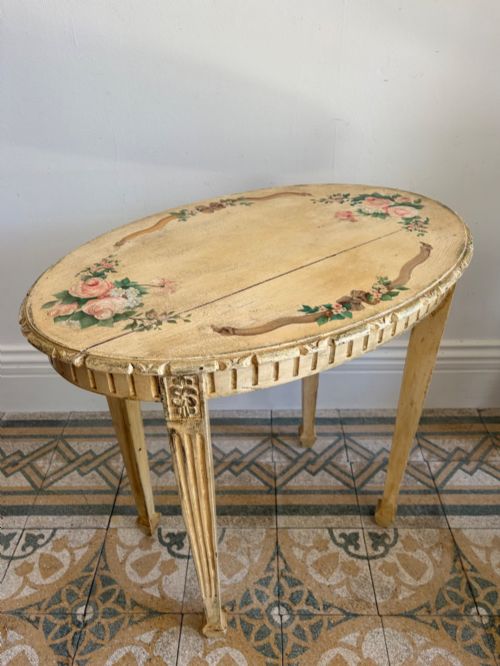
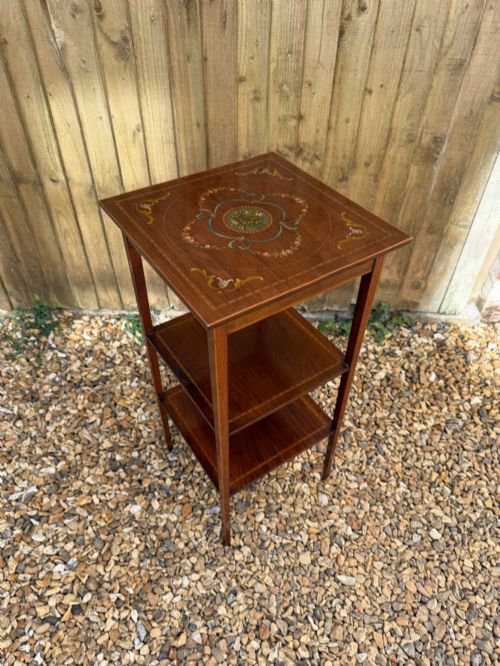
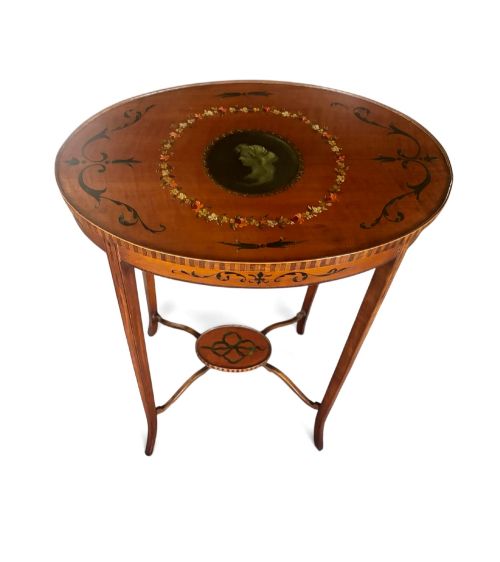
An edwardian floral painted table typically appears as an occasional table, side table, or writing desk, uniting practical form with ornamental brushwork. These pieces emerge predominantly from the Edwardian era and the early twentieth century, though influences span from Victorian craftsmanship through to revival styles.
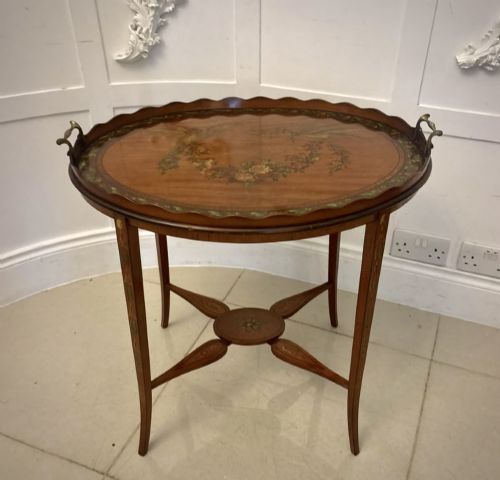
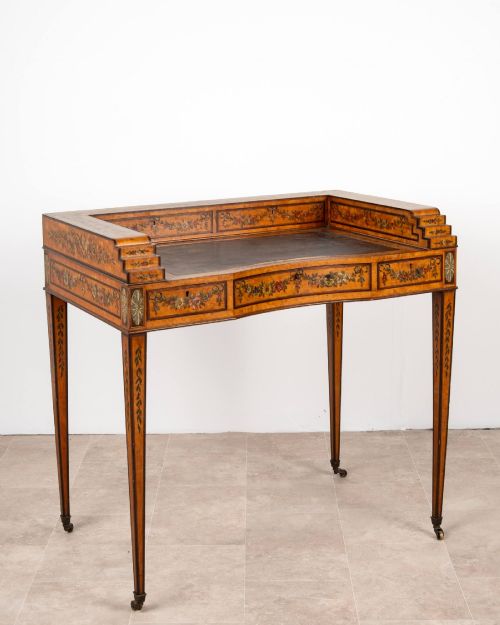
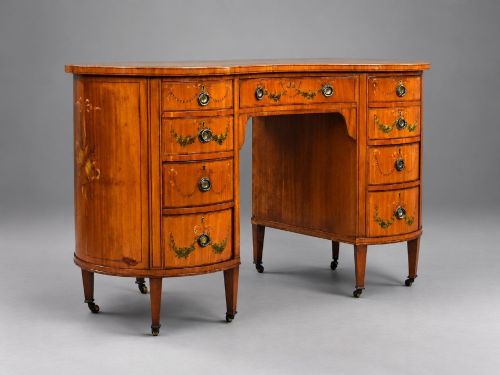
The most common formats on this page are occasional tables, Pembroke tables, and kidney-shaped desks built in satinwood or mahogany. Many incorporate painted floral motifs directly onto the timber top, occasionally framed by delicate stringing or brass fittings.
Materials and technique
Makers relied heavily on satinwood and mahogany as the structural foundation for these pieces, often combining timbers to achieve contrast in the grain. Satinwood provided a pale, smooth ground ideally suited for detailed hand-painted floral decoration.
The painting technique involved direct application of pigments onto the wooden surface, sometimes protected by a clear finish, while other examples integrate brass mounts, porcelain inserts, or inlaid wood to enhance the decorative scheme.
Edwardian Floral Painted Table Retail Price Guide 2026
Typical asking prices for edwardian floral painted table among the pieces listed under this phrase on Sellingantiques today, from the lower quarter to the upper quarter. They describe what is for sale here now, not the wider market.
Listings combine satinwood, mahogany, and brass with hand-painted floral motifs across occasional tables, writing desks, and Pembroke tables.
What varies in quality
The distinction between standard examples and the finest pieces lies in the crispness and restraint of the hand-painted floral decoration. Superior items display botanical accuracy and confident brushwork that integrate harmoniously with the underlying grain of the satinwood.
Construction details such as the choice of solid secondary timbers, the precision of the joinery, and the integrity of any inlaid borders separate workshop production from mass commercial output.
The Edwardian Floral Painted Table Glossary
- Satinwood
- A durable hardwood with a lustrous, golden sheen that serves as the preferred canvas for painted floral decoration. Its smooth surface accepts fine pigments with clarity.
- Pembroke table
- A small drop-leaf table with hinged flaps on either side, frequently fitted with a single drawer. This form offers versatility for domestic spaces.
- Carlton House desk
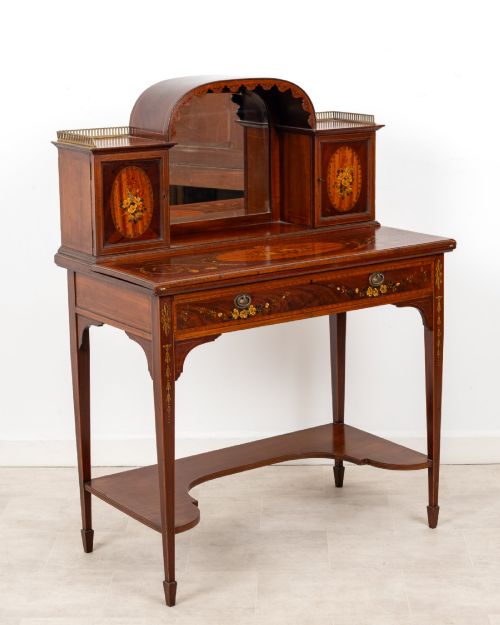
- A distinctive writing desk featuring a fitted superstructure of small drawers and compartments arranged in a curved semicircle around the back of the writing surface.
- Sheraton Revival
- A late nineteenth and early twentieth century design movement that reinterprets the neoclassical lightness and symmetry associated with late eighteenth century furniture.
Edwardian Floral Painted Table: Frequently Asked Questions
Where were these tables used originally?
These tables served primarily in drawing rooms and boudoirs as decorative surfaces for writing, holding small objects, or displaying lamps and porcelain.
Their lightweight construction allowed them to be moved easily around reception rooms depending on the daily needs of the household.
How do I care for a painted wooden surface?
Protect the painted decoration from direct sunlight to prevent fading of delicate floral pigments over time. Dust gently with a dry, soft cloth and avoid chemical polishes that can lift or soften the painted finish.
Maintain stable room humidity to prevent the underlying satinwood or mahogany from expanding or contracting.
Are all painted tables from the Edwardian period?
While the search phrase centres on the Edwardian era, surviving examples span from the late nineteenth century through the early decades of the twentieth century. Revival movements also produced pieces styled after earlier Georgian and Regency aesthetics.
Examining the secondary timbers, construction methods, and wear patterns helps clarify the actual period of manufacture.
What is the difference between an occasional table and a side table?
An occasional table is designed to be moved around a room as needed for specific tasks, such as holding a tea service or a lamp. A side table typically remains stationed against a wall or beside other furniture.
Both forms frequently feature decorative floral painted tops within this category of furniture.