


Edwardian Floral Marquetry Table
An edwardian floral marquetry table brings together precise botanical wood inlays and graceful domestic forms for daily use.
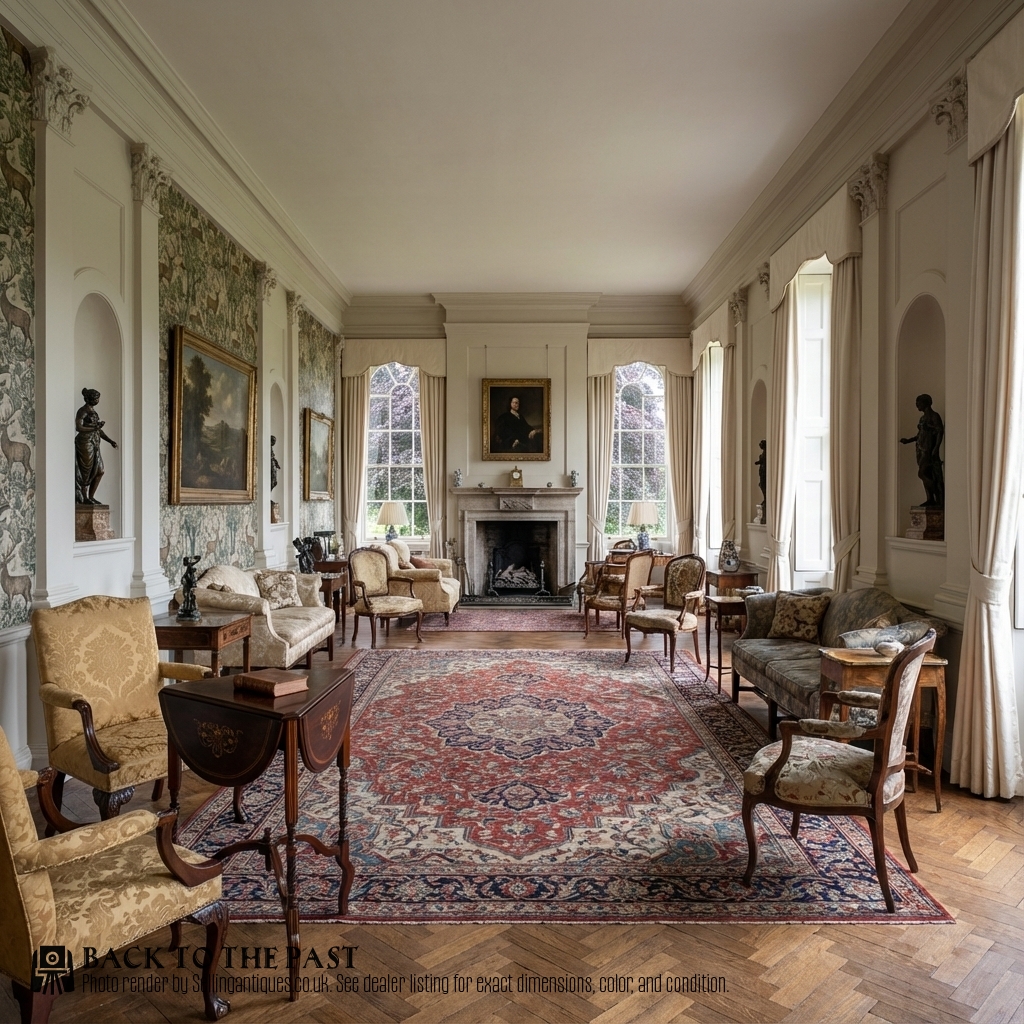
Edwardian Floral Marquetry Table
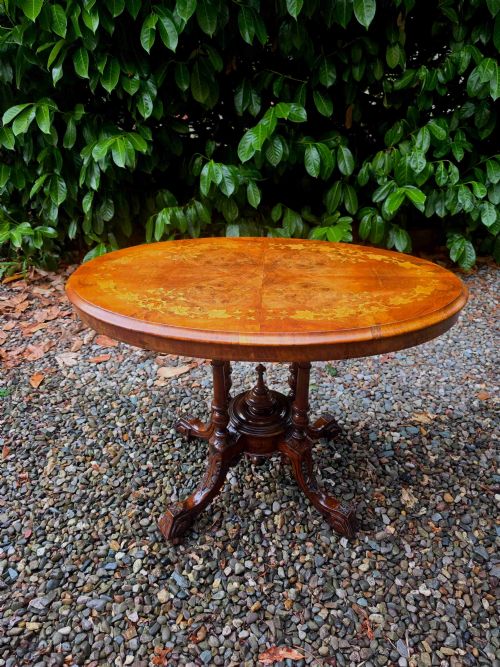
An edwardian floral marquetry table is primarily found in forms such as occasional tables, side tables, and centre tables designed for light domestic placement. These pieces emerge predominantly from the Edwardian period and the nineteenth century, often utilising rich timbers like mahogany, walnut, rosewood, and satinwood as a ground for decorative wood veneers.
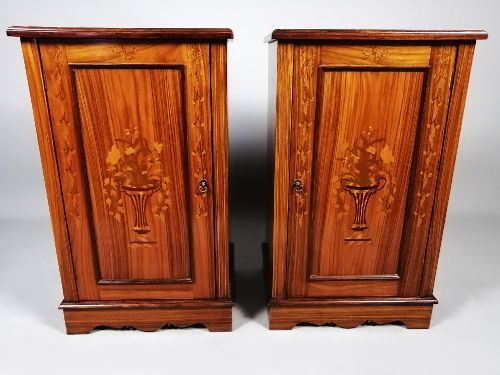
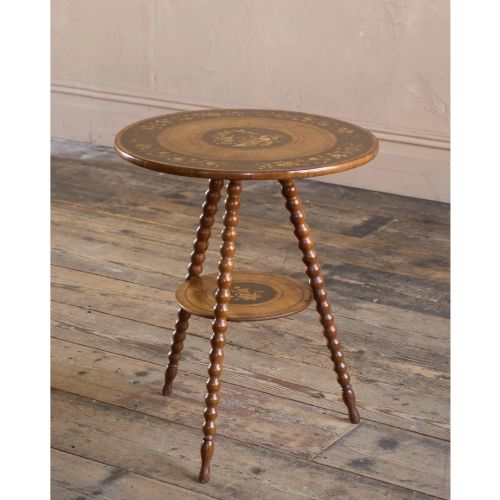
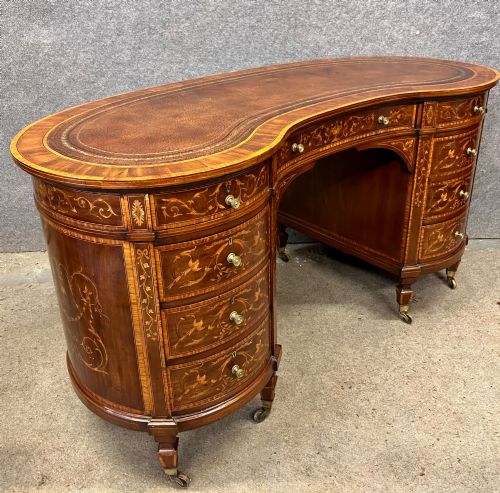
The objects span practical household items including drop-leaf occasional tables, two-tier étagères, and kidney-shaped lamp end tables alongside more formal display pieces. While the search phrase points strictly to tables, the broader selection includes related forms like inlaid bedside cupboards, desks, and mantel clocks that share the same decorative vocabulary.
Makers and workshops of the period applied diverse stylistic influences to these surfaces, incorporating Louis XV revival curves, Louis XVI symmetry, and Aesthetic Movement restraint alongside distinct floral marquetry. Buyers encounter both compact occasional surfaces suited for smaller corners and larger centre tables intended to anchor a room.
How they were made
Cabinet makers constructed the foundational carcass using timbers such as mahogany, walnut, and rosewood, frequently applying contrasting veneers and boxwood stringing to define edges and panels. Marquetry inlay was meticulously hand-cut from various dyed and natural woods to form intricate floral motifs across the top surfaces.
Surface ornamentation often relied on the interplay between darker tropical hardwoods and pale satinwood or boxwood details, sometimes complemented by brass mounts, glass tops, or marble inserts. Joinery methods combined traditional framing with precise veneer application to ensure stability across flat table tops and curved drop flaps.
Poppies bloom permanently in wood veneer on an Edwardian mantel clock alongside tables sporting nimble bobbin legs.
What varies in quality
The standard of an edwardian floral marquetry table depends heavily on the botanical intricacy of the inlay work and the harmonious selection of contrasting cabinet woods. Superior examples demonstrate tight, seamless wood-fitting in the marquetry without excessive filler, alongside well-figured primary timbers like burr walnut or rosewood.
Structural integrity and the retention of original surface patination distinguish finer items from simpler production pieces. The crispness of the boxwood stringing and the depth of the timber grain reveal the original skill invested at the workbench.
The Edwardian Floral Marquetry Table Glossary
- Marquetry inlay
- Decorative patterns formed by fitting together small pieces of wood veneer onto a solid ground. This technique allows for complex pictorial designs, particularly floral arrangements.
- Satinwood
- A durable, hard timber prized for its lustrous yellow sheen and fine grain. It is frequently used for contrasting details or light-coloured table tops.
- Étagère
- A set of open shelves or tiers used for displaying small objects. These multi-level pieces combine utility with decorative inlay.
- Demi-lune
- Half-moon shaped furniture designed to stand flush against a wall. These console or side tables maximise floor space while offering surface display.
- Burr walnut
- Timber harvested from walnut tree growths that produces highly swirled, organic grain patterns. It forms a dramatic background for floral marquetry.
Edwardian Floral Marquetry Table: Frequently Asked Questions
What is an edwardian floral marquetry table?
An edwardian floral marquetry table is a small domestic table decorated with detailed wood-inlaid plant and flower designs created from contrasting veneers.
These pieces typically date from the Edwardian era or the late nineteenth century and serve as functional occasional surfaces.
Where were these tables used?
They were placed in drawing rooms, parlours, and bedrooms as versatile surfaces for holding lamps, books, or small decorative items.
Drop-leaf and nesting versions allowed households to adjust surface space easily according to immediate needs.
How do I care for marquetry surfaces?
Protect the wood veneer by keeping the table away from direct sunlight and maintaining consistent room humidity to prevent splitting.
Apply traditional wax polish sparingly to nourish the timber and maintain the natural lustre of the inlaid floral designs.
How are Edwardian and Victorian pieces told apart?
Edwardian tables generally feature lighter timbers, simpler structural lines, and brighter satinwood elements reflecting early twentieth-century tastes.
Victorian counterparts tend to utilise heavier dense woods like rosewood and dark walnut with more robust proportions and ornate carving.