


Edwardian End Table
When choosing an Edwardian end table, you select a compact occasional piece built for utility beside a chair or sofa.
Edwardian End Table
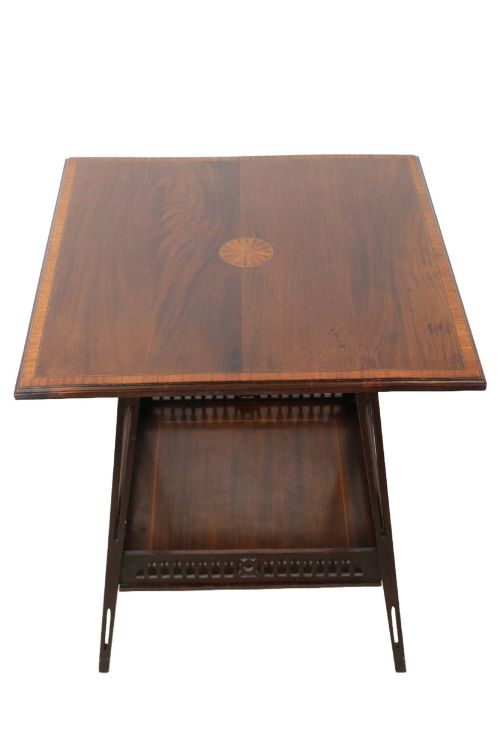
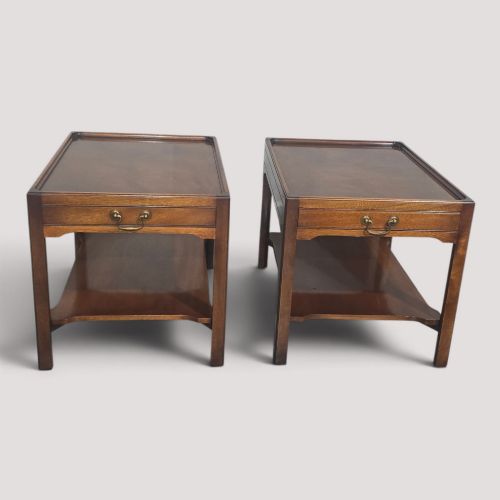
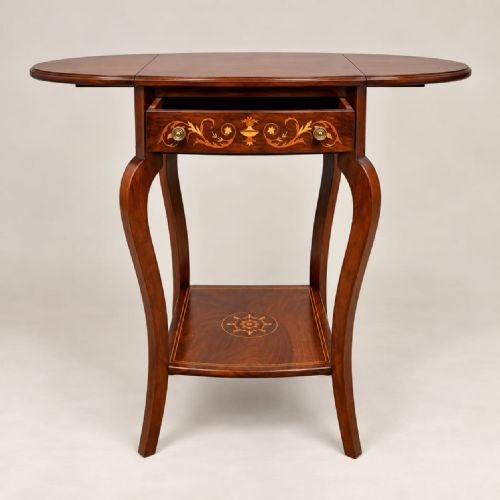
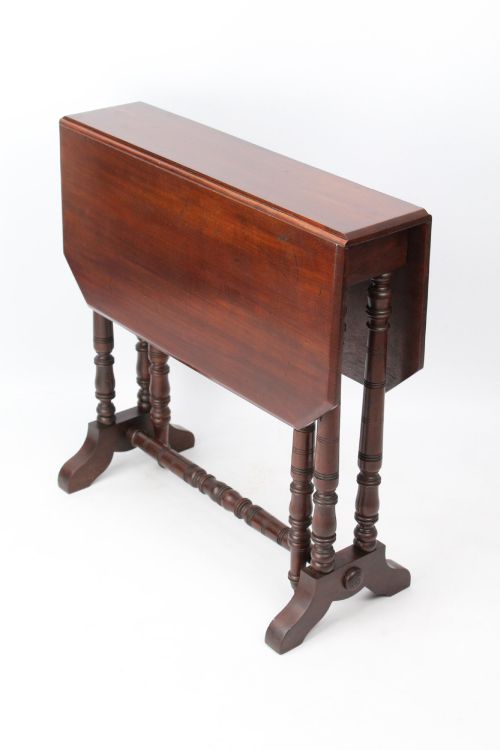
An Edwardian end table serves as a secondary surface within a room, designed primarily for holding lamps, books or drinks beside seating furniture. The forms found on this page range from simple rectangular occasional tables and nests of multi-tiered surfaces to drop-leaf variants and revolving bookcases.
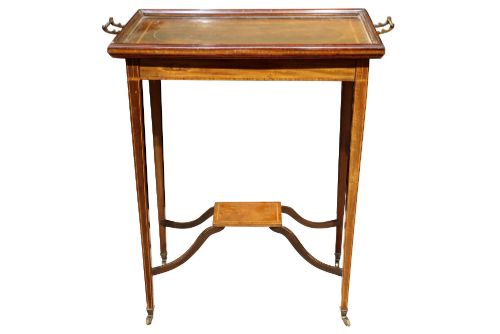
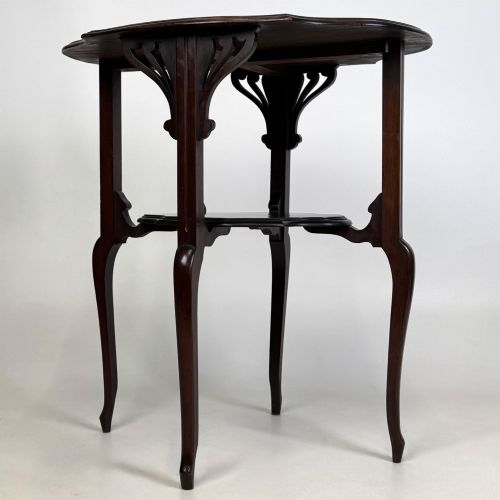
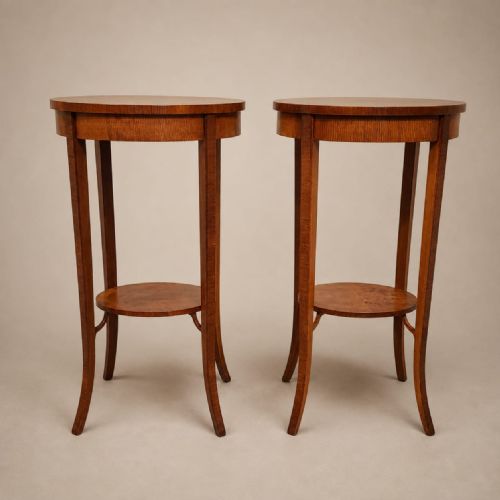
The pieces spanning this period frequently display the lighter proportions favoured after the heavier Victorian era, utilising compact footprints suited for smaller spaces. Alongside standard side and lamp tables, related items like oval occasional tables and tray-top formats appear across the selection.
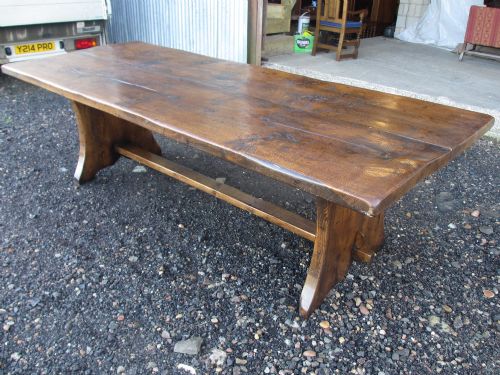
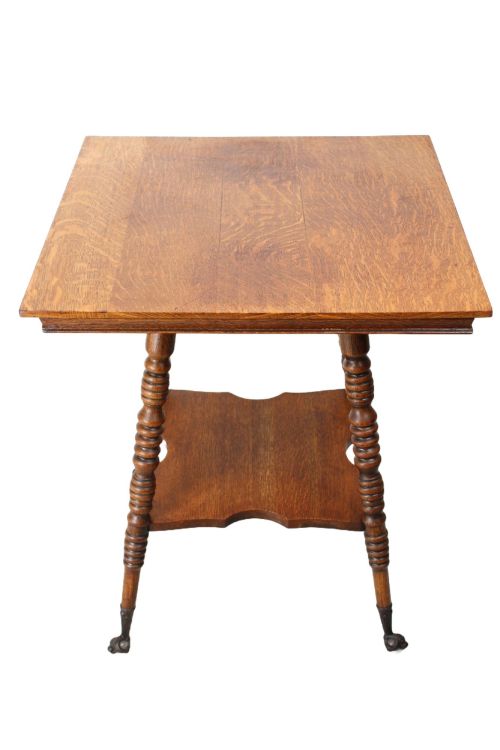
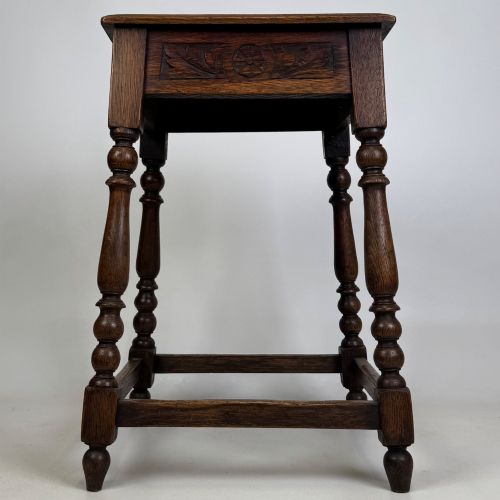
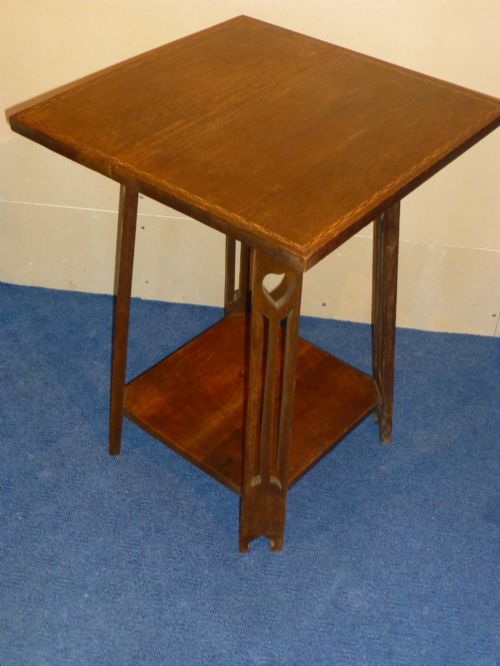
Makers and workshops of the time drew inspiration from diverse historical revivals, producing items that align with Arts and Crafts simplicity, Sheraton-style inlay, or robust oak construction.
How They Were Made
Cabinetmakers constructed these tables predominantly using solid and veneered timbers, with mahogany, oak and walnut forming the primary structural bases. Satinwood and rosewood were frequently employed for decorative cabinet work, while boxwood served for contrasting stringing and geometric details.
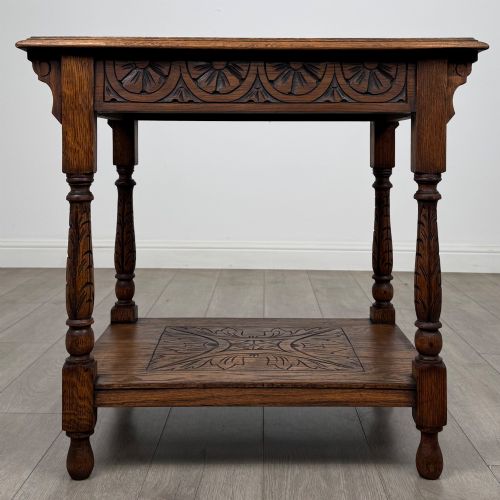
Decorative surfaces often incorporate intricate wood inlay, hand-carved mouldings or painted floral motifs applied directly to the timber. Brass hardware, including castors, hinges and handles, provides functional support and structural contrast to the timber frames.
Listings feature items from the Edwardian period alongside earlier Victorian and later 1920s examples, constructed in mahogany, oak, walnut, and satinwood.
What Varies In Quality
The standard of a piece is evident in the selection of figured timbers and the precision of the joinery used in the frame. Superior examples demonstrate careful matching of wood grain across table tops and drawers, alongside robust internal framing that prevents movement.
Ornamentation also dictates distinction, separating standard utility furniture from exhibition pieces featuring intricate hand-carving, delicate marquetry, or quality brass fittings. Workshop provenance can further elevate a piece, where documented makers applied rigorous standards to secondary timbers and hidden construction details.
Trevor Page & Co·Liberty & Co·William Birch·Waring and Gillow·Maple & Co
The Edwardian End Table Glossary
- Occasional table
- A small, movable table designed for minor tasks rather than central room use. These versatile pieces include lamp tables, wine tables and small side stands.
- Inlay
- A decorative technique where contrasting woods, brass or shell are inserted into recessed cavities on the timber surface. This creates flush geometric patterns or floral designs.
- Satinwood
- A lustrous, yellow-toned timber sourced from tropical trees, prized for its golden sheen and smooth grain. It was frequently used for fine veneering and painted table tops.
- Drop-leaf table
- A table featuring hinged flaps on the sides that fold down to save space or lift up to extend the surface area. Supporting swing legs secure the leaves when raised.
- Nest of tables
- A set of graduated tables designed to slide neatly underneath one another when not in use. They offer flexible surface space for entertaining.
Edwardian End Table: Frequently Asked Questions
What is an Edwardian end table used for?
These pieces were built to sit beside armchairs and sofas to hold lamps, books, tea services or decorative items. Their compact footprints made them adaptable additions to sitting rooms and libraries.
Over time, their functional role expanded from simple lamp stands to multi-tiered surfaces and nesting sets designed for entertaining guests in domestic settings.
How do I identify an Edwardian piece?
Edwardian furniture typically displays lighter proportions and brighter timber selections than the dark, heavy styles of the preceding Victorian era. Look for Sheraton-style mahogany inlay, satinwood borders, and tapered legs.
Construction methods also help with identification, as machinery became more common in workshops while hand-finishing remained standard for decorative elements and cabinet joints.
How do I care for antique wood surfaces?
Protect antique timber surfaces by keeping them away from direct sunlight and maintaining stable room humidity to prevent the wood from drying or splitting. Use clean, soft cloths for dusting rather than silicone-based polishes.
Occasional applications of appropriate wax help nourish the grain and preserve the original finish without building up heavy chemical layers over time.
What is the difference between Edwardian and Victorian tables?
Victorian tables generally feature heavier proportions, darker finishes, and more robust, substantial framing suited to formal nineteenth-century interiors. They often utilise dense rosewood or heavy carved mahogany.
Edwardian tables shifted towards lighter aesthetic sensibilities, incorporating satinwood, delicate boxwood stringing, and forms inspired by eighteenth-century revival styles like Chippendale and Sheraton.