




Edwardian Drum Desk
These pieces gather the circular forms of an edwardian drum desk, bringing revolving surfaces and enclosed storage into domestic studies.
Edwardian Drum Desk
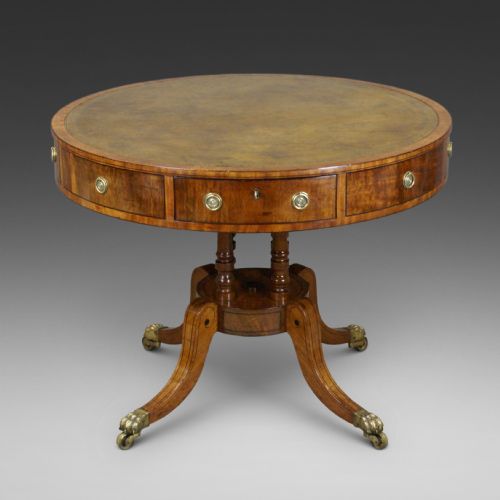
An edwardian drum desk takes its name from the cylindrical body that sits atop a central pillar, offering a circular workspace with multiple drawers set around the perimeter. These tables frequently turn on their bases, allowing access to papers without shifting the entire piece.
The evidence shows related forms spanning the nineteenth and early twentieth centuries, including mahogany drum tables alongside varied desks, tables, and scientific instruments. The versions most commonly encountered combine traditional timber construction with compact proportions suited to period interiors.
Construction and materials
Makers utilised mahogany as the primary timber, often selecting figured flames or rosewood veneers to accentuate the curved surfaces of the drum body. Brass details appear frequently, both as structural inlays and as functional hardware for drawer pulls and movement.
Inlaid leather surfaces provide the writing plane on the top of the drum, framed by the turned wooden edges. Internal construction relies on traditional joinery to support the radial drawers housed within the circular frame.
Secret compartments occasionally hide behind dummy drawer fronts, rewarding the curious owner with a miniature treasury.
Assessing quality
The distinction between standard examples and finer pieces rests on the choice of timber and the precision of the rotating mechanism. Richly figured flame mahogany and crisp brass inlay elevate the visual presence of the piece.
Proportions also dictate quality, particularly in smaller examples where balanced scaling requires careful cabinetwork. The seamless integration of radial drawers into the curved perimeter demonstrates the maker's skill.
The Edwardian Drum Desk Glossary
- Drum table
- A circular library or writing table with a deep top resembling a drum, typically fitted with alternating drawers and dummy drawers around the circumference.
- Flame mahogany
- A veneer cut from the fork of a mahogany tree, creating a distinctive flamed or feathered grain pattern across curved surfaces.
- Inlay
- A technique where contrasting materials such as brass are set flush into the wood surface to form decorative linear patterns.
Edwardian Drum Desk: Frequently Asked Questions
What is an edwardian drum desk used for?
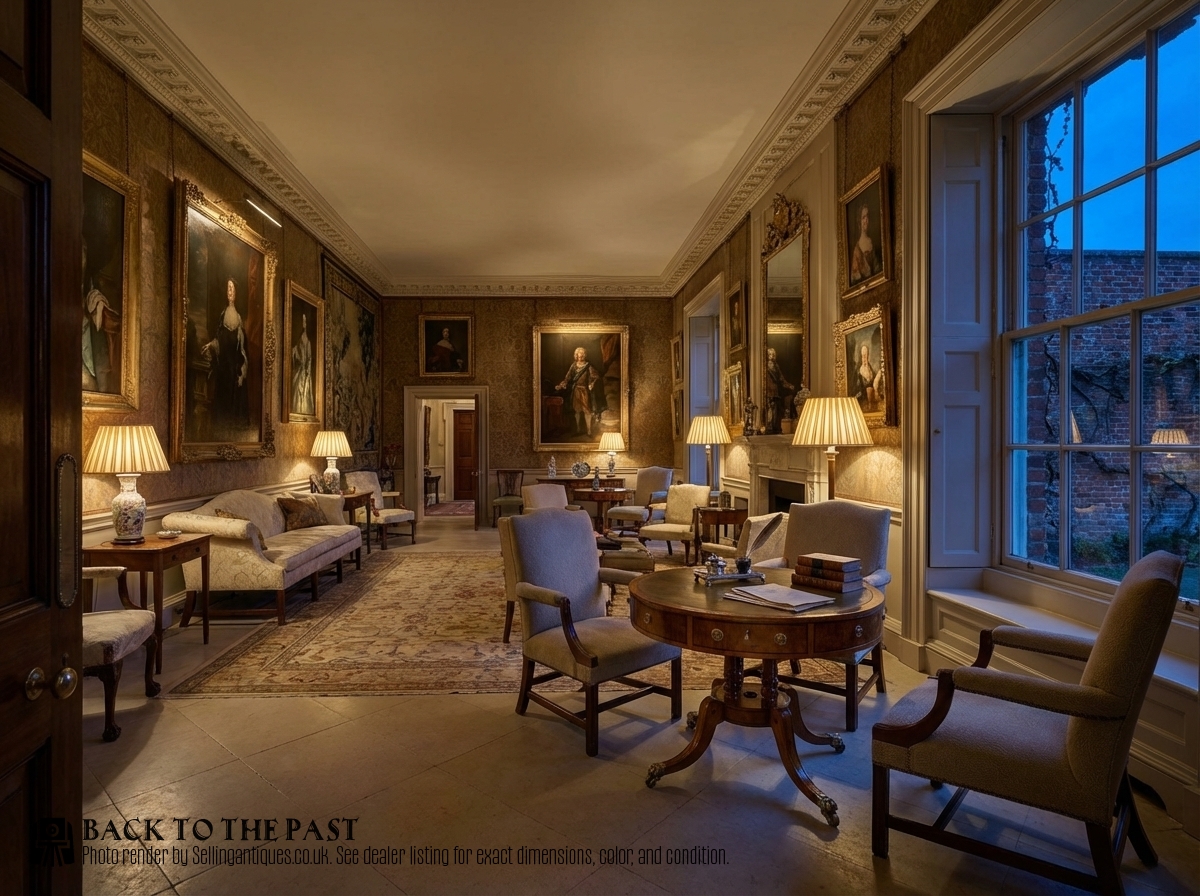
These pieces serve as compact writing and reference tables, designed to sit in the centre of a room rather than against a wall.
The revolving top and radial drawers allow multiple users to access stationery and documents from any position around the circumference.
How do I care for the leather top?
The leather writing surface benefits from gentle cleaning using specialist leather balms to maintain flexibility and colour.
Avoiding direct sunlight prevents the leather from drying out and preserves the gold-tooled borders often found on period examples.
Are these desks suitable for small rooms?
The circular footprint distributes volume evenly, making these pieces less visually obtrusive in compact studies than rectangular partners desks.
Enclosed storage within the drum body also helps keep writing materials concealed when the workspace is not in use.
How can I distinguish period styles?
Regency examples often feature bold brass inlay and rosewood veneers, while later Victorian and Edwardian iterations lean towards flamed mahogany and simpler lines.
Matching the construction details and secondary timbers helps confirm the likely era of manufacture.