



Edwardian Demilune Console
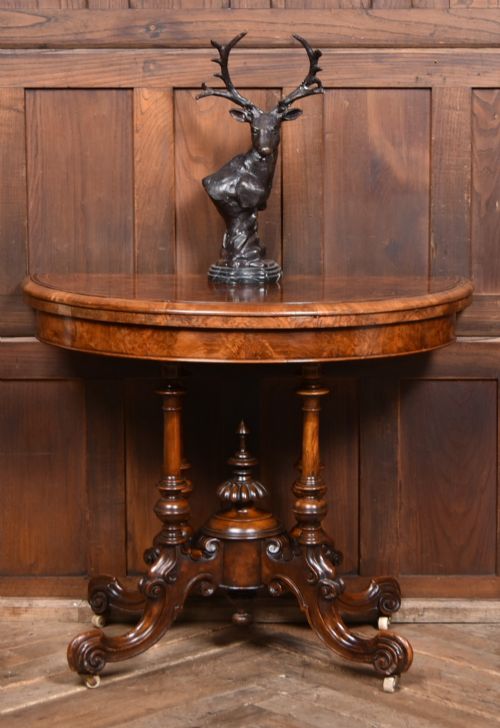
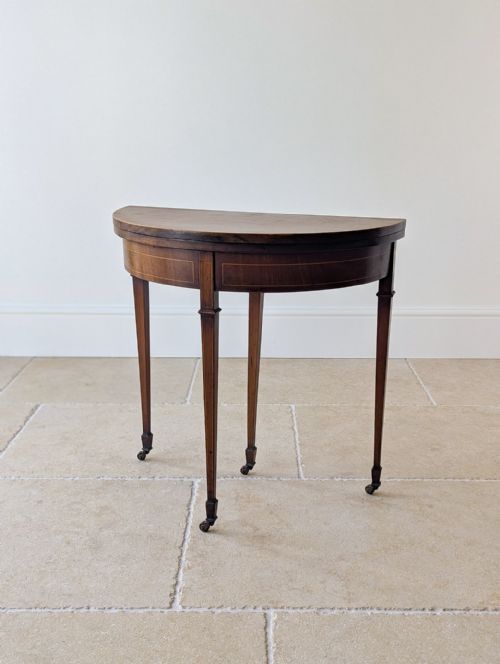
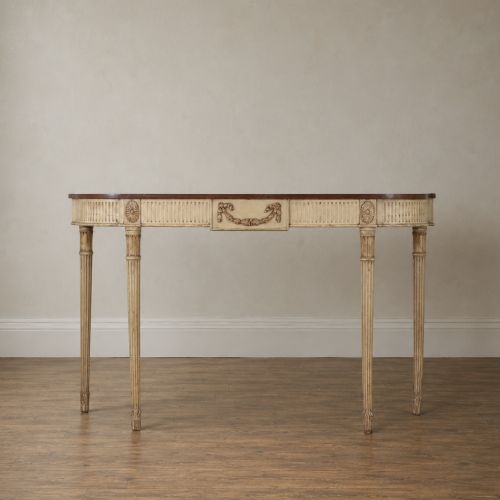
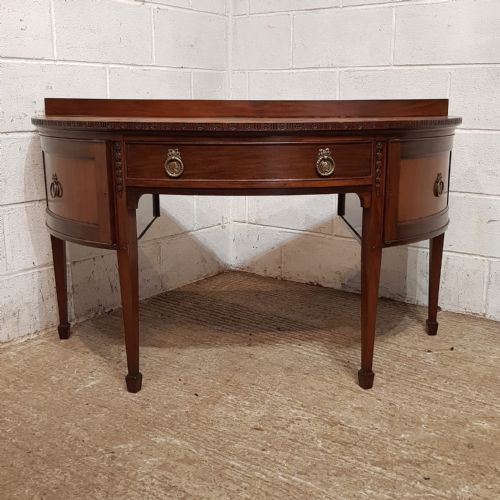
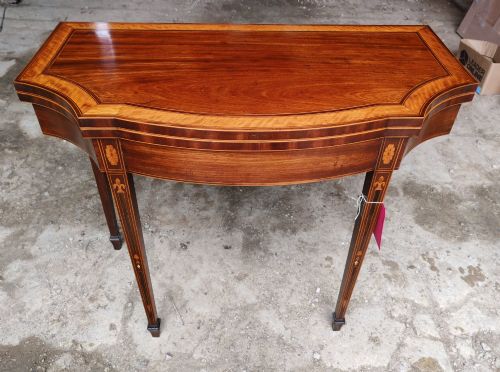
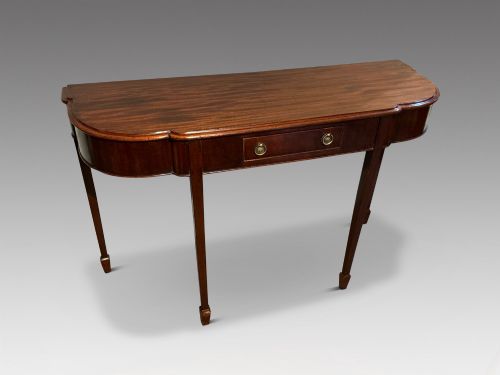
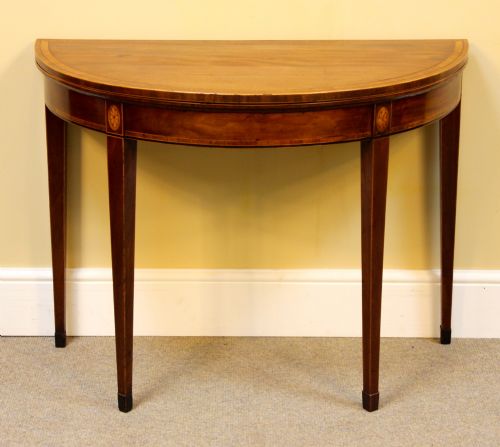
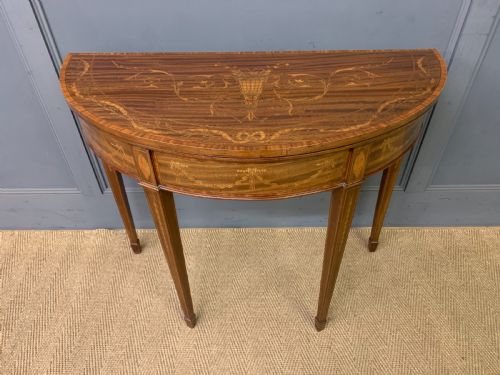
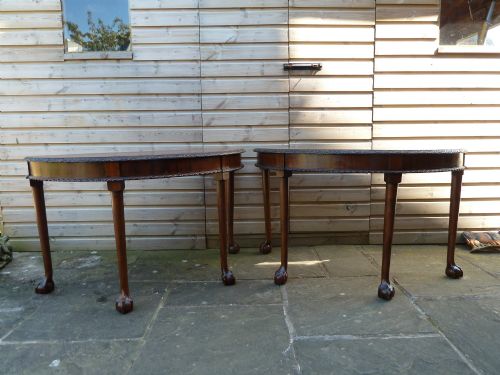
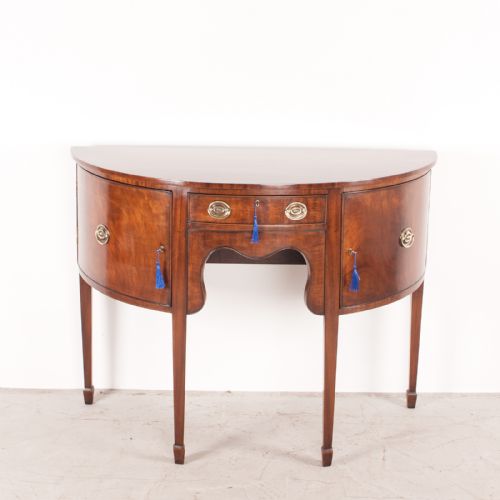
These edwardian demilune console tables offer semicircular elegance and refined inlay, bringing graceful proportions and versatile surfaces to a hallway or drawing room.
Edwardian Demilune Console
When you search for an edwardian demilune console, you are looking for a semicircular table designed to sit flush against a wall, combining compact depth with a useful surface. The pieces on this page span the Edwardian era and surrounding periods, drawing heavily on earlier Georgian and Sheraton revivals.
You will frequently encounter folding card tables, games tables, and pier consoles sharing this distinctive half-moon shape. Materials range from rich mahogany to satinwood, often enhanced with marquetry inlay and boxwood stringing.
Distinguishing Quality
Quality rests in the precision of the cabinetwork and the crispness of the marquetry inlay. Superior examples display seamless grain matching across the semicircular top and tightly fitted pivoting joints on fold-over mechanisms.
The choice of secondary timbers and the depth of the carving on revival pieces also distinguish higher tier items from standard production. A well-balanced proportion and harmonious timber selection elevate an ordinary hall table into a striking focal point.
Some tables hide a secret folding mechanism so clever it almost outsmarts the card players.
Edward and Roberts
The Edwardian Demilune Console Glossary
- Demilune
- A half-moon or semicircular shape typical of console tables designed to stand flat against a wall. This profile maximises floor space while providing a functional surface.
- Marquetry
- Decorative patterns formed by fitting together contrasting veneer timbers on a surface. Craftsmen used this technique to create elaborate floral and neoclassical designs.
- Crossbanding
- A border of veneer laid around the edge of a table top with the grain running perpendicular to the centre. This frames the main panel and adds visual definition.
- Stringing
- Thin lines of contrasting wood inlay used to outline drawers, legs, and table tops. It provides a subtle linear accent common in revival furniture.
- Frieze
- The horizontal band running directly beneath the top surface of the table. This area often bears the primary inlay or marquetry decoration.
Edwardian Demilune Console: Frequently Asked Questions
Where should I place a demilune console?
These semicircular tables suit narrow hallways, entrance passages, and reception rooms where floor space is limited. Their flat back sits neatly against the wall while the curved front softens the geometry of a room.
Fold-over variants can also function as occasional card tables when pulled into the centre of a room for entertaining.
How do I tell an Edwardian piece from a Georgian original?
Edwardian tables often revive earlier Georgian and Sheraton styles, featuring machine-sawn veneers and lighter internal framing timbers. Examination of the secondary woods, screw types, and general wear patterns helps clarify the actual period of manufacture.
Many listings specifically denote revival styles to distinguish 20th-century craftsmanship from 18th-century pieces.
Can these tables be used for everyday dining?
While double fold-over games and supper tables offer expanded surfaces, most demilune consoles are primarily decorative or intended for light use. Placing hot items or heavy objects directly on antique polished veneer surfaces requires protective mats.
Careful daily use preserves the delicate satinwood and marquetry detailing characteristic of these tables.