









Edwardian Cut Glass Pot
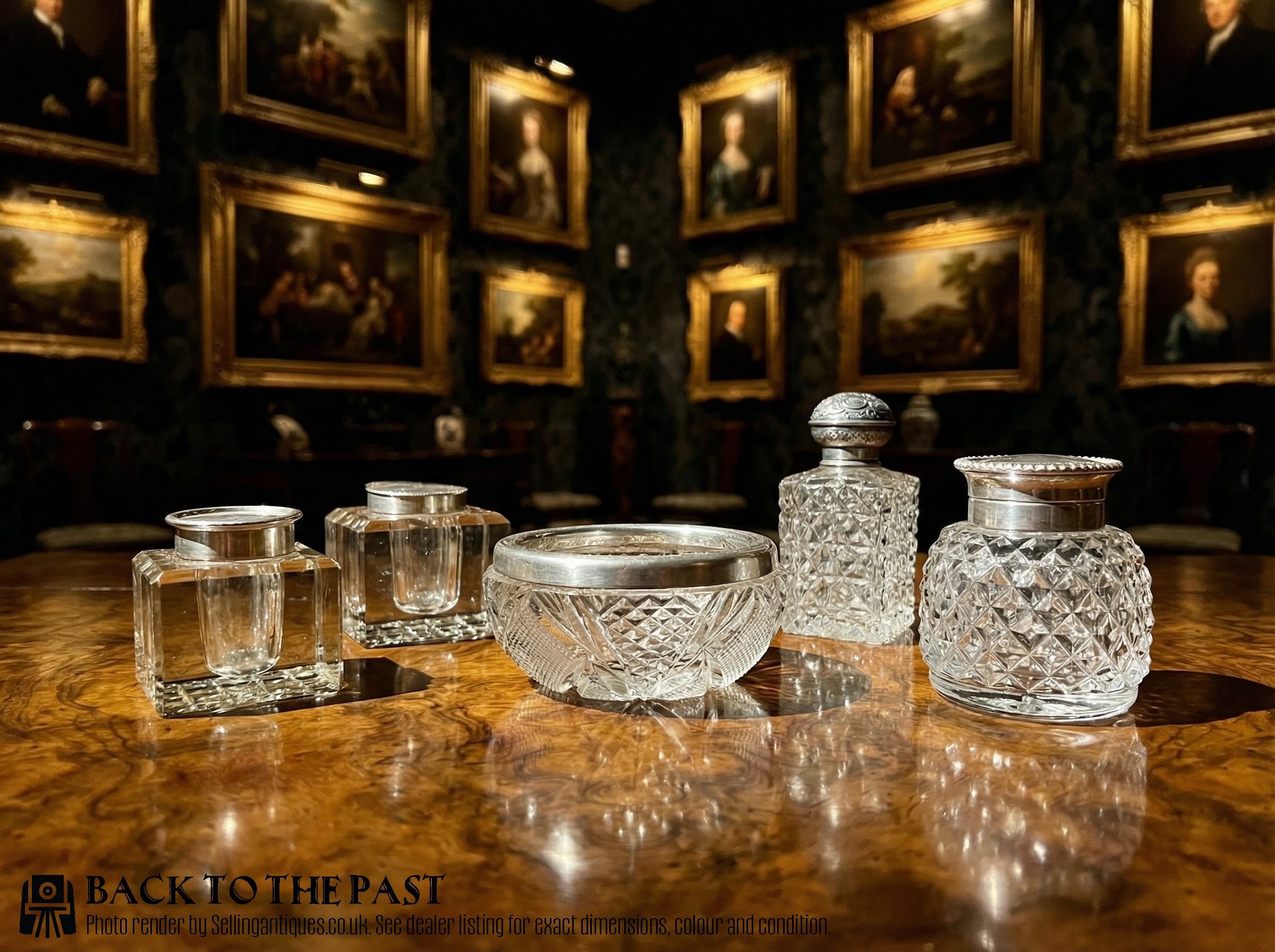
An Edwardian cut glass pot brings brilliant refraction and solid silver weight to a dressing table or desk.
Edwardian Cut Glass Pot
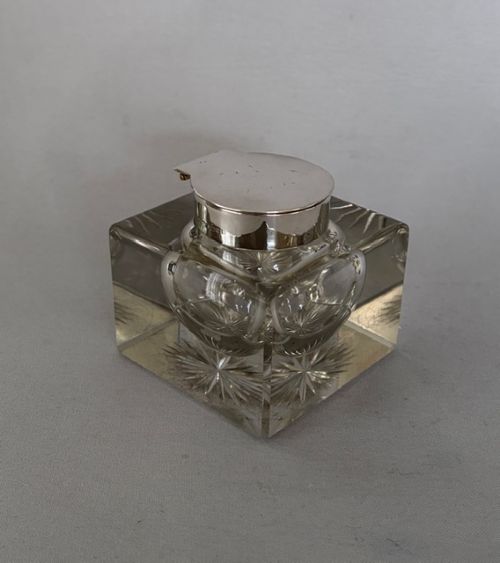
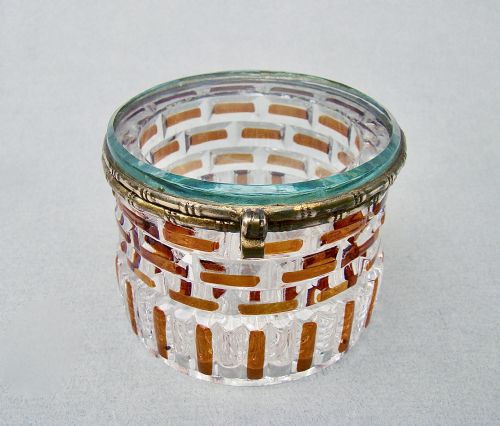
When you search for an Edwardian cut glass pot, you find pieces that span dressing table jars, inkwells, glue pots, and trinket boxes made around the turn of the twentieth century. These vessels combine heavy, light-catching glass bodies with fitted metal lids, primarily cast in sterling silver or silver plate.
The version you meet most often on this page is a small, lidded container designed for vanity use or desktop organisation, frequently displaying deep hobnail or linear faceting. While Edwardian examples dominate the selection, related pieces stretch from Victorian predecessors into Art Deco designs.
Makers housed these glass bodies in silver mounts, enamel tops, tortoiseshell, and occasionally French Baccarat crystal. They served practical domestic roles in bedrooms and studies before becoming decorative objects for modern collectors.
Materials and construction
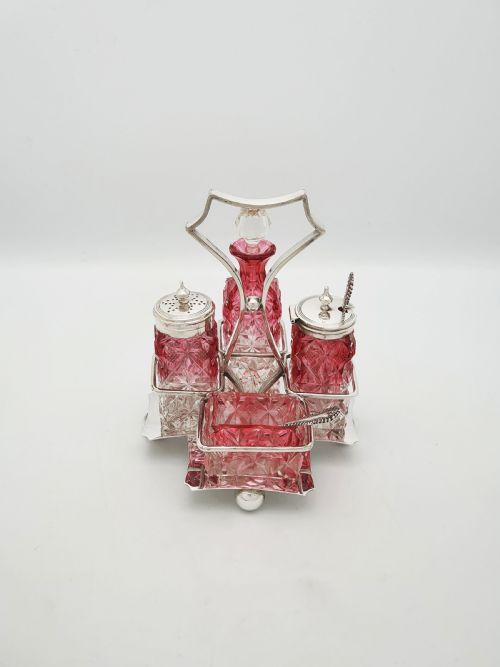
Makers produced the heavier vessels by blowing lead crystal into moulds before cutting geometric patterns across the exterior with rotating wheels. This process created sharp facets that scattered light through clear, cranberry, amber, or amethyst glass.
Silversmiths then fashioned matching slip-on or hinged lids, often stamping them with hallmarks indicating the assay office and date. Workshops also integrated guilloché enamel, tortoiseshell panels, and ceramic inserts into the mountings.
Edwardian Cut Glass Pot Retail Price Guide 2026
Typical asking prices for edwardian cut glass pot among the pieces listed under this phrase on Sellingantiques today, from the lower quarter to the upper quarter. They describe what is for sale here now, not the wider market.
Desktop match strikers in this selection feature textured glass bases designed to ignite safety matches right beside your ink.
Distinctions in craftsmanship
Quality rests in the crispness of the glass cutting and the thickness of the silver lid. Superior pieces display deep, hand-polished facets that remain sharp to the touch, paired with heavy gauge silver mounts that resist denting.
Maker attribution elevates certain examples, particularly those bearing the marks of recognised silversmiths or luxury retailers. The integration of supplementary materials, such as undamaged tortoiseshell or layered enamel, further separates standard containers from finer productions.
Henry Clifford Davis·Tiffany & Co·Asprey·John Grinsell & Sons·Henry Matthews
The Edwardian Cut Glass Pot Glossary
- Cut Glass
- Glass shaped and patterned by holding it against rotating abrasive wheels. The process leaves sharp, clear incisions across the vessel.
- Guilloché Enamel
- Decorative mechanical engraving beneath a translucent layer of coloured enamel. It creates repeating geometric patterns on silver lids.
- Hobnail
- A prominent faceted glass pattern resembling the hobnails on stout boots. It covers many Edwardian vanity jars and inkwells.
- Hallmark
- A series of stamped marks on precious metals indicating the standard of purity, assay office, and year of manufacture.
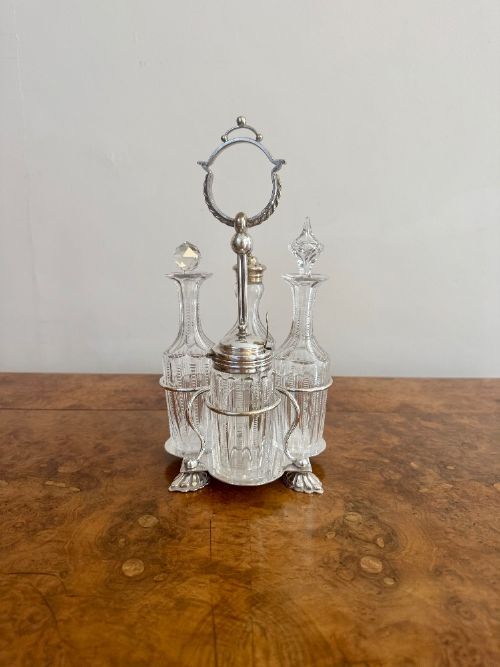
- Cruet Set
- A matched collection of glass bottles or pots for condiments, held within a metal stand. They sat upon dining tables during the Edwardian period.
Edwardian Cut Glass Pot: Frequently Asked Questions
What were glass glue pots used for?
These lidded vessels held liquid adhesive for sealing envelopes and binding documents on office desks.
An internal ceramic or glass liner kept the glue warm or accessible while the silver lid prevented evaporation.
How do I clean cut glass?
Wash the glass body in warm, soapy water using a soft brush to clear dust from the deep facet cuts.
Avoid submerging silver lids with tortoiseshell or enamel inserts to protect the organic materials and cement.
Are silver plate and sterling silver marked differently?
Sterling silver bears hallmarks including a lion passant or standard marks indicating purity alongside town and date letters.
Silver plate items display manufacturer marks that denote a plated layer over a base metal rather than solid silver.
Why do some pots have hinged lids?
Inkwells and desk accessories required attached lids to prevent the top from rolling away during frequent daily use.
Dressing table jars more commonly used removable slip-on lids for quick access to trinkets.