


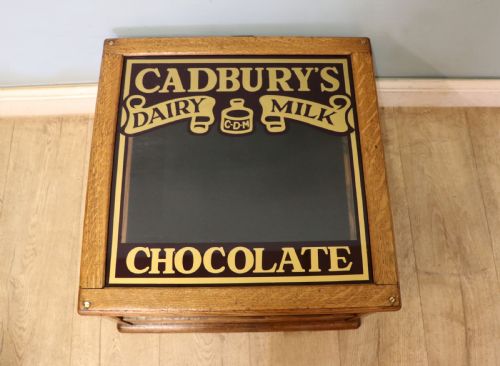

Edwardian Countertop Showcase
An edwardian countertop showcase is a glazed shop display cabinet designed to sit on a retail counter and present small goods.
Edwardian Countertop Showcase
The edwardian countertop showcase groups commercial display cabinets built to sit on shop counters and hold small wares for customers to view. These pieces originate from periods spanning the Victorian era through the 1930s, encompassing early twentieth century commercial styles and industrial commercial designs.
A buyer examining these listings meets various forms including glazed table top display cabinet cases, apothecary pieces, and sweet shop units. Many examples carry later sign-written branding such as Rowntree's Chocolates, Fry's, Cadburys Chocolate, and OXO cubes.
The objects serve primarily as display cases and cabinets, constructed from woods like oak and mahogany with glass viewing panels. The selections range from single cabinets to matched pairs originating from makers such as F. Sage & Co. London.
How they were made
Makers constructed these commercial display units using solid timbers such as mahogany, oak, and general hardwood for the structural frames. Brass hardware secures the doors and framing joints, while internal surfaces often incorporate felt linings to cushion the merchandise.
Glazing forms the primary enclosure of every cabinet, allowing maximum visibility of the contents from multiple angles on the shop counter. Sign-written decoration appears on the glass panels of several pieces, applied to advertise confectionery and household goods.
Listings feature pieces spanning the Victorian era through the 1930s, constructed predominantly in oak and mahogany with glass panels.
What varies in quality
Construction methods and timber selection set apart simpler utility cases from finer shop furniture. The choice between standard oak framing and dense mahogany affects the substantial feel of the piece on the counter.
Original branding and intact sign-written glass panels alter the character of individual examples. Pieces retaining verified maker details or authentic commercial lettering possess distinct historical interest compared to plain utility cabinets.
F. Sage & Co. London·Cadburys
The Edwardian Countertop Showcase Glossary
- Countertop showcase
- A glazed display cabinet built specifically to sit upon a shop counter for retail merchandise. These cases provide a clear view of small goods while protecting them from handling.
- Apothecary
- A trade style associated with medical and chemist supplies, frequently applied to utilitarian countertop cabinets with multiple small drawers or compartments. These pieces were designed for organising medicines and small dry goods.
- Sign-written
- Lettering painted by hand directly onto glass or timber surfaces for commercial advertising. This technique identifies the specific brand or shop that utilised the display.
- Glazing
- The installation of glass panes within a timber or metal framework. In these display cabinets, glazing forms the transparent walls and doors that enclose the items.
- Hardwood
- Timber derived from broad-leaved trees, including oak and mahogany, used for durable furniture construction. These dense woods provide the structural strength required for commercial retail environments.
Edwardian Countertop Showcase: Frequently Asked Questions
What were these cabinets used for?
Shopkeepers placed these glazed display units on retail counters to exhibit small goods like sweets, chocolates, and medicines directly to customers. The enclosed glass design kept merchandise clean while maintaining visibility in busy stores.
Commercial premises utilised branded cabinets supplied by major manufacturers to promote specific confectionery and household goods. Customers could inspect the items closely before asking the shop assistant to retrieve them.
How do I date an edwardian countertop showcase?
Dating relies on examining the timber construction, hardware fixings, and overall style of the cabinet framework. Pieces associated with the Edwardian period or early twentieth century exhibit specific joinery techniques and proportions distinct from Victorian examples.
Commercial advertising painted onto the glass or timber can also indicate the operational era of the shop. Sign-written branding for specific confectioners links the cabinet to the active trading years of those companies.
Where should I place one at home?
These display cabinets suit tabletops, sideboards, and kitchen counters where small collections can be safely viewed through the glass panels. Placing the case near natural light helps illuminate the interior contents effectively.
Because the pieces were designed for commercial counters, they occupy relatively shallow footprints suited to modern room layouts. The interior shelving accommodates small objects, ceramics, and curiosities away from dust.
Are the advertising signs original?
Some cabinets retain their original commercial sign-writing applied during their working life in retail shops. Other examples feature later sign-written decoration added to display brand names like Rowntree's or Cadburys.
Distinguishing between original period application and later decoration involves inspecting the wear and ageing of the painted surface on the glass. Both original and later painted panels reflect the commercial history associated with these display cases.