
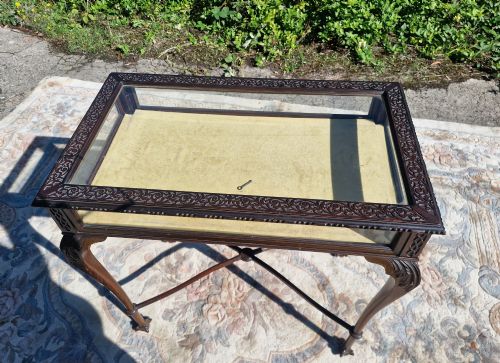


Vintage Collector Display Box
These vintage collector display boxes offer a structured way to showcase objects, bringing period craftsmanship straight into a room.
Vintage Collector Display Box
A vintage collector display box serves to house and exhibit small objects safely behind glass. Buyers searching this phrase look for table-top cabinets, countertop shop fittings, and freestanding display tables.
The selections span the Victorian, Edwardian, and 1930s periods, appearing in forms such as watchmaker cabinets and bijouterie tables. Oak and mahogany frame these pieces, often fitted with hinged lids or glazed doors.
Commercial utility shapes many examples, originating from apothecaries and watchmakers who needed to present delicate goods to customers. Domestic variants, such as inlaid bijouterie tables, focus instead on personal collections.
How they were made
Cabinetmakers utilised solid timbers like oak and mahogany to construct the structural frames of these boxes and tables. Glass panels form the viewing windows, held in place by wooden rebated joints or brass framing.
Interiors frequently feature fabric linings, including velvet, felt, and various textiles, designed to cushion delicate specimens and timepieces. Ormolu mounts and brass hardware provide functional hinges, locks, and decorative accents.
Surface treatments range from simple carved mahogany details to Edwardian inlaid patterns and French Rococo Revival ornamentation. Construction methods reflect sturdy commercial use or refined domestic cabinet work.
Some cabinets spent decades holding tiny watch parts before earning a peaceful retirement showing off modern pocket collections.
What varies in quality
The grade of timber and the precision of the joinery set the baseline for quality across these pieces. Dense mahogany and quartersawn oak display superior durability compared to simpler secondary woods.
Hardware integrity influences the overall standard, distinguishing mass-produced commercial fittings from bespoke maker output. Original brass hinges, functioning locks, and intact internal fabric linings preserve the original character.
The refinement of decorative elements, from subtle Edwardian string inlay to elaborate carved mahogany, marks the distinction between utilitarian storage and high-status display furniture.
Manoah Rhodes & Sons Ltd
The Vintage Collector Display Box Glossary
- Bijouterie table
- A glass-topped display table designed to hold small valuables and curiosities. These tables typically feature hinged lids and lined interiors.
- Watchmaker cabinet
- A specialised countertop cabinet featuring multiple shallow drawers for small components and timepieces. These pieces often originate from trade workshops.
- Ormolu
- Gilded bronze ornamentation applied to furniture and display cases. This technique adds metallic highlights to the wooden framework.
- Rebated joint
- A recessed groove cut into an edge to hold glass panes securely. This method is standard in glazed cabinet construction.
Vintage Collector Display Box: Frequently Asked Questions
What fits inside these display boxes?
These boxes accommodate small collectibles, pocket watches, jewellery, and curiosities behind protective glass panels. The internal depth varies according to whether the piece originated as a shop counter unit or a domestic table.
Fitted interiors with fabric linings keep items secure and visible from above or the front. This makes them practical for organising distinct collections without cluttering surfaces.
How do I date a display box?
Dating relies on identifying stylistic markers, timber choices, and construction techniques associated with specific periods. Edwardian pieces often display delicate inlay, while Victorian and earlier 20th-century examples lean towards heavier timber frames.
Commercial pieces from the 1920s and 1930s show functional trade characteristics, such as apothecary or watchmaker labelling and configuration. Comparing hardware and internal fabric types helps narrow down the decade of production.
Where should I place a display table?
Display tables suit living rooms, studies, or hallways where natural light can illuminate the contents through the glass top. Freestanding bijouterie tables function well as central accent pieces or side tables.
Countertop cabinets sit comfortably on top of existing sideboards, chests of drawers, or desks. Positioning them away from direct heat sources protects the timber and internal fabric linings from fading.
How do I maintain the wood and glass?
Routine maintenance involves dusting the glass with a soft cloth and applying appropriate wax to the wooden exterior. Avoid using harsh chemical cleaners that might damage antique timber finishes or original brass hardware.
Internal fabric linings benefit from gentle suction using a low-power vacuum attachment to remove dust. Keeping the environment stable in humidity prevents the wood from warping around the glass panes.