


Edwardian Chinoiserie Furniture
Edwardian chinoiserie furniture brings orientalist lacquer and gilded detail into early twentieth-century rooms.
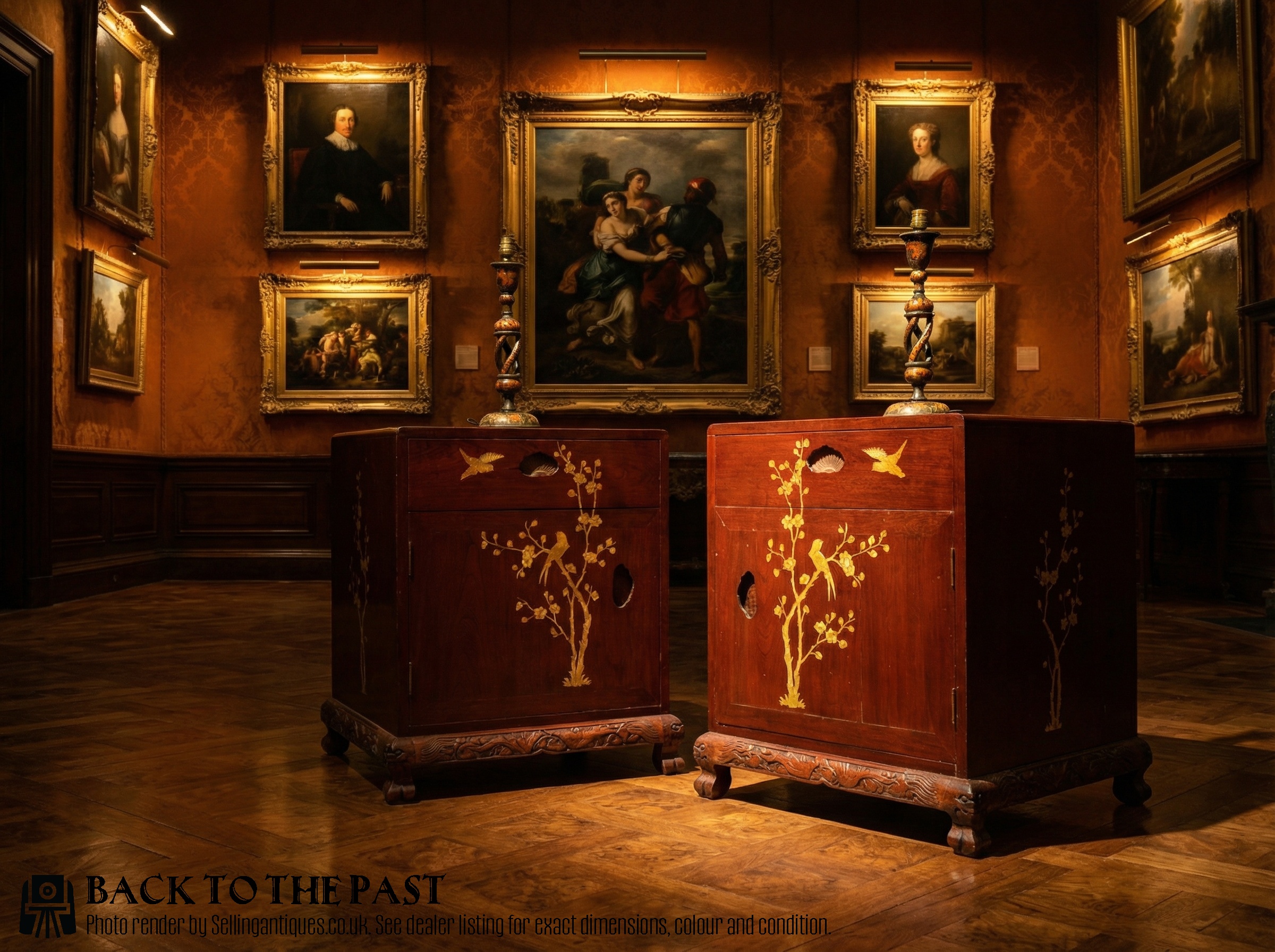
What they are
Edwardian chinoiserie furniture encompasses decorated display cabinets, wardrobes, side cabinets, and upholstered suites created during the early twentieth century. These pieces draw on earlier revival aesthetics, applying decorative oriental motifs to standard domestic forms of the period.
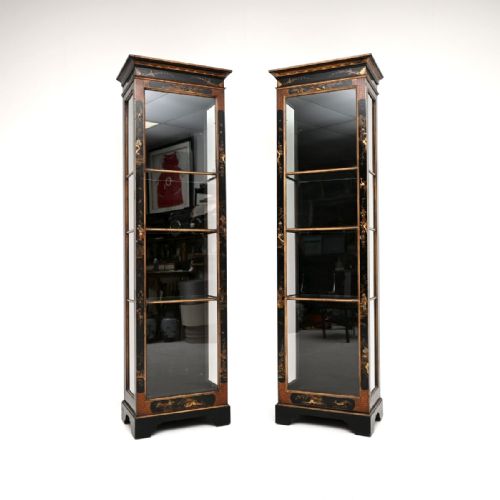
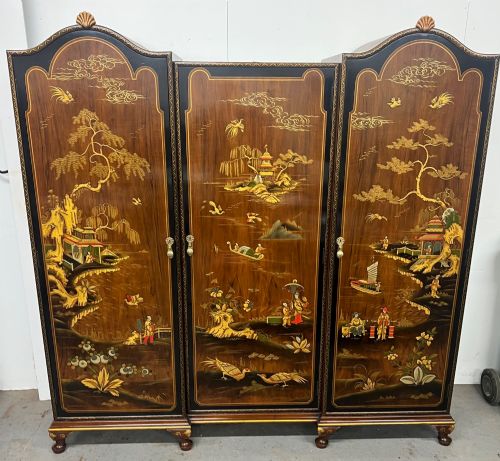
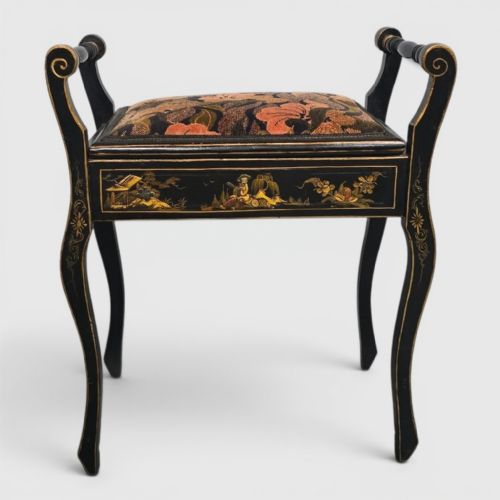
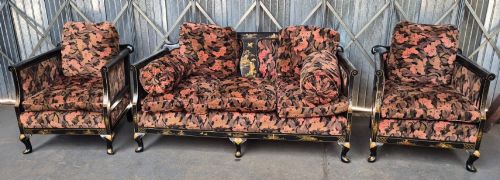
The objects seen here date across the Edwardian era and the decades immediately following, specifically spanning from nineteen hundred to nineteen twenty. They include pairs of display cabinets, bedroom wardrobes, and matching three-piece seating groups.
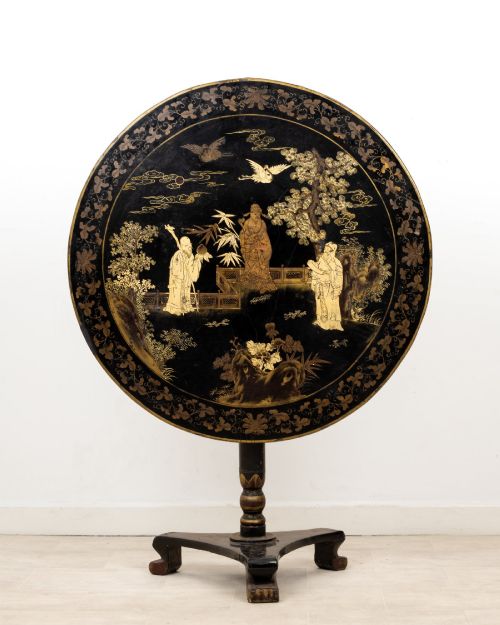
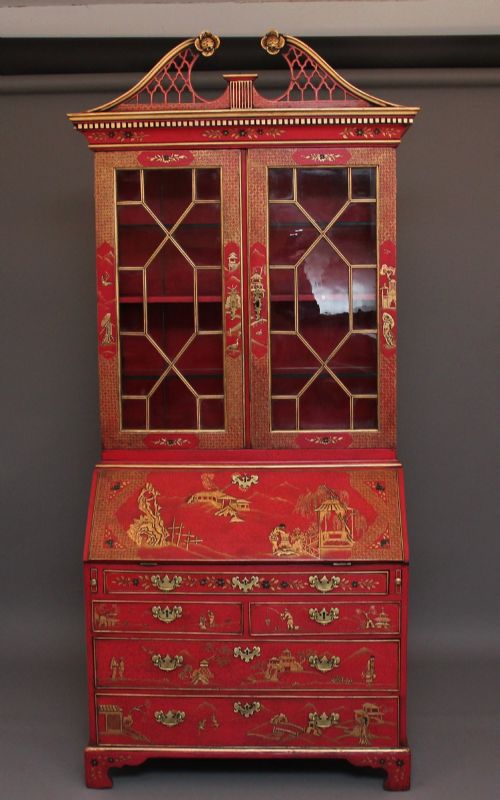
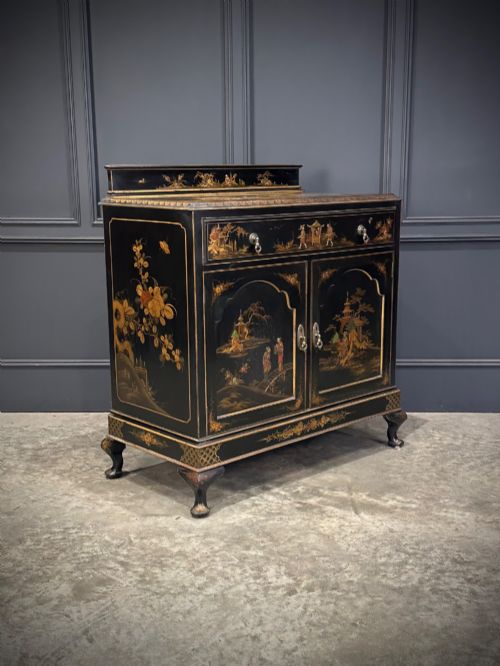
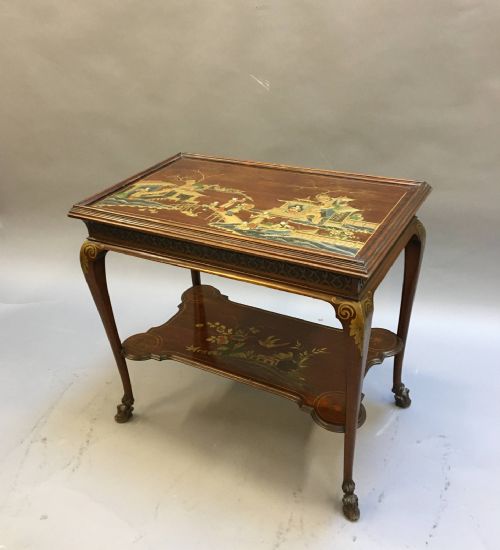
Buyers seeking this aesthetic will most frequently encounter lacquered cabinets and decorated side storage pieces finished with distinctive oriental scenes. Each item demonstrates the period's fascination with hand-painted landscapes and exotic figures applied to functional wooden carcasses.
How they were made
The construction of these pieces relies on traditional cabinet timbers such as mahogany and general wood substrates finished with specialist surface treatments. Artisans applied layers of lacquer to build a deep, reflective ground before executing the decorative schemes.
Gold leaf and gilding provide the metallic highlights that define the orientalist iconography across panels, framing borders, and door fronts. Additional detailing incorporates brass hardware, glass viewing panels, and applied textile elements on upholstered seating suites.
Retail Price Guide 2026
Typical UK retail prices for edwardian chinoiserie furniture, calculated from the Sellingantiques database of over a million retail prices indexed since 2003. This retail price guide relies exclusively on Sellingantiques data; no external sources or auction records are used, so the figures do not describe the wider market.
Even a wardrobe gets to play at being an oriental palace when coated in gold leaf.
What varies in quality
Quality in this category rests upon the execution and depth of the lacquerwork and gilding rather than the underlying timber alone. Superior examples display meticulous hand-painted detail with crisp gold leaf application that retains its brilliance across panels and mouldings.
Construction standards are measured by the integration of decorative schemes with the architectural form of the cabinet or wardrobe. Pieces that maintain harmonious proportions alongside well-preserved surface finishes represent the upper tier of the range.
Maples & Co.
The Edwardian Chinoiserie Furniture Glossary
- Chinoiserie
- A European artistic style reflecting Chinese and East Asian motifs, popular in decorative arts and furniture design. This aesthetic uses painted scenes of figures, pagodas, and landscapes.
- Lacquer
- A durable resin finish applied in multiple layers to wooden surfaces to create a smooth, glossy protective coating. It forms the base for traditional Asian-inspired decoration.
- Gilding
- The application of gold leaf or powder to surfaces to produce a thin gold coating. It adds decorative contrast against dark lacquer grounds.
- Display Cabinet
- A glazed piece of furniture designed for exhibiting porcelain, glassware, or small ornaments. Edwardian versions often feature elaborate painted frames.
Frequently Asked Questions
What is Edwardian chinoiserie furniture?
Edwardian chinoiserie furniture consists of domestic storage and display pieces decorated with painted oriental scenes, lacquer, and gilding.
These items date from the early twentieth century and combine traditional Edwardian forms with Asian-inspired decorative motifs.
How do I identify a chinoiserie cabinet?
A chinoiserie cabinet is distinguished by its lacquered surface and hand-painted decoration depicting landscapes, figures, and architectural elements.
These pieces often feature gold leaf details against dark or coloured backgrounds.
Were these pieces made in pairs?
Makers during the Edwardian period occasionally produced matching items, such as display cabinets and side cabinets, for symmetrical interior placement.
Pairs share identical dimensions, timber construction, and painted decorative schemes.
How do I care for lacquer surfaces?
Lacquer finishes require gentle dusting with a soft cloth and protection from direct sunlight and extreme humidity changes.
Avoid using chemical polishes that can degrade the delicate surface layers and gold leaf accents.