
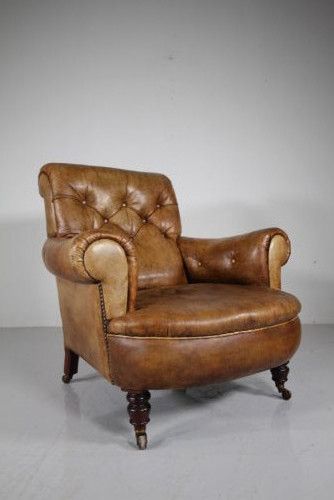

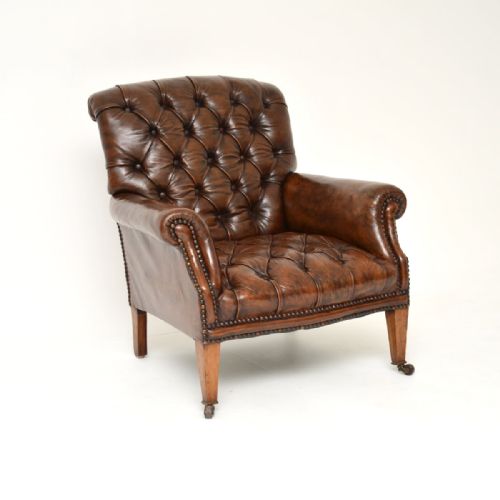


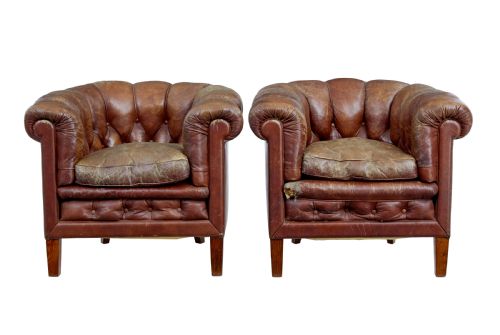


Edwardian Chesterfield Armchair
These Edwardian chesterfield armchairs combine deep-buttoned comfort with sturdy timber framing, offering a welcoming seat for any study or library.
Edwardian Chesterfield Armchair
The edwardian chesterfield armchair is a substantial seating form defined by its upholstered upholstery and supportive proportions. When you search for this phrase, you encounter pieces that range from compact club chairs to expansive wingbacks designed for deep relaxation.
The selections on this page draw on periods spanning the nineteenth century through the early twentieth century, alongside Victorian and Regency stylistic influences. Library chairs, desk chairs, and reclining armchairs appear regularly among these listings.
Leather remains the predominant covering across these examples, paired with hardwood and mahogany frames. Many pieces exhibit traditional buttoning and characteristic low arms that define the chesterfield profile.
Construction and materials
Makers built these frames using robust hardwoods such as mahogany and general timber to ensure structural longevity. Joinery relied on traditional methods to support the heavy weight of sprung upholstery and dense stuffing.
Leather forms the primary outer material, often accented with brass studding along the borders. Sub-components incorporate steel springs and internal webings that provide the characteristic resilience of the seat.
Carved details appear on select wooden legs and arm supports, demonstrating manual skill in shaping hardwood components.
Listings feature items built from mahogany, hardwood, and timber, upholstered in leather with brass and steel hardware.
Assessing quality and character
Quality rests heavily on the integrity of the internal frame and the condition of the leather upholstery. Superior examples maintain firm structural support and supple leather that displays natural patination rather than excessive cracking.
The finesse of the hand-carved details and the precision of the brass stud work distinguish finer workshops from standard production. Proportion and balance also play a decisive role, with better pieces offering harmonious lines and ergonomic comfort.
Howard & Son's·Gillows
The Edwardian Chesterfield Armchair Glossary
- Chesterfield
- A deep-buttoned upholstered seating form traditionally featuring arms and back of the same height. This style offers a distinct silhouette common in British studies and libraries.
- Wingback
- An armchair featuring side panels attached to the backrest designed to shield the occupant from drafts. These panels extend downward to form the armrests.
- Oxblood
- A deep reddish-brown colour frequently found in traditional leather upholstery. This shade develops a rich patina over decades of use.
- Library chair
- A heavy, comfortable seating form designed for reading rooms and studies. They often utilise durable leather to withstand daily handling.
- Porters armchair
- A high-backed enclosed seating form originally designed to keep drafts away from doorkeepers in grand halls. They frequently feature hooded tops and fully upholstered sides.
Edwardian Chesterfield Armchair: Frequently Asked Questions
What defines an edwardian chesterfield armchair?
An edwardian chesterfield armchair combines a sturdy timber frame with deep-buttoned leather upholstery. These chairs typically feature low, rolled arms and a generous seating depth.
They emerged from a tradition of comfortable library and club seating. The focus remains on durability and substantial padding for daily use.
How do I care for antique leather?
Antique leather requires regular dusting with a dry cloth and occasional treatment with appropriate leather balms. Avoid placing these chairs near direct heat sources or strong sunlight to prevent drying.
Maintaining the natural oils keeps the hide supple. Gentle handling preserves the original patina built up over decades.
Where were these armchairs originally used?
These chairs traditionally occupied grand libraries, studies, smoking rooms, and gentleman's clubs. Their robust construction suited heavy daily use in formal domestic and institutional settings.
Today they transition easily into modern living spaces and offices. Their classic proportions anchor a room while providing a comfortable reading seat.
How do I distinguish between periods?
Distinguishing periods involves examining the framing timber, the style of the legs, and the upholstery technique. Victorian pieces often display heavier proportions and darker mahogany, while Edwardian examples can appear slightly more refined.
Earlier Regency and William IV iterations show distinct classical revival influences in their woodwork. Comparing the turn of the legs and stretcher arrangements helps clarify the era.