

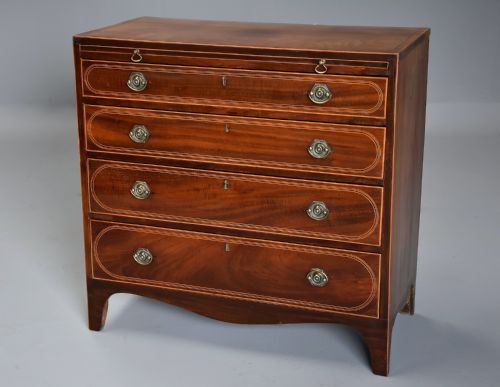
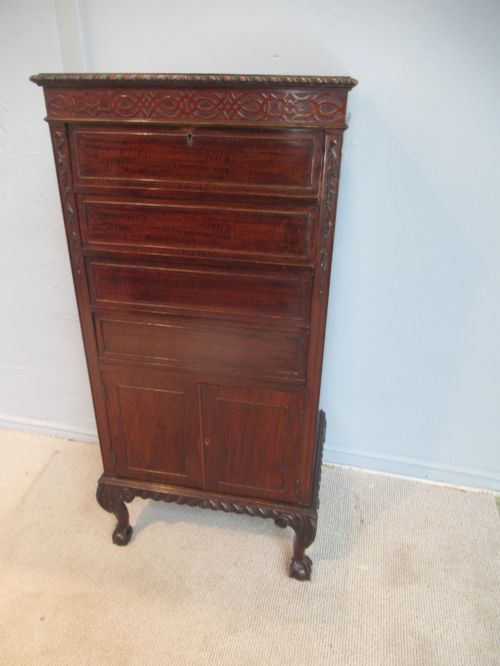
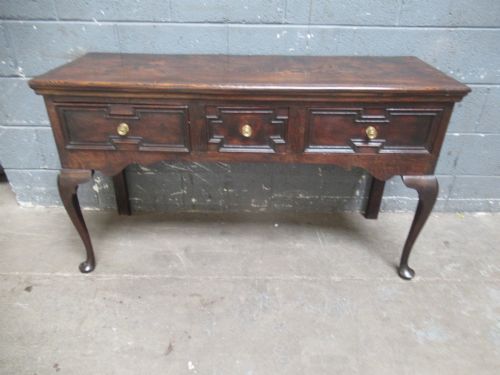
Edwardian Chest on Legs
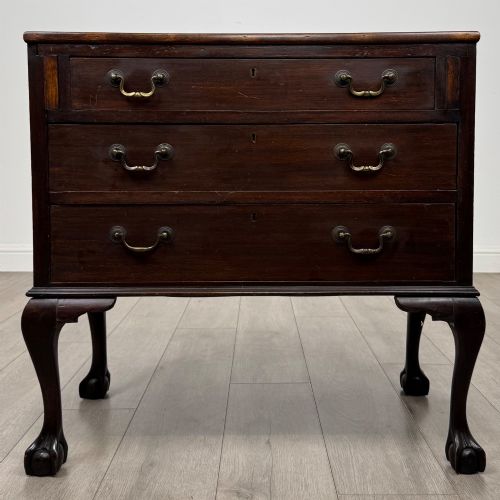
An edwardian chest on legs brings upright storage and timber figure to a bedroom, pairing practical drawer space with elevated proportions.
Edwardian Chest on Legs
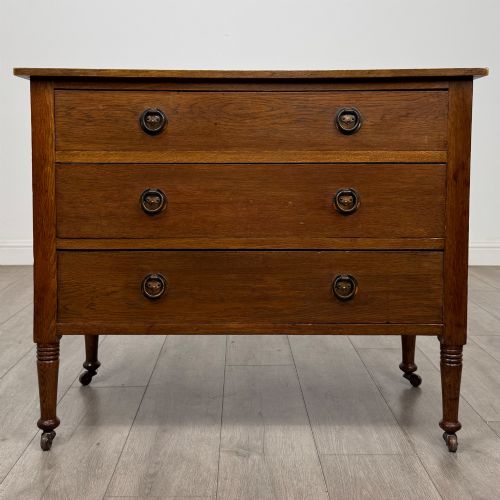
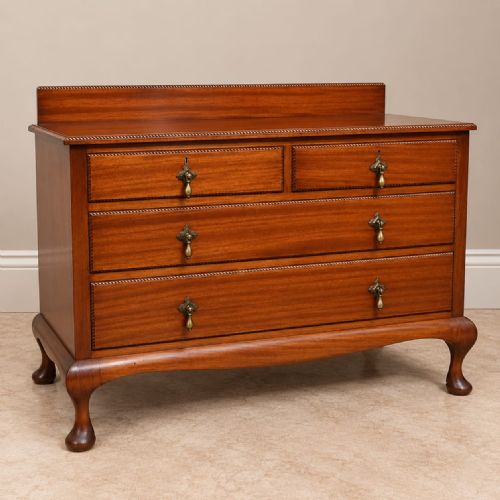
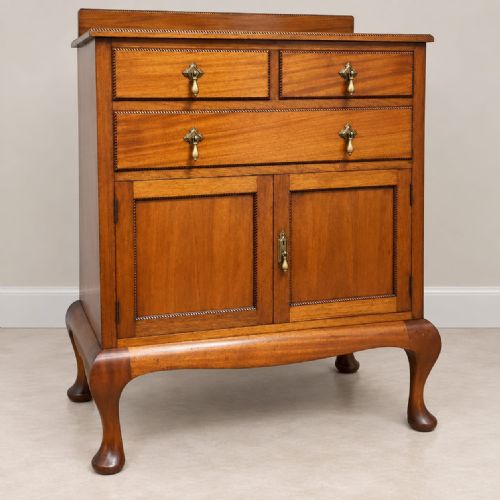
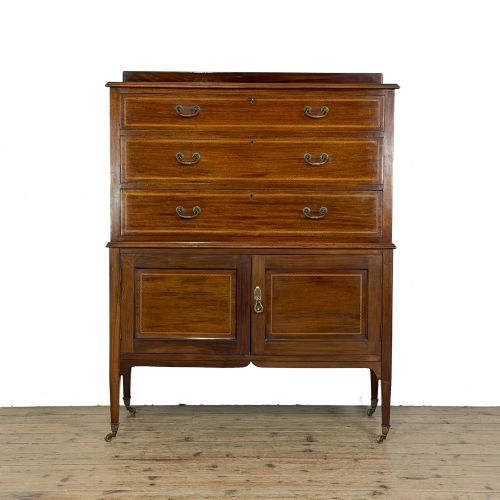
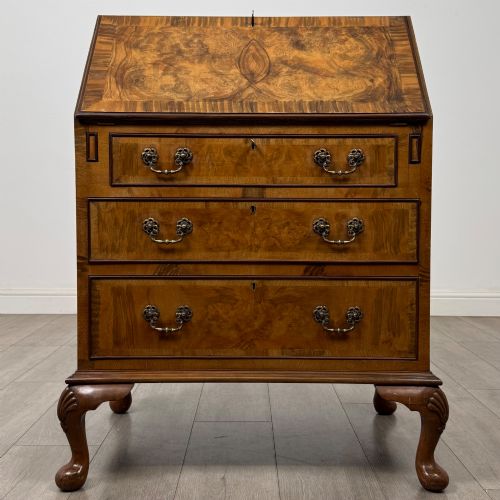
When searching for an edwardian chest on legs, buyers encounter elevated storage forms dating from the early twentieth century alongside revival pieces. The selection includes tallboys, chests of drawers, and cabinets raised on stands, reflecting the period preference for lighter furniture lifted off the floor on slender supports.
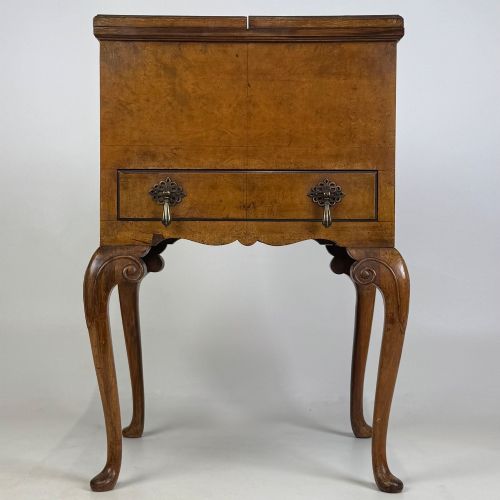
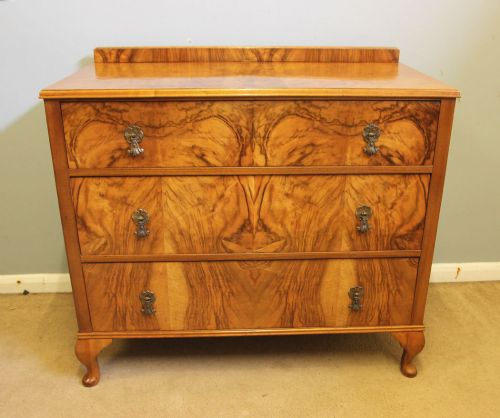
Mahogany and burr walnut dominate the examples seen here, often shaped with serpentine or bowfront profiles. While formal Edwardian and 1900s dates form the core, the listings also incorporate related Georgian revival pieces and occasional stands.
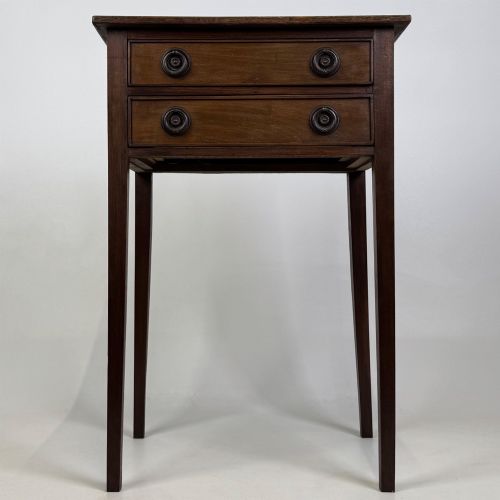
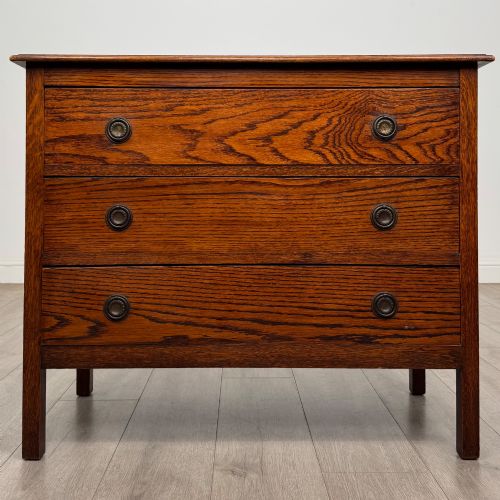
The primary forms serve as bedroom storage or compact side pieces, utilising brass hardware and figured veneers to create visual interest. Buyers find variations ranging from straightforward oak chests to elaborate walnut serpentine models.
How they were made
Cabinet makers utilised solid timbers such as mahogany and oak alongside decorative veneers including burr walnut to face drawer fronts and tops. Timber selection dictated the character of the piece, with figured grain patterns arranged symmetrically to catch the light.
Construction relied on traditional joinery methods, incorporating dovetailed drawer boxes and fitted internal compartments. Brass handles, escutcheons, and hinges completed the assembly, fastened securely to the carcase.
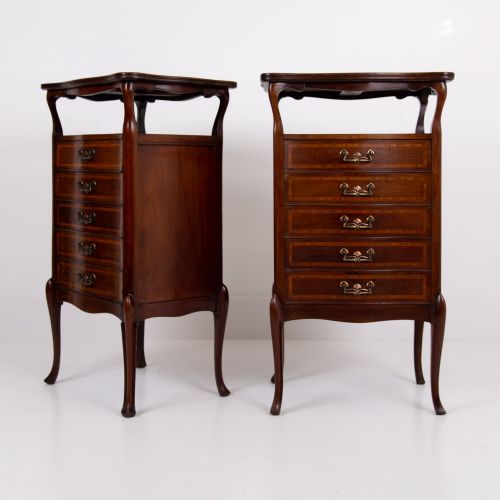
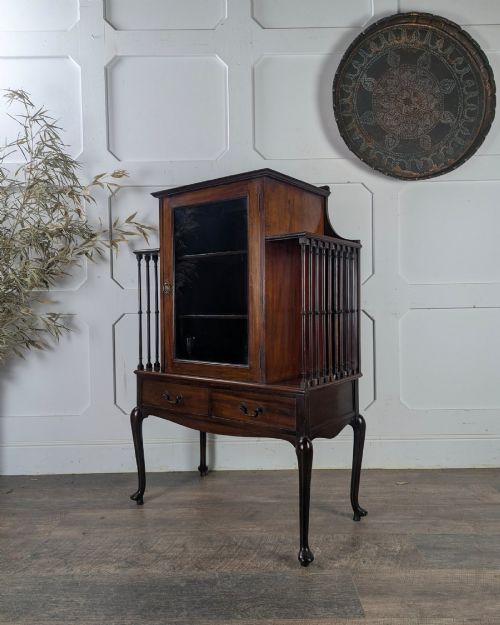
Sheet music cabinets share shelf space with laburnam oyster chests on stands.
What varies in quality
Quality separates through the choice of timber veneer and the precision of the cabinetwork. Superior examples display carefully matched burr walnut or rich mahogany grain across the entire front, while simpler pieces utilise plain oak.
The refinement of the proportions and the crispness of any inlaid detailing dictate the standing of a piece. Finer items exhibit balanced serpentine or bowfront shapes and well-executed revival styling that references earlier Georgian or Queen Anne models.
Druce & Co·Whytock & Reid·Mappin & Webb·Morison & Co
The Edwardian Chest on Legs Glossary
- Tallboy
- A tall chest of drawers, often constructed in two sections with the upper chest resting on a lower stand or base. It provides substantial vertical storage while maintaining a smaller floor footprint.
- Serpentine front
- A furniture front curving outward at the centre and inward at the sides in a gentle 'S' shape. This profile requires skilled joinery and adds visual movement to a cabinet or chest.
- Burr walnut
- A prized timber veneer taken from the knotted growth of a walnut tree, displaying intricate, swirling grain patterns. It was frequently utilised on high-grade Edwardian and revival furniture.
- Bowfront
- A convex, outwardly curved front elevation typical of select chests and side tables. The contour softens the corners of the furniture piece.
- Revival style
- A design movement looking back to historical periods such as Georgian, Hepplewhite, or Queen Anne. Makers reinterpreted these earlier aesthetics using Edwardian construction methods.
Edwardian Chest on Legs: Frequently Asked Questions
What is an edwardian chest on legs?
An edwardian chest on legs is a raised storage piece designed during the early twentieth century, combining drawer space with elevated supports.
These items lift the cabinet body off the floor, lightening the overall visual weight in a bedroom setting.
How do I identify an edwardian piece?
Identification relies on observing the combination of Edwardian or early twentieth-century construction traits, timber choices like mahogany and burr walnut, and revival styling.
Examine the drawer linings, brass hardware, and secondary woods for consistency with the period.
Where were these chests used?
These chests served primarily as bedroom storage for clothing, linens, and personal items.
Smaller variants also functioned as bedside cabinets or hallway side tables depending on the room layout.
How do I care for walnut veneer?
Burr walnut and walnut veneer require stable indoor humidity away from direct sunlight to prevent drying and lifting.
Dust gently with a dry cloth and avoid harsh chemical polishes that can damage the historical finish.