
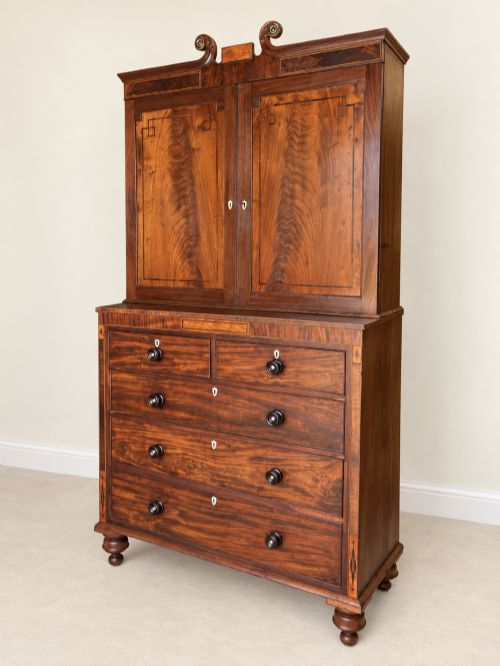
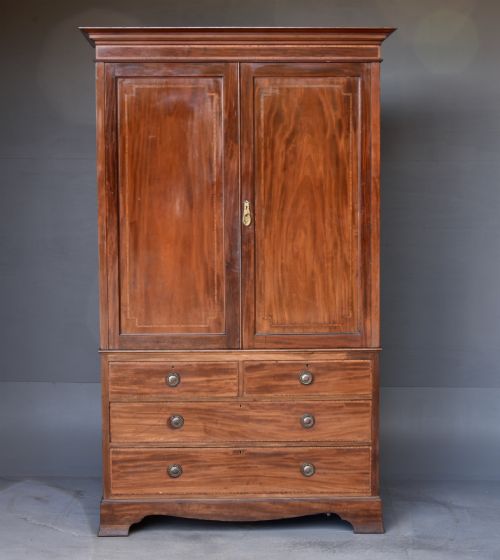
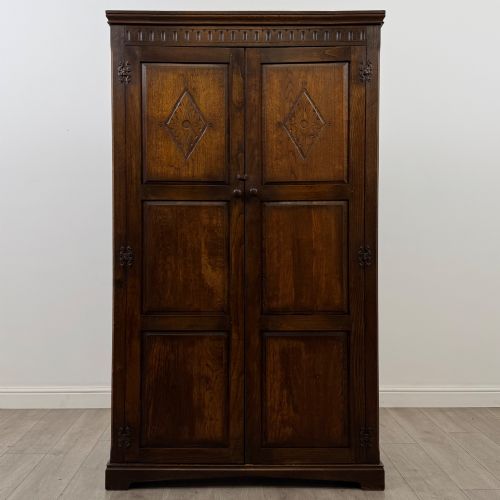
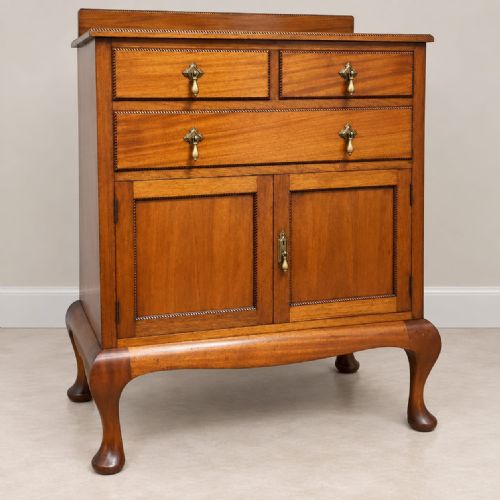
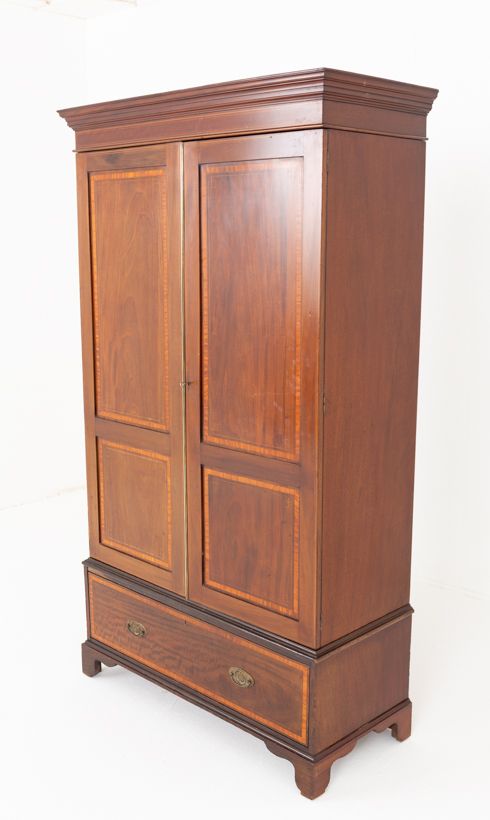
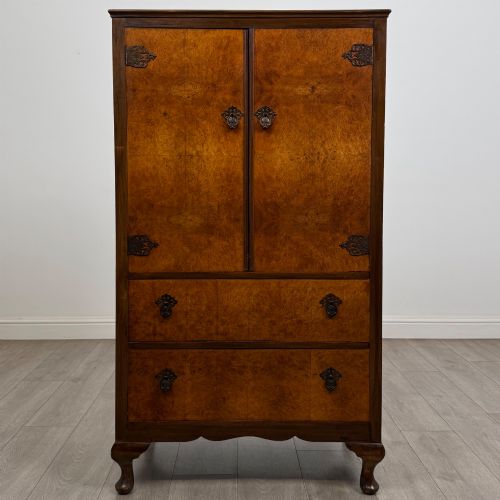
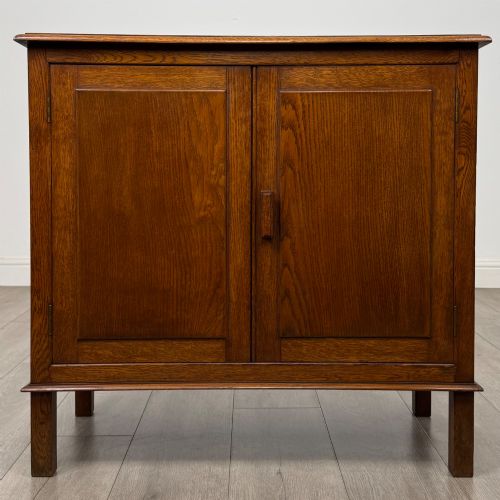
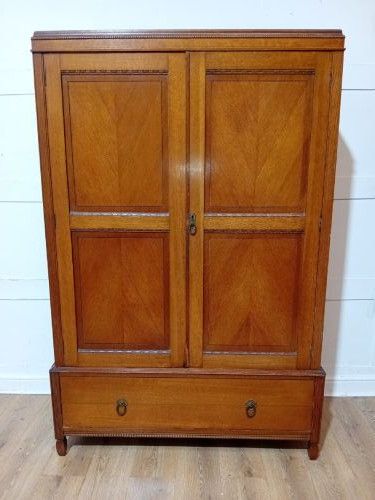
Edwardian Linen Press Cupboard
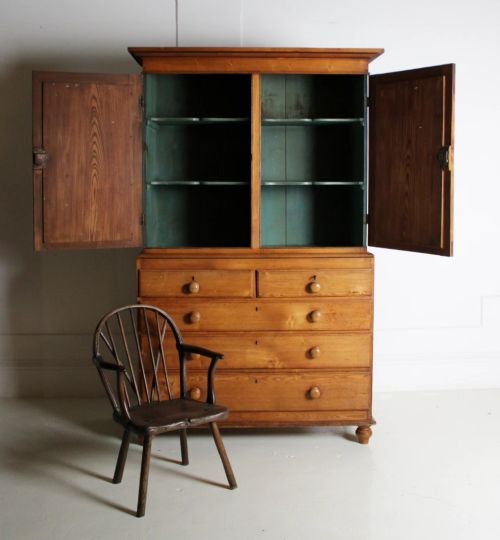
An Edwardian linen press cupboard is a substantial storage piece built to hold household textiles and garments, combining vertical hanging space with sliding tray compartments.
Edwardian Linen Press Cupboard
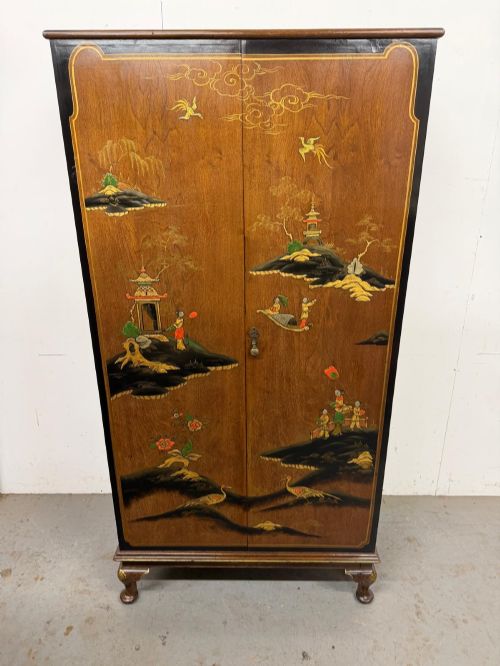
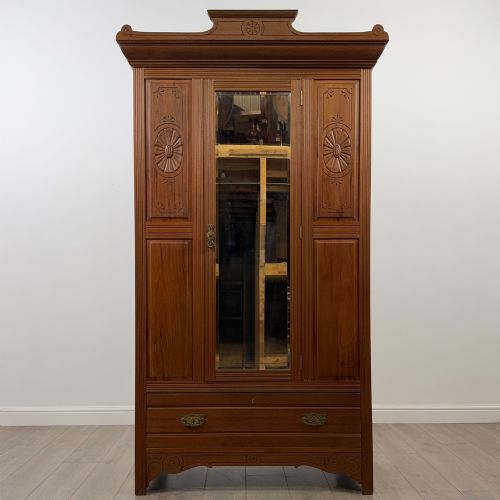
When searching for an edwardian linen press cupboard, you encounter large bedroom furniture that bridges the gap between traditional linen storage and the modern wardrobe. These pieces typically combine an upper section of interior sliding trays or shelves with lower drawer arrangements, alongside dedicated hanging compartments.
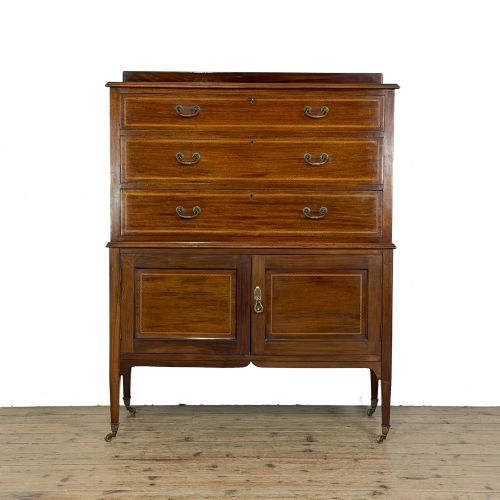
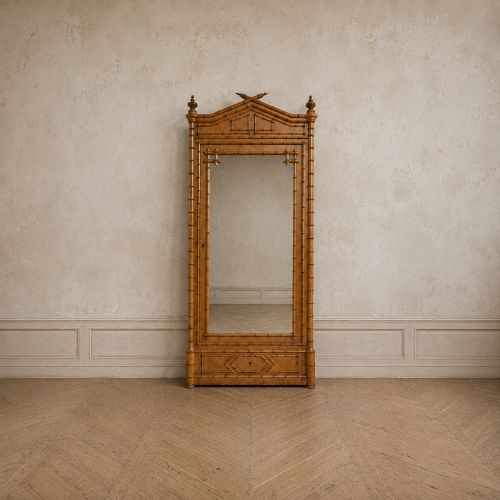
While true Edwardian examples dominate, the selections on this page stretch from late Victorian incarnations to later twentieth-century interpretations. You will find related forms including compactums, gentleman's wardrobes, and tallboys appearing under this heading.
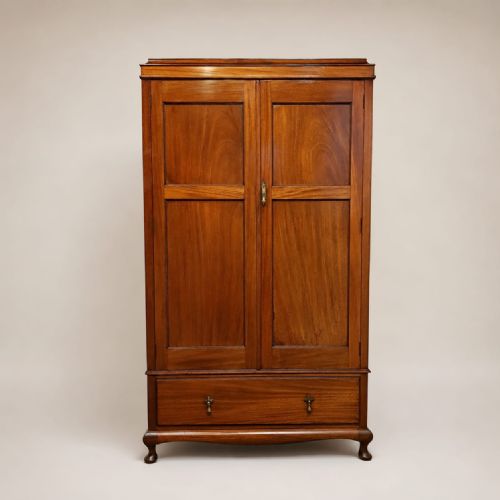
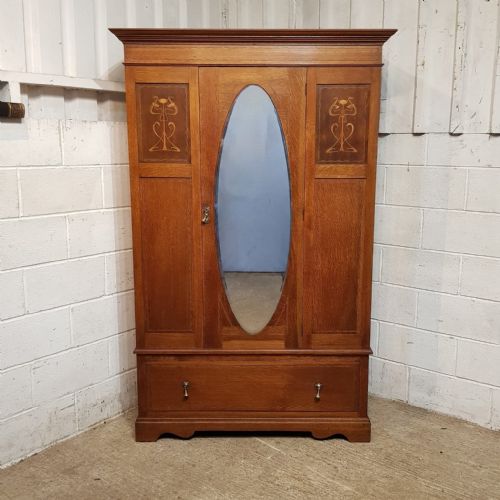
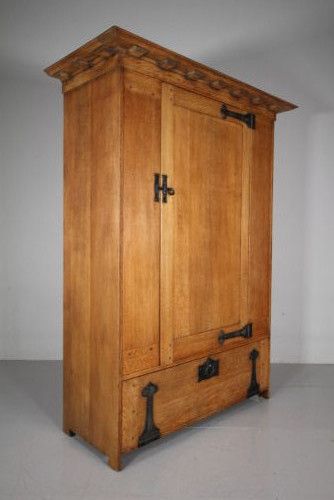
Woods range widely across the available inventory, with mahogany and oak holding strong representation alongside walnut, satinwood, and pine. Makers applied diverse stylistic treatments, moving from straightforward Edwardian utility to Sheraton Revival inlay and Arts and Crafts simplicity.
Materials and construction methods
Cabinet makers built these pieces using solid timbers like oak, mahogany, and ash for structural integrity, often applying figured veneers such as burr walnut, satinwood, and bird’s eye maple to primary surfaces. Brass hardware, including drop handles, escutcheons, and hanging rods, provides functional and decorative contrast against the dark or polished wood.
Construction relied upon traditional joinery techniques, featuring dovetailed drawer boxes and panelled doors designed to accommodate seasonal wood movement. Many larger wardrobes and presses were engineered to dismantle into modular sections, allowing these heavy items to navigate tight stairwells and bedroom doorways.
Listings feature woods spanning mahogany, oak, walnut, satinwood, ash, rosewood, teak, and pine across multiple periods.
Indicators of distinction and build quality
The distinction between standard utility furniture and superior output rests upon the selection of timber and the precision of the joinery. Master workshops utilised heavily figured veneers and hand-cut dovetails, whereas lesser examples relied on simpler machine-sawn joints and plain secondary woods.
Intricate detailing such as satinwood stringing, hand-carved panels, and matching brass maker stampings separate high-end commissions from mass-produced items. The survival of original bevelled mirror glass, functioning locks with working keys, and internal sliding trays intact heavily influences the standing of any given piece.
Maples and Co·Heals·Harris Lebus·Druce and Co·Waring and Gillow
The Edwardian Linen Press Cupboard Glossary
- Linen press
- A tall storage cabinet traditionally used to store folded linen and garments on internal sliding trays rather than hanging rails.
- Compactum
- A multi-functional wardrobe combining hanging space, drawers, and linen shelves within a single unified footprint.
- Gentleman's wardrobe
- A specialised clothing cabinet featuring segmented compartments tailored for men's formal attire, accessories, and folded shirts.
- Sheraton Revival
- A late nineteenth and early twentieth-century design style emulating the neoclassical furniture forms of Thomas Sheraton, typically featuring satinwood inlay and classical proportions.
- Dovetail
- A traditional wood joint interlocking wedge-shaped fingers, prized for its tensile strength in drawer construction.
Edwardian Linen Press Cupboard: Frequently Asked Questions
What is an edwardian linen press cupboard used for?
These large cabinets provide versatile storage by combining deep internal sliding trays for folded textiles with hanging space for garments and lower drawers for smaller items. They serve as a practical focal point in a bedroom or dressing room.
Historically designed for household linens and tailored clothing, modern owners utilise them for clothes storage, utility organisation, or as standalone bedroom statement pieces.
How do I tell an Edwardian piece from Victorian?
Edwardian furniture dating from 1901 onwards tends to feature lighter timbers, simpler lines, and influences from Art Nouveau and Sheraton Revival styles compared to earlier Victorian production. Darker finishes and heavier, highly ornate carvings are more commonly associated with the nineteenth century.
Examining the internal secondary woods, backboards, and hardware styles often reveals the transition from late Victorian factory methods to early twentieth-century cabinet making.
Do these large cupboards dismantle for transport?
Many larger wardrobes and presses from this era were constructed to dismantle into modular sections, separating the cornice, central carcase, base, and doors. This modular design helped cabinet makers deliver heavy furniture into upstairs bedrooms.
Checking the interior for bolted joints or knockdown fixings will confirm whether a specific piece separates before moving.
How do I integrate a large press into a modern room?
The substantial scale and rich wood tones of these cabinets make them ideal anchor pieces for bedrooms or large hallways, providing significant storage without needing extra furniture. Pairing the traditional timber finish with minimalist surrounding decor allows the piece to stand out.
Their internal sliding trays and hanging configurations also lend themselves well to repurposing as linen stores, media cabinets, or hallway cloakroom units.