


Sheraton Revival Chest Drawers
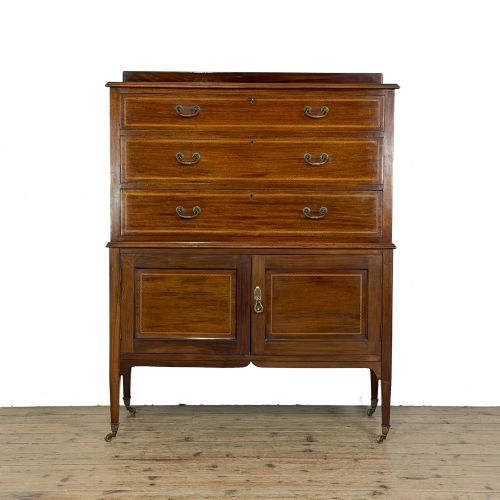
These sheraton revival chest drawers bring late eighteenth-century elegance into twentieth-century bedrooms through fine timbers and delicate inlay.
Sheraton Revival Chest Drawers
When you search for sheraton revival chest drawers, you are looking at pieces produced primarily during the Edwardian period and around nineteen hundred, alongside nineteenth-century examples that echo earlier neoclassical designs.
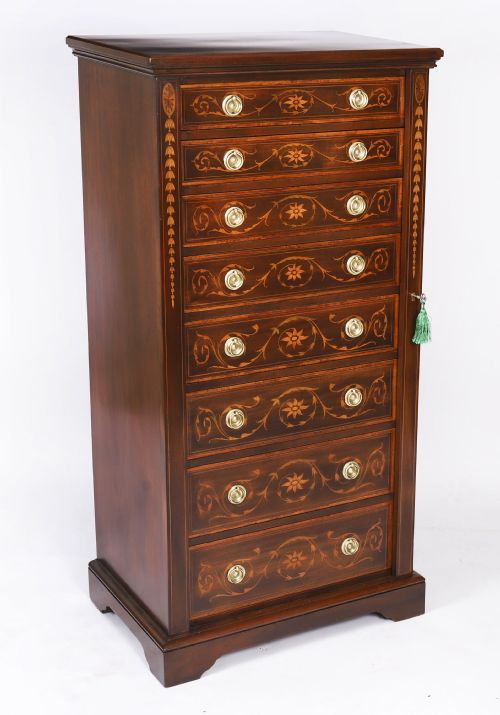
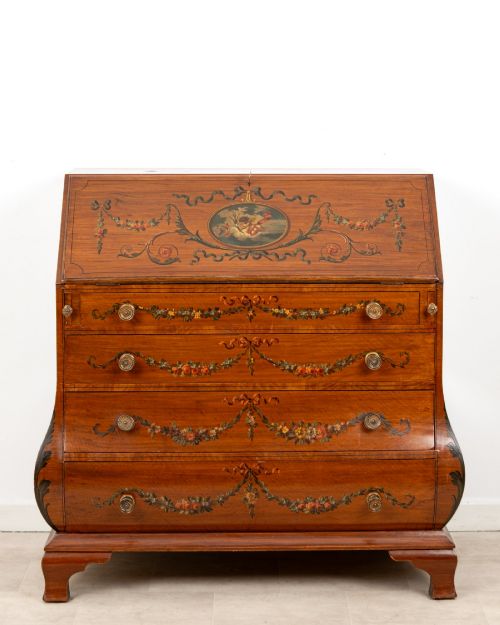
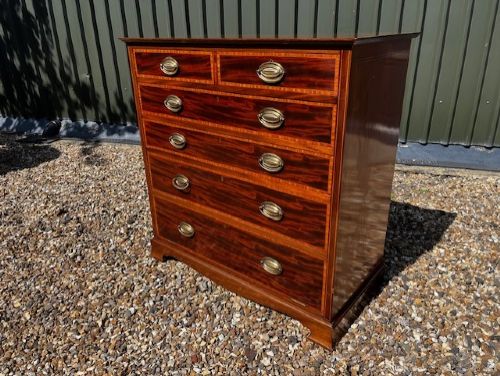
The versions you are most likely to meet on this page include mahogany and satinwood bedroom chests, tallboys, bureaux, and bedside tables, often decorated with boxwood inlay.
Makers such as J Shoolbred and Edwards and Roberts produced notable examples during this period, blending practical storage with refined decorative surfaces.
Materials and construction
Cabinet makers utilised primary timbers like mahogany, satinwood, and rosewood to build these chests, incorporating boxwood inlay for contrast and linear detail.
Brass fittings and painted details frequently complete the surface work, supporting both the structural integrity and the aesthetic of the period.
Chest forms range from standard bedroom drawers and tallboys to bureaux and bedside tables.
Assessing quality
Quality rests on the crispness of the boxwood inlay and the selection of timber veneers, where satinwood and figured mahogany show distinct depth.
The proportion of the piece, the execution of serpentine or bow fronts, and the integration of painted decoration separate standard production from finer cabinet work.
J Shoolbred·Edwards and Roberts
The Sheraton Revival Chest Drawers Glossary
- Satinwood
- A durable hardwood with a lustrous, golden-yellow sheen used extensively for veneers and primary surfaces in polite furniture. It takes a high polish.
- Boxwood Inlay
- Contrasting pale wood inserted into recesses within a darker timber to create geometric borders or floral patterns. This technique defines much Edwardian decorative work.
- Wellington Chest
- A tall, vertical chest of drawers secured by a hinged locking stile on one side. The design originated in the nineteenth century for efficient storage.
- Bow Front
- A convex curved front on a cabinet or chest of drawers. This form requires precise woodworking to shape the drawers and frame.
Sheraton Revival Chest Drawers: Frequently Asked Questions
What periods do these chests come from?
These pieces originate primarily from the Edwardian era, around nineteen hundred, and the nineteenth century.
The styles reflect a revival of earlier eighteenth-century neoclassical aesthetics adapted for Edwardian homes.
What woods are commonly used?
Makers constructed these chests using mahogany, satinwood, and rosewood as primary and veneer timbers.
Boxwood inlay provides contrasting details across the drawer fronts and top surfaces.
Are there different forms available?
The selection includes standard bedroom chests, tall chests, bureau desks, and bedside tables.
Some pieces feature serpentine or bow fronts, while others incorporate cupboards or secretaire drawers.
How do I identify a maker?
Certain pieces bear stamps or signatures from prominent firms like J Shoolbred or Edwards and Roberts.
Construction methods and timber quality also point toward the standards of particular workshops.
How do I care for satinwood and mahogany?
Keep these timbers away from direct sunlight and sudden temperature changes to protect the polish and veneers.
Dust with a dry cloth and apply occasional specialist wax to maintain the timber finish.