


Edwardian Ceiling Pendant
An edwardian ceiling pendant brings focused downward illumination and tactile period materials to a hallway or reception room.
Edwardian Ceiling Pendant
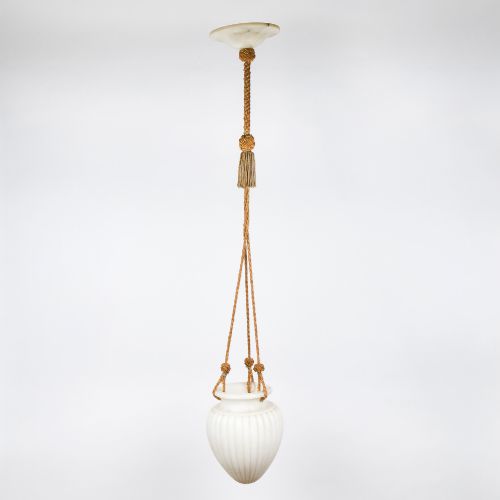
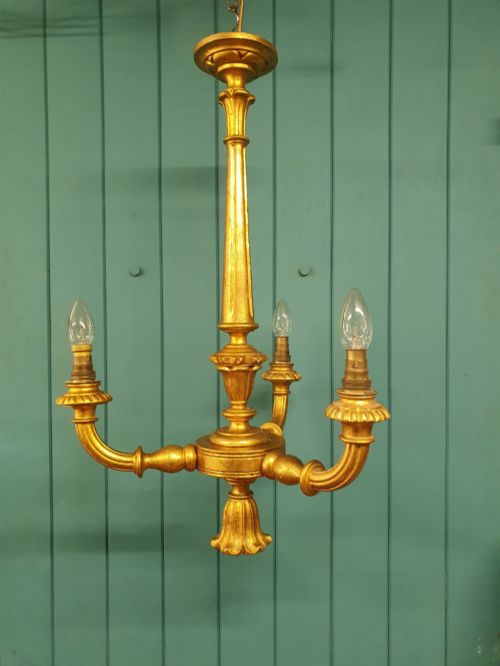
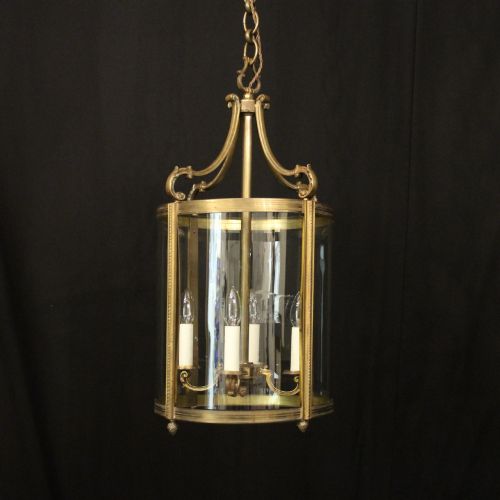
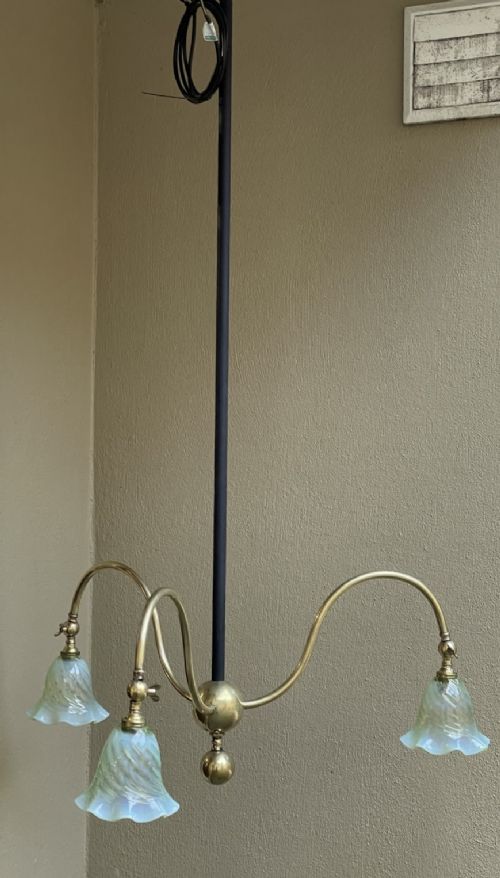
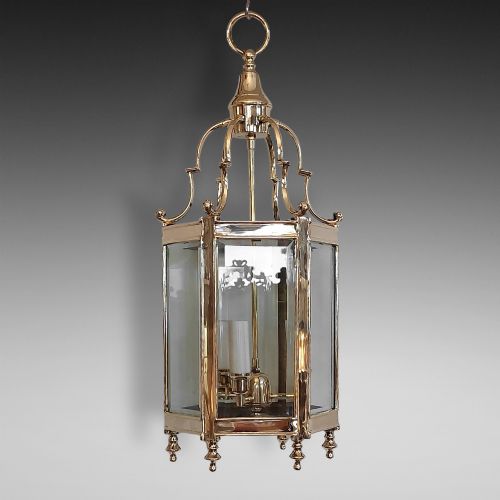
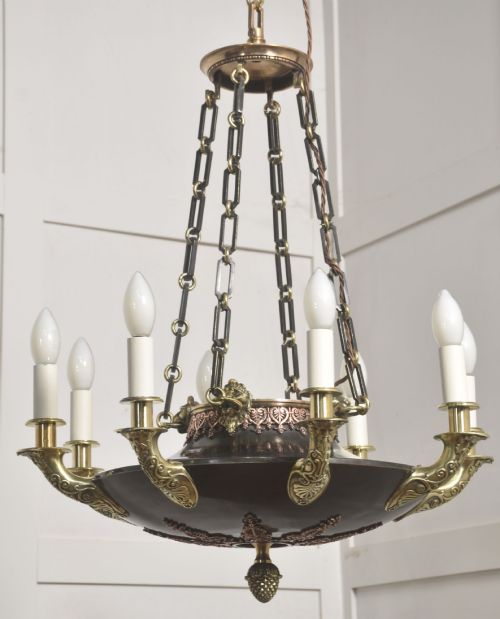
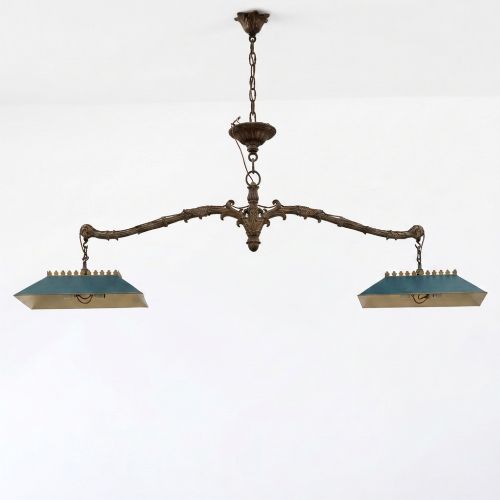
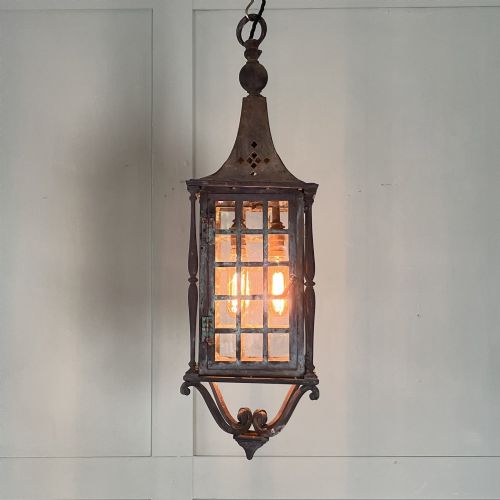
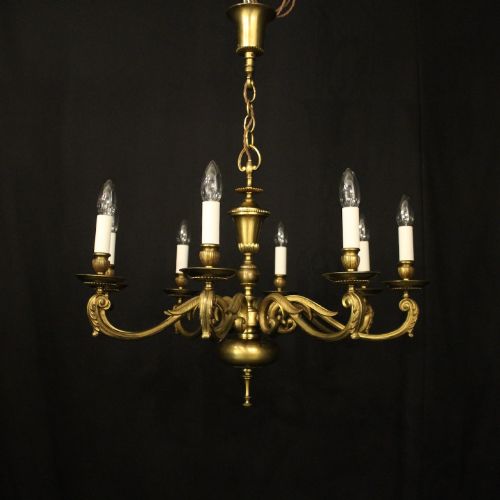
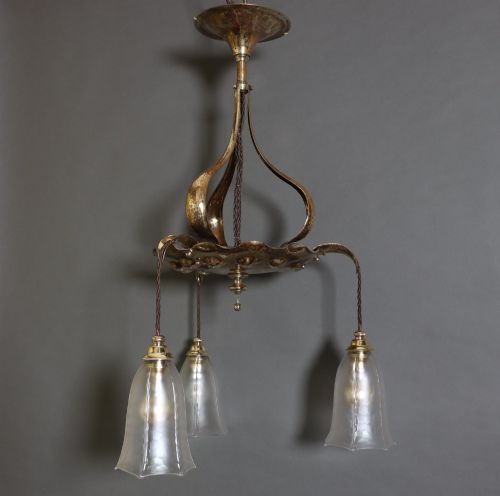
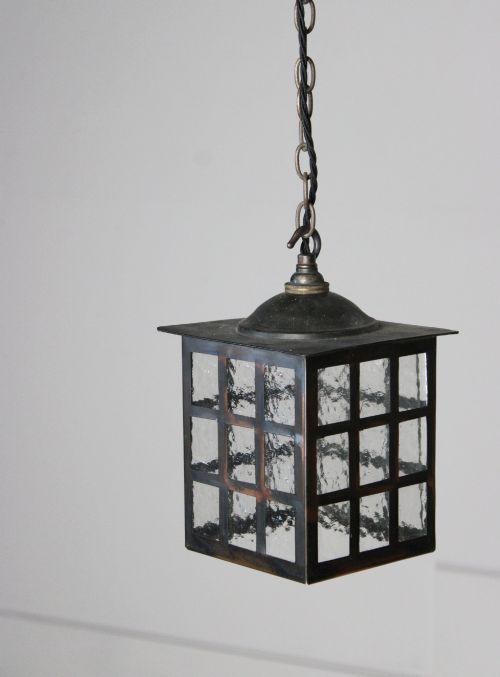
The edwardian ceiling pendant encompasses single-shade hanging lights, multipronged chandeliers, and glazed hall lanterns originating from the late nineteenth century through to the interwar decades. Brass frames paired with moonstone or cut glass predominate among the surviving examples gathered here.
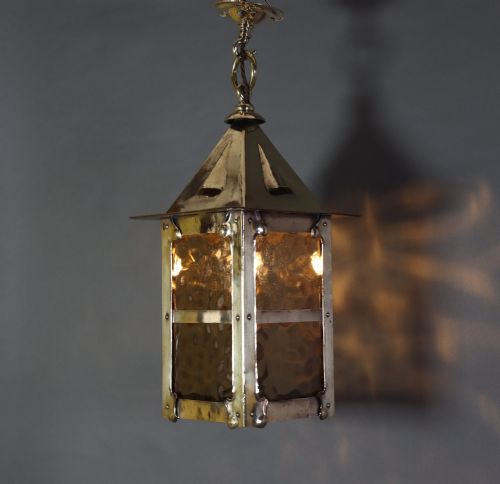
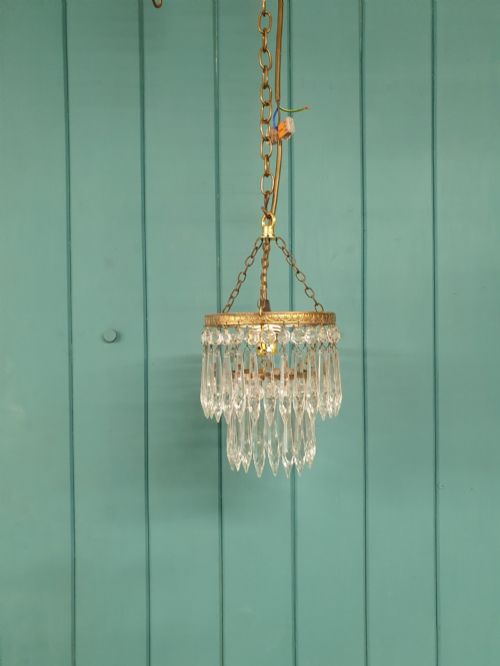
Makers and workshops of the period produced both utilitarian hall fittings and decorative reception room fixtures, drawing upon Arts and Crafts, Art Nouveau, and classical revival idioms. Simpler glass shade pendants sit alongside hexagonal brass lanterns and multi-arm crystal chandeliers.
Materials and Construction
Metalwork relies primarily on cast, spun, and gilded brass, alongside bronze, copper, and wrought iron frameworks that support the weight of the glass components. Frames are often assembled with visible screws and mechanical joints characteristic of early twentieth-century metalworking.
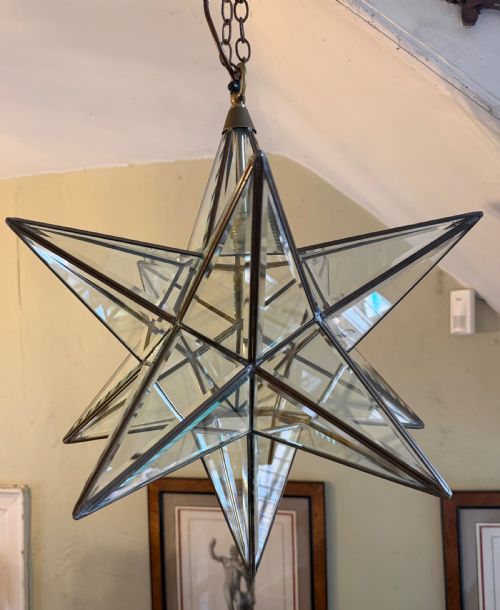
Glass elements range from mould-blown moonstone and vaseline shades to heavy leaded crystal, bevelled panes, and cut glass prisms secured by brass galleries.
A solitary leaded glass porch lantern still holds the faint aroma of coal gas from a previous century of uncertain loyalty.
Design and Execution
Quality rests upon the weight of the metal castings, the depth and clarity of the glass cutting, and the integrity of the original joints and galleries. Heavier gauge brass and crisper moulding distinguish finer domestic fixtures from simpler utility lighting.
The sophistication of the design, whether in the fluid botanical lines of an Art Nouveau frame or the hand-hammered surfaces of an Arts and Crafts lantern, marks out the superior productions of the era.
Osler·G.E.C·Voysey
The Edwardian Ceiling Pendant Glossary
- Pendant light
- A hanging light fixture suspended from the ceiling by a chain, cord, or rigid rod. These units distribute general or task illumination directly downwards.
- Plafonnier
- A shallow ceiling-mounted bowl light that sits close to the plasterwork. This form provides diffused ambient illumination in spaces with lower ceilings.
- Hall lantern
- A glazed metal enclosure designed to shelter a burner or bulb in drafty entranceways. Panels of bevelled, leaded, or stained glass are typically set into brass or copper frames.
- Moonstone glass
- An opalescent, milky white glass type that softens light diffusion. It was widely utilised for Edwardian shade production to reduce glare.
- Coffin prisms
- Elongated, faceted glass drops with a tapered profile resembling a coffin shape. These hang from chandelier rings to refract light.
Edwardian Ceiling Pendant: Frequently Asked Questions
How do I hang an edwardian ceiling pendant?
Suspension is typically handled via a matching brass ceiling rose, chain or rod, and a ceiling hook fixed directly to a joist. Wiring should be routed through the central support and connected by a qualified professional to ensure safety.
Drop heights should be calculated to clear household traffic while positioning the light source at an effective level for the room's proportions.
What is moonstone glass?
Moonstone glass is a translucent, milk-white material blown into shades that emit a soft, even glow. It effectively conceals the bulb while diffusing light across hallways and landings.
This glass type is frequently paired with aged brass galleries and simple hanging chains.
Are these lights wired for modern use?
Many surviving examples retain period brass lampholders and galleries, though interior wiring is routinely updated for contemporary standards. Rewiring preserves the exterior aesthetic while ensuring electrical safety.
Original fabric or rubber flex is generally replaced with modern braided silk or plastic cable during restoration.
How do I clean antique brass and glass?
Brass components benefit from gentle dusting with a soft cloth to preserve their aged patina rather than aggressive polishing. Glass shades and prisms can be unhooked and washed in warm soapy water.
Harsh chemical cleaners should be avoided on both metal surfaces and antique glass to prevent permanent scratching or stripping of the finish.