
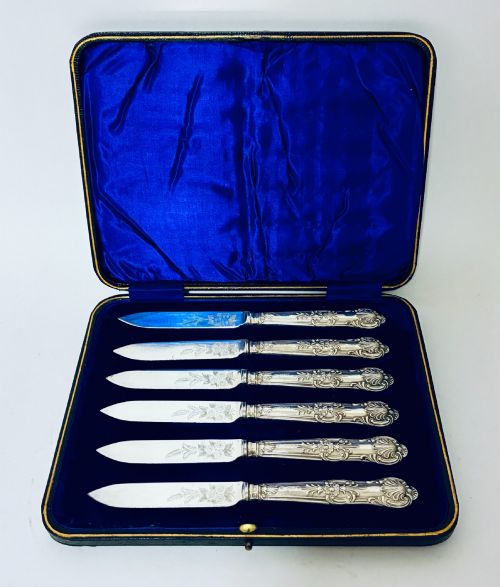


Edwardian Cased Knife Set
These edwardian cased knife set examples offer fitted elegance for formal dining, housing silver and pearl in custom boxes.
Edwardian Cased Knife Set
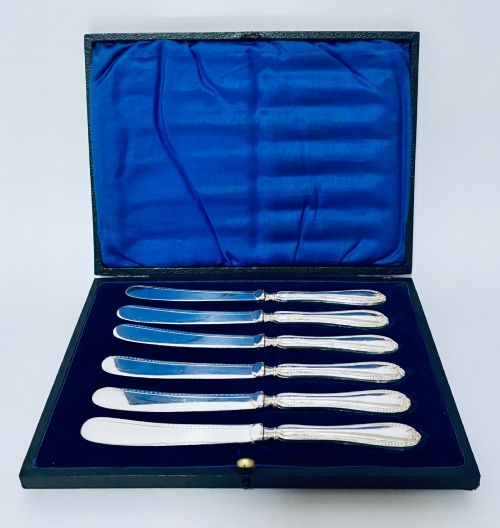
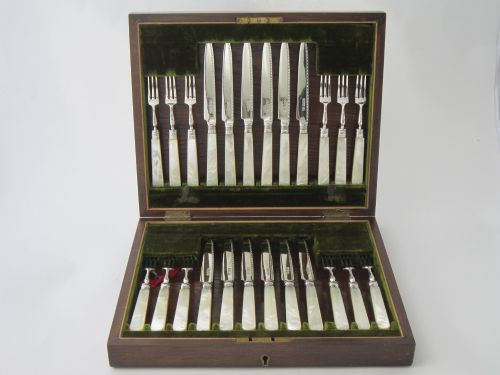
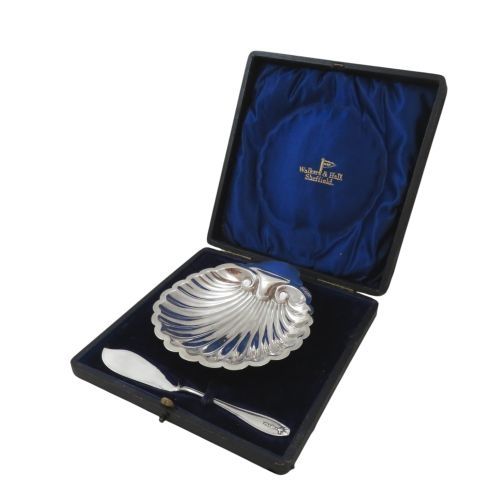
An edwardian cased knife set comprises fitted boxes containing matched cutlery, butter knives, fruit knives, or serving pieces for the table. You meet sets housing dessert knives, butter dishes, and fish sets in wooden boxes lined with silk and velvet.
The selection here spans the late nineteenth century through to the reign of George V, with Edwardian examples predominating. Forms range from six-piece butter knife sets to larger thirty-six-piece fish services and three-piece christening sets housed in fitted cases.
These items were created for domestic dining and formal gifting, preserved within protective wooden canteens or velvet-lined presentation boxes. The integration of fitted storage ensures the steel, silver plate, and sterling components remain complete and protected.
How they were made
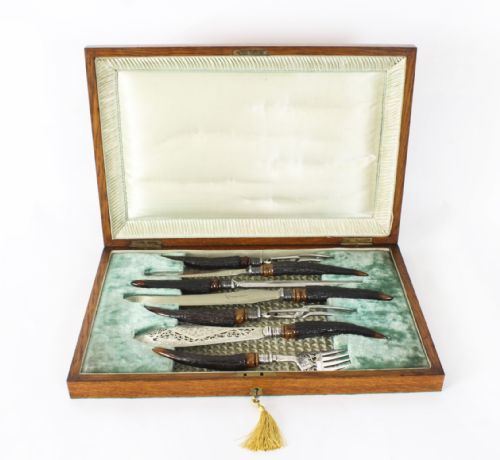
Maker workshops combined sterling silver and silver plate with organic materials such as mother of pearl, antler horn, and wood. Blades utilise steel for cutting edges, paired with handles shaped from pearl or metal.
Cases incorporate interior linings of silk and velvet to cradle each individual piece securely within custom slots. Exterior wooden canteens utilise oak and polished finishes to protect the contents during storage and transport.
Listings feature items from the Edwardian era, Victorian period, and George V reign, incorporating sterling silver, silver plate, velvet, silk, wood, and mother of pearl.
What varies in quality
The distinction between standard sets and finer examples lies in the material choice for handles and blades, such as solid sterling silver versus silver plate, and mother of pearl versus simpler alternatives. Hallmarks stamped into the silver provide clear evidence of assay office origin and date.
The integrity and preservation of the original velvet or silk lining inside the wooden case influence the overall appeal. Complete sets retaining every original knife, fork, or spoon without replacement pieces demonstrate higher retention of their original form.
The Goldsmiths & Silversmiths·Waring & Gillows
The Edwardian Cased Knife Set Glossary
- Canteen
- A fitted box or chest designed specifically to hold a set of cutlery securely. These wooden cases often feature individual slots lined with fabric.
- Sterling silver
- A silver alloy containing 92.5 percent pure silver by mass, frequently used for handles and decorative elements. Hallmarks stamped on the metal confirm its standard.
- Mother of pearl
- The iridescent inner layer of pearl oyster shells, shaped into smooth handle scales for fruit and butter knives. This material provides a lustrous, tactile grip.
- Silver plate
- A layer of pure silver applied to a base metal core, offering the appearance of solid silver at a different cost. Many serving pieces and knife sets utilise this technique.
- Assay office
- An official body that tested precious metals and stamped items with hallmarks to guarantee purity. Marks from London and Sheffield appear frequently on these pieces.
Edwardian Cased Knife Set: Frequently Asked Questions
What is an edwardian cased knife set used for?
These sets were designed for specific dining tasks such as serving fish, fruit, butter, or dessert at formal meals. The matched utensils ensured guests had the correct specialised tool for each course.
The fitted cases allowed households to store delicate pieces safely between dinner parties or present them as significant gifts for weddings and christenings.
How do I care for silver and pearl knives?
Keep the pieces clean and dry within their fitted cases to prevent tarnishing of the silver and moisture damage to the silk or velvet linings. Use specialised silver polish sparingly and avoid soaking mother of pearl handles in hot water.
Displaying or storing the canteens away from direct sunlight protects the wooden finishes and fabric interiors from fading over time.
How can I tell the period of a set?
Examine the metal components for official hallmarks, which include date letters and assay office marks that pinpoint the exact year of manufacture. Stylistic details such as the shape of the oak case and the contour of the handles also indicate whether a piece belongs to the Victorian, Edwardian, or George V eras.
Comparing the materials, such as the use of antler horn or mother of pearl, helps align the set with manufacturing practices of the late nineteenth and early twentieth centuries.
Are these sets complete with all pieces?
Many surviving sets retain their original complement of knives, forks, or spoons, nestled securely into the custom slots of the velvet or silk lining. Some larger services, such as fish sets, may show variations depending on how heavily they were used in period households.
Reviewing the specific item description confirms the exact count of utensils included in the fitted wooden canteen.