





Antique Butter Knives
Antique butter knives are small table implements designed for spreading, appearing here as single pieces, matched sets, or fitted cased pairs.
Antique Butter Knives
When you search for antique butter knives, you find specialised tableware items spanning the Victorian, Edwardian, and George V periods, extending into the mid-century. These items range from individual silver-handled pieces to cased sets intended for formal dining.
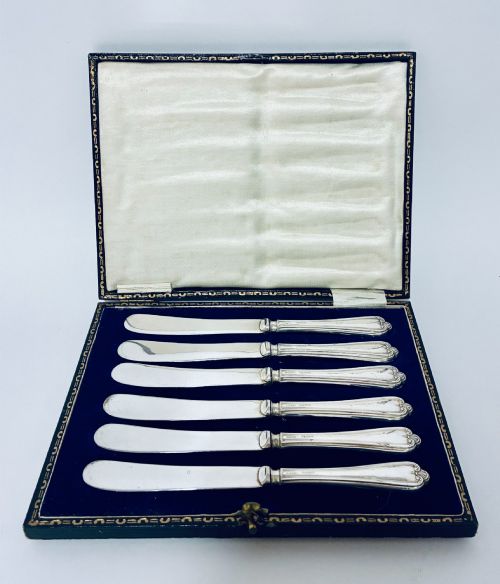
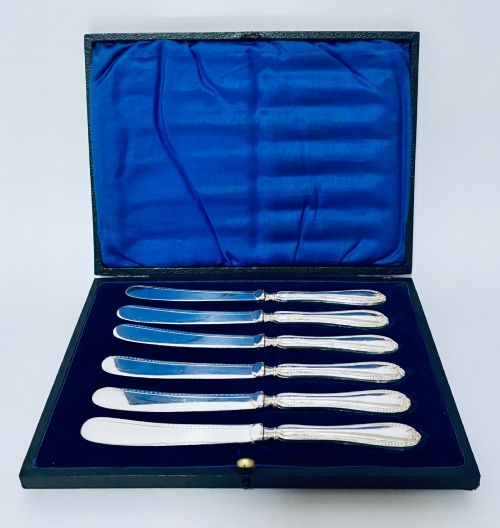
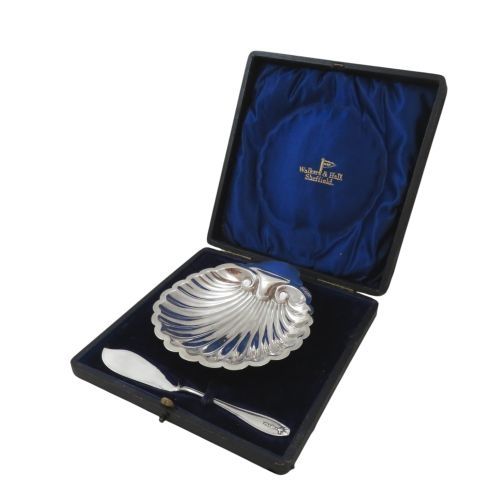
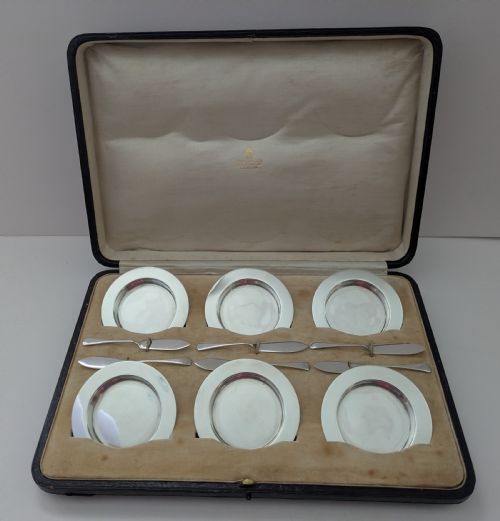
The most common versions met on this page include sets of six silver-handled knives and pairs housed in original presentation boxes, often accompanied by matching dishes or additional pieces like jam spoons and pickle forks.
How they were made
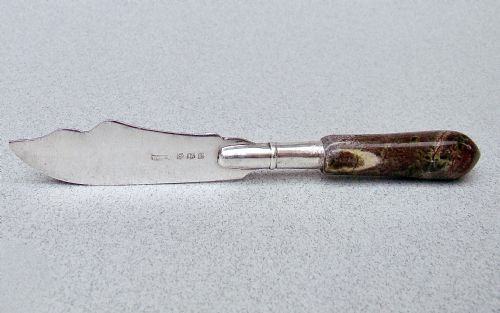
Makers utilised sterling silver and silver plate for blades and handles, frequently pairing metal with organic materials such as mother-of-pearl and agate. Steel appears alongside silver in specific blade constructions.
Presentation packaging incorporates fitted interiors lined with velvet and silk, protected by exterior cases finished in leather.
Listings feature sterling silver, silver plate, steel, mother-of-pearl, agate, velvet, silk, glass, and leather across Victorian, Edwardian, and George V periods.
What varies in quality
The distinction between standard examples and superior pieces rests on the integrity of the original presentation case and the completeness of matched sets. Fitted boxes lined with silk and velvet elevate the standing of an item.
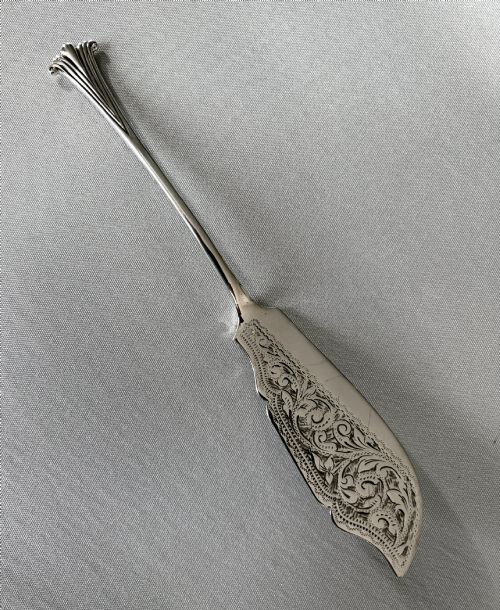
Execution of pierced silver ornamentation and the selection of materials like agate or mother-of-pearl for handles also divide everyday tableware from finer workshop productions.
The Goldsmiths & Silversmiths·Vale & St John·Asprey & Co.·Adie Brothers
The Antique Butter Knives Glossary
- Sterling silver
- A silver alloy containing 92.5 percent pure silver by mass, widely used across Victorian and Edwardian cutlery.
- Mother-of-pearl
- An iridescent inner layer of pearl oyster shell utilised for decorative knife handles.
- Agate
- A decorative quartz gemstone incorporated into miniature knife handles for colour and texture.
- Presentation case
- A fitted storage box lined with silk or velvet, designed to hold matched pairs or sets of cutlery.
- Cutlery
- Table utensils used for serving and eating food, encompassing knives, forks, and spoons.
Antique Butter Knives: Frequently Asked Questions
Are antique butter knives safe to use daily?
These pieces function adequately for modern dining if washed by hand rather than placed in automated dishwashers. Gentle cleaning preserves the delicate joins between handles and blades.
Silver components benefit from occasional polishing with appropriate pastes, while organic handle materials like mother-of-pearl require protection from excessive heat and harsh chemicals.
How do I store cased butter knife sets?
Original presentation cases keep individual items organised and protect the fitted silk and velvet interiors from excessive dust and direct sunlight. Keeping the case closed when not in use minimises tarnishing of the silver.
Store boxes in stable indoor environments away from dampness and extreme temperature shifts, which can warp leather exteriors and degrade internal fabrics over time.
What is the difference between silver and silver plate?
Solid silver items are constructed entirely from precious metal alloys throughout the handle and blade, whereas plated pieces apply a thin layer of silver over a base metal core. Hallmarks usually stamp solid silver to indicate purity and origin.
Both materials appear frequently across the periods represented on this page, requiring similar cleaning approaches despite their differing underlying compositions.
How can I tell the period of a knife?
Hallmarks stamped onto metal components provide specific city marks, date letters, and maker symbols that narrow down the year of manufacture. Stylistic indicators like Edwardian pierced work or Victorian floral motifs offer further chronological clues.
Packaging styles and accompanying presentation boxes also assist in dating, as interior silk linings and exterior leather finishes evolved between the nineteenth and twentieth centuries.