

Edwardian Carved Writing Table
An edwardian carved writing table brings functional elegance to a study, offering rich timber surfaces and carved detail shaped for daily correspondence.
Edwardian Carved Writing Table
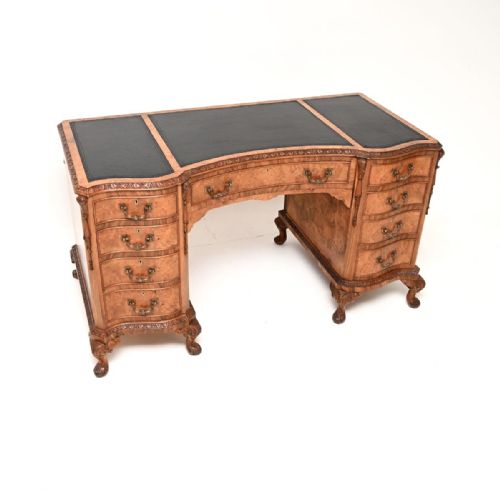
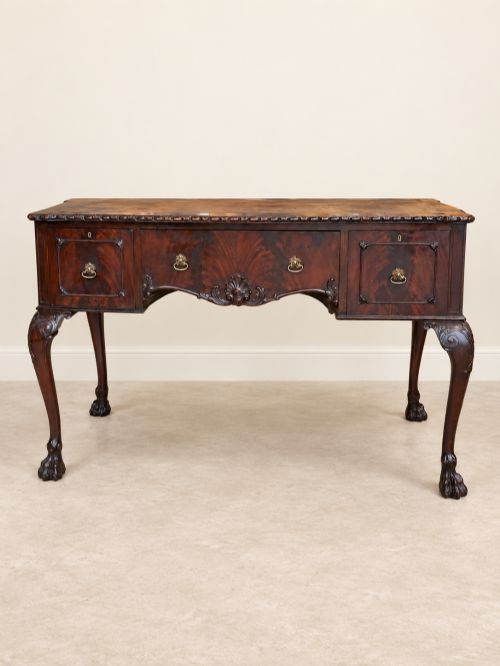
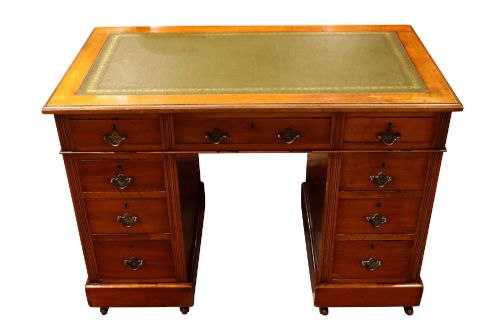
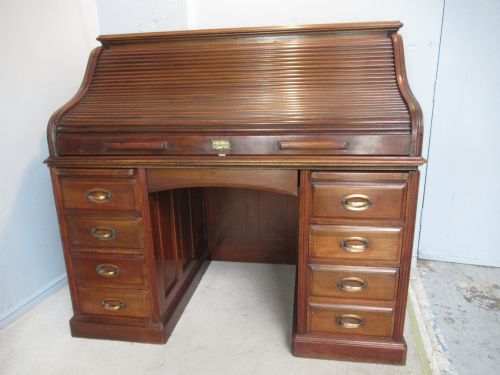
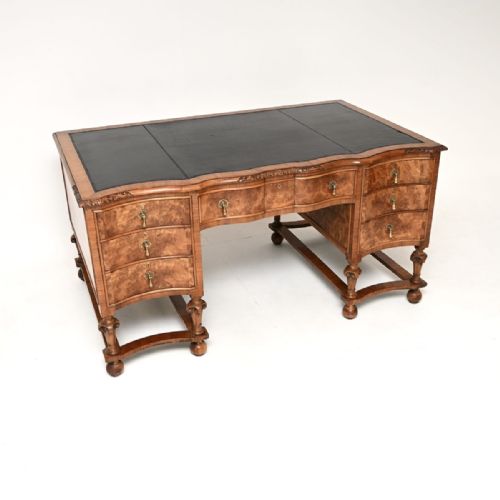
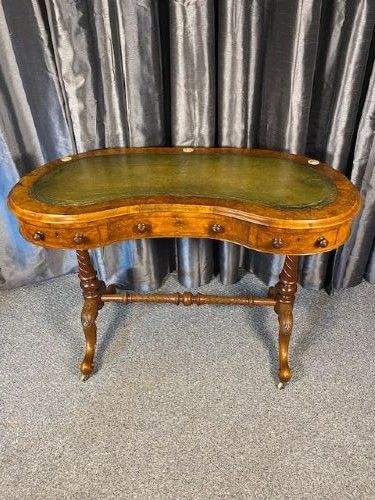
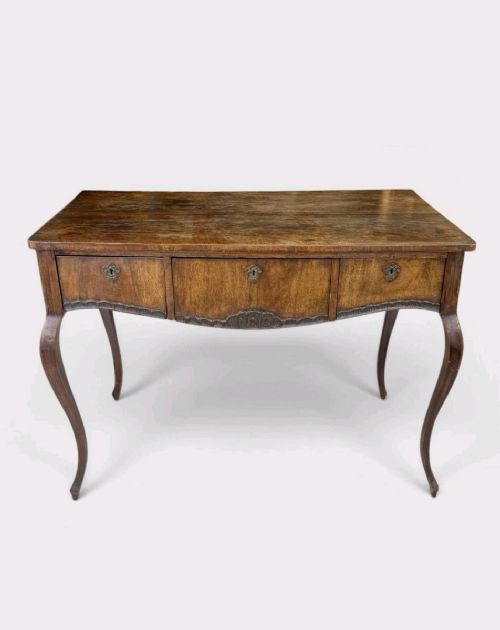
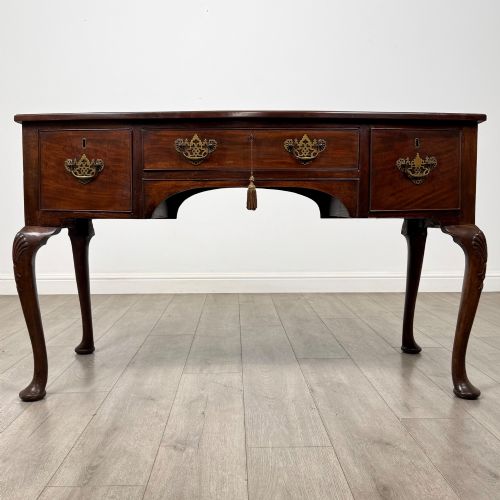
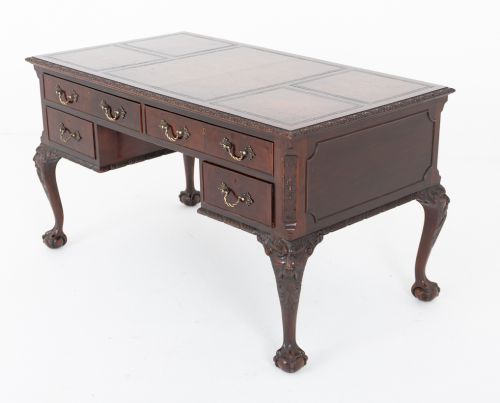
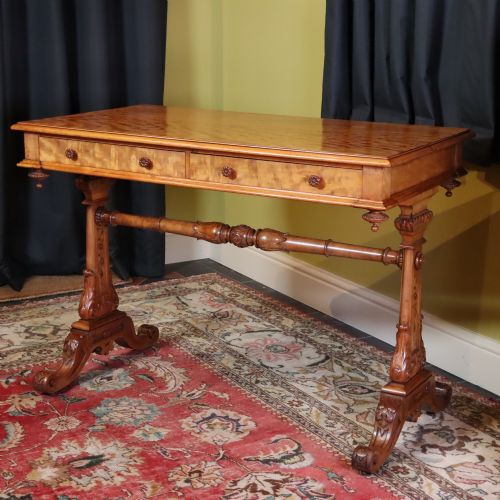
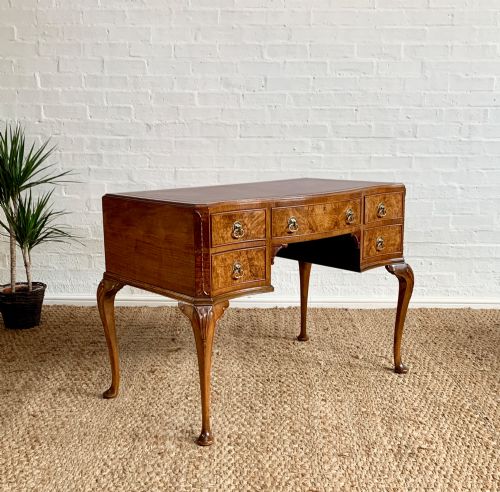
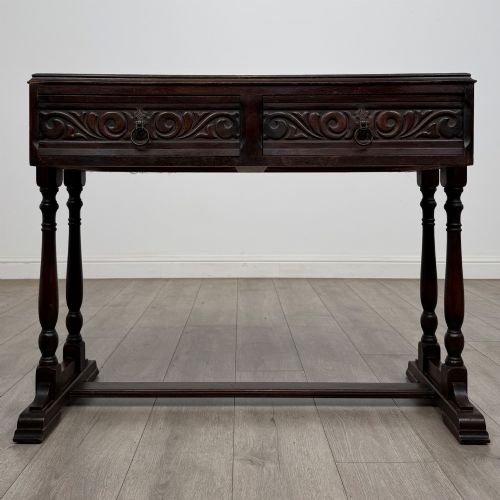
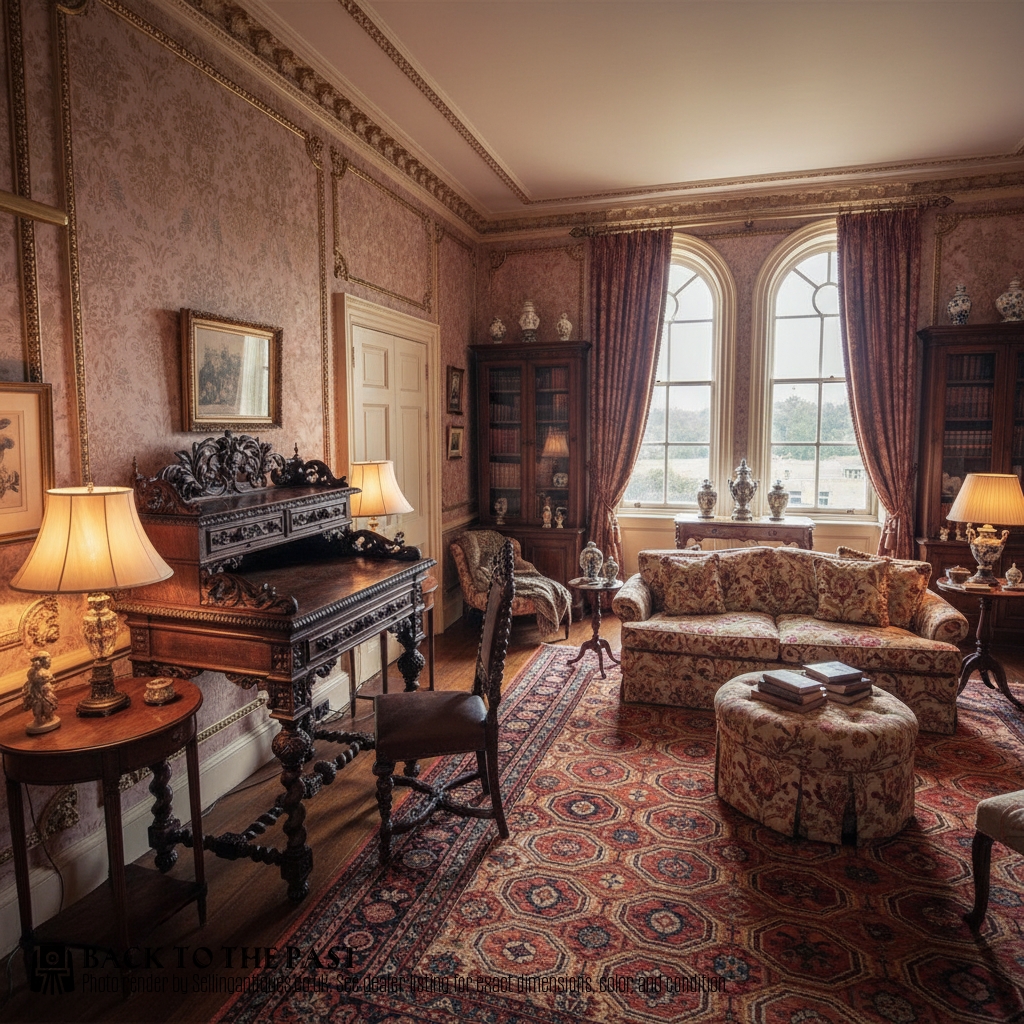
An edwardian carved writing table is a practical workspace created during the early twentieth century, though the selection spans related pieces from the Victorian era up to the nineteen-twenties. Buyers encounter various formats on this page, ranging from compact single-drawer writing tables and side tables to large pedestal desks and library tables.
The aesthetic draws heavily on earlier revivals, incorporating Chippendale, Queen Anne, and Gothic styles alongside native Edwardian designs. Woods such as mahogany, walnut, burr walnut, and oak dominate the selection, frequently paired with inset leather writing surfaces and brass hardware.
Materials and Construction
Cabinet makers utilised dense hardwoods including mahogany, walnut, and oak to build the foundational frames and drawers of these desks. Burr walnut and satinwood veneers were frequently applied to tabletops and drawer fronts to introduce intricate grain patterns and lighter contrasting tones.
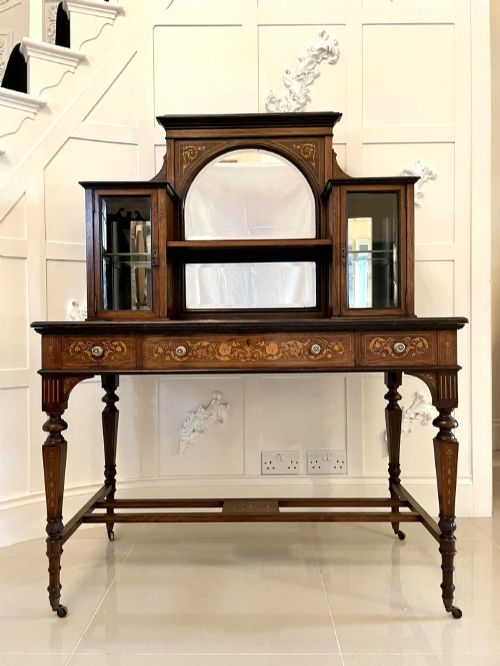
Surface decoration often involved detailed hand-carving along the edges and legs, supplemented by marquetry inlay, brass handles, and tooled leather inserts. Structural joints relied on traditional woodworking methods to ensure durability across pedestal desks, side tables, and writing tables.
Edwardian Carved Writing Table Retail Price Guide 2026
Typical asking prices for edwardian carved writing table among the pieces listed under this phrase on Sellingantiques today, from the lower quarter to the upper quarter. They describe what is for sale here now, not the wider market.
Listings feature woods such as mahogany, oak, walnut, burr walnut, satinwood, rosewood, and brass hardware.
Assessment of Quality
Quality rests primarily on the choice of timber and the precision of the cabinet work, particularly in the selection of figured burr walnut or satinwood veneers. Pieces bearing the mark of established makers exhibit superior timber selection and more refined carving.
The crispness of the hand-carving and the integration of secondary woods indicate the level of craftsmanship invested in the piece. Well-executed joinery in the drawer construction and durable leather writing surfaces distinguish the finest examples.
Maple and Co·Wylie and Lochhead Glasgow·James Shoolbred and Co London·Edwards and Roberts·Gill and Reigate
The Edwardian Carved Writing Table Glossary
- Pedestal desk
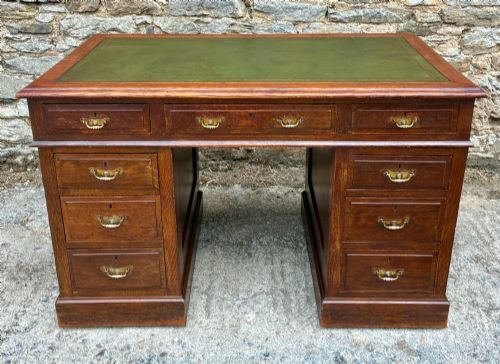
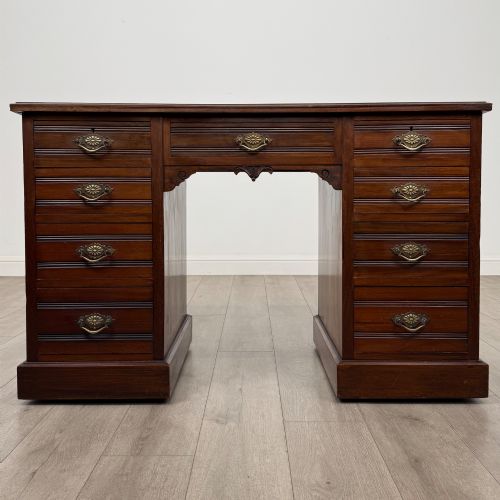
- A freestanding desk comprising two supporting pedestals of drawers with a central desktop section. This form offers substantial storage beneath the writing surface.
- Burr walnut
- A wood harvested from the warted growths of walnut trees, yielding complex swirling grain patterns. It is sliced into thin veneers for decorative furniture surfaces.
- Marquetry
- The art of applying pieces of veneer to a structure to form decorative patterns and pictures. Craftsmen use varied timber species to achieve natural colour contrasts.
- Partners desk
- A large double-sided desk designed for two people to work opposite one another. These pieces feature drawers and cupboards accessible from both sides.
Edwardian Carved Writing Table: Frequently Asked Questions
What is an Edwardian writing table?
An Edwardian writing table is a compact wooden desk produced in the early twentieth century, designed primarily for correspondence and light administrative tasks. These pieces frequently feature slender legs, one or more drawers, and decorative carving.
They bridge the heavier proportions of Victorian furniture with lighter Edwardian aesthetics, often incorporating mahogany or walnut timbers.
How do I distinguish a pedestal desk?
A pedestal desk consists of a flat top supported by two independent columns of drawers, creating a kneehole space in the centre. They offer substantial storage and a commanding presence in a room.
Unlike simpler writing tables, pedestal versions are heavier and constructed to sit freestanding in the middle of a study or library.
Which woods are most common?
Mahogany, walnut, and oak appear most frequently across these listings, reflecting the preferred durable timbers of the period. Burr walnut and satinwood are also utilised for decorative veneer work on finer surfaces.
Secondary woods like pine or oak are typically found inside drawer construction and unseen structural framing.
How should I care for leather tops?
Leather writing surfaces require gentle cleaning with a slightly damp cloth, avoiding harsh chemicals or excess moisture that could crack the material. Applying an appropriate leather cream periodically helps maintain flexibility and rich colour.
Keeping these surfaces away from direct sunlight prevents the leather from drying and fading over time.