



Edwardian Carved Corner Chair
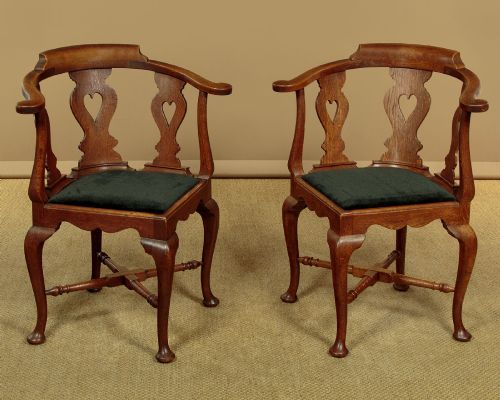
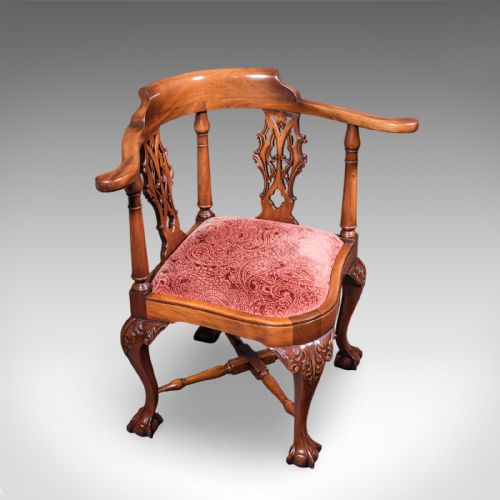
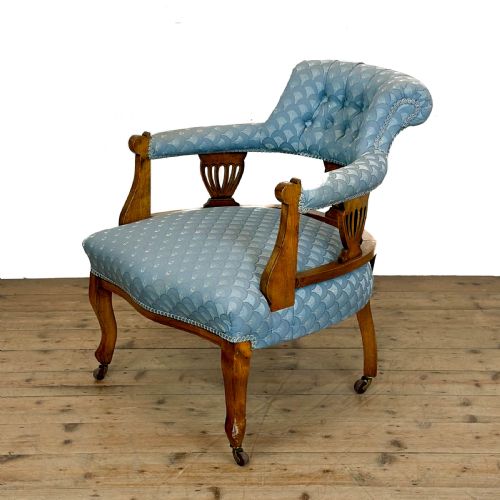
An edwardian carved corner chair brings an intelligent use of space to a room, fitting neatly into room angles while offering deep backs and supportive arms.
Edwardian Carved Corner Chair
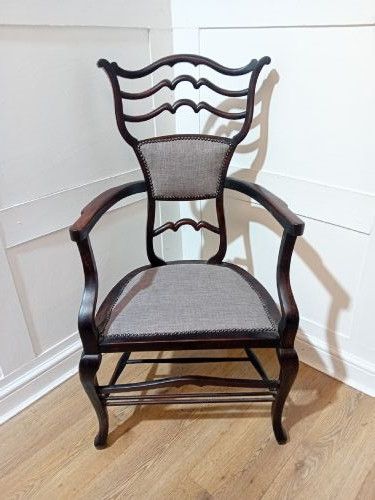
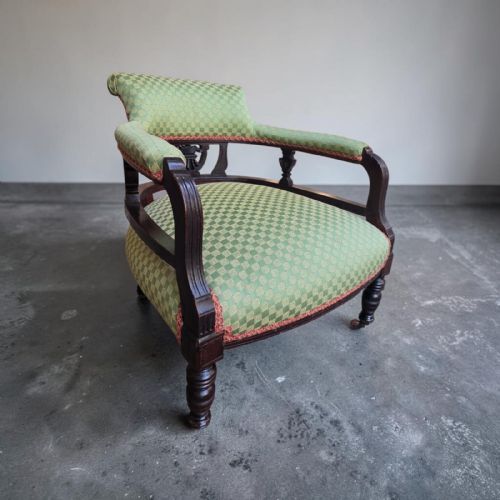
When you search for an edwardian carved corner chair, you find seating designed to occupy room corners efficiently without dominating the floor plan. These pieces combine compact footprints with substantial backrests, often featuring carved wooden details typical of the early twentieth century.
The most common examples on this page date from around nineteen hundred, executed in mahogany with inlaid wood details. Makers of this period drew upon earlier Georgian revival and Edwardian empire styles to produce occasional and salon seating for parlours and drawing rooms.
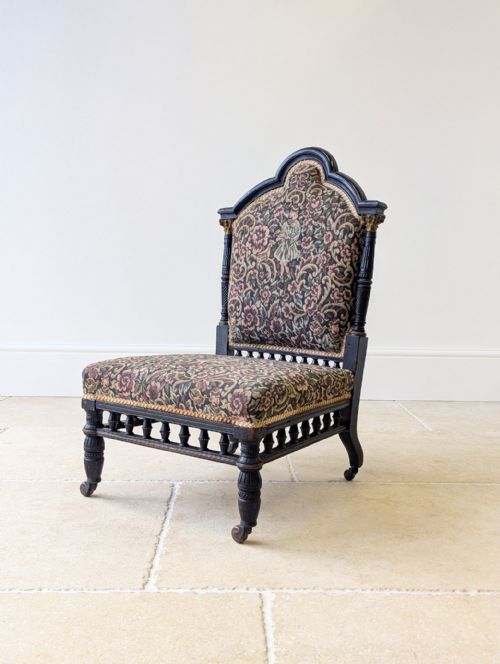
Beyond the standard Edwardian interpretations, the selection includes related forms from the Victorian and eighteenth centuries in oak, walnut, and ebonised finishes. These variations demonstrate how chair makers adapted the diagonal frame across successive decades while retaining the characteristic corner orientation.
How they were made
Constructed primarily from solid mahogany, oak, walnut, and rosewood, these chairs rely on sturdy timber framing to support the diagonal seat plan. Joinery involves precise corner blocks and dowels to ensure stability under lateral loads.
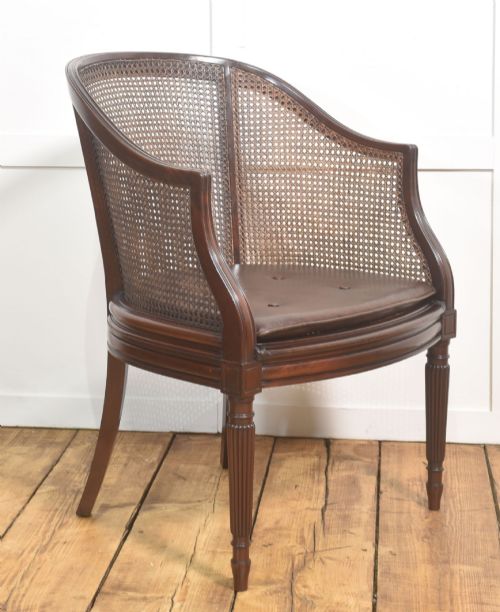
Decoration is achieved through marquetry inlay, boxwood stringing, and hand carving applied to the crest rails and splats. Some examples incorporate cane work panels or upholstered drop-in seats covered in fabric and leather.
Periods represented span from eighteenth-century walnut examples to Edwardian mahogany pieces produced around nineteen hundred.
What varies in quality
The distinction between standard production and finer examples rests upon the crispness of the hand carving and the precision of the marquetry inlay. Subtle variations in timber selection and the complexity of the turned supports also separate simpler occasional seating from masterwork pieces.
Structural integrity depends on the original timber density and the preservation of the corner joints. Pieces displaying balanced proportions and well-integrated decorative motifs command greater appreciation among collectors.
The Edwardian Carved Corner Chair Glossary
- Marquetry Inlay
- A decorative technique where small pieces of contrasting veneer are fitted into wood panels to form pictorial or geometric designs. It adds visual texture to the flat surfaces of the chair back.
- Corner Chair
- A seat designed with a diagonal orientation specifically to fit into room angles. The backrest typically curves around two adjacent sides of the square seat.
- Boxwood
- A dense, pale wood frequently used for fine stringing and contrasting inlay details on dark mahogany furniture. Its pale tone provides sharp visual definition against the primary timber.
- Tub Chair
- A seating form featuring a continuous curved backrest that wraps around to form low arms. This enclosing shape offers a distinct comfort compared to open armchairs.
- Georgian Revival
- A design movement that reinterprets eighteenth-century furniture forms using later nineteenth and early twentieth-century manufacturing methods. It accounts for many classic proportions seen in Edwardian seating.
Edwardian Carved Corner Chair: Frequently Asked Questions
How do I place a corner chair?
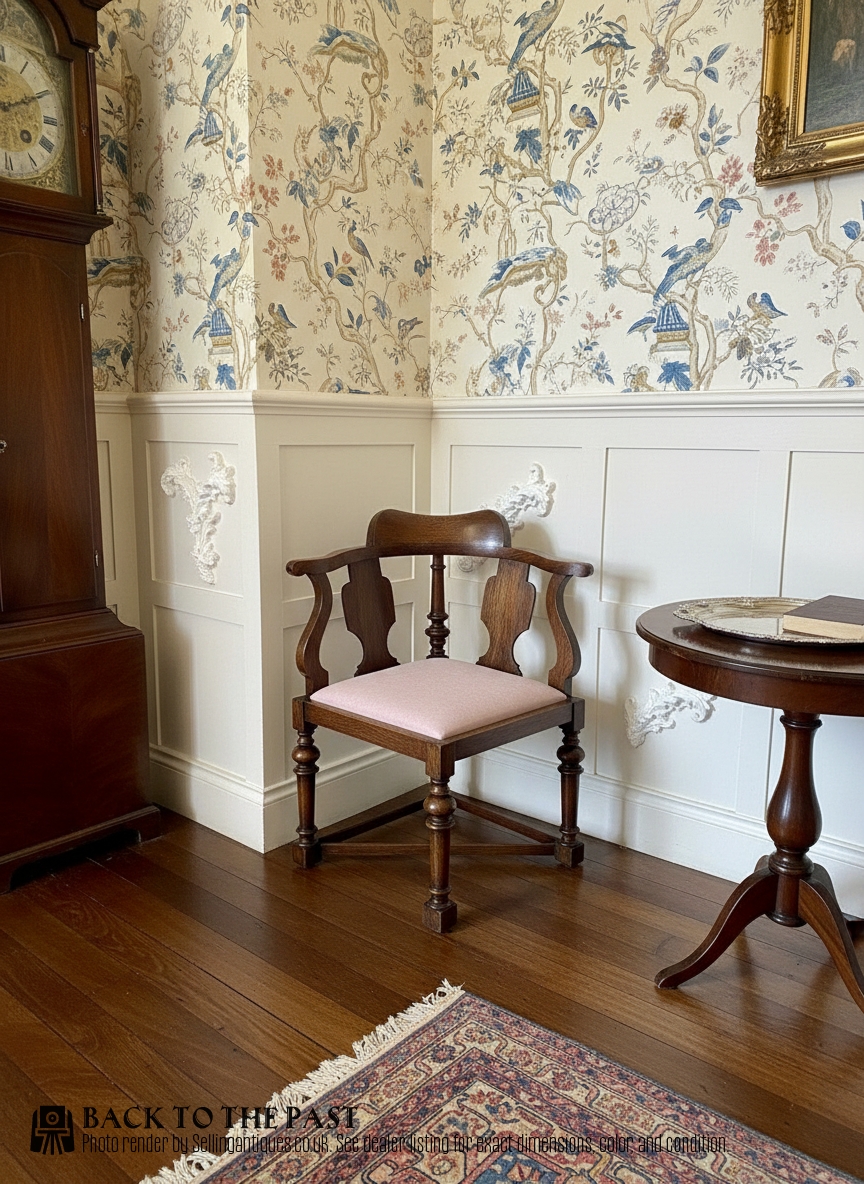
These chairs fit directly into ninety-degree room angles where standard seating leaves awkward gaps. They work effectively in hallways, studies, and drawing rooms as occasional seats.
Because of their diagonal footprint, they do not obstruct thoroughfares while still providing a functional place to sit.
Are these chairs comfortable for daily use?
The enclosed backrests and supportive arm rails provide a secure seating position. Many examples feature upholstered or cane seats designed for extended sitting.
Their compact dimensions make them suitable as writing desk companions or occasional salon chairs rather than lounging armchairs.
How do I distinguish Edwardian from Victorian examples?
Edwardian pieces generally exhibit lighter mahogany timbers, delicate boxwood stringing, and refined marquetry inlay. They favour brighter, airier aesthetic expressions influenced by revival styles.
Victorian versions tend toward darker ebonised finishes, heavier oak structures, and more robust, solid carvings reflecting nineteenth-century domestic tastes.
What is the difference between an occasional chair and a salon chair?
Occasional chairs are light movable pieces intended to be brought into use as needed around a room. Salon chairs were traditionally designed for formal entertaining and conversation in reception rooms.
Both types emphasise decorative woodwork and refined upholstery over heavy utility.