
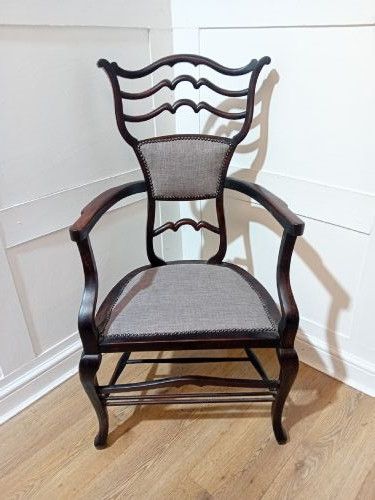
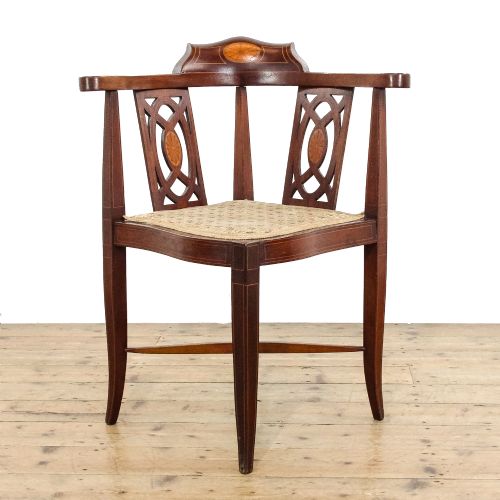
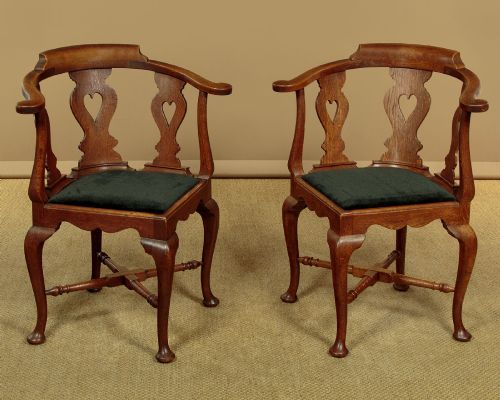


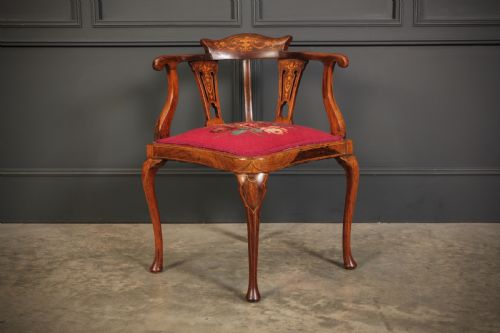
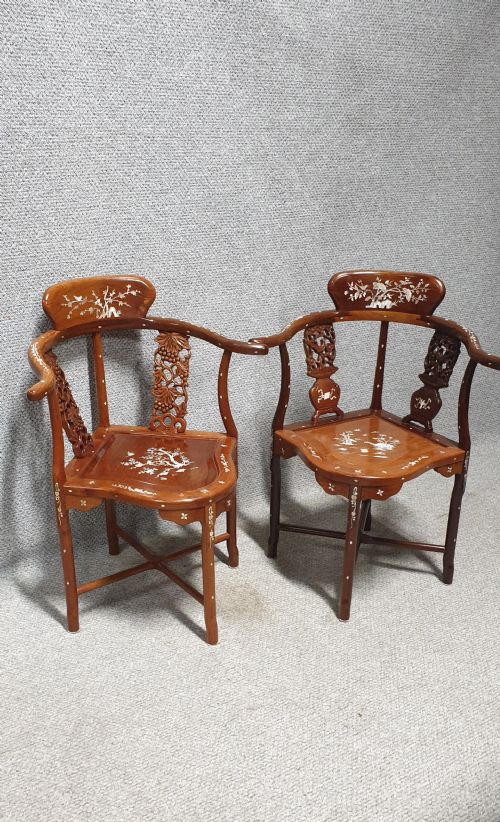
Vintage Corner Elbow Chair
A vintage corner elbow chair turns dead space into seating with curved backs and diagonal footprints drawn from Georgian, Victorian, and Edwardian rooms.
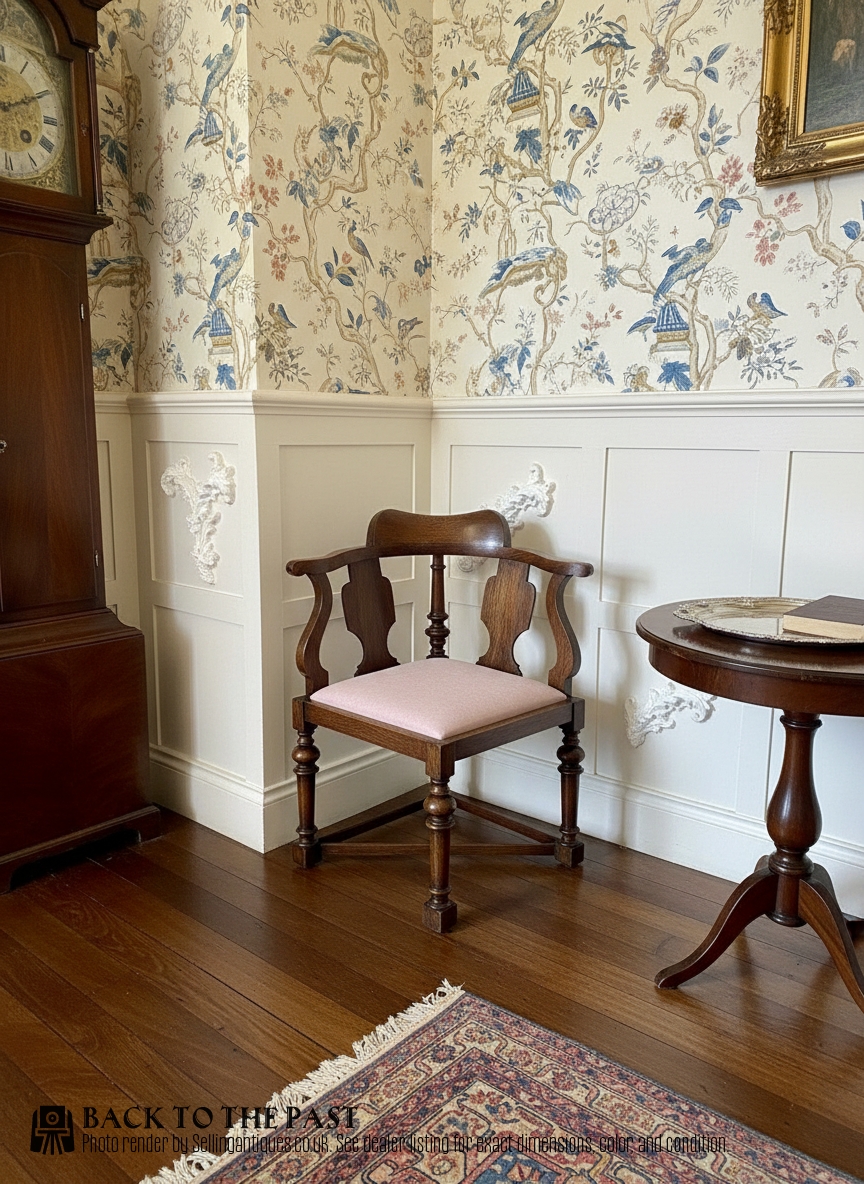
Vintage Corner Elbow Chair
A vintage corner elbow chair sits snugly into room angles, providing a seat where straight furniture fails to fit. These pieces emerge across Victorian, Edwardian, and Georgian periods, alongside items dated around nineteen hundred.
The form combines an elbow seat with a diagonal orientation, giving users dual backrests that wrap around the corner. Examples include oak turner's chairs, rush seat designs, and mahogany frames with inlaid details.
Buyers encounter accent chairs, occasional chairs, and armchairs built for corners. The selection spans carved oak, mahogany, rosewood, and rush construction originating in English country and revival styles.
How they were made
Woodworkers built these frames primarily in oak and mahogany, often incorporating satinwood or marquetry wood inlay for decorative contrast. Rush provides traditional seating surfaces on country chairs, while other frames use fabric upholstery secured with upholstery studs.
Joiners shaped solid timbers into curved elbow rests and high corner backs, applying deep carving or subtle inlays to the surfaces. Turnery techniques created spindle components, particularly evident in older oak examples styled after Saxon forms.
Some chairs turn corners so well they make right angles look entirely optional.
What varies in quality
The calibre of a vintage corner elbow chair rests in the crispness of its carved woodwork and the integrity of its timber. Superior examples feature well-executed marquetry inlay, sound joints in turned components, and genuine period materials like aged oak or rich mahogany rather than later replacements.
Structural refinement separates standard production from finer craftsmanship, seen in how smoothly the curved back rail joins the corner post. The presence of original rush seating or high-grade upholstery adds distinct character to the construction.
The Vintage Corner Elbow Chair Glossary
- Elbow seat
- A chair style providing low armrests designed to support the user's elbows. This configuration appears frequently on domestic seating from the nineteenth century.
- Turner's chair
- A heavy wooden armchair constructed entirely from turned spindles and posts. These pieces derive from traditional vernacular designs often associated with early English interiors.
- Marquetry
- Decorative veneer work arranged in pictorial or geometric patterns using various coloured woods. Craftsmen applied this technique to cabinet fronts and chair backs.
- Rush
- Woven marsh grass utilised for traditional chair seats. It provides a flexible, durable surface stretched across the frame rails.
Vintage Corner Elbow Chair: Frequently Asked Questions
Where do you put a corner chair?
These pieces suit awkward dead corners in bedrooms, hallways, or studies where standard chairs block movement. Their diagonal footprint allows them to tuck neatly into ninety-degree wall angles.
They also function well as desk chairs or occasional seating in living rooms, adding architectural interest to empty wall space without protruding too far into the floor area.
How do I date a corner chair?
Dating relies on identifying the primary wood, construction techniques, and stylistic revival markers present in the frame. Georgian pieces display simpler, robust mahogany lines, while Victorian and Edwardian examples often feature heavier carving or inlaid marquetry.
Turned wooden spindles and rush seats frequently point towards vernacular or country workshop traditions spanning the nineteenth century.
Are corner chairs comfortable to sit in?
The curved back rail offers unexpected support for the upper body, though the seating position is upright rather than lounging. Users typically sit at an angle dictated by the triangular frame.
Upholstered versions and those with wider elbow rests provide softer support compared to plain wooden or rush-seated variants.
What is a Turner's chair?
A Turner's chair is a traditional form built using turned wooden spindles pegged together without flat panels. These heavy oak pieces draw on early English vernacular styles.
They appear with elbow seats and high, open backrests that offer a distinct architectural silhouette within Victorian interpretations of older domestic furniture.