


Edwardian Butterfly Brooch
An Edwardian butterfly brooch brings delicate winged form and period craftsmanship together, offering a charming piece of history to wear.
Edwardian Butterfly Brooch
An edwardian butterfly brooch captures the natural world in precious metals and gemstones, taking the form of winged insects designed to be worn on lapels, collars, or hats. While the phrase points to the early twentieth century, pieces seen here span from the Victorian era through the 1930s, including styles like Art Nouveau and Art Deco alongside Edwardian designs.
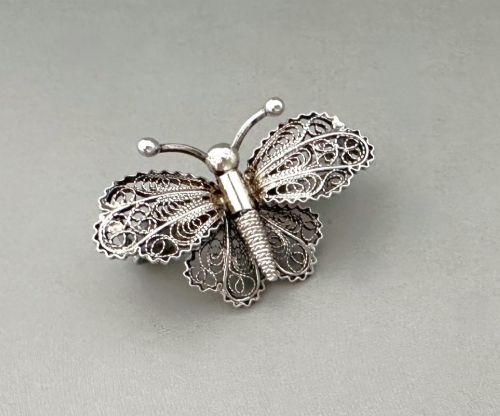
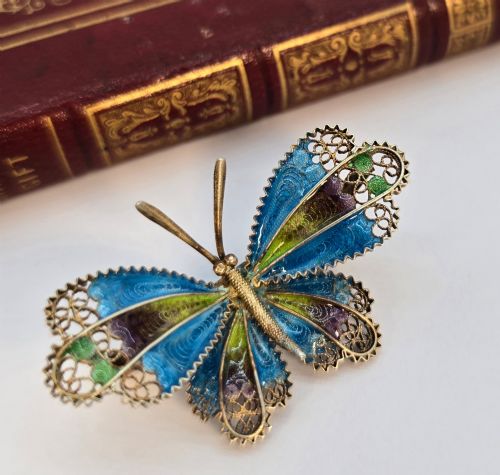
The most frequent examples combine silver and vibrant enamel to create coloured wings, whilst others employ intricate filigree wirework or solid gold settings. Buyers will also encounter multi-gem specimens set with diamonds, sapphires, emeralds, rubies, and moonstones.
Forms range from straightforward brooches to versatile brooch pendants and long hatpins designed for securing headwear. Origins encompass simple sterling silver works as well as elaborate platinum and high-carat gold creations.
How they were made
Silversmiths and goldsmiths utilised yellow gold, sterling silver, silver gilt, and platinum to form the foundational body and antennae of each insect. Precious stones including diamonds, sapphires, emeralds, rubies, and moonstones were then carefully flush or claw set into the metalwork.
Enamelling techniques provided vivid colour to the wings, often working in tandem with translucent butterfly wing panels or fine silver filigree wire. Artisans also employed traditional casting and hand-cutting methods to shape the segmented bodies and delicate wing contours.
Materials recorded across these listings include silver, gold, platinum, diamond, sapphire, emerald, ruby, moonstone, enamel, and butterfly wing.
What varies in quality
Quality rests upon the selection of materials and the complexity of the manufacturing technique, moving from simple silver work to substantial mountings set with considerable carat weights of diamonds and coloured gems. The finesse of the enamel application and the intricacy of the filigree wirework distinguish finer examples from standard production.
Design distinction also dictates the tier of a piece, separating straightforward utilitarian pins from sophisticated creations bearing stones like basaltic sapphires or platinum settings by notable makers.
Rene Lalique
The Edwardian Butterfly Brooch Glossary
- Silver gilt
- Silver that has been coated with a thin layer of gold on its surface. This technique provides the rich appearance of gold whilst utilising a silver base.
- Filigree
- Delicate jewellery-making work consisting of twisted threads of gold or silver soldered together. It creates openwork patterns that resemble lace.
- Hatpin
- A long pin with a decorative head used to secure a hat to the hair. Examples often feature insect motifs like butterflies or dragonflies.
- Enamel
- A glassy substance fused to the surface of metal through firing for ornamentation. It supplies bright, permanent colour to wings and body details.
Edwardian Butterfly Brooch: Frequently Asked Questions
How were butterfly brooches worn?
These pieces were typically pinned to the lapels of jackets, the fronts of blouses, or fastened securely to heavy fabrics using integrated pin stems.
Some versatile versions included loops that allowed the piece to double as a pendant on a chain.
What materials are common in these brooches?
Silver and yellow gold form the most frequent metallic bases, often paired with vitreous enamel for colourful wings.
Many examples incorporate gemstones such as diamonds, rubies, sapphires, emeralds, and moonstones.
How do I spot an Edwardian piece?
Edwardian jewellery often employs platinum or lightweight gold settings alongside delicate diamond work reflecting early twentieth-century tastes.
Distinguishing these from later 1930s pieces or Victorian precursors relies on examining the specific mounting styles and gemstone cuts.
Can I wear a hatpin version today?
Hatpin variants feature exceptionally long shafts intended to push through thick felt or straw millinery and anchor into the wearer's hair.
Collectors frequently display them in stands or adapt them carefully for modern wear.