
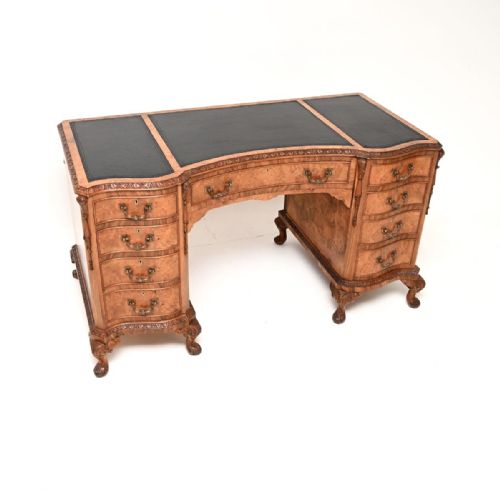
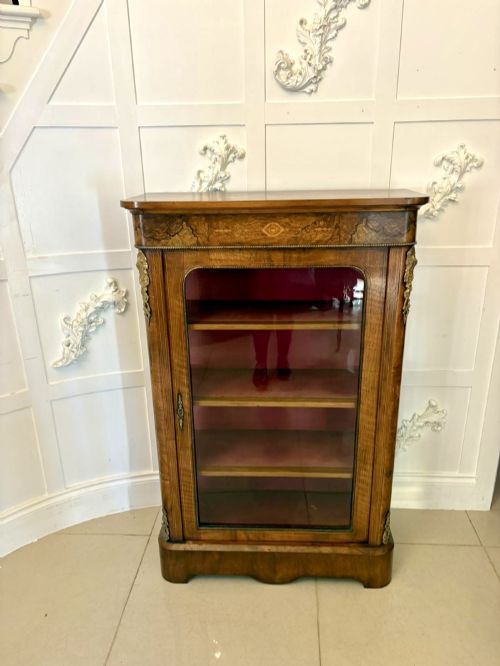
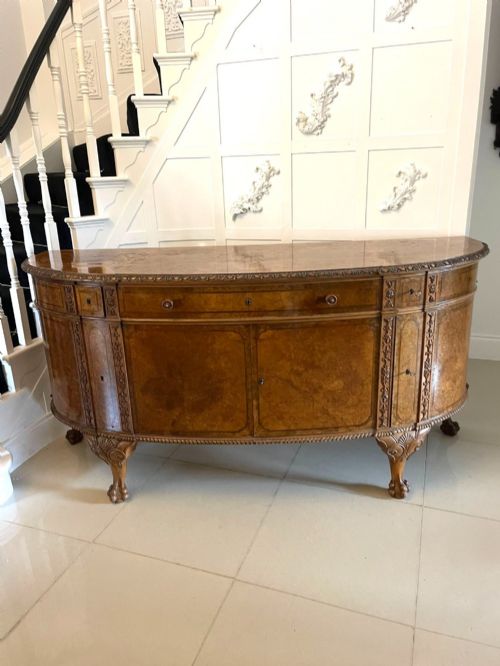
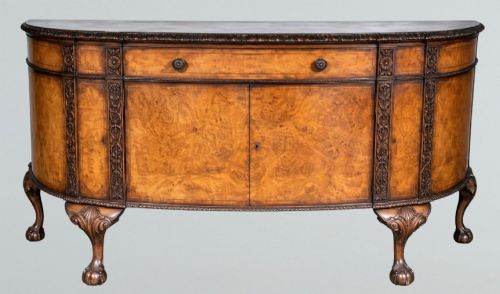

Edwardian Burr Walnut
Edwardian burr walnut encompasses sophisticated furniture displaying figured timber veneers, prized for rich grain patterns and warm tones.
Edwardian Burr Walnut
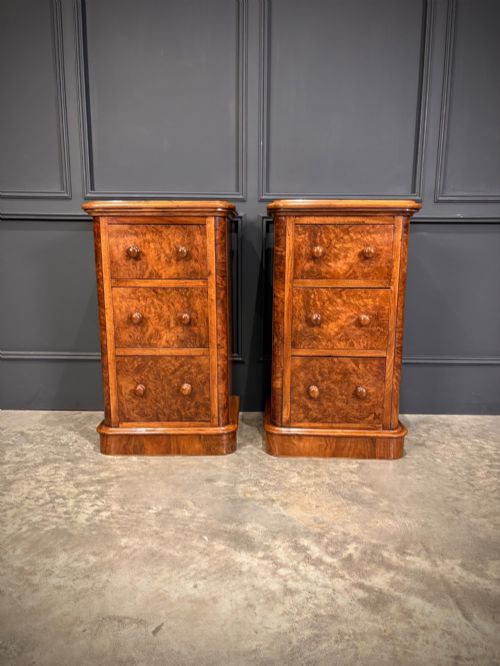
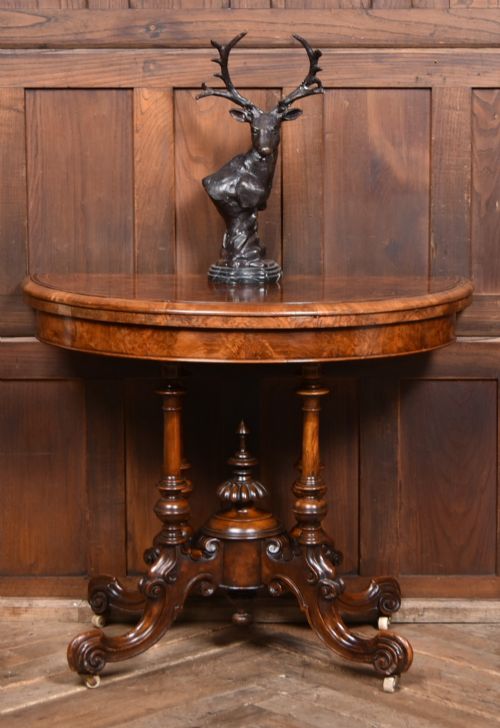
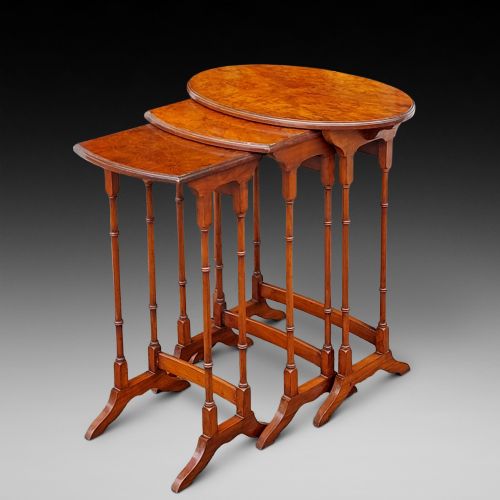
Edwardian burr walnut furniture showcases distinctive swirling timber patterns formed from tree growths, appearing across desks, cabinets, and tables.
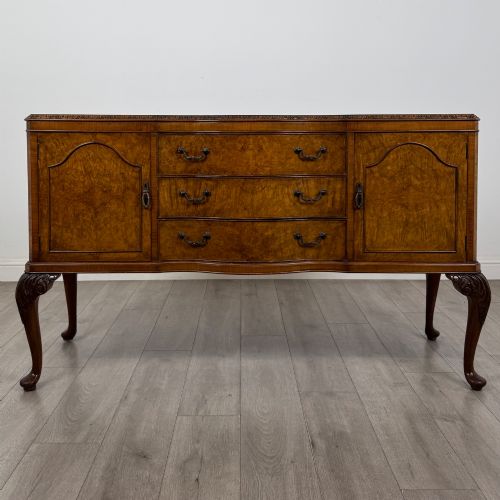
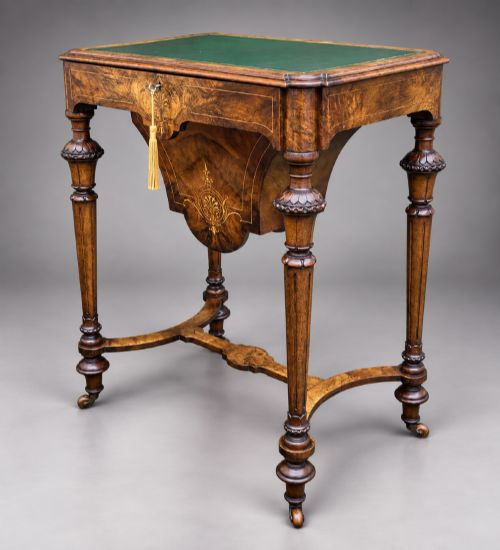
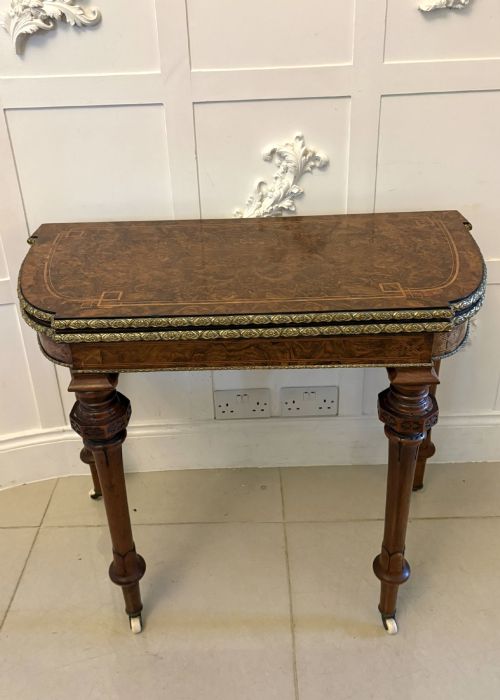
Examples on this page span writing desks, display cabinets, sideboards, and occasional tables originating from the Edwardian period alongside Victorian and later revivals.
Buyers seeking this phrase encounter both compact pieces like nesting tables and substantial items including wardrobes and partner desks.
Materials and construction methods
Craftsmen applied thin veneers of burr walnut timber over solid secondary woods, securing intricate grain patterns across visible surfaces.
Hardware details incorporate cast brass handles and hinges, while writing surfaces frequently feature inset leather panels.
Assessing craftsmanship and finish
Quality rests upon the symmetry and continuity of the burr walnut veneer selection across prominent drawer fronts and tabletops.
Superior items exhibit careful timber matching, refined carving details, and sturdy secondary framing that maintains structural integrity over time.
Maple and Co·Wylie and Lochhead Glasgow·Mappin and Webb·Burroughes and Watts·Charles Tozer
The Edwardian Burr Walnut Glossary
- Burr walnut
- A figured wood veneer harvested from the wart-like growths on walnut trees, prized for swirling, knotty grain patterns. It creates highly decorative surfaces on fine furniture.
- Veneer
- A thin layer of superior wood adhered to a base timber to provide an ornamental exterior. This technique maximises scarce figured woods.
- Pedestal desk
- A freestanding writing table supported by two banks of drawers forming pedestals. These pieces often feature inset leather writing surfaces.
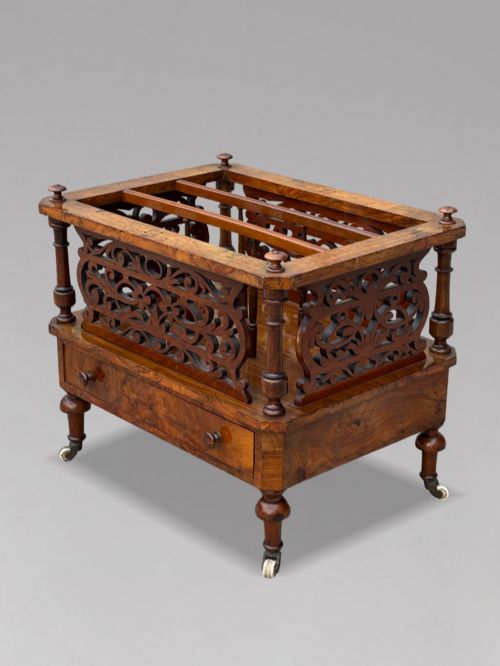
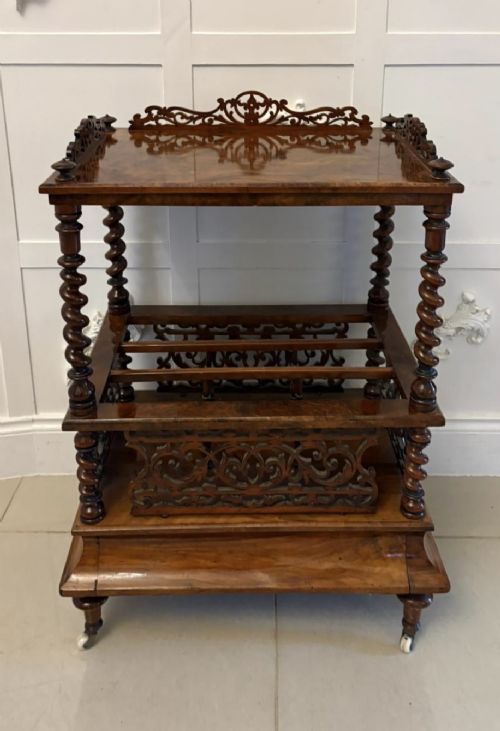
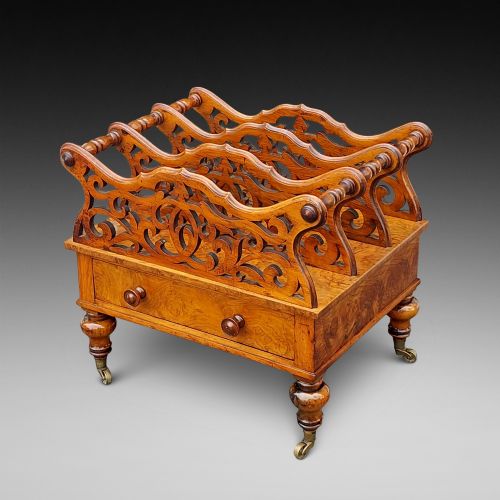
- Canterbury
- A low multi-partitioned stand originally designed for sheet music or books, typically featuring slatted sides and castor wheels.
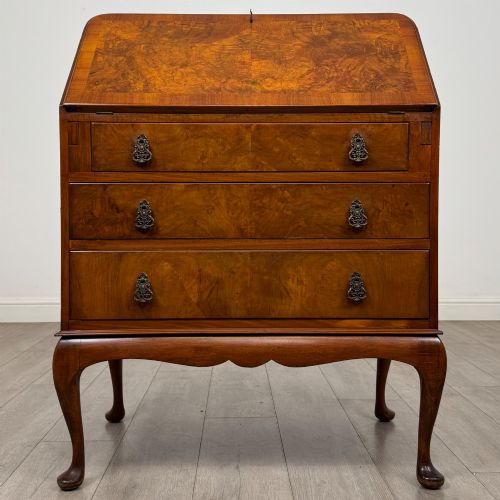
- Bureau
- A writing cabinet featuring a sloping flap that opens to reveal a fitted interior of small drawers and pigeonholes.
Edwardian Burr Walnut: Frequently Asked Questions
What is burr walnut?
Burr walnut is a decorative wood veneer sourced from tree growths containing clustered bud traces. This produces dense, swirling grain patterns across furniture panels.
Cabinetmakers selected these figured sections for the most prominent exterior surfaces of desks and cabinets.
How do I care for walnut furniture?
Maintain walnut surfaces by dusting with a dry cloth and avoiding direct sunlight to prevent fading. Regular gentle polishing preserves the timber lustre.
Keep pieces away from direct heat sources to protect the underlying veneer from drying or lifting.
Where were these pieces used?
Edwardian walnut items furnished formal reception rooms, libraries, and bedrooms in period residences. Smaller tables and cabinets suited drawing rooms for display or entertaining.
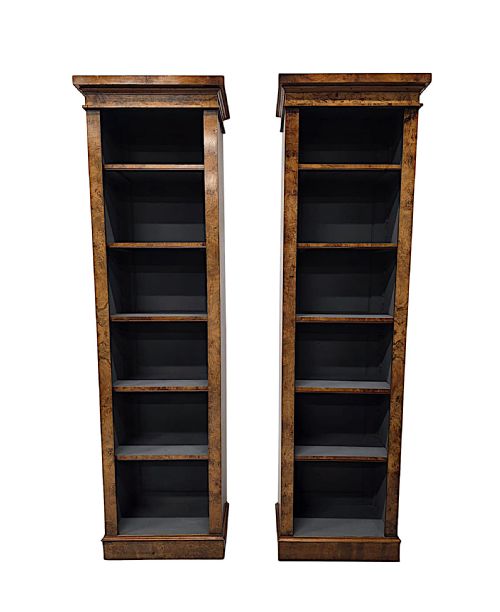
Larger desks and bookcases served private studies and administrative spaces.
Are these pieces solid walnut?
Most items utilise thin decorative veneers applied over stable secondary timbers rather than solid burr timber. This method prevents warping while displaying intricate grain patterns. Nesting tables and smaller accessories occasionally incorporate solid secondary woods alongside veneer.