
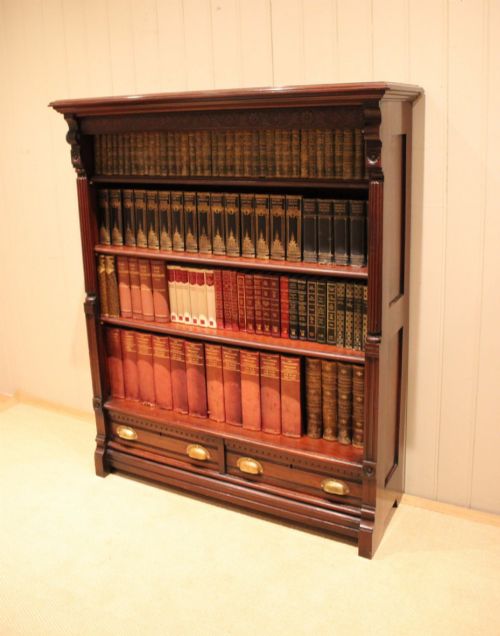
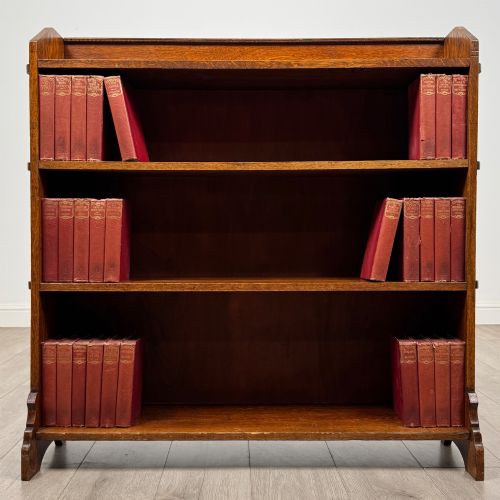
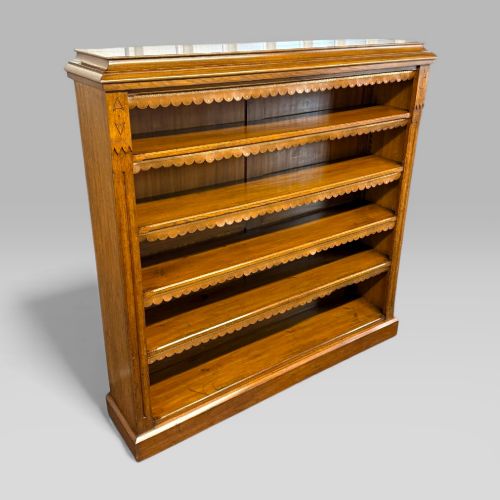
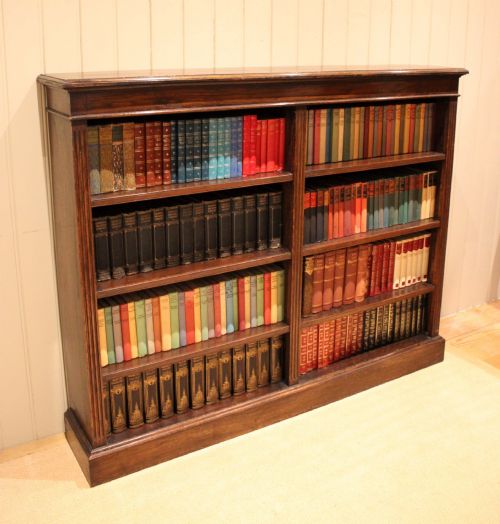

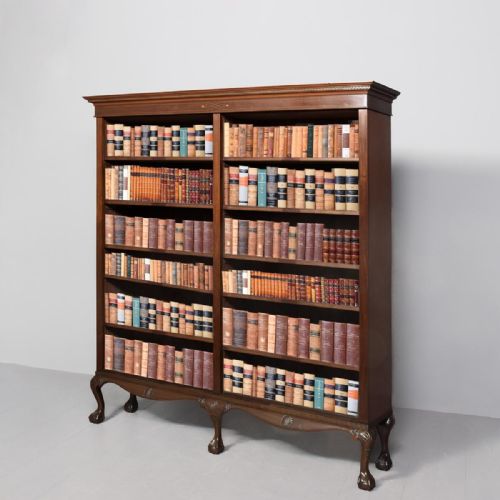
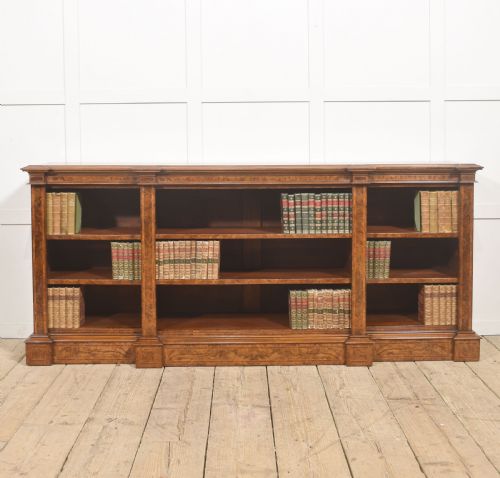

Wide Open Bookcase
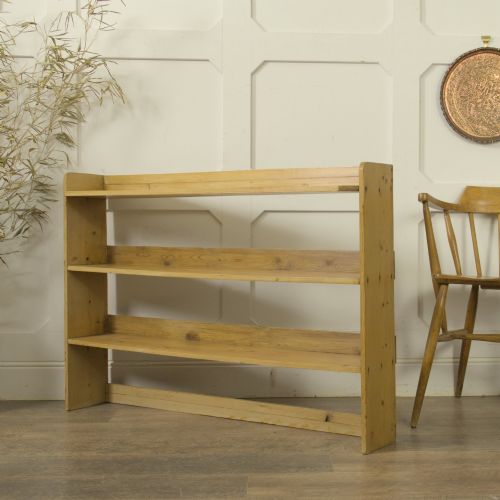
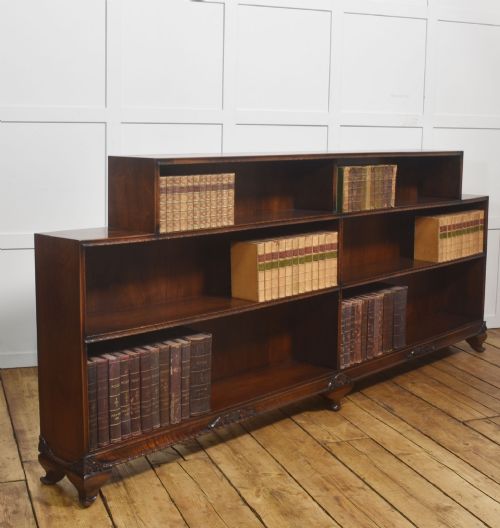
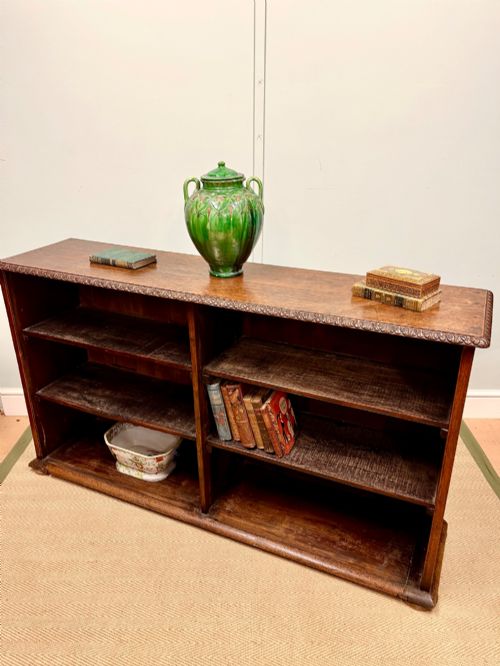
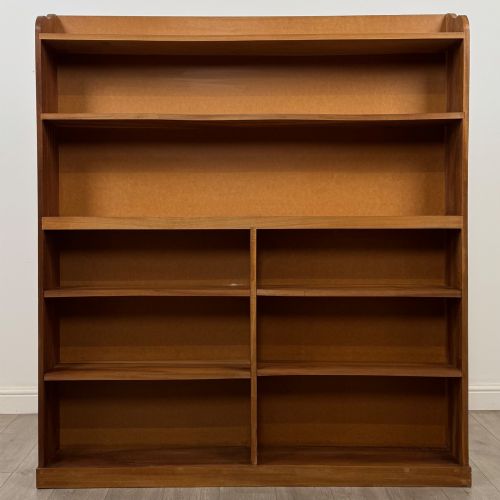
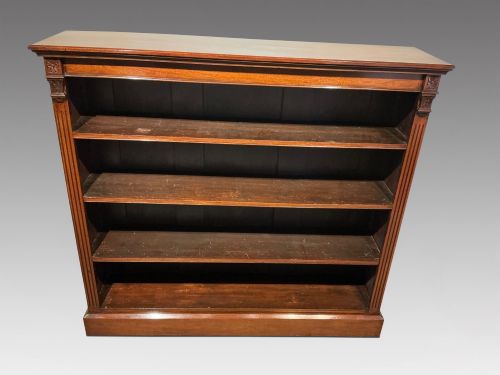
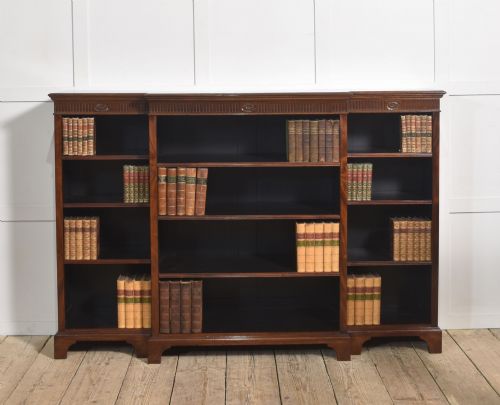
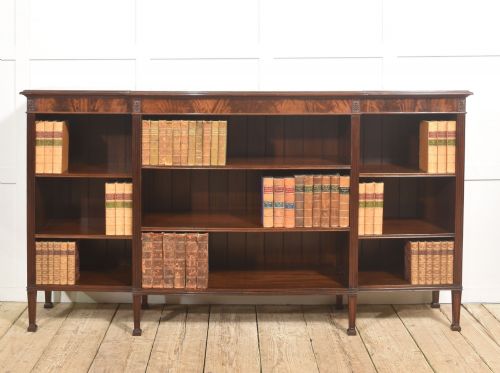
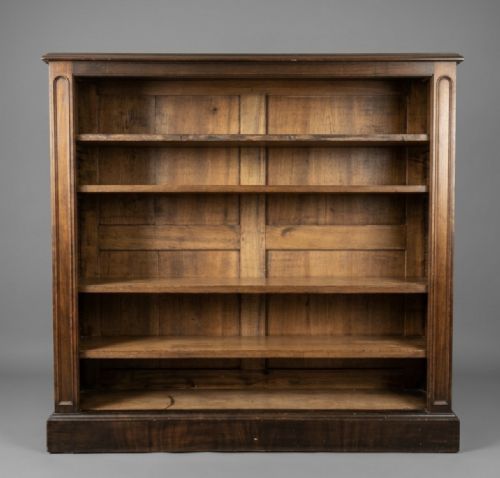
These wide open bookcase examples are substantial timber shelving units designed to hold a serious library, offering immediate access to volumes.
What a wide open bookcase is
A wide open bookcase provides deep, accessible shelving across an extended horizontal span rather than relying on narrow tower formats. These pieces often feature proportions designed to anchor a principal room, presenting books across prominent timber tiers.
Makers such as Lamb of Manchester produced notable iterations during the period, pairing functional capacity with refined surface grain. Collectors encounter variations ranging from golden oak to burr walnut veneer with brass detailing.
How they were made
Makers constructed these bookcases using solid timbers like oak and mahogany, alongside decorative applications of burr walnut veneer. Workshops selected materials for structural strength to support heavy rows of volumes across broad shelf spans.
Joinery techniques relied on traditional framing methods suited to large furniture, occasionally incorporating brass hardware for adjustable shelving or decorative emphasis. Surfaces received finishes that enhanced the natural grain of the wood rather than masking it.
Retail Price Guide 2026
Typical UK retail prices for wide open bookcase, calculated from the Sellingantiques database of over a million retail prices indexed since 2003. This retail price guide relies exclusively on Sellingantiques data; no external sources or auction records are used, so the figures do not describe the wider market.
Some nineteenth-century timber shelves have absorbed decades of tobacco smoke, acquiring a rich, aromatic patina.
What varies in quality
The distinction between standard utility shelving and finer pieces rests in the selection of timber veneers and the subtlety of cabinetmaking. Burr walnut and figured mahogany require expert matching across wide surfaces to achieve visual harmony.
Proportion and architectural presence dictate the standing of a piece within its period. Breakfront configurations and pieces bearing documented workshop attribution demonstrate greater ambition in design than simpler utilitarian shelving.
Lamb of Manchester
The Wide Open Bookcase Glossary
- Breakfront
- A cabinet design where the central section projects forward from the flanking wings. This architectural arrangement creates depth and shadow across the front elevation.
- Burr walnut
- A wood harvested from the abnormal growth of a walnut tree, yielding highly figured, swirling grain patterns. Cabinetmakers used it as a decorative veneer on premium surfaces.
- Golden oak
- A specific light, warm honey tone characteristic of oak furniture produced during the Edwardian era. This finish brightened domestic interiors compared to darker Victorian predecessors.
- Veneer
- A thin layer of superior timber applied over a secondary wood base. This technique allowed makers to display dramatic grain patterns without building entire structures from costly materials.
Frequently Asked Questions
What is a wide open bookcase?
A wide open bookcase is a large, doorless shelving unit designed to display and store extensive collections of books across a broad horizontal format.
These pieces prioritise accessibility and visual impact, making them suited to studies, libraries, and principal reception rooms.
How do I date a wide open bookcase?
Dating relies on identifying timber choices, decorative styles, and construction details associated with specific historical periods like the Edwardian era or nineteenth century.
Lighter golden oak finishes and specific veneer choices often point toward early twentieth-century production, while heavier carved oak points to earlier Victorian work.
Where should I place a wide open bookcase?
These large furniture items require substantial wall space and benefit from placement in rooms with balanced natural light to showcase the timber grain.
Because they lack doors, positioning them away from direct heat sources helps protect both the wooden structure and the books stored within.
What woods were used for these bookcases?
Carpenters utilised durable timbers including oak, mahogany, and walnut to construct the primary frames and shelving tiers.
Decorative variations frequently incorporate burr walnut veneer to add visual texture and pattern across the broad front surfaces.