
Edwardian Brass Stick Holder
These edwardian brass stick holder pieces bring practical hallway organisation and bright metalwork into the home.
Edwardian Brass Stick Holder
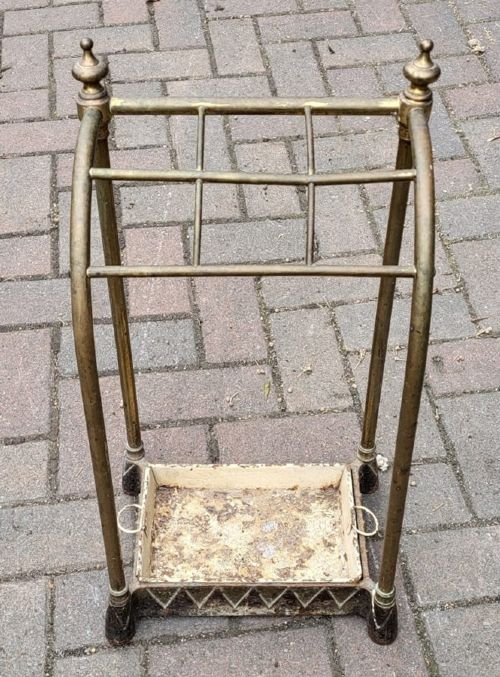
An edwardian brass stick holder is a hallway furnishing designed to store walking sticks, canes and umbrellas neatly upright. The pieces appearing here span the Edwardian era alongside Victorian and early twentieth century examples, reflecting long-standing domestic habits.
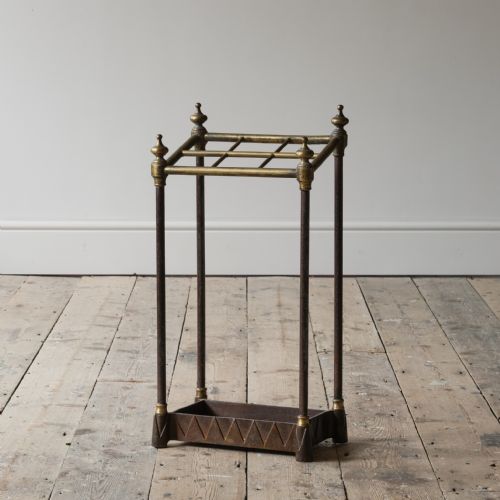
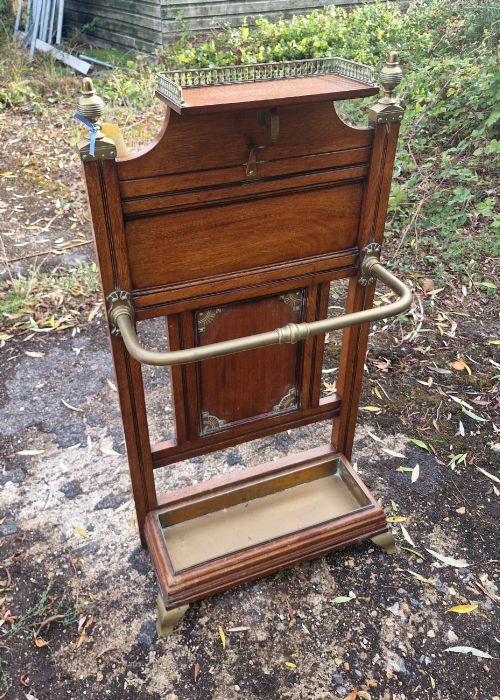
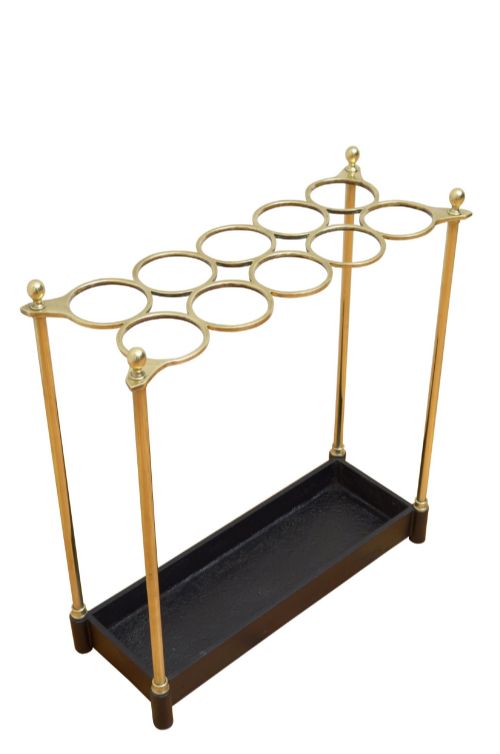
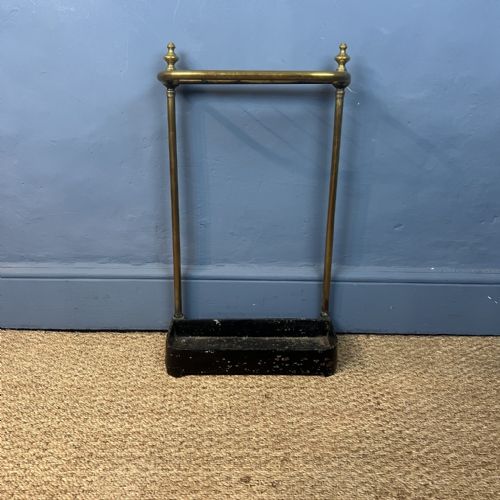
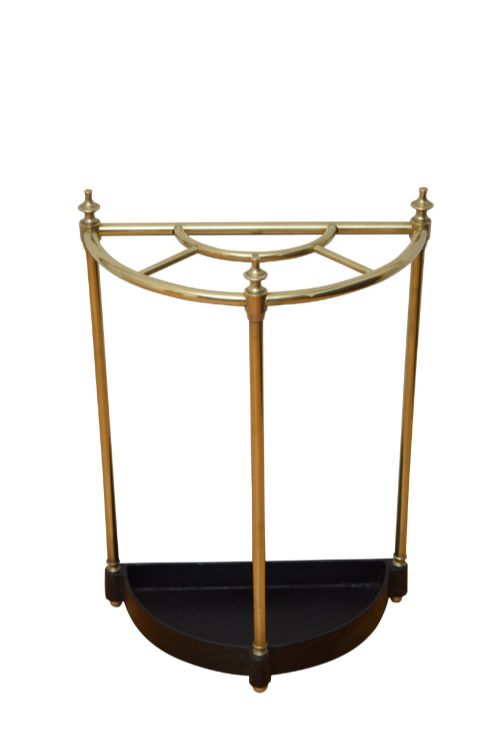
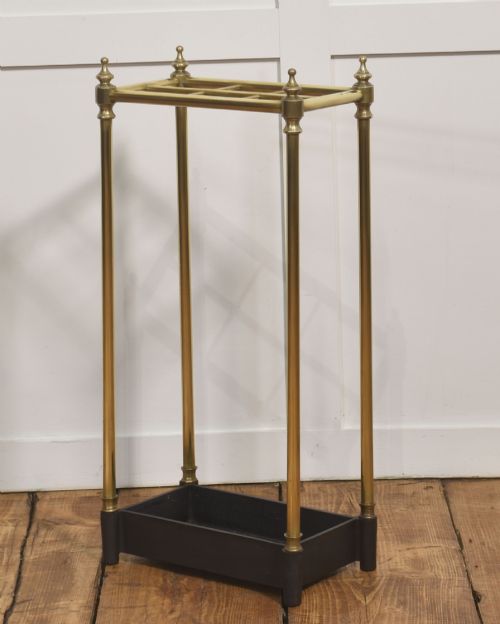
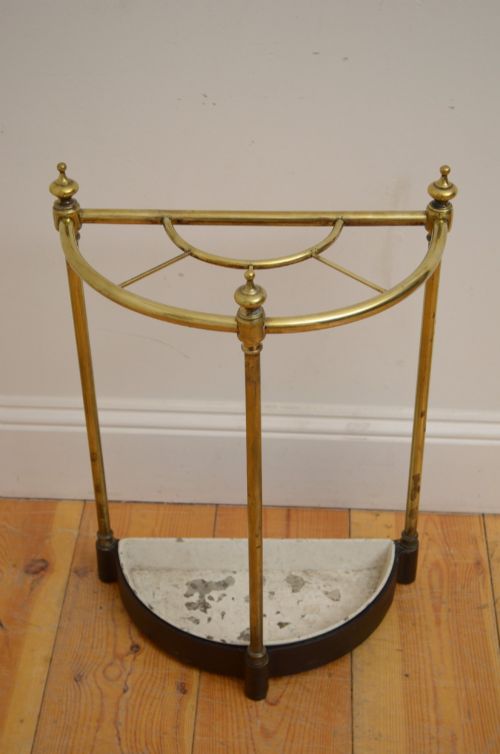
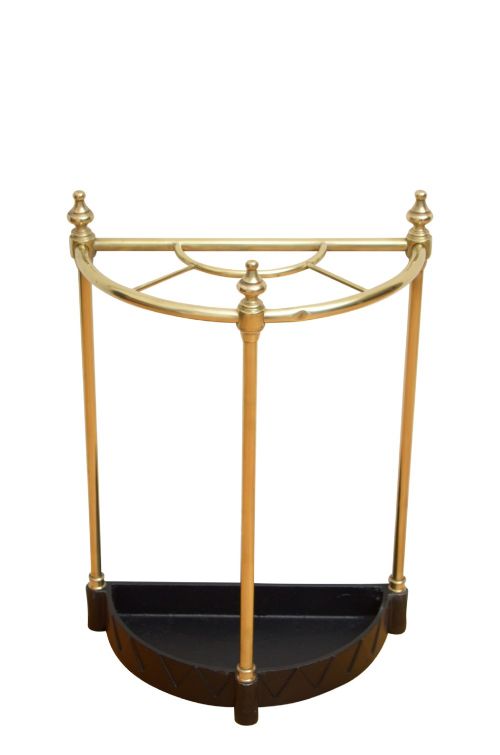
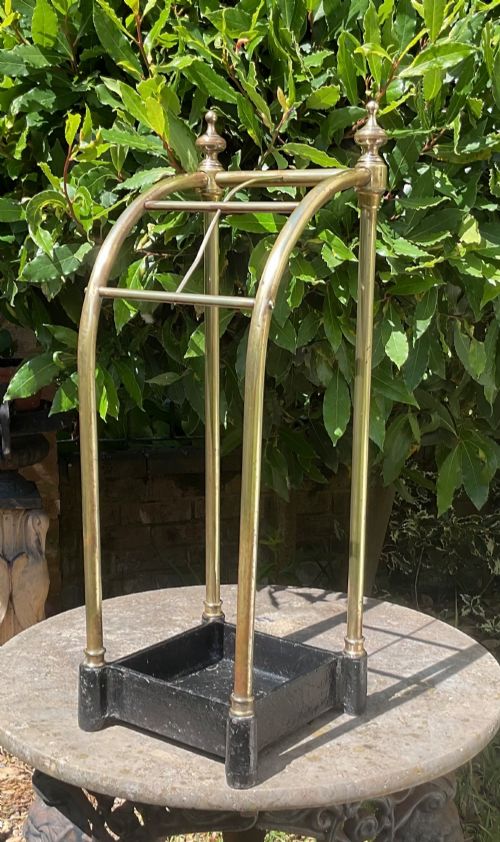
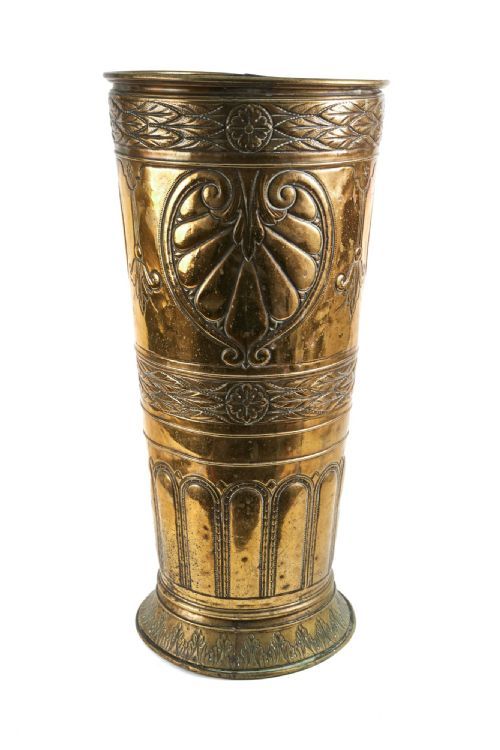
Most examples take the form of demi lune or half moon shapes designed to sit flat against a hallway wall, alongside oval and cylindrical forms. Materials frequently combine brass with cast iron bases or oak frames to provide the necessary weight for holding heavy walking canes.
Makers and designers of the period also applied these materials to umbrella stands, stick stands and related hall furnishings, often incorporating drip trays to protect floors from wet weather.
Materials and construction
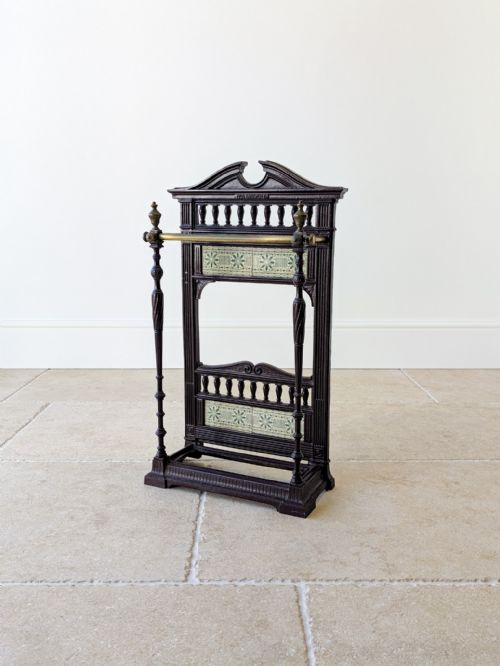
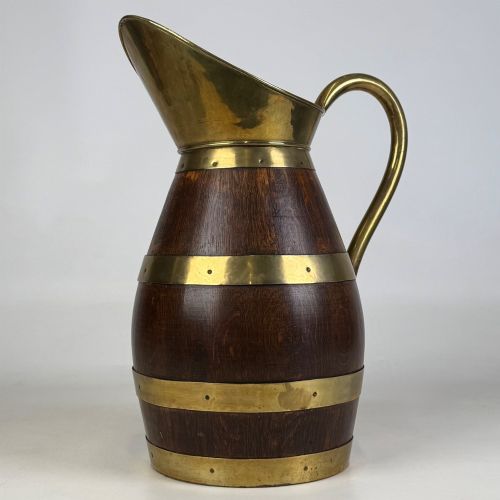
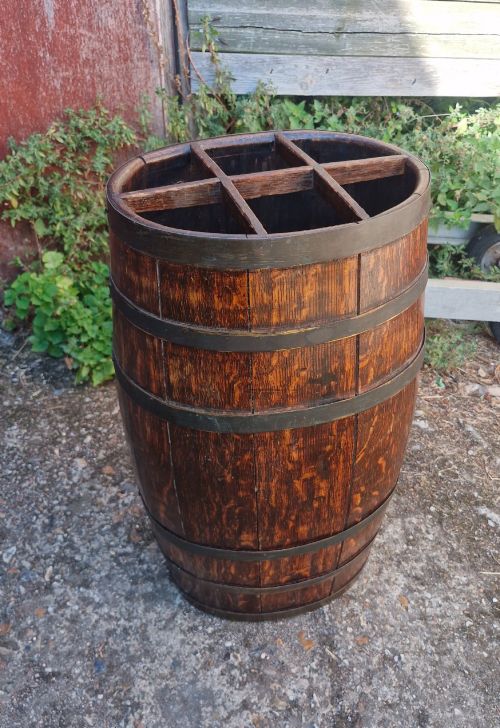
Construction relies heavily on sheet brass and cast iron, utilising the stiffness of metal alongside heavy iron bases to prevent tipping. Coopered oak and mahogany timber bodies appear bound in brass or metal bands, joining carpentry techniques with metalworking.
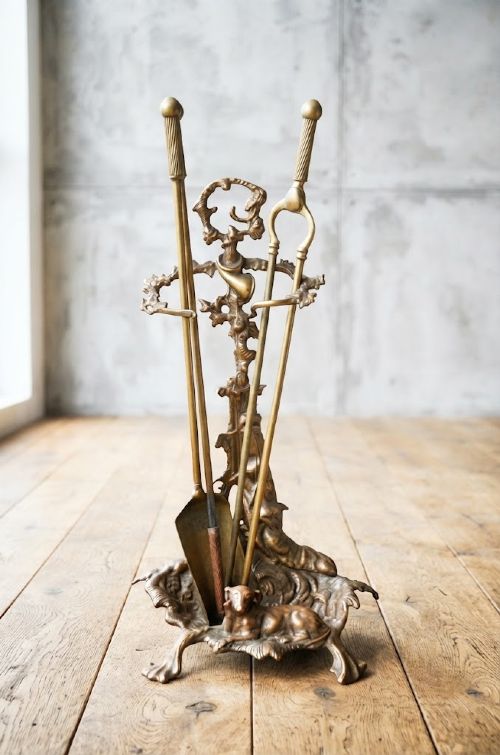
Details such as ball finials, dog tooth trays and cast hunting scenes display period casting and pressing methods. These techniques allowed makers to produce both functional hall equipment and decorative items with distinct aesthetic styles.
Some stands feature cast hunting scenes, keeping outdoors pursuits present even in the hallway.
Judging quality and construction
Quality rests on the weight of the casting and the integration of the materials, where substantial cast iron bases and thick brass gauge differentiate sturdier pieces from lighter alternatives. Well-joined wooden framing and intact drip trays demonstrate higher manufacturing standards.
Detailing distinguishes individual examples, with decorative elements like ball finials, clean lines and defined motifs showing greater care in execution than plain utilitarian items.
Coalbrookdale·James Shoolbred
The Edwardian Brass Stick Holder Glossary
- Demi Lune
- A half-moon shape allowing furniture to sit flush against a hallway wall. This profile saves floor space while providing adequate capacity for canes.
- Drip Tray
- A shallow metal basin placed at the base of a stand to catch water from wet umbrellas. It protects flooring materials from moisture damage.
- Coopered
- Constructed from wooden staves joined edge to edge and bound with metal hoops, much like a barrel. This technique appears in wooden umbrella stands.
- Finial
- A decorative ornament finishing the top of a post or upright. Ball finials are common on brass and metal stick stands.
- Arts and Crafts
- A design movement valuing hand craftsmanship and simple materials. Pieces from this tradition emphasise honest construction over excessive ornament.
Edwardian Brass Stick Holder: Frequently Asked Questions
Where should I place an edwardian brass stick holder?
These pieces belong in a hallway or entrance porch where walking sticks and umbrellas see regular use. Their narrow profiles suit tight spaces near front doors.
Positioning them on hard flooring near the entrance also prevents moisture from reaching carpets.
How do I clean brass and cast iron stands?
Dusting with a dry cloth keeps metal surfaces free from grime. Avoid harsh chemical cleaners that strip period patina.
Cast iron bases benefit from light oiling if rust appears, while removable drip trays simplify cleaning out accumulated rainwater.
What is the difference between an umbrella stand and a stick stand?
Umbrella stands generally feature wider apertures or partitions suited to fabric canopies and curved handles. Stick stands offer narrower loops designed specifically for straight walking canes.
Many period examples accommodate both functions interchangeably within the same hallway footprint.
How can I tell an Edwardian stand from a Victorian one?
Edwardian pieces often display lighter proportions and simpler lines influenced by early twentieth century tastes. Victorian examples tend to feature heavier cast iron components and more ornate decoration.
Overlapping styles mean exact dating relies on construction details and registration marks.