


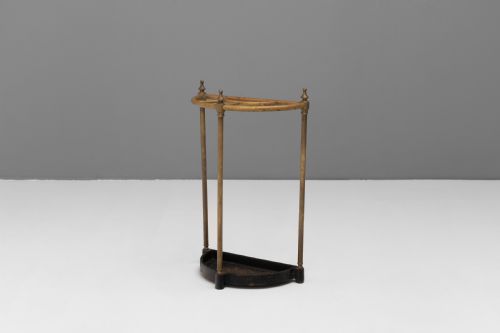


Demi Lune Umbrella Holder
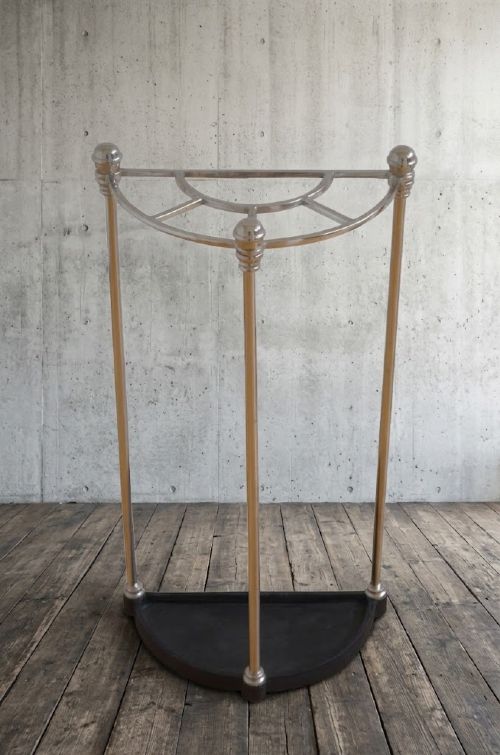
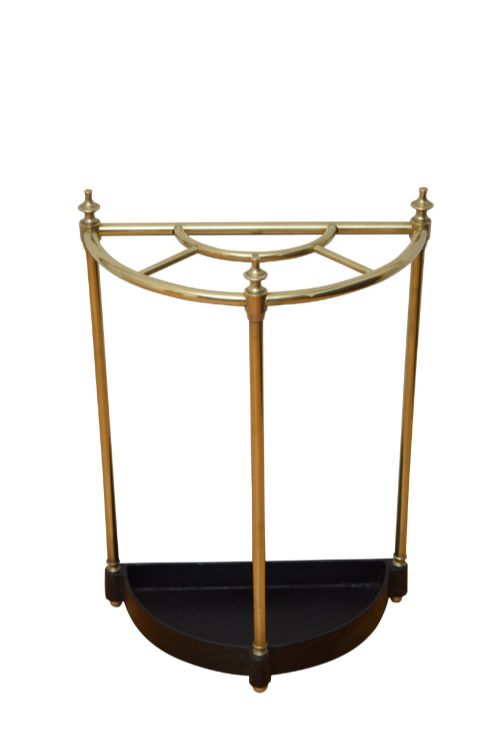
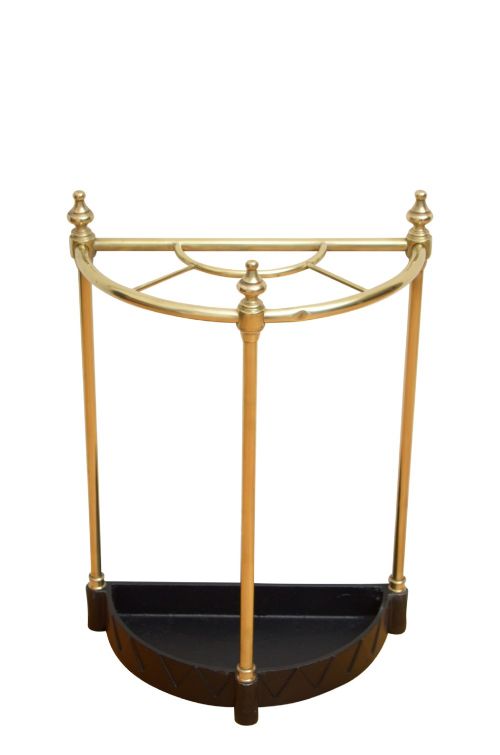
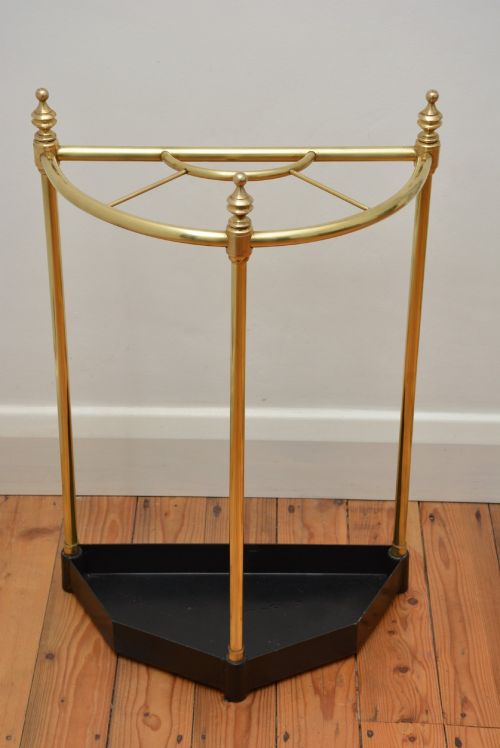
A demi lune umbrella holder shapes a half-circle to hug a hallway wall while holding walking sticks and wet rainwear.
Demi Lune Umbrella Holder
The demi lune umbrella holder is a hallway furnishing designed with a flat back to sit flush against a wall, saving valuable floor space in narrow entrance passages. These stands take the form of half-moon frames intended to receive wet umbrellas and walking sticks without obstructing household traffic.
Most examples found here date from the Victorian, Edwardian, and Art Deco periods, stretching from eighteen ninety through to nineteen thirty. The selection spans robust country house oak hall stands alongside sleeker metal frames suited to compact town properties.
Brass is the dominant metal across the current listings, often paired with cast iron bases or fitted with zinc drip trays to catch rainwater. Buyers also encounter nickel plated finishes and tubular metal constructions reflecting early twentieth century design shifts.
How they were made
Maker workshops utilised brass casting and sheet rolling to form the distinctive half-circle frames and decorative stick loops. Cast iron provides heavy, stable bases on several designs to prevent the stand from tipping when loaded with heavy walking sticks.
Oak timber appears in larger country house hall pieces, constructed using traditional joinery to support integrated umbrella wells. Zinc trays and dog tooth trays were incorporated beneath the main frames to protect wooden and tiled floors from pooling water.
Current listings span the Victorian period through to nineteen thirty, incorporating brass, cast iron, nickel plating, tubular metal, and oak.
What varies in quality
Quality rests on the weight of the metal and the integrity of the structural divisions, separating solid cast pieces from lighter tubular alternatives. Finer items exhibit crisp casting detail in the brass framework and retain their original removable drip trays.
The Demi Lune Umbrella Holder Glossary
- Demi Lune
- A half-moon shape with one flat edge designed to stand flat against a wall. This profile defines the footprint of the entire selection.
- Stick Stand
- A piece of furniture intended specifically for holding walking sticks and canes. These often share form with umbrella holders.
- Dog Tooth Tray
- A drip pan featuring a serrated or patterned rim design. It catches water beneath the umbrella frame.
- Nickel Plating
- A thin protective metal coating applied to a base metal to provide a bright finish. It appears on Art Deco era items.
- Cast Iron
- A sturdy iron alloy poured into moulds to create heavy supportive bases. It ensures the stand remains stable.
Demi Lune Umbrella Holder: Frequently Asked Questions
Where should I place a demi lune umbrella holder?
These half-circle stands fit neatly against hallways or entrance walls where floor space is limited. Their flat back allows them to rest flush without protruding too far into a narrow passage.
Positioning one near the front door catches wet umbrellas immediately upon entry while keeping walking sticks organised for daily use.
How do I care for brass umbrella stands?
Brass surfaces require occasional dusting and gentle cleaning to maintain their finish over time. Avoid harsh chemical polishes that strip away the aged patina accumulated across the Victorian and Edwardian periods.
Ensure the interior drip trays are emptied and dried regularly to prevent moisture damage to the base metal.
How do I date a metal umbrella stand?
Dating relies upon stylistic details, manufacturing techniques, and materials such as heavy cast iron versus tubular metal. Victorian and Edwardian pieces often display ornate brass casting or decorative stick loops.
Art Deco items from nineteen thirty tend toward cleaner geometric lines and nickel plated surfaces rather than traditional brass.
Do these stands include drip trays?
Many traditional stands feature integrated zinc or metal trays positioned at the base to catch rainwater. These removable pans protect flooring from dampness dripping off wet umbrellas.
Examining the individual piece confirms whether the original tray remains intact within the half-circle frame.