





Edwardian Brass Planter
These edwardian brass planter pieces bring polished metalwork and plant displays together with period domestic utility.
What an edwardian brass planter is
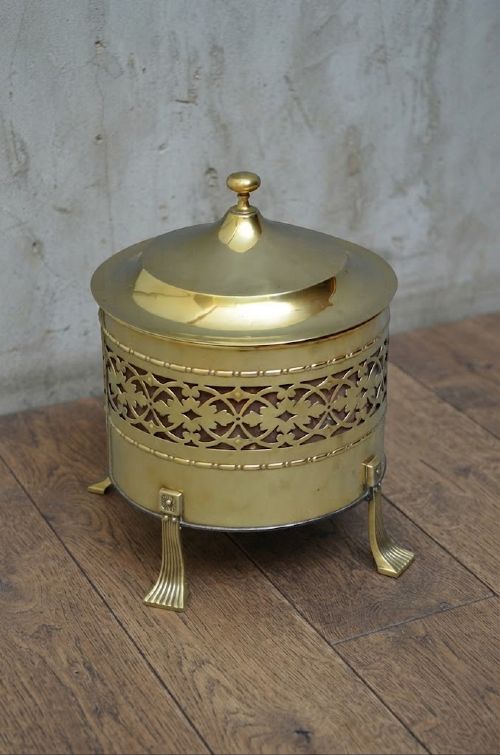
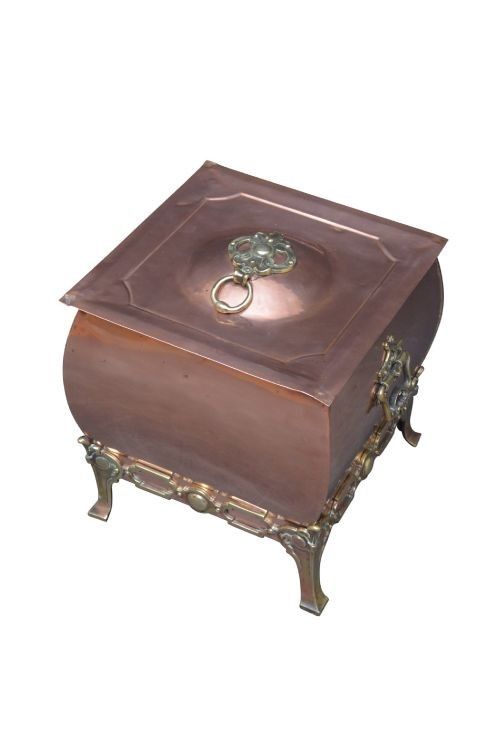
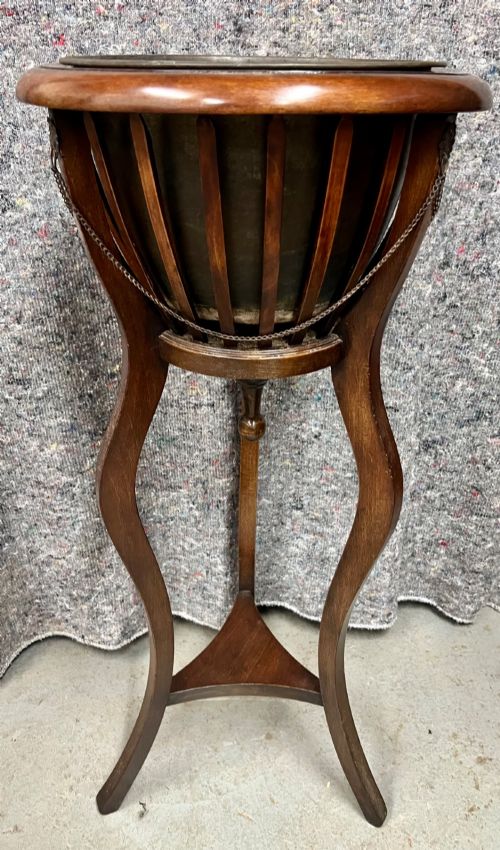
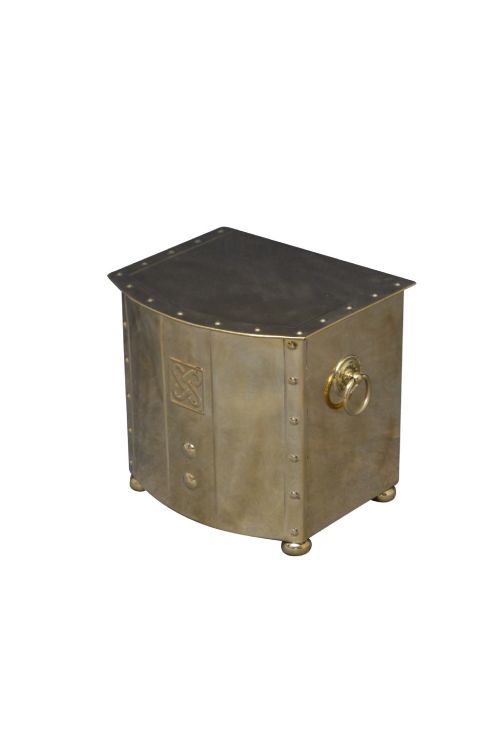
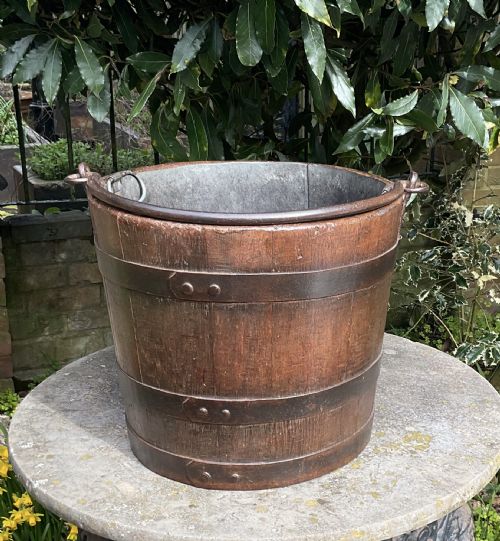
An edwardian brass planter serves as a vessel for potted greenery or functions interchangeably as a coal bucket, log bin, and hearth accessory. The pieces on this page span the edwardian period around nineteen hundred, taking forms such as troughs, jardiniere bowls, and coal bins.
Makers produced these items in solid brass, sometimes combining them with iron, copper, or inlaid mahogany. Buyers frequently encounter variations that include liners, fretwork designs, and stylistic art nouveau forms.
How they were made
Makers utilised solid brass sheets, copper, and iron to construct these vessels during the edwardian era. Techniques involved fluting, fretwork piercing, and stylistic shaping to achieve the characteristic art nouveau curves.
Many examples incorporated inner liners to hold moisture and protect the metal structure from soil and water. Inlaid mahogany elements also appear alongside the metalwork on specific trough and jardiniere forms.
Retail Price Guide 2026
Typical UK retail prices for edwardian brass planter, calculated from the Sellingantiques database of over a million retail prices indexed since 2003. This retail price guide relies exclusively on Sellingantiques data; no external sources or auction records are used, so the figures do not describe the wider market.
What varies in quality
The distinction between standard vessels and superior pieces lies in the complexity of the brass work, such as hand-pierced fretwork versus plain surfaces. Art nouveau examples with distinct stylistic forms represent a higher design ambition than basic utilitarian coal bins.
The inclusion of original liners and the integrity of the solid brass or inlaid mahogany construction dictate the overall calibre. Finer items demonstrate crisp fluting and substantial metal gauge rather than thin sheet construction.
J Sankey and Sons
The Edwardian Brass Planter Glossary
- Jardiniere
- An ornamental pot or stand for plants. These vessels often sit on hearths or window sills.
- Fretwork
- Ornamental design created by cutting patterns through the metal. This technique appears on coal bucket bodies.
- Fluted
- Decorated with parallel shallow grooves. Makers applied this surface pattern to solid brass bodies.
- Art Nouveau
- A style characterised by flowing organic lines. Pieces adopt this aesthetic through stylistic shaping.
Frequently Asked Questions
Can I use an edwardian brass planter for real plants?
Many examples include internal liners intended to hold soil and water safely without damaging the outer metal body. Inspect the interior to confirm whether a watertight vessel is present before planting directly.
Historically, these items served dual purposes as plant holders or coal buckets by the hearth. Using a plastic nursery pot inside the liner helps preserve the historical metalwork.
Were these items meant for coal or plants?
Makers designed these versatile vessels for both domestic fuel storage and decorative horticulture during the edwardian period. Troughs, buckets, and jardiniere forms share similar construction methods regardless of their intended contents.
Evidence shows pieces catalogued interchangeably as coal bins, log buckets, and window sill troughs. The presence of a liner often dictates the practical use.
What defines the art nouveau style on these pieces?
Art nouveau influence appears through organic forms, flowing curves, and stylistic shaping rather than strict geometric symmetry. This aesthetic emerged around nineteen hundred to refresh traditional domestic metalwork.
Such examples contrast with simpler fluted or plain brass vessels from the same edwardian years. The emphasis rests on artistic contours applied to functional objects.