
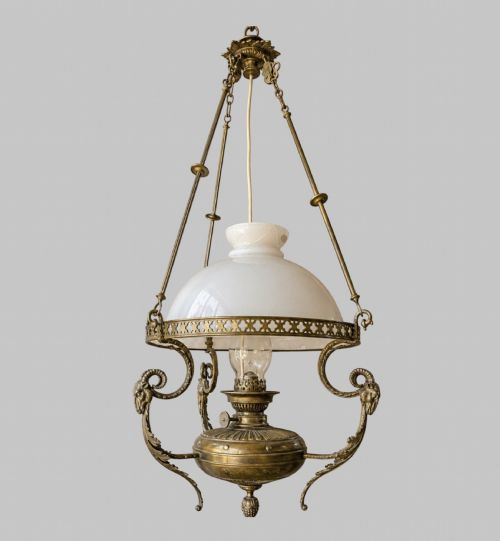
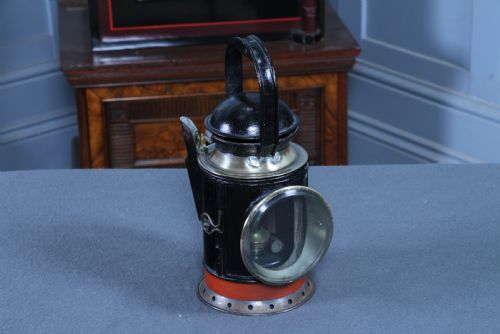
Edwardian Brass Oil Lamp
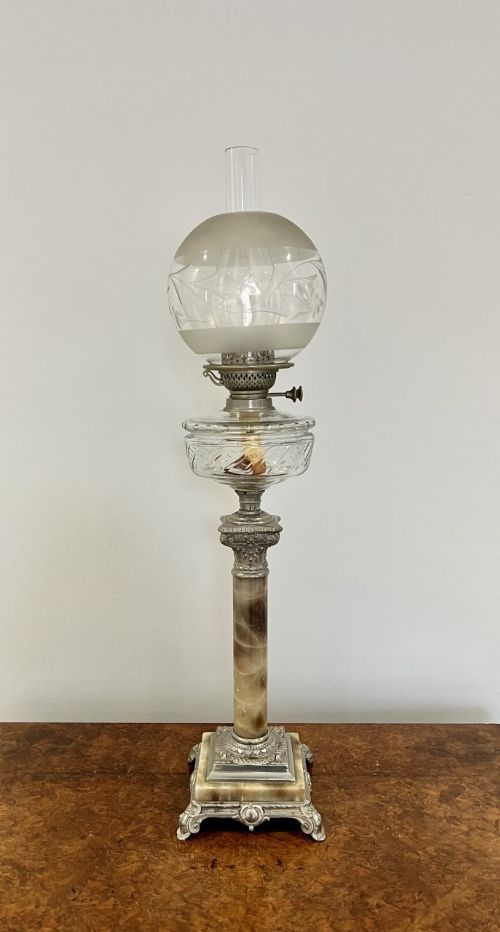
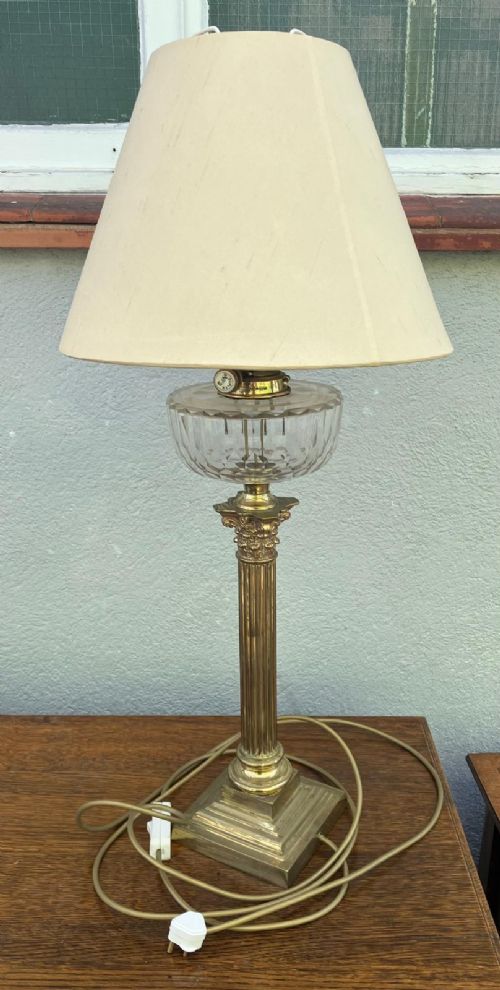
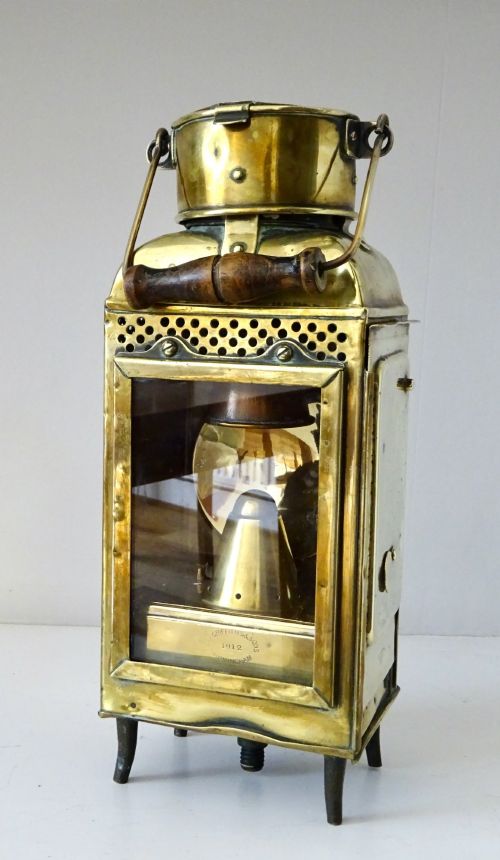
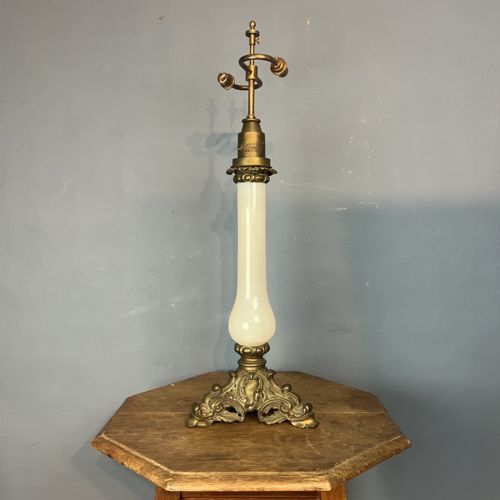
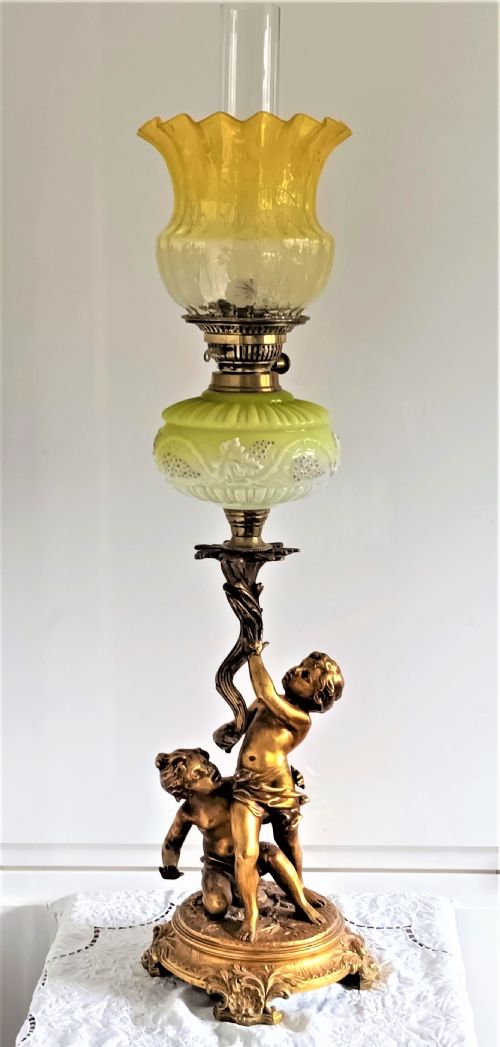
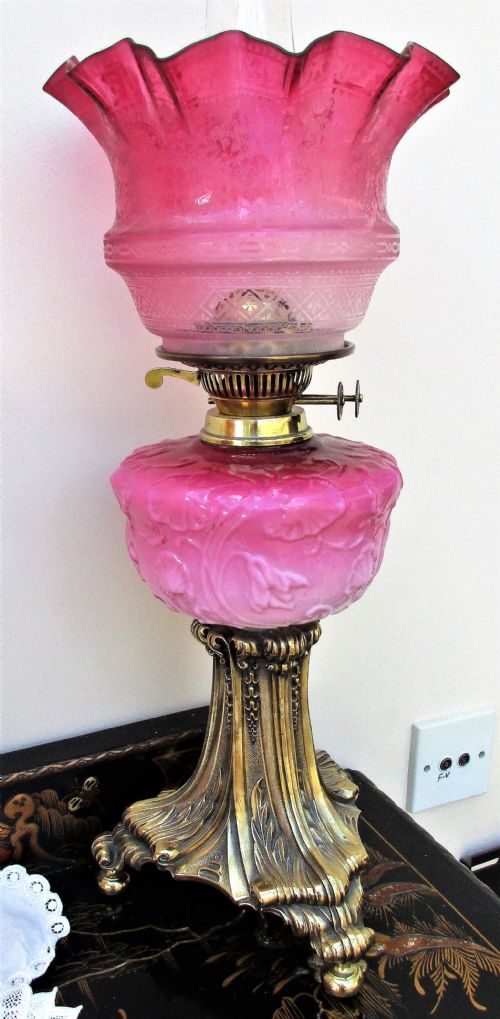
An edwardian brass oil lamp brings genuine period warmth to a room, combining heavy cast metal bases with striking glass fonts.
What these pieces are
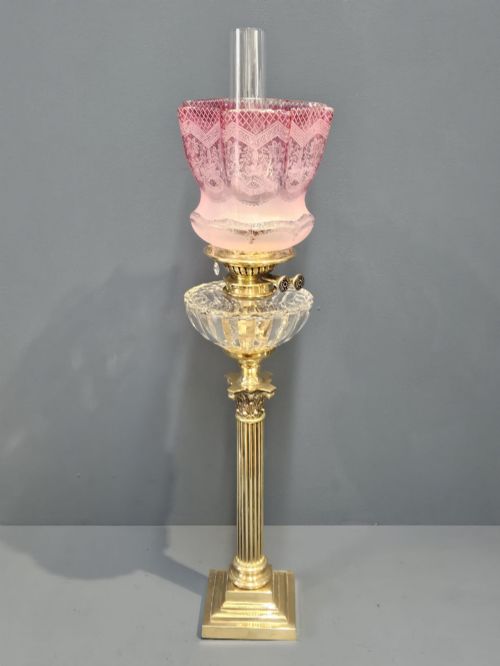
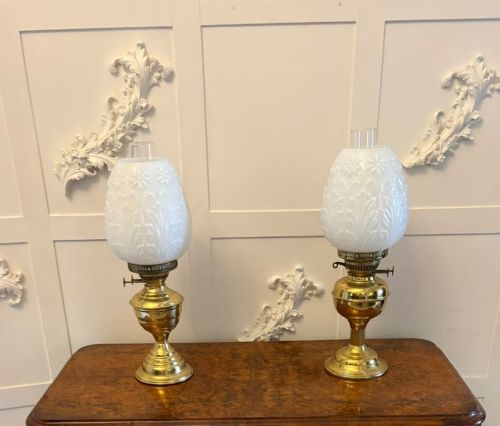
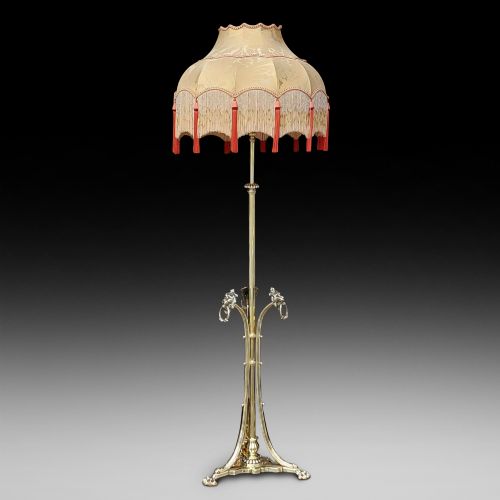
When searching for an edwardian brass oil lamp, buyers encounter heavy metal standards and table models designed for domestic lighting at the turn of the twentieth century. The selection ranges from compact table pieces to tall floor-standing variants.
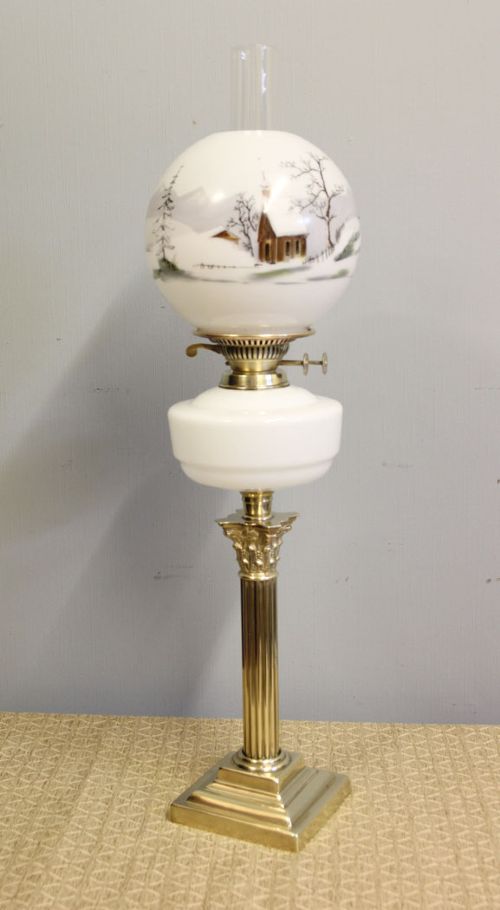
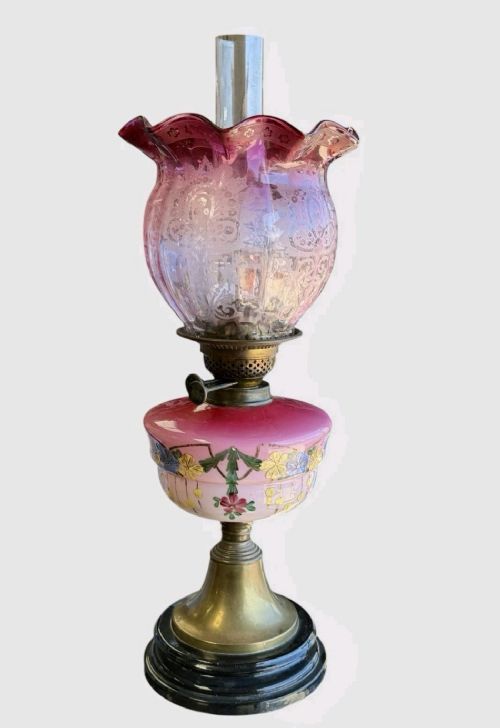
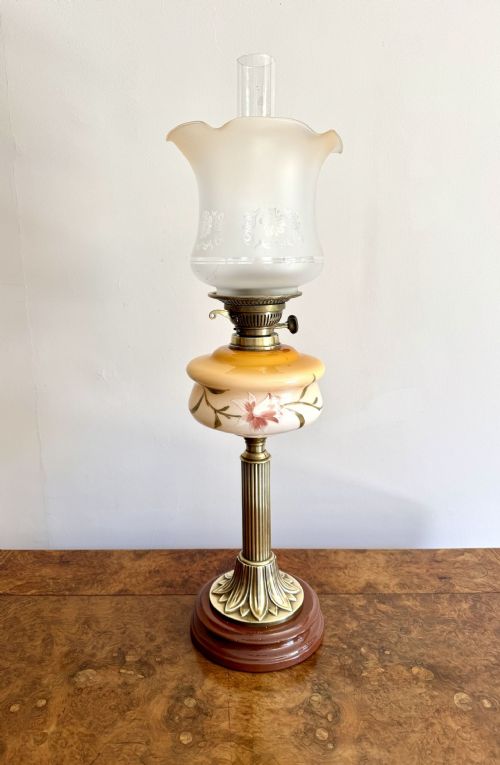
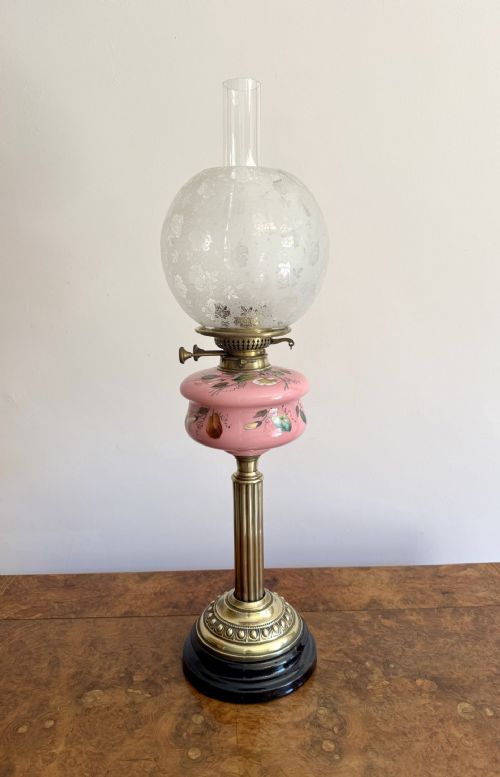
The versions most commonly met on this page span the Edwardian period and the late Victorian era. Standard table lamps frequently pair polished metal reservoirs with hand-painted or opaline shades.
Makers and designers of the period combined functional metalwork with decorative glass elements. Examples in the inventory include both standard table models and adjustable floor lamps.
How they were made
These lamps rely on solid brass construction for structural stability, often combined with heavy slate bases to prevent tipping. Metal components were cast, turned, and polished to create bright reflective surfaces.
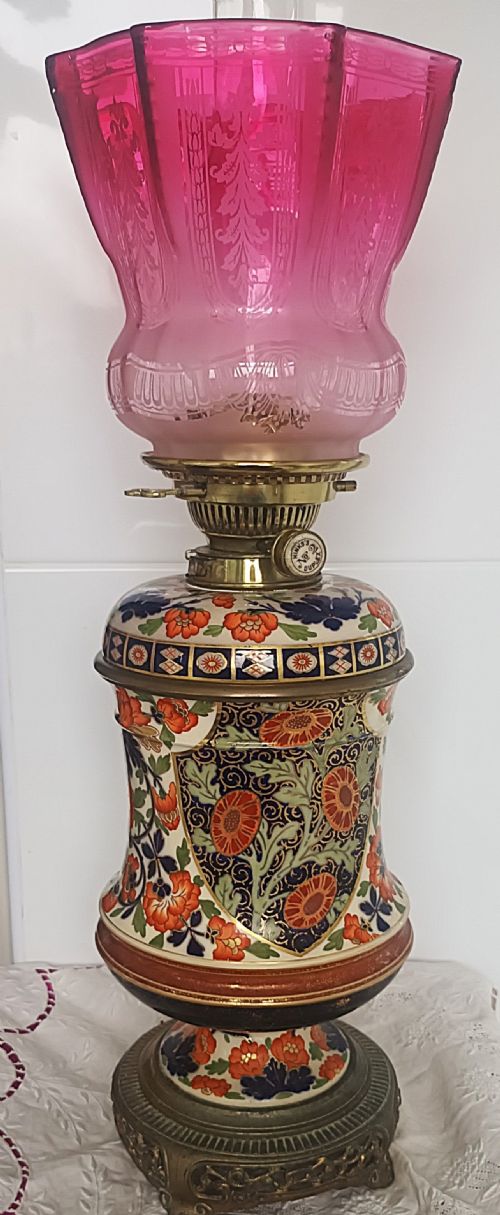
Reservoirs and shades utilise specialised glass techniques, including cranberry glass, opaline glass, and hand-painted decoration. Coloured glass elements required skilled manipulation of molten materials during shaping.
Retail Price Guide 2026
Typical UK retail prices for edwardian brass oil lamp, calculated from the Sellingantiques database of over a million retail prices indexed since 2003. This retail price guide relies exclusively on Sellingantiques data; no external sources or auction records are used, so the figures do not describe the wider market.
Some adjustable standards still retain their original heavy cast iron internal weights, designed to keep tall floor lamps safely anchored.
What varies in quality
Quality in these lamps rests on the weight of the brass casting and the intricacy of the glasswork. Heavier gauge metal and crisper surface chasing distinguish finer examples from standard production pieces.
The artistic merit of the glass shade dictates the upper tier of the range. Hand-painted floral details and unusual glass colours such as yellow or cranberry elevate specific pieces.
Hinks·Taylor Tunnicliff·Messengers·Harrods
The Edwardian Brass Oil Lamp Glossary
- Font
- The oil reservoir of the lamp, usually positioned above the base and beneath the burner. It is frequently made of glass or ceramic to display the fuel level.
- Opaline glass
- A milky, translucent white glass popular in nineteenth-century lighting. It diffuses light softly and was often paired with brass bases.
- Standard lamp
- A tall floor lamp designed to stand directly on the floor rather than on a table. These often feature adjustable columns.
- Duplex burner
- A double-wick burner mechanism common on larger lamps of this era. It provided a brighter illumination than single-wick variants.
Frequently Asked Questions
How do I operate an edwardian brass oil lamp?
Operating these lamps involves filling the reservoir with paraffin or lamp oil and allowing the wick to saturate fully before lighting.
Adjustment wheels control the flame height, while the glass chimney protects the flame from draughts.
Can these lamps be converted to electricity?
Many buyers choose to convert these pieces for modern electrical use by running a cord discreetly through the central column.
This modification preserves the antique appearance while allowing everyday use as a table or floor lamp.
How do I clean brass bases?
Polishing brass requires a soft cloth and a proprietary metal polish applied gently to avoid disturbing any original patina.
Glass components should be washed separately in warm soapy water and dried thoroughly before reassembly.